Apple Cider Doughnut Loaf Cake bakes up with a deep golden crust, a soft spiced crumb, and that unmistakable cider-doughnut flavor that feels like it came straight from a bakery case. The loaf stays tender for days, and the cinnamon sugar coating gives each slice a sweet, sandy finish that crackles just a little when you cut into it.
What makes this version work is the reduced apple cider. Boiling it down concentrates the flavor, so the loaf tastes like apple cider instead of just a generic spice cake with a splash of juice. Sour cream keeps the crumb plush, while oil gives it the moist, almost melt-in-your-mouth texture you want in a loaf cake. Brushing the warm cake with butter before the cinnamon sugar goes on is the move that makes the outside taste like a real doughnut, not just a quick glaze.
Below, I’ll walk you through the small details that matter most, including how to keep the center from sinking and how to coat the loaf while it’s still warm enough for the sugar to cling.
The cider reduction made the flavor taste baked-in, not like an afterthought, and the cinnamon sugar stuck perfectly when I brushed the loaf while it was still warm. My slice stayed soft the next day too.
Like this apple cider doughnut loaf cake? Save it to Pinterest for the loaf that tastes like a cider doughnut in every cinnamon-sugar coated slice.
The cider reduction that gives this loaf its bakery-style flavor
The biggest difference between a loaf that tastes like apple cider doughnut and one that tastes like spice cake is the cider itself. Reducing the cider first pulls out the sharp, fruity edge and leaves you with a concentrated base that survives the oven instead of disappearing into the batter. If you skip that step, the flavor stays faint and the loaf leans heavily on cinnamon instead of tasting like cider.
The other thing that matters is mixing the wet ingredients until smooth before the flour goes in. Once the flour is added, stir only until the batter disappears. Overmixing builds gluten and gives you a tight, bready crumb instead of the soft slice this loaf is supposed to have.
- Reduced apple cider — This is the flavor engine. Reduce it to a thick, almost syrupy 1/4 cup and let it cool before mixing it in, or it can scramble the eggs and thin out the batter.
- Sour cream — It keeps the crumb tender and adds a subtle tang that makes the spice blend taste fuller. Full-fat plain Greek yogurt works if that’s what you have, but the loaf will be a touch less plush.
- Oil — Oil keeps the cake moist for days, which is exactly what you want in a loaf. Butter can work, but the texture turns a little firmer once cooled.
- Brown sugar — The molasses note rounds out the spices and helps the crust brown deeply. Light or dark brown sugar both work; dark brown sugar gives a deeper, warmer finish.
What Each Ingredient Is Actually Doing in This Recipe
- Primary ingredient (the star) — Quality matters most. Choose the best you can find.
- Cooking medium (oil, butter, or broth) — This carries flavors and prevents dryness.
- Seasonings (salt, pepper, spices, herbs) — Layer flavors so nothing overpowers. Build depth gradually.
- Aromatics (garlic, onion, herbs) — Cook with fat to bloom flavors. Become the foundation.
- Supporting ingredients — Complement the main ingredient without overpowering it.
- Sauce or liquid (if applicable) — Brings flavors together. Balance richness with acid.
- Acid (lemon, vinegar, wine, or other) — Brightens and prevents flat-tasting results.
- Final finish (garnish, glaze, or sauce) — Prevents one-dimensional taste and adds visual appeal.
Building the batter without losing that tender crumb
Reducing the cider
Pour the apple cider into a small saucepan and simmer it over medium heat until you have 1/4 cup left. The liquid should look darker and smell almost candy-like, not just warm and fruity. Cool it before adding it to the batter, because hot cider can thin the eggs and make the mixture look slightly curdled.
Mixing the wet ingredients
Whisk the oil, both sugars, eggs, vanilla, cooled cider, and sour cream until the mixture is smooth and glossy. You’re looking for the sugar to dissolve enough that the batter feels unified, not grainy. If the eggs are added all at once to cold sour cream, the batter can look broken for a minute, but continued whisking brings it back together.
Finishing the batter and baking
Fold the dry ingredients into the wet just until no streaks of flour remain, then stop. Scrape the batter into a greased 9×5 loaf pan and bake until the top is deeply golden and a toothpick comes out clean from the center, usually 60 to 65 minutes. If the top darkens before the middle is done, tent it loosely with foil for the last stretch so the crust doesn’t overbake.
The butter-and-sugar finish
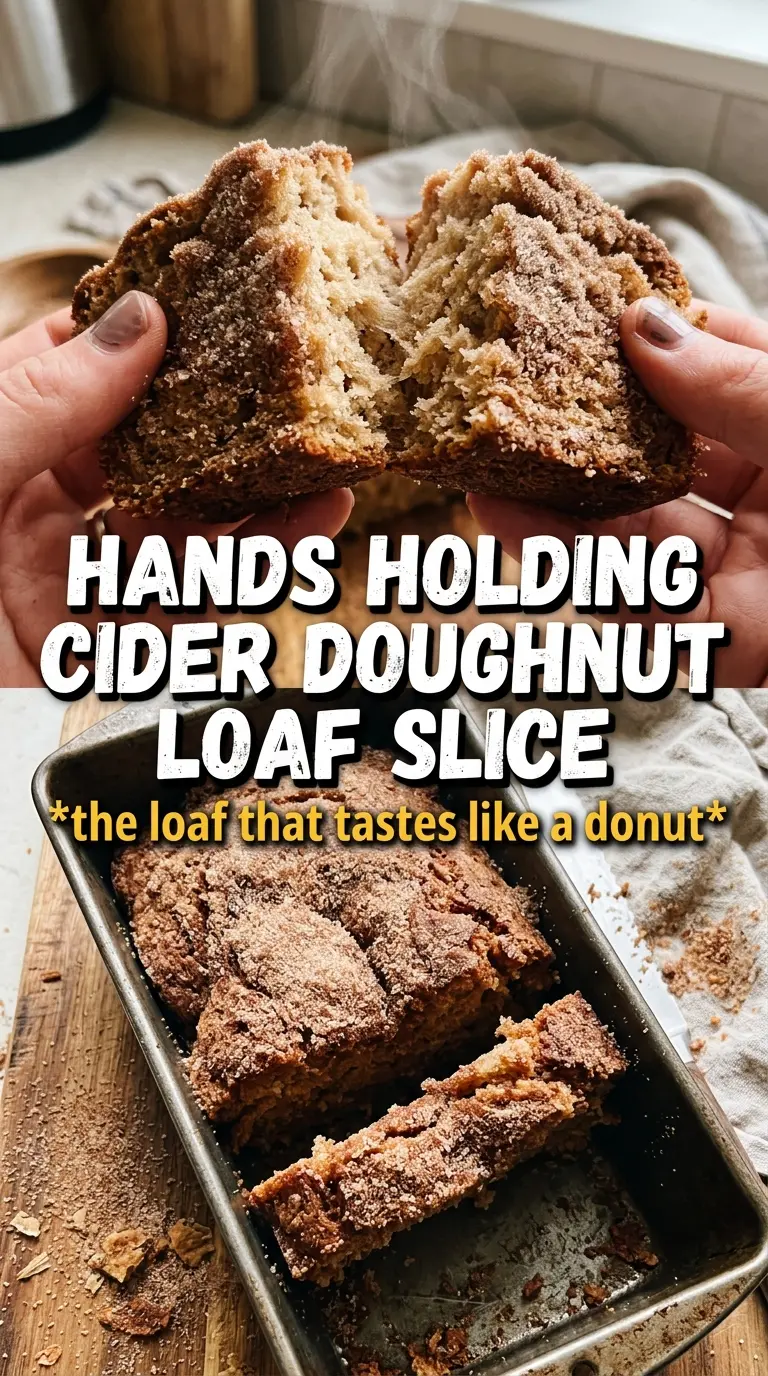
Let the loaf rest briefly, then turn it out while it’s still warm and brush all sides with melted butter. The warmth helps the cinnamon sugar cling instead of sliding off. Roll or sprinkle generously, pressing lightly so the coating sticks to the buttered surface and gives you that classic doughnut finish.
How to adapt this loaf when you need a different finish
Dairy-free version
Swap the sour cream for an unsweetened dairy-free yogurt with some body, then use melted plant butter or neutral oil for the coating instead of butter. The crumb stays soft, though the tang is a little less pronounced. Choose a yogurt that isn’t watery, or the batter can bake up looser.
Gluten-free adaptation
Use a 1:1 gluten-free baking flour that already includes xanthan gum. The loaf will be a little more delicate when warm, so let it cool in the pan for a bit before turning it out. The cinnamon sugar coating still works exactly the same.
Muffin-style bake
Divide the batter into a lined muffin tin and bake until the tops spring back and a tester comes out clean, usually in a much shorter window than the loaf. You’ll get more cinnamon-sugar surface area and a texture closer to a bakery breakfast treat. Watch the tops closely, since muffins dry out faster than a loaf.
Storage and Reheating
- Refrigerator: Store tightly wrapped for up to 4 days. The coating softens a bit, but the loaf stays moist.
- Freezer: Freeze the uncoated loaf wrapped well for up to 2 months. Thaw at room temperature, then brush with butter and coat after warming.
- Reheating: Warm slices briefly in the microwave or a low oven. Don’t heat too long or the sugar coating will melt away and the crumb can dry out at the edges.
Answers to the questions worth asking before you bake this loaf
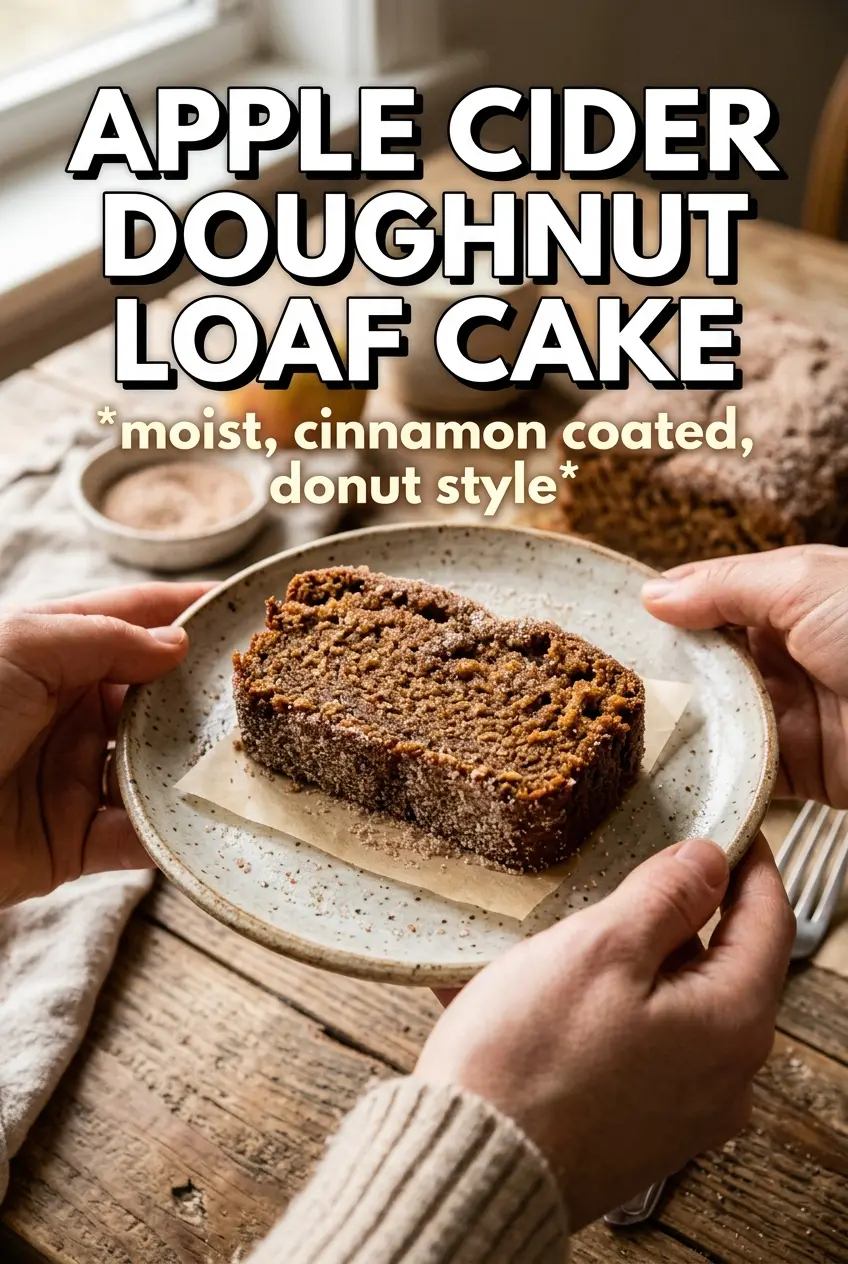
Apple Cider Doughnut Loaf Cake
Ingredients
Equipment
Method
- Reduce apple cider to 1/4 cup over medium heat, then cool completely so it doesn’t cook the eggs. Watch for the liquid to thicken slightly and reduce to a small, glossy measure.
- Preheat the oven to 350F and grease a 9x5 loaf pan. Leave it ready so the batter can go in right after mixing.
- Whisk all-purpose flour, baking powder, baking soda, cinnamon, nutmeg, allspice, cardamom, and salt until evenly combined. The mixture should look uniform in color with no spice clumps.
- Whisk vegetable oil, granulated sugar, brown sugar, eggs, vanilla extract, reduced apple cider, and sour cream until smooth. Stop when the batter looks glossy and free of streaks.
- Fold the flour mixture into the wet ingredients just until combined, then scrape the batter into the prepared loaf pan. Mix only until no dry pockets remain for a tender crumb.
- Bake at 350F for 60-65 minutes, until a toothpick comes out clean. The loaf should be deeply golden and set in the center.
- Remove the loaf from the pan while warm and brush all sides with melted butter. The surface should look glossy as the butter soaks in.
- Roll the warm loaf in cinnamon sugar (or sprinkle generously) so it fully adheres. Let any excess fall off, then set until the coating looks lightly crisp.