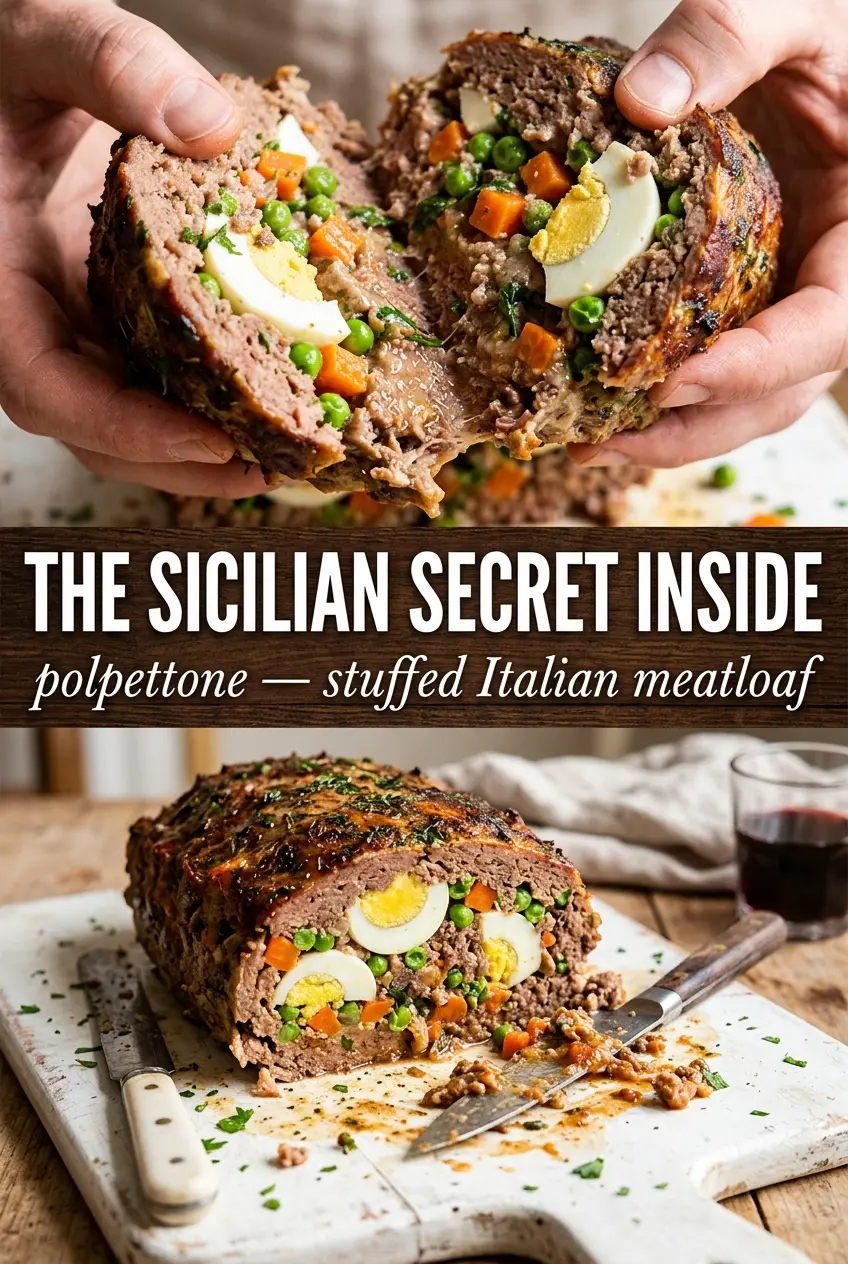
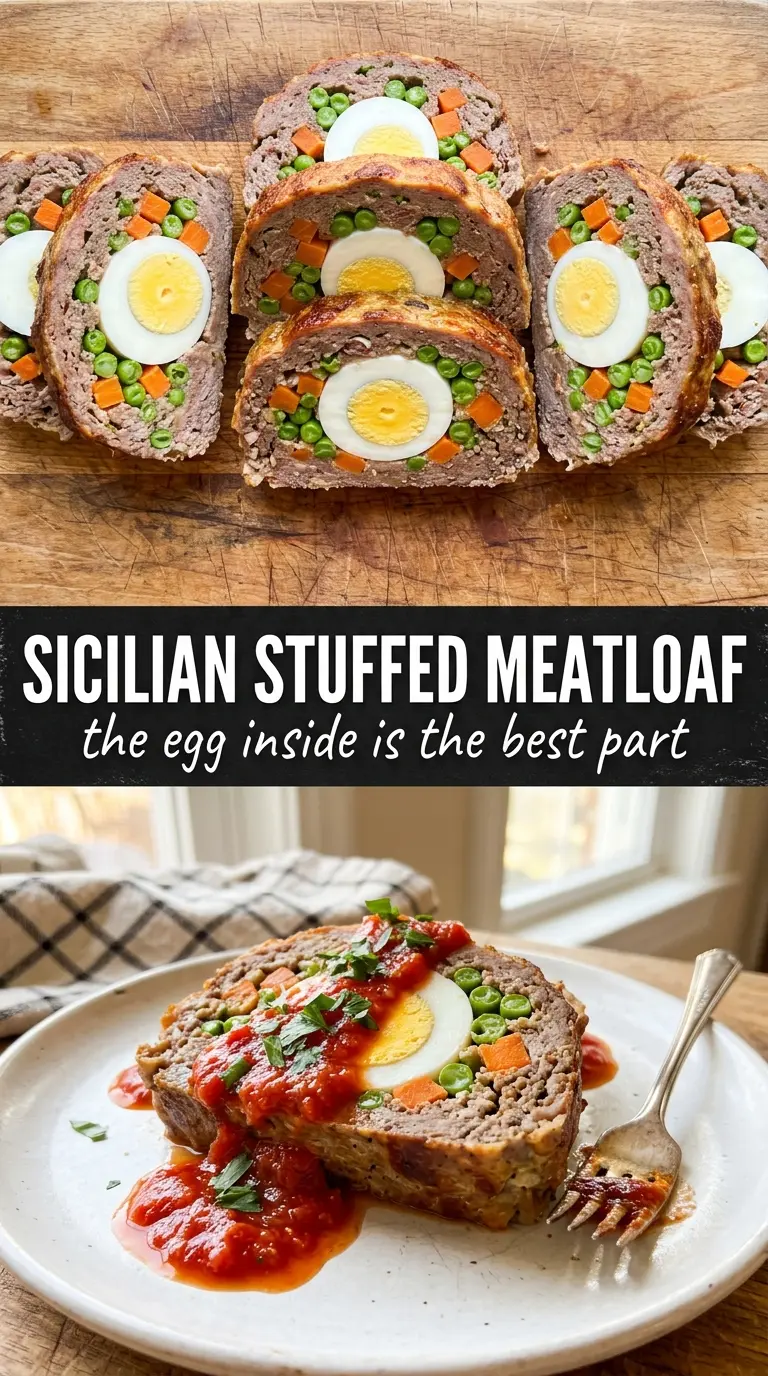
Sicilian meatloaf lands on the table with a slice that stops people mid-sentence: seasoned beef wrapped around salami, spinach, provolone, and a row of hard-boiled eggs, all cut into a dramatic spiral. It eats like a full Italian dinner packed into one pan, with enough richness and contrast to feel special without turning fussy.
The trick is treating it more like a roll than a loaf. Pressing the meat mixture into an even rectangle helps the filling stay centered, and the plastic wrap makes it possible to roll the meat tightly without tearing it apart. That tight roll is what gives you those clean slices instead of a crumbling mess. The eggs also do more than look good; they give the center structure and keep each piece feeling substantial.
Below you’ll find the small details that matter most here, from how to keep the filling from leaking out to the best way to slice it so the cross-section stays sharp. If you’ve only ever made plain meatloaf, this version is the one that changes your mind.
The roll held together beautifully, and the slice showed off those eggs and salami layers exactly like the photo. I loved that the center stayed neat after resting, not watery or falling apart.
Pin this Sicilian meatloaf for the night you want a dramatic sliced center with salami, spinach, and hard-boiled eggs.
The Roll Is What Keeps the Filling from Disappearing
A stuffed meatloaf fails when the filling is piled high in the middle and the beef never gets a chance to hold it in place. This version works because the meat is pressed into a rectangle first, so every layer has the same thickness and the seam can seal underneath instead of splitting open on top. The roll shape also means the loaf cooks more evenly than a deep mound, which helps the center set without drying out the outer edges.
The other mistake people make is overpacking the filling. Leave that one-inch border bare, and don’t stretch the meat too thin at the edges. If the beef tears while you’re rolling, it means the layer is too thin or the filling is too heavy in the middle. A tight roll is what gives you the clean cross-section everyone wants from this dish.
What Each Ingredient Is Actually Doing in This Meatloaf
- Ground beef — This is the structure of the loaf, so use a blend with enough fat to stay tender. Very lean beef makes the meatloaf feel dry and tight once it bakes.
- Breadcrumbs and eggs — These bind the mixture and help it hold its rolled shape. If you need to swap the breadcrumbs, crushed plain crackers or gluten-free breadcrumbs work well, but skip coarse crumbs that leave the loaf loose.
- Parmesan, garlic, parsley, and oregano — These build the savory base so the filling doesn’t have to carry the whole dish. Fresh parsley gives the loaf a brighter finish, while dried oregano brings that classic Italian note that survives baking.
- Salami or prosciutto — This adds salt, fat, and a cured-meat punch that makes every slice taste layered. Prosciutto gives a softer, more delicate bite; salami brings a bolder, more obvious streak through the center.
- Spinach and provolone — The spinach keeps the filling from feeling heavy, and the provolone melts into the center without disappearing completely. Wilt the spinach first so it doesn’t release water into the loaf while it bakes.
- Hard-boiled eggs — They’re the signature look of polpettone-style meatloaf, and they also help the center slice cleanly. Use fully cooked eggs that have cooled before rolling so they don’t steam the meat from the inside.
Building the Spiral Without Letting the Loaf Split
Mix the Meat Just Until It Comes Together
Combine the beef, breadcrumbs, parmesan, eggs, garlic, parsley, oregano, salt, and pepper until the mixture looks evenly distributed. Stop before it turns paste-like; overmixing compacts the meat and gives you a dense loaf instead of a tender one. If the mixture feels sticky, that’s normal. It should hold together when pressed, not slump apart.
Shape the Rectangle on Plastic Wrap
Press the meat onto a large sheet of plastic wrap into a rough 10×12-inch rectangle, keeping the thickness even from edge to edge. Uneven spots create weak points during rolling, which is when the filling starts to leak. Use your hands to pat and square off the edges rather than pressing hard with your palms, which can tear the surface.
Layer the Filling for a Clean Slice
Spread the salami, spinach, and provolone over the meat, leaving that border bare so the seam has something to grip. Lay the hard-boiled eggs in a row down the center, not scattered around, because a straight line gives you the dramatic spiral once it’s sliced. If the spinach looks wet, squeeze it dry first; extra moisture is one of the main reasons a stuffed meatloaf turns soggy inside.
Roll, Seal, and Bake Until Just Done
Use the plastic wrap to lift and roll the meatloaf tightly around the filling, then place it seam-side down in the baking dish. Tight is the word here, but not so tight that the meat squeezes out at the ends. Bake at 350°F until the center reaches 160°F, which usually takes 60 to 70 minutes. Pull it out, rest it for 10 minutes, and slice with a sharp knife so the filling stays in place instead of smearing.
How to Adapt This for Different Tables and Leftover Plans
Gluten-Free Version
Swap the breadcrumbs for gluten-free breadcrumbs or finely crushed gluten-free crackers. The goal is the same: a binder that holds the roll together without making it heavy. Keep the amount the same, then check the mixture by pressing a little between your fingers; it should hold like soft modeling clay.
Dairy-Free Adaptation
Leave out the provolone and add a few extra strips of salami or a little more spinach for body. You lose the gentle melt in the center, but the loaf still slices beautifully and keeps the same Italian-style feel. If you want a richer finish, serve it with extra warmed marinara.
Make-Ahead Assembly
You can shape and fill the loaf a few hours ahead, then keep it covered in the refrigerator until baking time. That resting time helps the roll firm up, which makes it easier to transfer without losing the seam. Let it sit at room temperature for about 20 minutes before baking so the center doesn’t start out ice-cold.
Storage and Reheating
- Refrigerator: Store sliced or whole in an airtight container for up to 4 days. The slices hold together even better the next day.
- Freezer: This freezes well. Wrap tightly, then freeze whole or in slices for up to 2 months. Thaw overnight in the refrigerator before reheating.
- Reheating: Warm covered in a 300°F oven with a spoonful of marinara over the top so the meat doesn’t dry out. The biggest mistake is blasting it in the microwave, which toughens the beef and makes the center filling leak out.