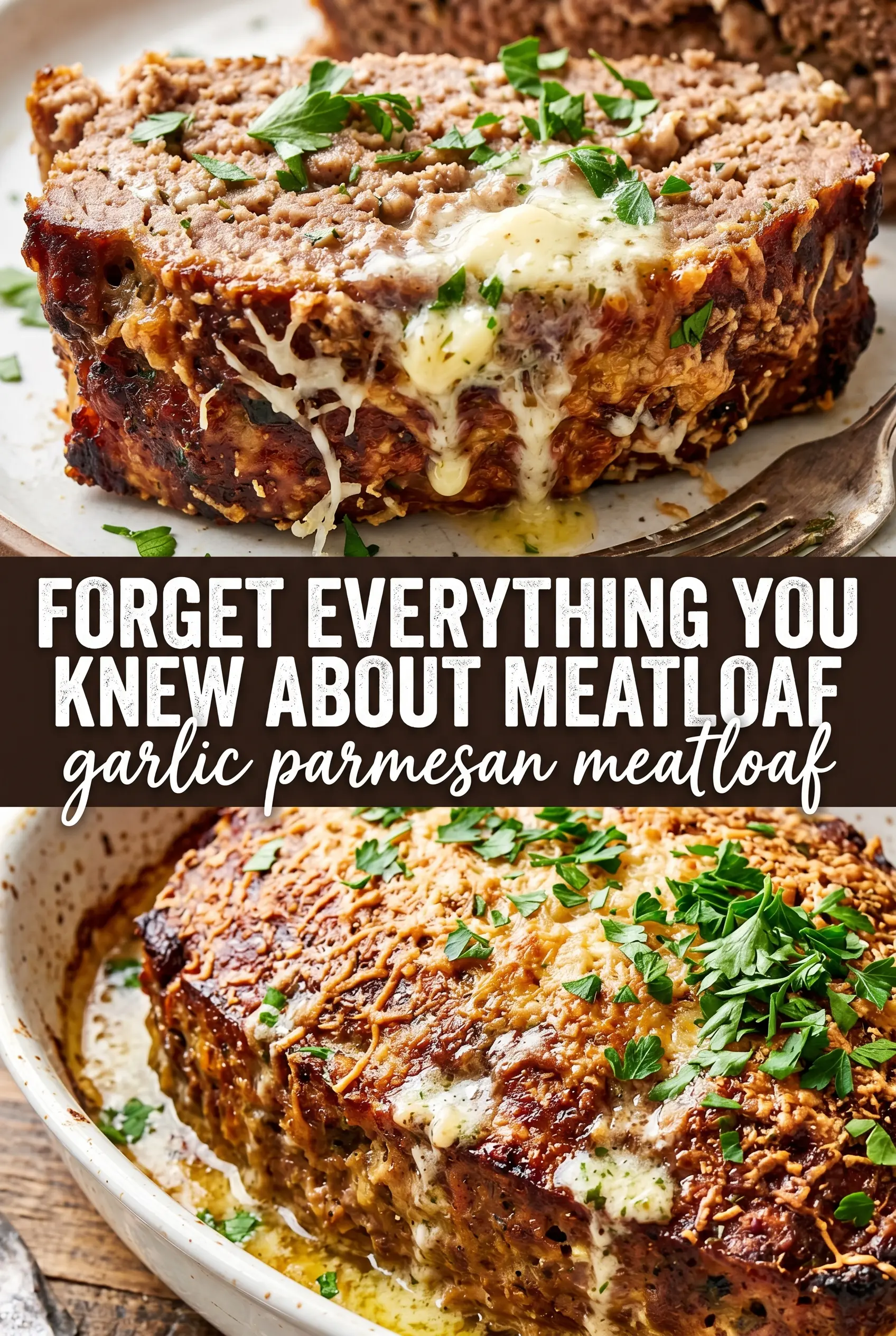
Garlic Parmesan Meatloaf bakes up with a bronzed, savory crust and a juicy center that slices cleanly instead of crumbling apart. The garlic butter on top turns the whole loaf into something richer than a standard meatloaf, and the parmesan adds a salty, nutty edge that carries through every bite.
What makes this version work is the balance between moisture and structure. The milk and eggs keep the beef tender, while the breadcrumbs and parmesan help the loaf hold together without turning dense. The garlic goes in two places: inside the meat mixture for deep flavor and in the topping for that fragrant, buttery finish that lands right when the loaf comes out of the oven.
Below, I’ll show you why this meatloaf stays juicy, how to keep the topping from burning, and the small adjustments that make it easy to adapt for your table.
The garlic butter brushed on top halfway through was the best part — the crust stayed golden and the middle was still juicy, not dry at all. My husband went back for seconds before I even sat down.
Save this garlic parmesan meatloaf for the nights when you want a juicy loaf with a garlicky parmesan crust and almost no cleanup.
The Part Most Meatloaves Miss: The Top Has to Seal, Not Steam
The biggest mistake with meatloaf is packing it too tightly or hiding it in a loaf pan, which traps moisture and softens the crust. A free-form loaf on a parchment-lined sheet gives the heat room to move around the meat, so the outside browns while the center stays tender.
The parmesan on top does more than add flavor. It helps form that salty, slightly crisp surface that keeps the garlic butter from soaking straight into the loaf. Brush it on in two stages: once before baking, then again halfway through. That second brush keeps the top glossy and fragrant instead of dry.
- Ground beef — Use 80/20 beef if you can. Leaner beef can work, but the loaf will eat drier unless you’re careful not to overbake it.
- Breadcrumbs — These hold the meat together and soften the texture. Plain breadcrumbs are fine; seasoned crumbs add extra salt, so adjust carefully.
- Parmesan — Freshly grated parmesan gives the best melt and the best crust. Pre-grated cheese works in a pinch, but it doesn’t cling to the surface the same way.
- Garlic butter topping — This is what makes the loaf taste finished instead of just baked. Melt the butter before mixing so the garlic disperses evenly and doesn’t clump.
What Each Ingredient Is Actually Doing in This Meatloaf or Meatballs
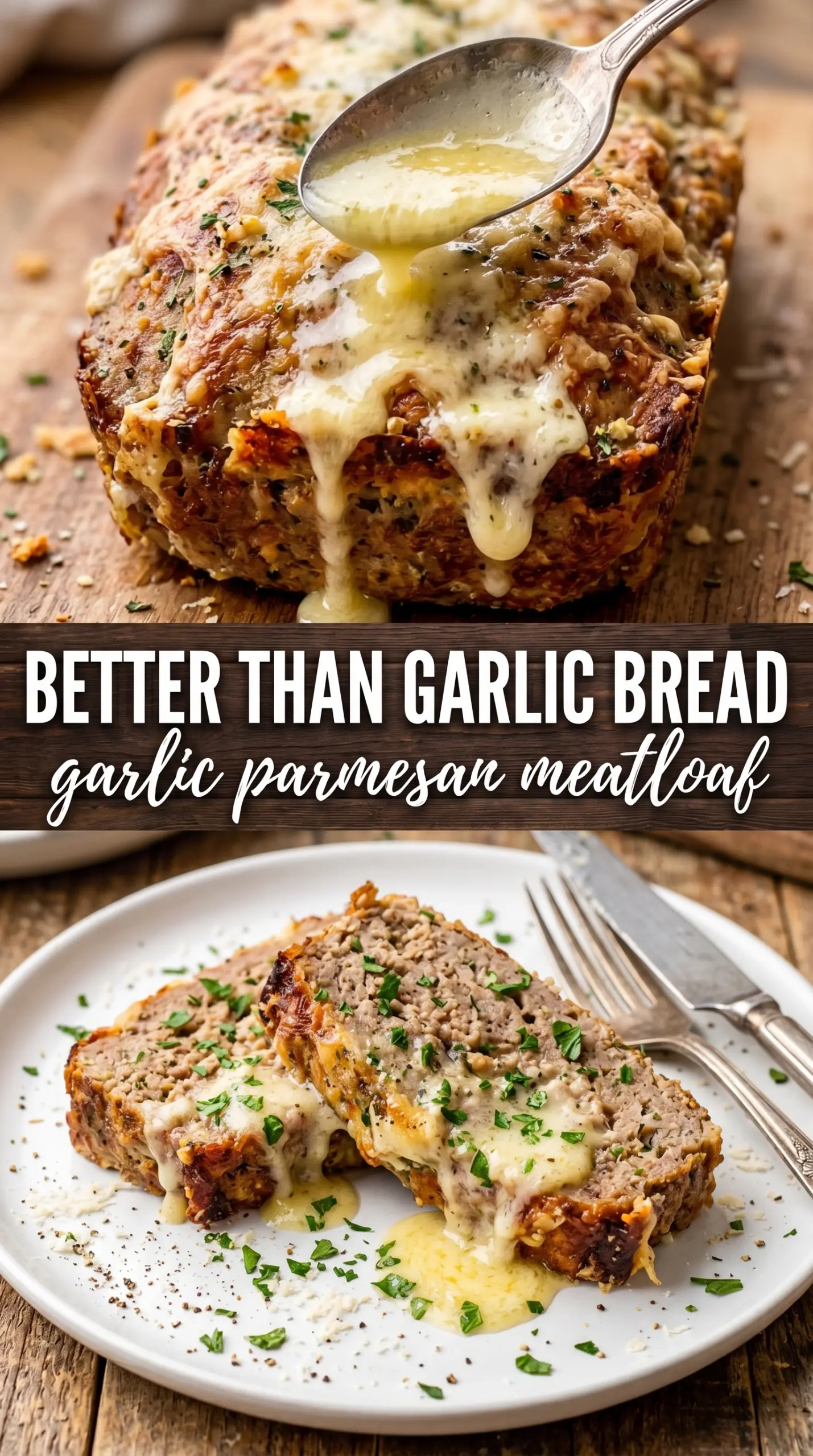
- Ground meat (the protein foundation) — Use 80/20 so it stays moist. Handle gently to keep texture tender instead of dense.
- Breadcrumbs or fillers (the binder) — These hold the meat together without making it dense. Soak in milk first so they add moisture.
- Egg (the structural binding agent) — This holds everything together during cooking. One egg per pound of meat is the right ratio.
- Onion and aromatics (the base flavor) — Mince finely so they distribute evenly. Raw onion softens as it cooks and becomes part of the texture.
- Seasonings (salt, pepper, Worcestershire, spices) — Build flavor boldly. The meat mixture carries the entire flavor profile.
- Milk or liquid (the moisture keeper) — This keeps the meatloaf tender instead of dense and dry. Don’t skip this step.
- Glaze or sauce (ketchup-based or other) — This adds sweetness, moisture, and flavor to the exterior. Apply strategically so it caramelizes.
- Resting time (the final step) — Let the meatloaf rest 10 minutes so it sets and slices cleanly. Cutting too soon makes it fall apart.
Building the Loaf So It Stays Juicy From Edge to Center
Mix the Base Gently
Combine the beef, parmesan, breadcrumbs, eggs, milk, garlic, parsley, seasoning, Worcestershire, salt, and pepper just until everything looks evenly distributed. If you work the mixture like bread dough, the meat proteins tighten and the finished loaf turns dense. The texture should hold together when pressed, but it should still look loose and slightly shaggy before shaping.
Shape It for Even Browning
Form the mixture into a free-form loaf about the same thickness from end to end. Tapering one side or making the center much taller than the edges leads to uneven cooking, with dry ends and an underdone middle. Press it together just enough that it won’t crack apart, then stop.
Brush, Bake, and Watch the Color
Brush half the garlic butter over the top before it goes into the oven, then press extra parmesan into the surface. Bake at 350°F until the internal temperature reaches 160°F, and don’t rely on color alone; parmesan can look done before the center is ready. Halfway through, brush on the remaining garlic butter so the top stays glossy and the garlic doesn’t scorch.
Rest Before You Slice
Let the loaf sit for 10 minutes after baking. That pause lets the juices settle back into the meat instead of running out onto the cutting board. If you slice too soon, the center will still taste good, but the slices won’t hold that clean, juicy shape you want.
How to Adapt This Garlic Parmesan Meatloaf Without Losing the Texture
Make it gluten-free with the right crumb swap
Use gluten-free breadcrumbs or crushed gluten-free crackers in the same amount. The texture stays close to the original, but crumbs that are too coarse can make the loaf crumbly, so pulse them finer if needed.
Swap in ground turkey for a lighter loaf
Ground turkey works, but it needs the moisture from the milk, eggs, and butter topping even more than beef does. Use it only if you’re happy with a softer, milder loaf, and pull it as soon as it reaches temperature so it doesn’t dry out.
Go dairy-free without changing the method
Replace the milk with unsweetened plain almond milk or oat milk, and use a dairy-free butter for the topping. You’ll lose a little of parmesan’s salty depth unless you use a dairy-free parmesan-style substitute, so season the loaf a touch more boldly.
Storage and Reheating
- Refrigerator: Store slices in an airtight container for up to 4 days. The parmesan crust softens a bit, but the flavor stays strong.
- Freezer: Freeze cooled slices tightly wrapped for up to 2 months. Thaw in the refrigerator overnight so the texture doesn’t turn watery.
- Reheating: Warm slices covered in a 300°F oven with a spoonful of broth or water in the pan. Microwaving works, but it can make the edges rubbery before the center is hot.