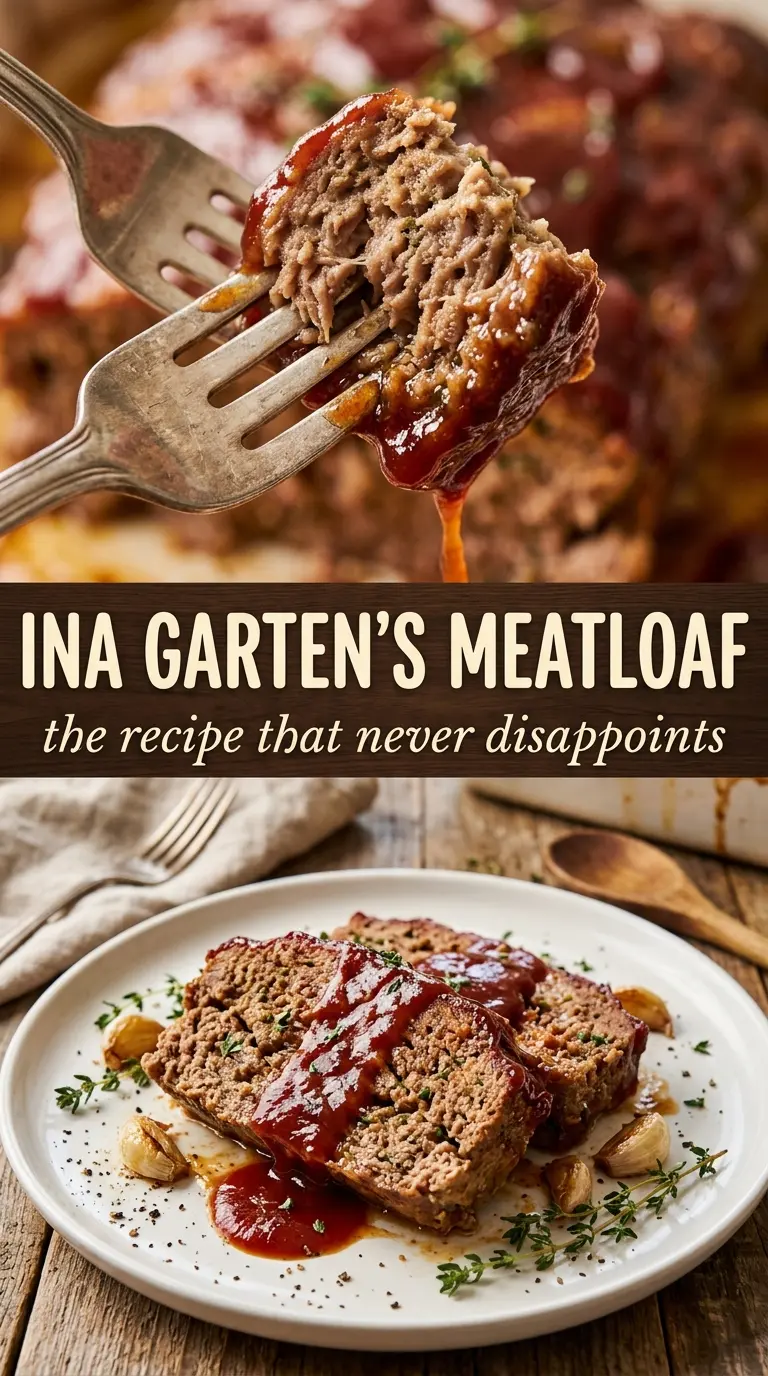
Ina Garten’s meatloaf earns its place because it slices cleanly, stays moist without turning mushy, and brings the kind of deep, savory flavor that makes a plain loaf feel special. The caramelized onion mixture and the ketchup-brown sugar glaze work together in a way that gives you both sweetness and balance, not the flat, one-note meatloaf people complain about.
The trick here is restraint. The meat gets folded together just until combined, which keeps the texture tender instead of compacted, and the loaf is shaped free-form on a sheet pan so it cooks evenly and browns all over instead of steaming in a loaf pan. The onions matter too; cooking them until caramelized pulls out their sweetness and keeps the interior from tasting heavy.
Below, I’m walking through the part that makes this version worth repeating: how to keep the loaf from going dense, why the glaze goes on before baking, and the small timing details that help you get those neat, satisfying slices at the table.
The glaze baked into a sticky little crust and the loaf held together perfectly when I sliced it after resting. Even the leftovers were still moist the next day.
Save this Ina Garten meatloaf for the nights when you want a caramelized glaze, tender slices, and a classic dinner that holds together beautifully.
The Trick to Keeping This Meatloaf Tender Instead of Dense
Meatloaf goes wrong when it gets packed like a brick. Once the mixture is overworked, the proteins tighten up in the oven and you end up with a slice that looks neat but eats like a meat puck. This version stays tender because the ingredients are folded together just until they come together, and the breadcrumbs plus stock give the meat enough moisture to bake up cohesive without becoming heavy.
The other thing that helps is the free-form shape. A loaf pan traps fat and steam, which softens the exterior and makes the center cook less evenly. On a parchment-lined sheet, the edges brown while the middle stays juicy, and that contrast is what makes a slice taste finished instead of monotonous.
What Each Ingredient Is Doing in the Loaf
- Ground beef — This gives the loaf its meaty backbone. Use beef with some fat; very lean beef dries out before the center finishes cooking.
- Ground veal or pork — Veal keeps the texture delicate, while pork adds a little richness and sweetness. Pork is the easier swap and works beautifully here.
- Plain dry breadcrumbs — These hold onto the stock and juices so the loaf slices cleanly. Fresh breadcrumbs can work, but they make the texture softer and a little less structured.
- Eggs — They bind the mixture without making it gummy. Two extra-large eggs are enough for this amount of meat; more than that can make the interior feel custardy.
- Dijon, Worcestershire, and thyme — This is the flavor base. Dijon sharpens the meat, Worcestershire adds depth, and thyme keeps it tasting classic rather than flat.
- Caramelized onions — Don’t skip the sautéing step. Raw onions can taste harsh and dump water into the loaf, while cooked onions bring sweetness and a softer, more integrated texture.
- Ketchup, brown sugar, and cider vinegar — This glaze needs all three parts: sweet, tangy, and tomato-rich. Brush it on generously so it bakes into a shiny layer instead of just sitting on top.
Building the Loaf So It Bakes Evenly
Mixing the Meat Without Overworking It
Start with a large bowl and combine the beef, veal or pork, breadcrumbs, eggs, mustard, Worcestershire, stock, thyme, salt, and pepper first. Once those are mostly distributed, add the onions and fold everything together with your hands until no streaks remain. Stop there. If you keep squeezing the mixture, the loaf becomes compact and the finished slices lose that tender, meaty grain.
Shaping the Free-Form Loaf
Form the mixture into a flat oval or rectangle on a parchment-lined baking sheet. A flatter loaf cooks more evenly than a tall one, and the exposed surface gives the glaze room to caramelize. If the edges crack while shaping, press them back gently; don’t pack the top down hard or you’ll undo the texture you just built.
Glazing Before the Bake
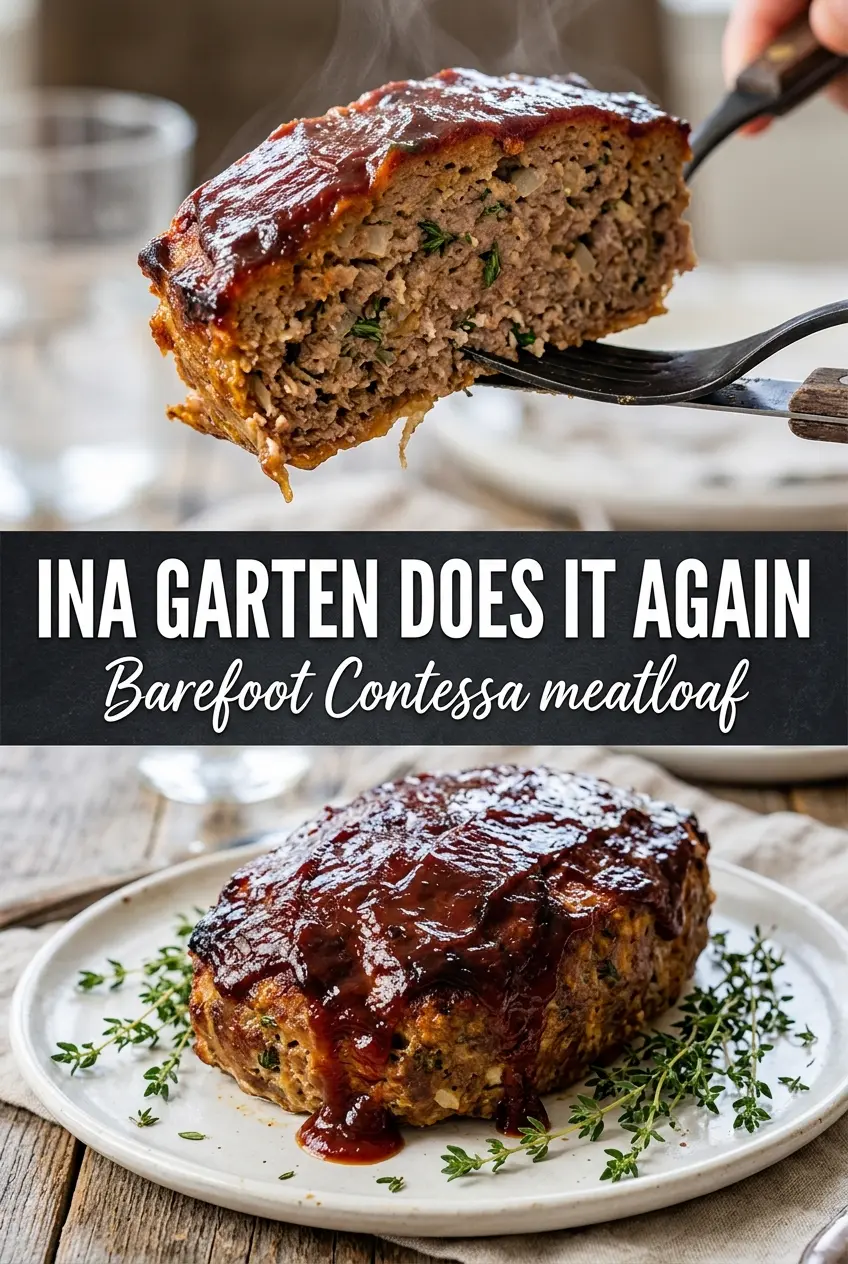
Mix the ketchup, brown sugar, and cider vinegar, then brush it over the top and sides before the loaf goes in the oven. That first coating sets into a lacquer as it bakes, which gives you the glossy finish people remember. If the glaze looks thin at first, that’s fine; it thickens in the oven. The mistake is waiting until the end, when it sits on top without bonding to the meat.
Knowing When It’s Done
Bake at 325°F until the center reaches 160°F, which usually takes 60 to 75 minutes depending on the thickness of your loaf. The top should look deeply glazed and the edges should be browned, not pale. Let it rest for 15 minutes before slicing. If you cut too soon, the juices run out and the slices collapse instead of holding their shape.
How to Adapt This Meatloaf for Different Needs
Swap pork for veal
Pork is the easiest and most useful swap here. It gives the loaf a richer, slightly sweeter finish and is much easier to find than veal. The texture stays close to the original, so this is the change I’d make first.
Make it gluten-free
Use gluten-free dry breadcrumbs in the same amount. They still absorb the stock and help the loaf hold together, though some brands soak up a little faster, so don’t add extra liquid unless the mixture looks dry and crumbly.
Use all pork for a richer loaf
You can replace the veal with more pork if that’s what you have. The loaf will be a touch richer and softer, but the glaze and onions keep it balanced. I wouldn’t go leaner than that or the texture starts to dry out.
Storage and Reheating
- Refrigerator: Store slices in an airtight container for up to 4 days. The glaze firms up a bit, but the loaf stays moist if it rested properly before slicing.
- Freezer: Freezes well for up to 2 months. Wrap individual slices tightly and thaw overnight in the fridge so they reheat evenly.
- Reheating: Warm slices covered in a 300°F oven with a spoonful of water or stock in the pan, or use the microwave at medium power. High heat dries out the edges before the center is hot.
Questions I Get Asked About This Recipe
Ina Garten's Meatloaf
Ingredients
Equipment
Method
- Preheat the oven to 325°F with a rack in the middle position, so the loaf heats evenly as it bakes.
- In a large bowl, combine ground beef, ground veal or pork, breadcrumbs, beaten extra-large eggs, Dijon mustard, Worcestershire sauce, chicken stock, fresh chopped thyme, salt, and black pepper.
- Add the caramelized onions and fold until just mixed, keeping the texture dense without overworking the meat.
- Shape the mixture into a flat, free-form loaf on a parchment-lined baking sheet, since a flatter loaf cooks more evenly.
- Mix the ketchup, brown sugar, and cider vinegar into a smooth glaze, then brush generously over the top and sides for a lacquered finish.
- Bake for 60–75 minutes at 325°F until the internal temperature reaches 160°F, with the glaze turning deep amber and caramelized.
- Rest the meatloaf for 15 minutes before slicing, so the juices redistribute and the slices hold their shape.