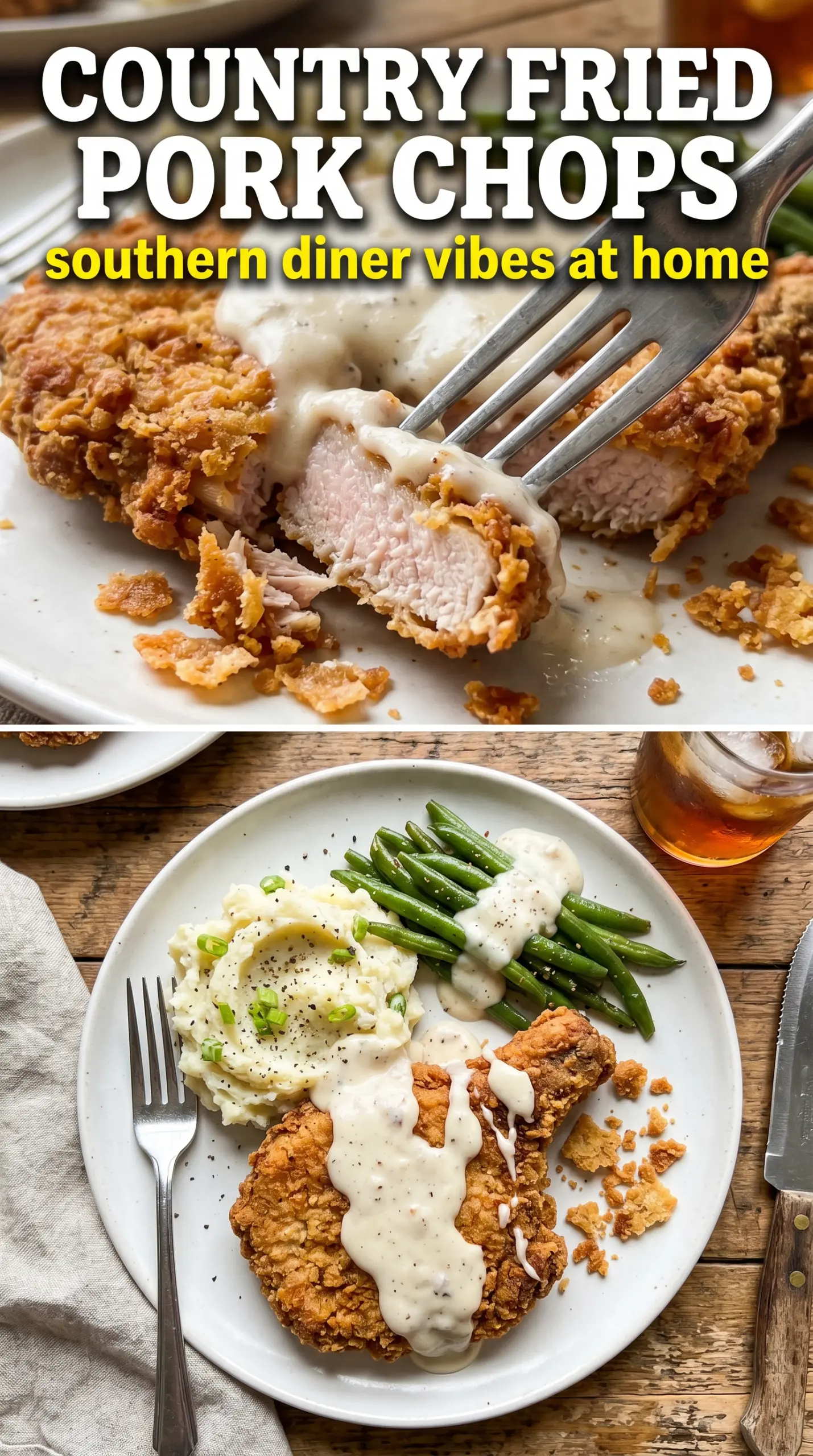
Country fried pork chops hit the table with a crust that crackles when you cut into it and juicy meat underneath, which is exactly why this dish keeps its place in a real dinner rotation. The breading stays thick and rugged instead of slipping off in the pan, and the white gravy turns the whole plate into something comforting without drowning out the crunch.
The trick is in the coating: a mix of flour and cornmeal gives you a more textured crust than flour alone, and the buttermilk helps the breading cling in a way plain egg wash can’t. Thin-cut chops cook fast enough to stay tender, and the shallow fry keeps the breading crisp without overcooking the pork. The gravy uses the browned drippings from the pan, so it tastes like part of the same meal instead of an afterthought.
Below you’ll find the small details that make the crust stay put, how to keep the gravy smooth, and a few practical swaps if you need to work with what you have.
The coating stayed on the chops instead of sliding off, and the cornmeal gave the crust that extra crunch I always want. The gravy came together smooth with no lumps, and dinner disappeared fast.
Love the crunch on these country fried pork chops? Save this one for the nights when you want crispy breading, soft white gravy, and a skillet dinner that feels old-school in the best way.
The Reason the Coating Stays Crisp Instead of Slipping Off
Most breaded pork chop recipes fail at the same point: the flour layer looks good going into the pan, then it loosens, sheds, or goes patchy because the surface never got enough tack before frying. The egg-and-buttermilk dip here gives the dredge something to grip, and pressing the flour mixture onto the chops matters more than people think. You want a thick, shaggy coating, not a dusting.
Thin chops help, too. Thick pork chops need longer in the pan, which gives the coating more time to soften before the meat is done. With half-inch chops, you can get a deep golden crust in just a few minutes per side and still keep the center juicy.
- Cornmeal — This is what gives the crust its rough, crunchy edge. All flour works in a pinch, but you lose that distinct country-fried texture.
- Buttermilk — It adds a little tang and helps the coating cling. If you don’t have it, use milk with a teaspoon of lemon juice or vinegar stirred in and let it sit for 5 minutes.
- Thin-cut pork chops — These cook fast enough to stay tender. If yours are thicker, pound them lightly to even them out before breading.
What the Flour, Cornmeal, and Drippings Are Each Doing Here
- All-purpose flour — This is the base of the breading and the backbone of the gravy. Use a regular grocery-store flour here; there’s no payoff in using anything fancy.
- Smoked paprika, garlic powder, and onion powder — These season the crust all the way through, so the pork doesn’t taste like plain fried breading. Don’t skip them, or the outside reads flat.
- Drippings — The gravy tastes best when it starts with the browned fat and browned bits left in the skillet. If you don’t have enough drippings, supplement with butter until you have the full amount, then whisk in the flour.
- Whole milk — This makes the gravy smooth and rich. Lower-fat milk will work, but the sauce thins out a little more and needs a few extra minutes to thicken.
Frying the Chops Until the Crust Sets and the Pork Stays Juicy
Building the Coating
Set up the flour mixture and the egg-buttermilk dip in shallow dishes so the chops can move quickly from one to the next. Dip each chop fully in the wet mixture, then press it into the seasoned flour with enough pressure to make the coating look clumpy and thick. That rough surface turns into crunch in the skillet; a smooth, even coat tends to fry up thinner and softer.
Managing the Oil Temperature
Heat about 1/2 inch of oil over medium-high heat until it shimmers and a pinch of flour sizzles immediately. If the oil is too cool, the breading drinks it up and turns greasy; if it’s too hot, the crust browns before the pork cooks through. Keep the heat steady and adjust it between batches if the pan starts smoking or the coating darkens too fast.
Frying to Deep Golden
Lay the chops in the skillet without crowding them, and leave them alone until the first side turns deep golden and releases with a crisp edge. Flip once and cook the second side until the pork is cooked through and the breading feels set, usually 3 to 4 minutes per side for thin chops. If the crust starts to get too dark before the center is done, lower the heat and finish a minute or two longer.
Turning the Drippings Into White Gravy
Pour off most of the oil, but leave 3 tablespoons of drippings in the pan and scrape up any browned bits. Whisk in the flour and cook it for about a minute so the raw taste is gone, then add the milk slowly while whisking to keep the gravy smooth. If it looks lumpy, the milk went in too fast; keep whisking over medium heat and it usually settles out as it thickens.
Small Swaps That Still Give You a Proper Southern Fried Chop
Gluten-Free Breading
Use a gluten-free all-purpose flour blend in place of the regular flour, and keep the cornmeal in the mix for texture. The crust will still crisp well, but it may brown a little faster, so watch the skillet closely and lower the heat if needed.
Dairy-Free Version
Swap the buttermilk for unsweetened plant milk plus a splash of lemon juice or vinegar, and use butter or a neutral oil in the gravy instead of drippings if needed. You lose a little of the classic tang, but the coating still clings and fries up with good crunch.
Extra-Crunch Country Style
Add an extra tablespoon or two of cornmeal and press the breading on firmly before frying. The crust gets more rugged and shattery, though it also becomes a little more rustic and less smooth.
Storage and Reheating
- Refrigerator: Store leftover pork chops and gravy separately for up to 3 days. The crust softens in the fridge, which is normal.
- Freezer: The pork chops freeze better than the gravy. Wrap the cooled chops tightly and freeze for up to 2 months; the gravy can separate, so I don’t recommend freezing it.
- Reheating: Warm the chops on a rack in a 375°F oven until hot, not in the microwave, which turns the breading soggy. Reheat the gravy slowly on low heat with a splash of milk, whisking until smooth.
Questions I Get Asked About This Recipe
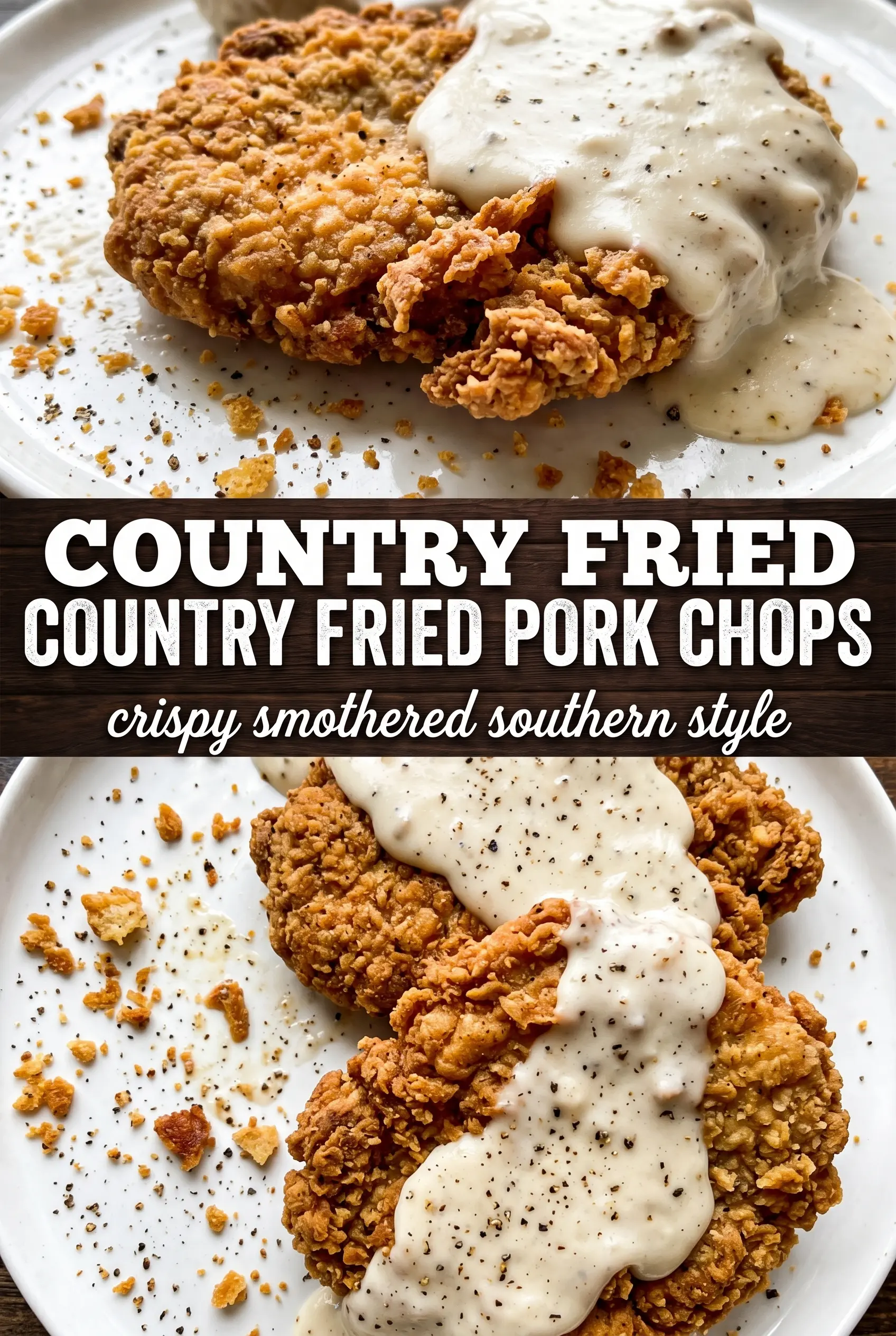
Country Fried Pork Chops
Ingredients
Equipment
Method
- Mix flour, cornmeal, garlic powder, smoked paprika, onion powder, salt, and pepper in a shallow dish to form the seasoned coating.
- Whisk eggs with buttermilk in another dish until smooth and uniform.
- Dip each pork chop in the egg mixture, letting excess drip back into the dish.
- Coat the pork chops in the seasoned flour mixture and press firmly so the crust clings tightly.
- Heat 1/2 inch of oil in a cast iron skillet over medium-high heat until hot.
- Fry pork chops 3–4 minutes per side until deep golden and cooked through, flipping once.
- Drain the pork chops on paper towels and reserve 3 tablespoons of drippings for the gravy.
- Whisk 3 tablespoons flour into the reserved drippings over medium heat for 1 minute to cook off the raw flour taste.
- Slowly whisk in whole milk, then simmer until thick.
- Season the gravy with salt and pepper and serve it over the country fried pork chops.