Pork tenderloin takes on a glossy, sticky glaze beautifully when it’s seared first and finished in the oven. The outside turns burnished and caramelized, while the center stays juicy and just barely pink if you pull it at the right temperature. This version gets that balance right without a long marinade or a fussy sauce reduction.
The trick is building the glaze with enough honey to lacquer the meat, but balancing it with soy sauce, Dijon, and apple cider vinegar so it doesn’t taste flat or cloying. Searing before roasting gives you better color and keeps the glaze from tasting boiled. Brushing on half the glaze before the oven and the rest halfway through lets it set in layers instead of sliding off the pan.
Below, I’ve included the timing cue that matters most for tenderloin, plus a few swaps and storage notes in case you want to change the heat level or cook for a different night of the week.
The glaze thickened up into this shiny coating in the oven, and the pork stayed juicy even after resting. I loved how the garlic softened instead of burning.
Save this honey garlic pork tenderloin for a fast dinner with a sticky amber glaze and juicy slices every time.
The Thin Line Between Juicy Pork and Dry Pork Tenderloin
Pork tenderloin is lean, which means it goes from perfect to overcooked fast. The biggest mistake is leaving it in the oven until it looks fully done in the center; by then, it’s already past the sweet spot. Pulling it at 145°F and letting it rest gives you slices that are tender and still juicy, not chalky.
Searing first matters here because it builds flavor before the glaze goes on. If you skip that step, the honey mixture has to do all the work, and it won’t give you the same deep color or savory edge. The oven finish keeps the glaze from scorching while the pork cooks through evenly.
What Each Ingredient Is Actually Doing in This Glaze

- Pork tenderloin — This cut stays tender if you don’t overcook it. Pork loin is a different cut and needs longer cooking, so don’t swap it in unless you’re adjusting the timing and expect a firmer slice.
- Honey — It gives the glaze its shine and stickiness. There isn’t a true substitute that behaves the same way in the oven; maple syrup works in a pinch, but it runs thinner and tastes more woodsy.
- Soy sauce — This is the salt and savoriness that keeps the glaze from tasting like warmed-up candy. Use low-sodium if you want more control, especially if your pork is heavily seasoned.
- Dijon mustard — It helps the glaze emulsify a little and gives it a sharp edge that cuts through the sweetness. Yellow mustard will work, but the flavor is softer and less complex.
- Apple cider vinegar — A small amount keeps the glaze lively. Without it, the sauce can land flat and sticky in the wrong way.
- Red pepper flakes — They don’t make the pork spicy; they just give the glaze a little lift. Leave them out if you want a milder dinner, or add more if you like the sweet heat contrast.
- Garlic — Fresh minced garlic gives the glaze its backbone. Garlic powder won’t burn as easily, but it also won’t give you the same sharp, fragrant bite.
How to Build the Glaze So It Sticks Instead of Burning
Season and Sear First
Pat the tenderloins dry, season them with salt and pepper, and sear them in hot oil until the surface is golden on all sides. You’re looking for color, not full doneness. If the pan isn’t hot enough, the pork will gray instead of browning, and the glaze won’t have that caramelized finish later.
Mix the Glaze Before It Hits the Pan
Stir the honey, garlic, soy sauce, Dijon, vinegar, and red pepper flakes together until smooth. This keeps the garlic from clumping in one spot and burning. Brush on half right after searing so the pork starts building that sticky coating before it goes into the oven.
Roast to Temperature, Not by Clock Alone
Transfer the skillet to the oven and roast until the thickest part reaches 145°F. Most tenderloins land in the 18 to 22 minute range, but the exact time depends on their size and your skillet heat. If the glaze looks dark early, tent loosely with foil while the pork finishes.
Rest Before Slicing
Let the pork rest for 5 minutes before slicing it. That pause keeps the juices in the meat instead of running across the cutting board. Slice against the grain for the cleanest, most tender bite, then spoon any glaze from the pan over the top.
Three Ways to Bend This Recipe Without Breaking It
Make it gluten-free
Swap the soy sauce for tamari or a certified gluten-free soy sauce. The glaze keeps the same sweet-salty balance, and the texture won’t change. Check that your mustard is gluten-free too if you’re cooking for someone sensitive.
Turn down the heat without losing flavor
Leave out the red pepper flakes and the pork still tastes balanced because the vinegar and Dijon keep the glaze from going flat. If you want even more gentle heat, use a pinch of black pepper instead of chili. The result is sweeter and more kid-friendly, but still not bland.
Use the same glaze on chicken thighs
This glaze also works on bone-in or boneless chicken thighs, though the cook time will change. Thighs can handle a little extra glaze without drying out, so they’re forgiving if you want a more casual version of the same dinner. Keep the oven method, but cook to the proper chicken temperature instead of using the pork timing.
Storage and Reheating
- Refrigerator: Store leftovers in an airtight container for up to 3 days. The glaze will thicken and the pork will firm up a little as it chills.
- Freezer: You can freeze sliced pork for up to 2 months, but the glaze won’t stay quite as glossy after thawing. Wrap it tightly and freeze with a little of the pan sauce if possible.
- Reheating: Warm gently in a covered skillet over low heat with a splash of water or extra glaze. High heat dries out tenderloin fast, so don’t blast it in the microwave unless you like tough edges.
Answers to the Questions Worth Asking
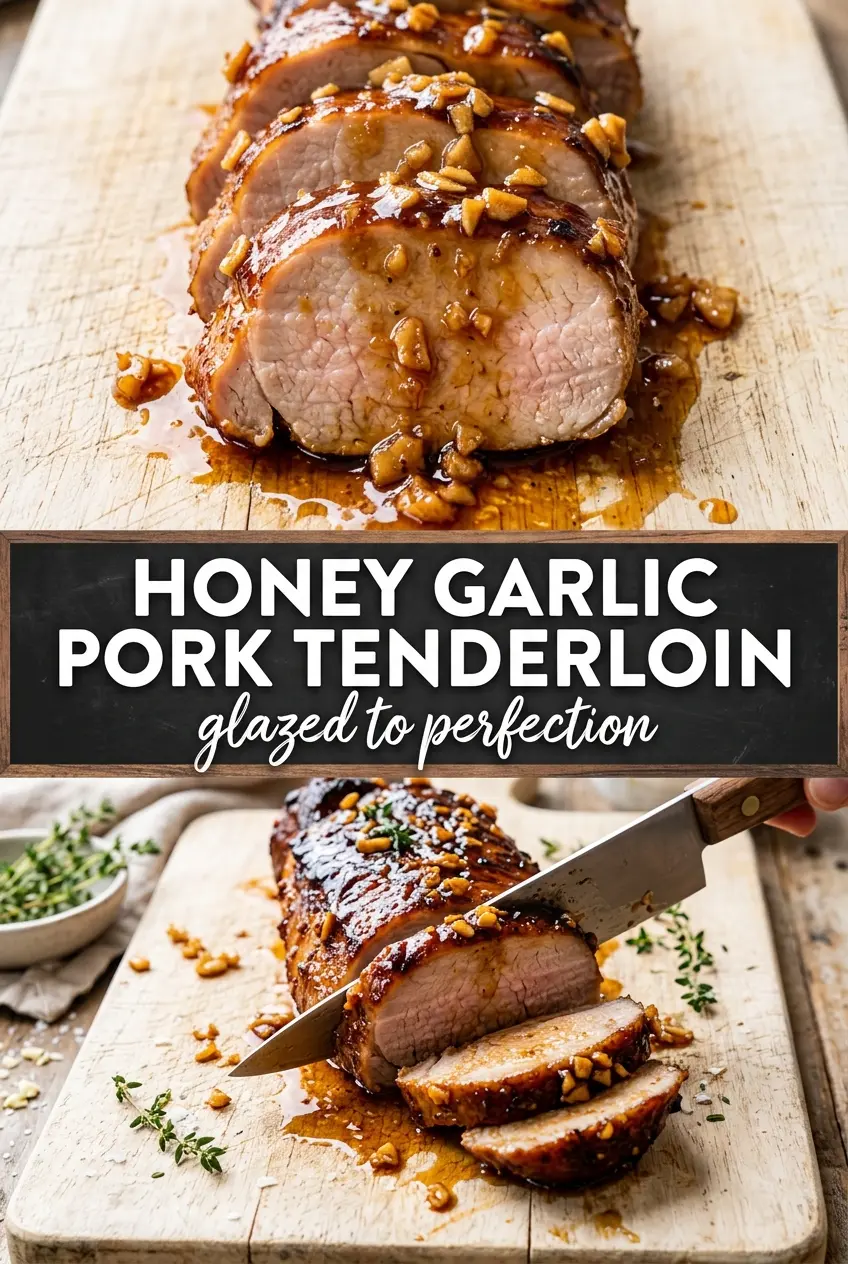
Honey Garlic Pork Tenderloin
Ingredients
Equipment
Method
- Preheat the oven to 400°F so it’s ready for roasting as soon as the pork is seared.
- Season the tenderloins with salt and pepper to taste, covering all sides and ends.
- Heat the olive oil in an oven-safe skillet over medium-high heat and sear the tenderloins for 2 minutes per side until golden all over.
- Mix the honey, garlic, soy sauce, Dijon mustard, apple cider vinegar, and red pepper flakes, then brush half of the glaze over the seared pork.
- Transfer the skillet to the oven and roast for 18–22 minutes, brushing with the remaining glaze halfway through, until the internal temperature reaches 145°F.
- Rest the pork for 5 minutes before slicing so the juices settle and the glaze stays glossy.
- Slice and garnish with sesame seeds and green onions, then serve while the glaze is still caramelized and shiny.