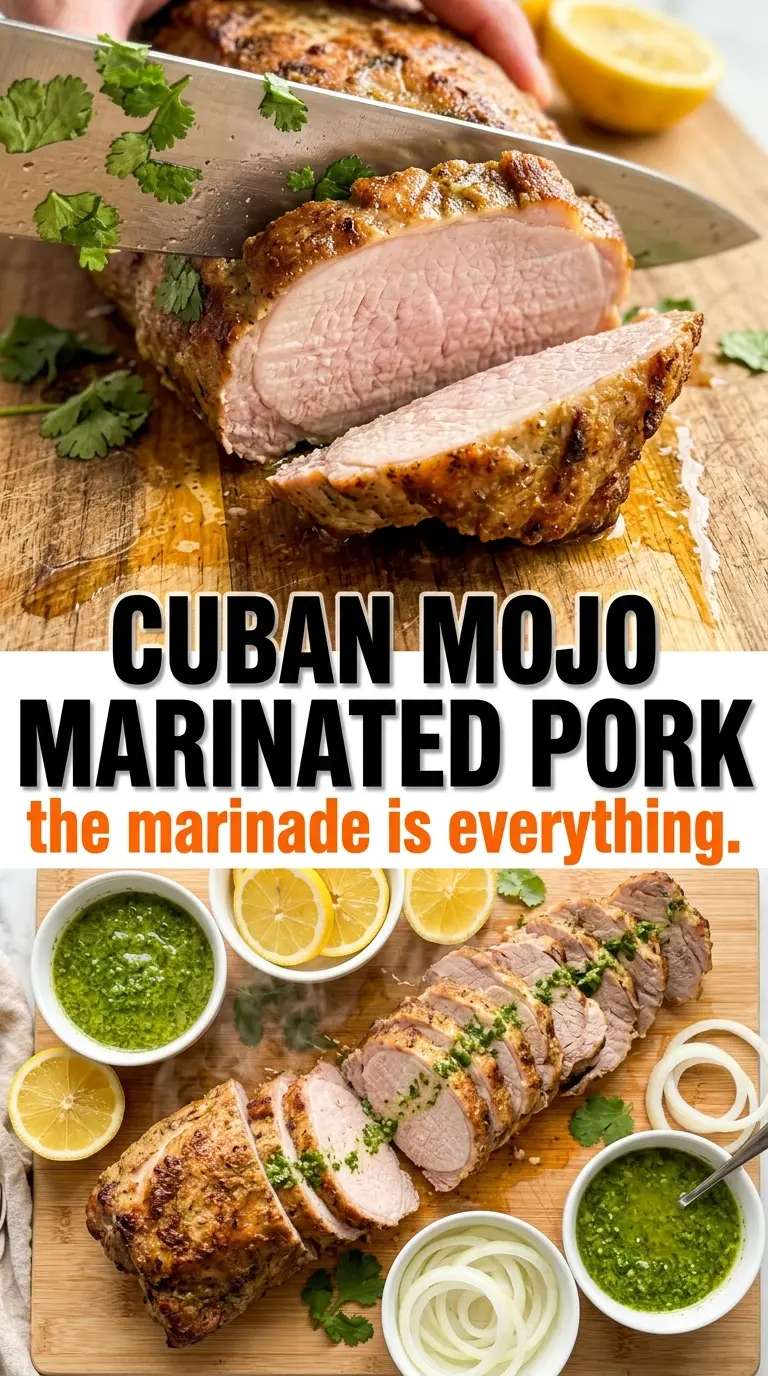
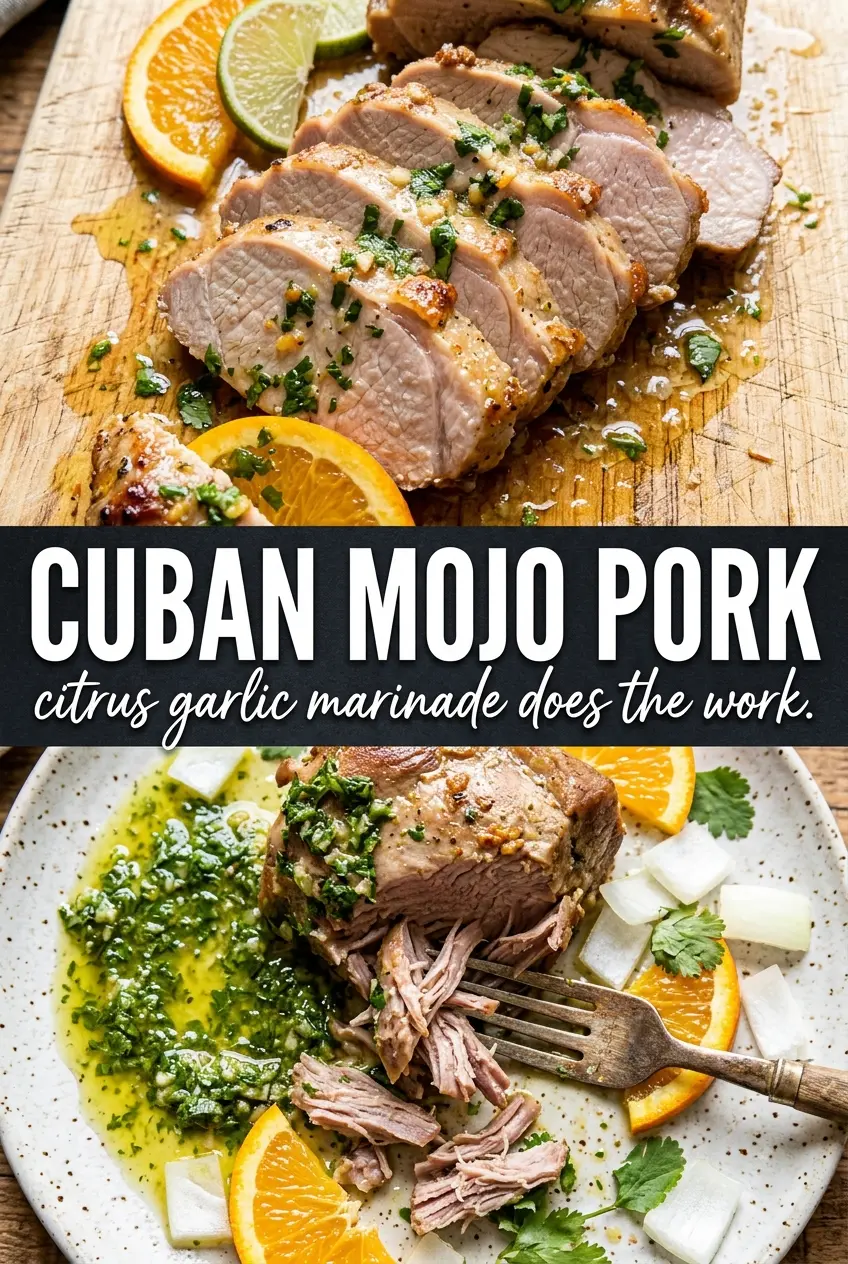
Deeply caramelized Cuban mojo marinated pork is the kind of roast that fills the kitchen with garlic, citrus, and cumin long before it comes out of the oven. The outside turns sticky and bronzed while the inside stays juicy enough to pull apart with a fork, and that contrast is exactly what makes this roast worth the wait.
The mojo does the heavy lifting here, but the real payoff comes from giving the pork enough time to soak and then roast low and slow until the collagen has had time to loosen. Fresh orange and lime juice bring brightness, while garlic, oregano, and cumin give the meat that classic Cuban backbone. The final blast of uncovered heat is what builds the crust, so don’t rush straight to shredding before that last caramelizing stage.
Below, I’ve included the detail that matters most for getting a roast like this right: how to keep the marinade from turning flat, how to know when the pork is ready to shred, and the small finishing step that keeps every bite tasting clean and vivid instead of heavy.
The crust got beautifully browned in the last part of roasting, and the pork shredded into juicy strands without drying out. The lime at the end made the whole thing pop.
Cuban mojo marinated pork stays tender and shreds beautifully when you save the uncovered roasting time for the end.
The Finish That Gives Mojo Pork Its Caramelized Edge
The mistake that ruins a lot of mojo pork is leaving it covered for the entire roast. The foil traps steam, which is useful at first because it keeps the shoulder moist while the connective tissue loosens, but it also prevents the surface from browning. That last 30 to 45 minutes uncovered is where the magic happens: the juices reduce, the edges darken, and the roast takes on that glossy, sticky crust people remember.
Internal temperature matters more than the clock here. Pork shoulder isn’t done when it hits 145°F; it gets tender and shreddable around 190°F, when the fat and collagen have broken down enough to give you that pull-apart texture. If it feels tough, it needs more time. If the outside is getting too dark before the center is tender, cover it again loosely for a bit and finish with another uncovered stretch at the end.
What the Mojo Marinade Is Really Doing
- Fresh orange juice — This brings sweetness and the soft acidity that helps the pork taste rounded instead of sharp. Bottled juice works in a pinch, but fresh juice gives the marinade a cleaner finish and better aroma.
- Fresh lime juice — Lime keeps the citrus from tasting flat. It also brightens the final roast, especially after the long oven time, when some of the marinade’s punch naturally softens.
- Garlic — Don’t be shy with it. Minced garlic in the marinade perfumes the meat all the way through, and blending it helps spread it evenly instead of leaving little hot spots of raw garlic.
- Cumin, oregano, and smoked paprika — These are the backbone of the mojo. Cumin brings warmth, oregano gives the familiar Cuban herbal note, and smoked paprika adds color and a faint roasted depth that plays well with the browned crust.
- Olive oil — It carries the seasoning and helps the surface roast instead of drying out. You don’t need a fancy bottle here, but use a decent-tasting oil because it’s part of the marinade, not just a cooking fat.
- Pork shoulder — This is the cut that works. It has enough fat and connective tissue to handle a long roast without drying out, and that’s what gives you juicy shredded pork instead of a lean roast that slices cleanly but eats dry.
The Roasting Method That Keeps the Pork Juicy
Blending the Mojo Until It’s Fully Emulsified
Blend the garlic, citrus juices, olive oil, cumin, oregano, paprika, salt, pepper, and cilantro until the marinade looks glossy and speckled rather than separated. You want the garlic broken down enough to coat the meat evenly. If it looks chunky, the flavor will cling in spots instead of sinking into the scored surface.
Scoring and Marinating the Shoulder
Cut shallow slashes all over the pork shoulder before it goes into the bag. Those cuts give the marinade more edges to grab onto and help the seasoning reach below the surface. Four hours is the minimum for real flavor; overnight gives a deeper result, but don’t push it much beyond that or the citrus can start to make the outer layer taste a little too sharp.
Covered Roasting Before the Browning Stage
Set the pork in a roasting pan with the marinade and cover it tightly with foil before it goes into the oven. That first long stretch at 325°F is for tenderness, not color, so don’t uncover it too early. If the foil isn’t sealed well, steam escapes and the roast dries at the edges before the center has a chance to loosen.
Finishing Uncovered for the Crust
When the pork is fork-tender, pull off the foil and return it to the oven until the outside is golden and the juices around the pan look a little syrupy. This is where you get the deep caramelization that makes the roast taste finished instead of merely cooked. If the pan looks dry, spoon a little of the accumulated liquid over the top before the final roast, but don’t drown the surface or it won’t brown properly.
How to Adapt This for Different Needs Without Losing the Mojo
Use pork butt for the richest shreddable texture
Pork butt and pork shoulder are close enough that either one works, but butt usually has a little more marbling, which means a silkier shred and slightly more forgiving roasting time. If you use a leaner shoulder roast, watch the temperature more closely and don’t stop as soon as it looks browned.
Make it dairy-free and naturally gluten-free
This recipe already fits both of those needs as written, which is one reason it’s such an easy main dish for a mixed table. Just serve it with rice, beans, or roasted vegetables instead of anything bread-based if you need to keep the whole plate gluten-free.
Swap cilantro if you’re one of those people who tastes soap
Leave the cilantro out of the marinade and use extra lime zest or a little more oregano instead. You’ll lose the fresh herbal lift, but the pork still tastes distinctly mojo because the citrus, garlic, and cumin carry the profile.
Turn leftovers into faster meals
Shredded mojo pork holds up well in bowls, tacos, and sandwiches because the rendered fat keeps it moist even after reheating. Add a squeeze of lime right before serving leftovers, since the citrus brightens the meat again after a day in the fridge.
Storage and Reheating
- Refrigerator: Store in an airtight container for up to 4 days. The flavor gets even deeper, though the pork will firm up as it chills.
- Freezer: Freeze shredded pork for up to 3 months in its cooking juices if you can. That little bit of liquid protects it from drying out.
- Reheating: Warm it covered in a skillet or baking dish with a splash of the cooking juices or a spoonful of water. The common mistake is blasting it uncovered until the leaner bits turn stringy and dry.
Answers to the Questions Worth Asking
Cuban Mojo Marinated Pork
Ingredients
Equipment
Method
- Blend minced garlic, orange juice, lime juice, olive oil, cumin, oregano, smoked paprika, salt, black pepper, and chopped cilantro until smooth, so the marinade looks evenly speckled.
- Score the pork shoulder all over with a sharp knife, then place it in a zip-lock bag and pour the marinade over.
- Refrigerate 4–8 hours or overnight so the pork absorbs the citrus and garlic flavor.
- Preheat the oven to 325°F to get ready for covered roasting.
- Place the pork in a roasting pan, pour any remaining marinade over, and cover tightly with foil.
- Roast for 2.5 hours at 325°F, keeping the foil on so the interior stays juicy and tender.
- Uncover and roast 30–45 more minutes at 325°F until the outside is golden and caramelized, and the internal temperature reaches 190°F.
- Rest 15 minutes before shredding or slicing so the juices settle.
- Shred or slice the pork and serve with lime wedges and cilantro, giving the meat a bright citrus finish.