Golden, herb-crusted pork roast with a juicy center is the kind of main dish that earns a permanent place in the dinner rotation. The outside picks up a deep, savory color in the pan, then the oven finishes the roast gently enough to keep every slice moist and tender. When it’s rested properly, the juices stay where they belong instead of running all over the cutting board.
The trick here is a simple herb paste and a quick sear before the roast goes into the oven. That first blast of heat builds flavor on the surface, while the chicken broth in the pan keeps the drippings from burning and gives you a built-in sauce at the end. A pork loin roast can dry out fast if it’s overcooked, so the real win is pulling it at 145°F and giving it time to rest before slicing.
Below you’ll find the exact timing that keeps the roast juicy, plus the small details that make the pan juices worth serving with every slice.
The crust turned out beautifully browned and the pork stayed juicy all the way through. I used the pan juices over the sliced meat and it tasted like something from a good Sunday dinner.
Like this juicy pork roast? Save it to Pinterest for the nights when you want a browned herb crust and clean, tender slices from the oven.
The Reason This Pork Roast Stays Juicy Instead of Drying Out
Boneless pork loin has a narrow window between perfectly cooked and overdone, which is why this roast uses two layers of protection: a seasoned paste on the outside and a gentle finish in the oven. The paste helps the surface brown without needing a heavy marinade, and the broth in the pan adds a little steam and keeps the drippings from scorching. That matters because burnt pan juices turn bitter fast, and bitter juices can drag down the whole dish.
The other thing that saves this roast is the rest time. If you slice it the moment it comes out, the juices will flood the board and the meat will seem drier than it really is. Let it sit for 15 minutes and the slices stay neat, moist, and easy to serve.
What Each Ingredient Is Actually Doing in This Roast
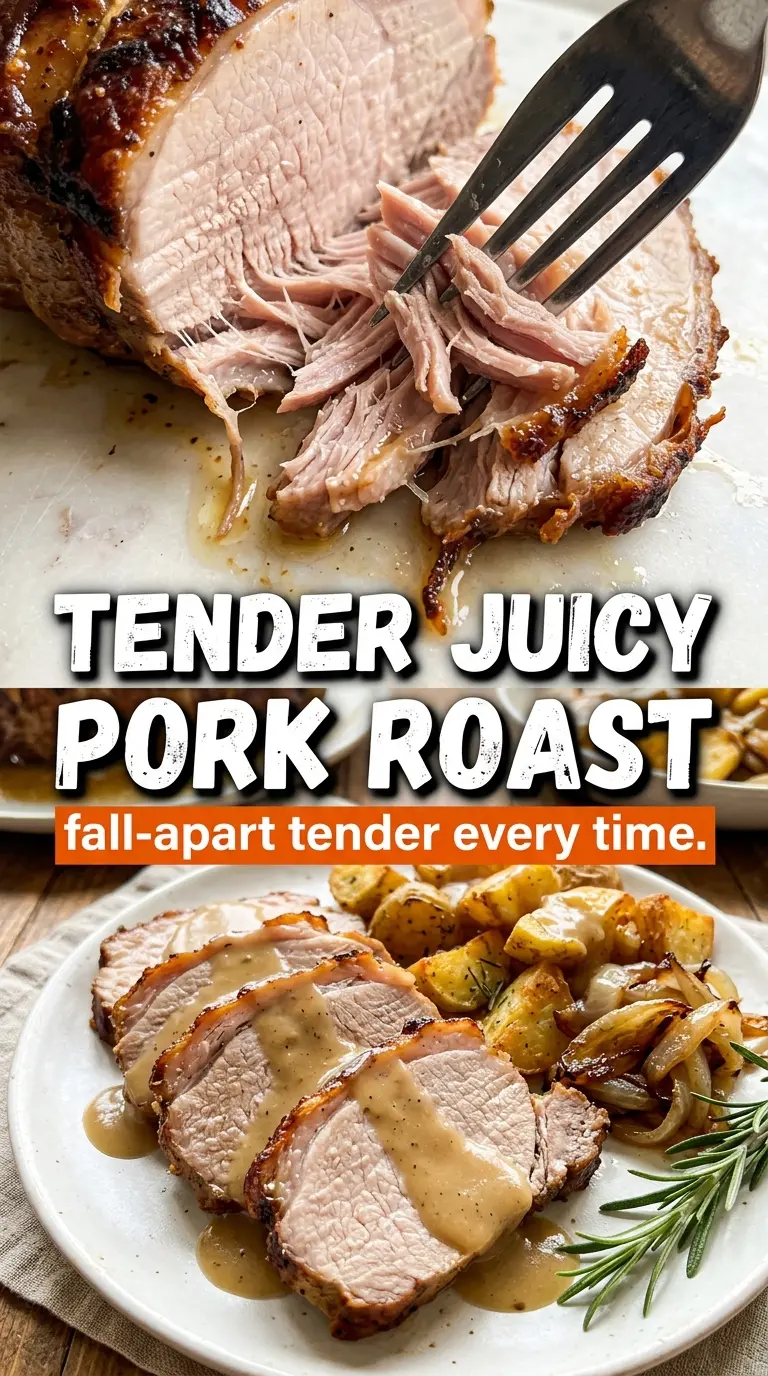
- Boneless pork loin roast — This is the cut that gives you clean slices and a lean, tender center. It doesn’t have a lot of fat to protect it, so timing matters more than anything else. If you swap in pork tenderloin, the roast will cook faster and need closer temperature checking.
- Olive oil — Oil carries the herbs and helps the paste cling to the meat. It also encourages the surface to brown in the skillet instead of sticking.
- Garlic, rosemary, thyme, smoked paprika, and onion powder — This mix builds a savory crust without overpowering the pork. Fresh rosemary works too, but chop it finely so it doesn’t feel woody in the finished slices. Smoked paprika gives the crust color and a subtle depth that plain paprika won’t.
- Chicken broth — The broth catches the drippings and gives you something to spoon over the roast at the end. Use a decent-tasting broth here, because the flavor concentrates as the pan juices reduce in the oven.
- Roasted vegetables — They turn this from a roast into dinner. Toss them with a little oil and roast them separately or around the pork only if they can handle the same cook time without getting mushy.
How to Build the Crust Before the Oven Takes Over
Mix the herb paste until it looks like wet sand
Stir the olive oil, garlic, rosemary, thyme, paprika, onion powder, salt, and pepper into a thick paste, not a loose vinaigrette. You want it dense enough to cling to the roast in a visible coating. If it seems too dry, add a tiny bit more oil; if it runs off the meat, it won’t brown evenly.
Dry the pork before it ever sees the pan
Pat the roast dry with paper towels and rub the paste over every surface. Moisture on the outside turns to steam, and steam is the enemy of a good crust. Press the seasoning on with your hands so it stays put during the sear.
Sear until the outside turns deep gold
Heat the skillet over medium-high and sear the roast on all sides for 2 to 3 minutes per side. You’re looking for a rich brown crust, not blackened spots. If the pan is too cool, the pork will sit there and sweat; if it’s too hot, the garlic can burn before the surface has a chance to color.
Roast to temperature, not to the clock
Pour in the broth and move the pan to the oven. Start checking early, because oven times can vary by a lot depending on the shape of the roast and how hot your skillet runs. Pull it when the center reaches 145°F; any higher and the lean meat starts losing the juiciness you worked to keep.
Let the rest do its job
Rest the roast for 15 minutes before slicing. The temperature will even out, the juices will settle, and the slices will hold together instead of collapsing into shreds. Spoon the pan juices over the top just before serving so every piece gets some of that garlicky herb flavor.
How to Adapt This Roast for a Bigger Table or Different Diets
Use pork tenderloin for a faster dinner
Pork tenderloin works with the same seasoning, but it cooks much faster and should be watched closely. Expect a leaner, slightly more delicate slice with less carryover cooking room, so start checking temperature well before the full time is up.
Make it dairy-free without changing the texture
This roast is naturally dairy-free as written, which makes it an easy main for mixed-diet dinners. Keep the broth and herb paste the same, and serve it with vegetables or potatoes that match your table.
Make it gluten-free with one quick label check
The recipe is gluten-free as long as your chicken broth is certified gluten-free. That’s the only ingredient that can quietly introduce a problem, and it’s easy to swap without changing the flavor of the roast.
Scale it up for a crowd without crowding the pan
For a larger gathering, roast two smaller loins instead of one oversized piece if they fit better in the pan. That gives you more even cooking and more surface area for browning, which is better than cramming a huge roast into a tight skillet.
Storage and Reheating
- Refrigerator: Store sliced pork in an airtight container for up to 4 days. Keep a little of the pan juice with it so the meat doesn’t dry out in the fridge.
- Freezer: Freeze cooled slices tightly wrapped and sealed for up to 2 months. The texture stays best when you freeze the pork with a spoonful of juices.
- Reheating: Warm gently in a covered skillet or low oven with a splash of broth until just heated through. High heat is what makes leftover pork tough, so stop as soon as the slices are warm.
Answers to the Questions Worth Asking
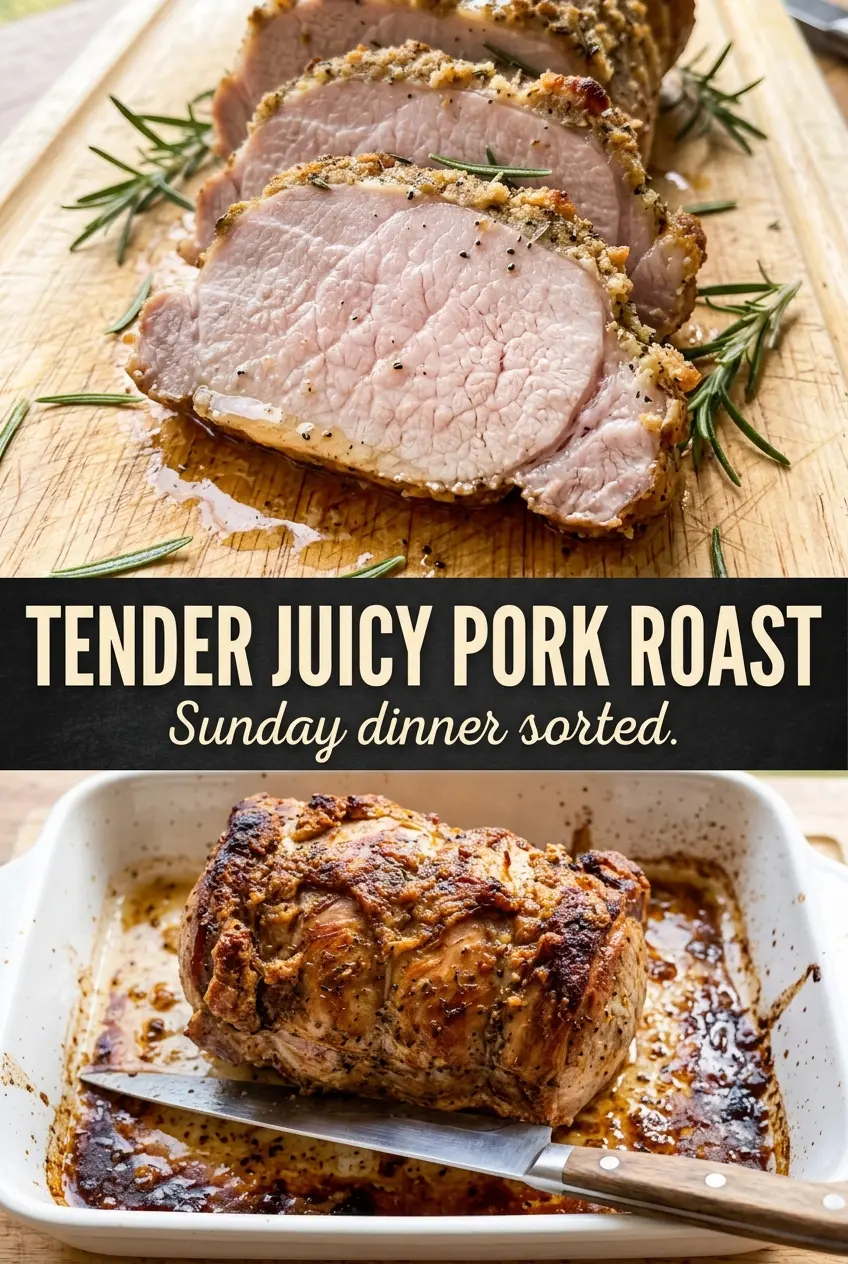
Tender Juicy Pork Roast
Ingredients
Equipment
Method
- Preheat oven to 375°F.
- Mix olive oil, garlic, dried rosemary, dried thyme, smoked paprika, onion powder, salt, and black pepper into a paste.
- Pat pork loin roast dry and rub the herb paste all over every surface.
- Heat an oven-safe skillet or roasting pan over medium-high heat and sear the roast on all sides until golden, about 2–3 minutes per side.
- Pour chicken broth into the pan.
- Transfer to the oven and roast for 60–75 minutes until internal temperature reaches 145°F.
- Rest the pork roast for 15 minutes before slicing.
- Spoon the pan juices over the top before serving.