Golden, smoky fried rice is at its best when the grains stay separate, the beef gets a little crisp at the edges, and the onion melts into the pan just enough to turn everything savory and sweet at once. This version does all of that in one skillet, with scrambled egg folded through and soy sauce catching on the hot rice instead of disappearing into it.
The trick is heat and timing. Day-old rice gives you dry grains that can fry instead of steam, and the beef goes in first so it leaves behind browned bits that season the whole pan. Onion and garlic build the base, but the real payoff comes when the rice sits untouched for a minute or two so it can pick up those smoky patches before you toss in the sauce.
Below, I’m walking through the part that matters most: how to get fried rice that tastes bold and a little charred without turning mushy. I’ve also included a few practical swaps and the one reheating method that keeps the texture closest to fresh.
The rice got those crispy little bits on the bottom and the onion made the whole pan taste deeper. I usually end up with fried rice that’s a little wet, but this stayed fluffy and the eggs cooked up just right.
Save this savory onion beef fried rice for the nights when you want crispy, smoky rice and a fast one-pan dinner.
The reason the rice needs to stay cold and a little dry
Fried rice falls apart when the grains are too warm or too moist. Fresh rice clumps, steams, and turns soft before it ever gets the chance to fry. Day-old rice gives you individual grains that can hit the hot pan, dry out a little more, and pick up color instead of turning into a soft mass.
The other mistake is crowding the pan too early with sauce. Soy sauce and oyster sauce belong at the end, after the rice has had time to toast in the fat. That order keeps the rice from going muddy and gives you those darker, savory edges that taste like takeout in the best way.
- Ground beef — A little fat from the beef helps season the whole dish. If yours is especially lean, the extra oil in the recipe matters because the rice needs enough fat to fry, not dry out.
- Day-old white rice — Long-grain white rice gives the best separate texture. If you only have fresh rice, spread it on a tray and chill it uncovered for at least 30 minutes so some moisture can escape.
- Onion — The onion softens and sweetens as it cooks, which balances the salt and smoke from the sauce. Dice it small so it disappears into the rice instead of landing in big sharp pieces.
- Oyster sauce — This adds depth and gloss that soy sauce alone can’t quite match. If you need a substitute, use a little extra soy sauce plus a pinch of sugar, but the dish will taste less rounded.
What Each Ingredient Is Actually Doing in This Beef Dish
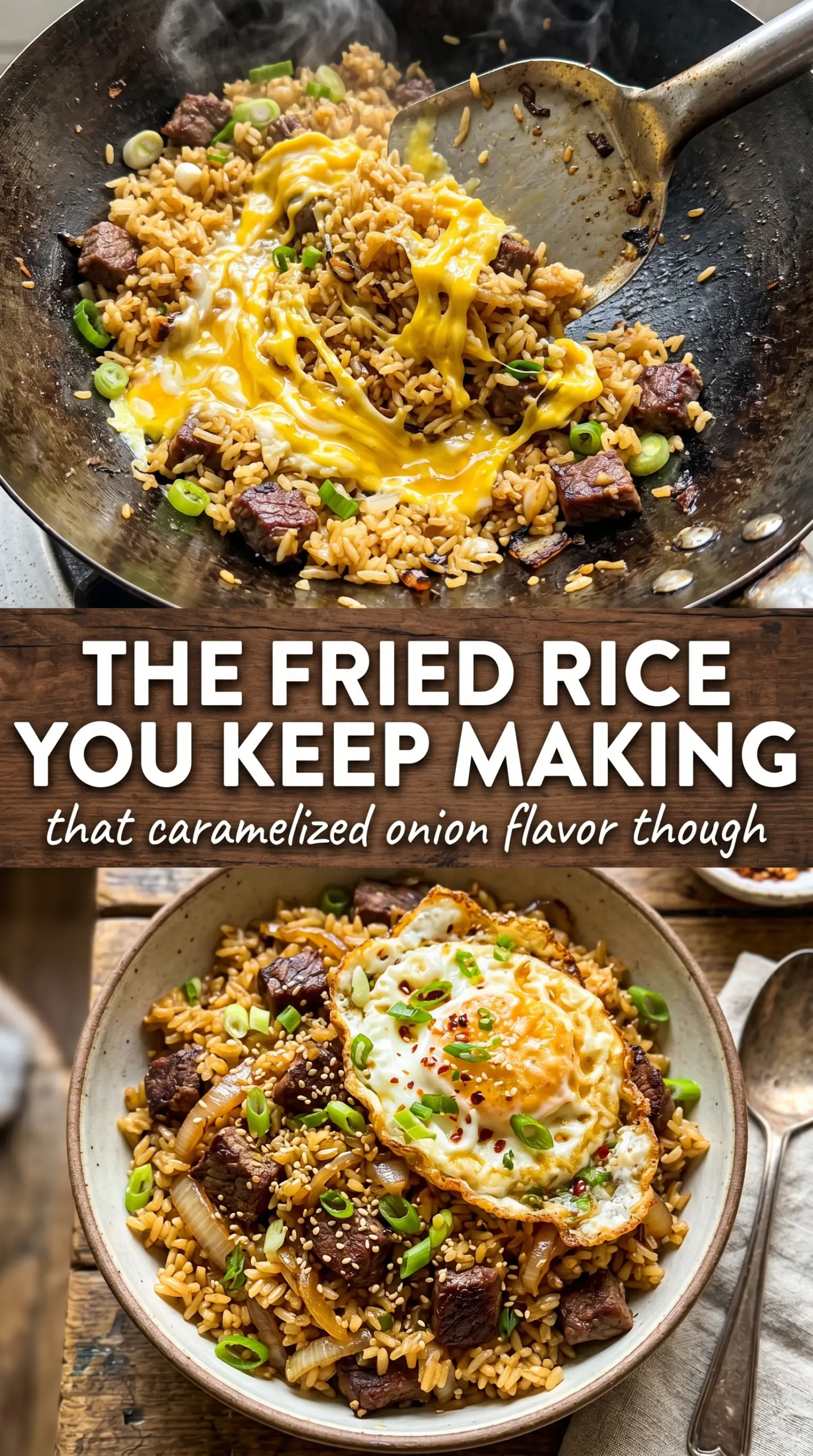
- Ground beef or beef pieces (proper cut) — Choose 80/20 for best flavor and texture. Pat dry so it browns.
- Oil (the browning medium) — High-heat oil essential for proper searing. Creates deep pan flavor.
- Seasonings (salt, pepper, spices) — Build flavor boldly. Beef carries the entire profile.
- Aromatics (garlic, onion, herbs) — Cook with oil to bloom flavors. Become the foundation.
- Sauce or braising liquid (broth, cream, or tomato) — This brings flavors together and adds richness. Balance with acid.
- Vegetables (rice, pasta, or fresh) — These add substance and prevent monotone texture.
- Acid (vinegar, wine, or tomato) — This brightens and prevents heavy beef flavor.
- Final garnish (herbs, cheese, or toppings) — These add color and fresh flavor. Add right before serving.
Building the wok heat in the right order
Brown the beef first
Start with a hot wok or skillet and let the ground beef cook until it’s browned and starting to crisp in spots. Don’t stir constantly; let it sit long enough to pick up color, because that browning is what gives the finished rice its deeper savory taste. If a lot of fat renders out, drain some of it, but leave enough behind to coat the rice later.
Soften the onion, then wake up the garlic
Add the diced onion and cook it until it turns translucent and lightly golden around the edges. Then add the garlic and keep it moving for about 30 seconds. Garlic burns fast in a dry, hot pan, so it should smell fragrant, not bitter, before you move on.
Scramble the eggs in the empty space
Push the beef and onion to one side and pour the beaten eggs into the open area. Let them set for a moment, then stir just until they’re softly scrambled. If you cook them all the way through before mixing, they turn dry and the rice loses that tender eggy bite that makes fried rice feel complete.
Fry the rice before you season it
Add the cold rice and press it into the hot surface of the pan. Leave it alone for a minute or two so it can develop a little char on the bottom. If you toss too soon, the rice just warms through; if you let it sit, you get those smoky, toasted grains that carry the whole dish.
Finish with sauce and a quick toss
Drizzle in the soy sauce, oyster sauce, sesame oil, and white pepper, then toss everything together over high heat for another couple of minutes. The rice should look evenly seasoned, not wet. Once the sauce hits the pan, move fast enough to coat every grain without letting the bottom scorch.
How to adapt this fried rice when the pantry is missing a few things
Ground turkey or chicken instead of beef
Use the same method, but add an extra teaspoon of oil because lean poultry doesn’t leave behind as much fat. You’ll lose a little of the deep beefy flavor, so keep the soy and oyster sauce measured as written to keep the dish balanced.
Gluten-free version
Use a certified gluten-free soy sauce or tamari and swap in a gluten-free oyster-style sauce if needed. The texture stays the same, and this is the easiest way to keep the recipe intact without losing the salty, caramelized finish.
Make it spicier
Add a pinch of chili flakes with the garlic or finish with a drizzle of chili oil. Heat works well here because the onion and beef keep the rice grounded, so the spice reads lively instead of harsh.
Use brown rice
Brown rice works if it’s fully cooked and chilled, but it won’t taste as plush or cling to the sauce in the same way. The finished dish comes out a little nuttier and firmer, which is good if you want a sturdier texture.
Storage and Reheating
- Refrigerator: Store in an airtight container for up to 4 days. The rice firms up a bit, but the flavor holds well.
- Freezer: It freezes fine for up to 2 months. Pack it flat in portions so it thaws evenly and doesn’t get gummy in the center.
- Reheating: Reheat in a skillet over medium-high heat with a splash of water or a few drops of oil, stirring just until hot. Microwaving straight from the fridge can make the rice soft, so use a pan if you want the texture to stay closest to fresh.
Answers to the questions worth asking
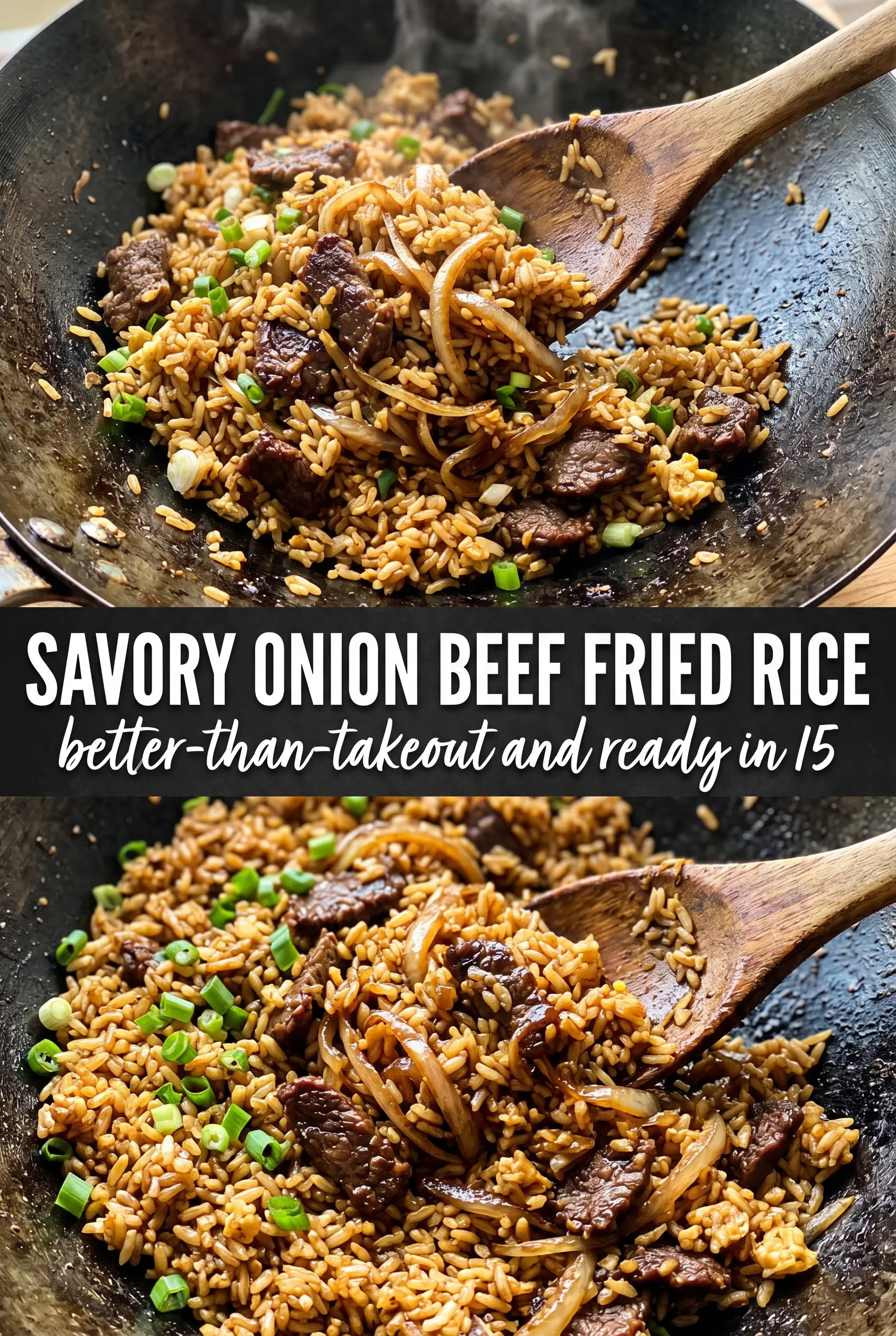
Savory Onion Beef Fried Rice
Ingredients
Equipment
Method
- Heat 2 tablespoons vegetable oil in a wok or large skillet over high heat, then add the ground beef and cook, breaking apart, until browned and slightly crispy (about 8–10 minutes). Drain off excess fat.
- Add the diced onion to the pan and cook for 3 minutes, stirring occasionally. Add the minced garlic and cook for 30 seconds, just until fragrant.
- Push the beef mixture to one side of the pan, then pour in the beaten eggs in the empty space and scramble until just set (about 30–60 seconds). Mix the scrambled eggs into the beef.
- Add the cold day-old cooked white rice and press it into an even layer in the pan. Let it sit undisturbed for 1–2 minutes over high heat to get slightly charred, then toss to combine.
- Drizzle soy sauce, oyster sauce, sesame oil, and white pepper over the rice, then toss everything together over high heat for 2 minutes until evenly coated and hot.
- Garnish with sliced green onions and sesame seeds, then serve immediately while the rice grains are smoky and hot.