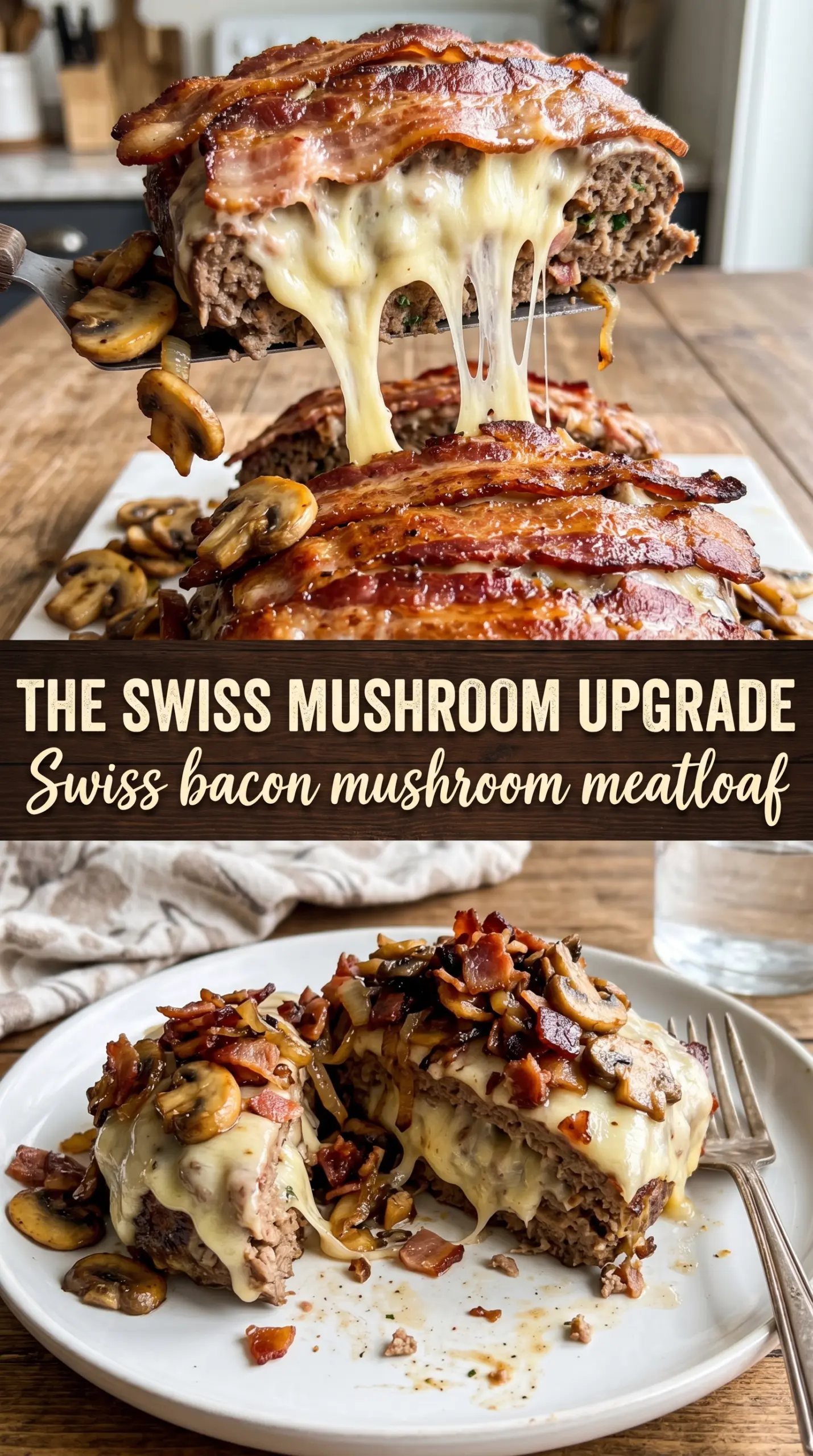
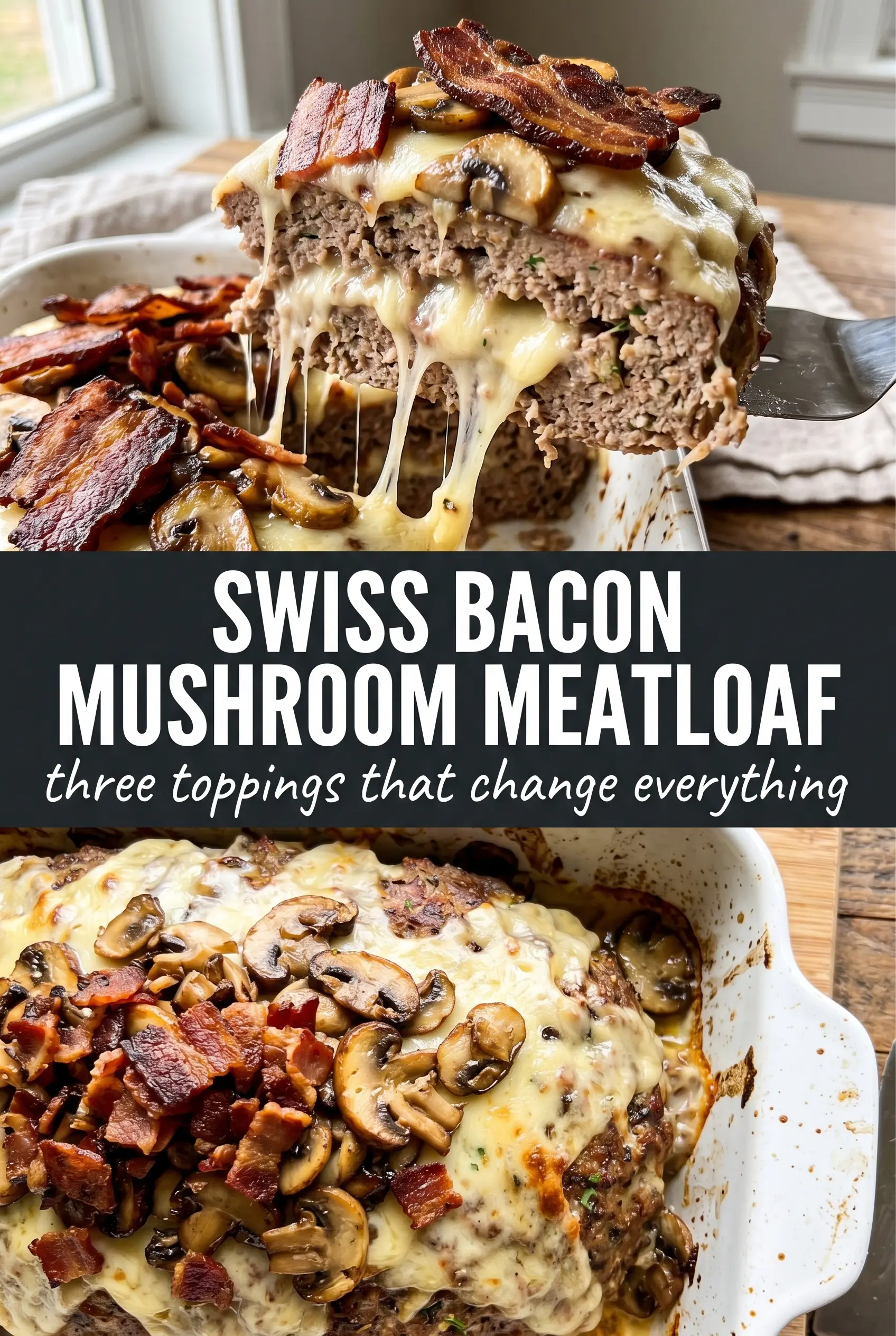
Swiss bacon mushroom meatloaf turns a classic loaf into a sliceable center-cut dinner with a rich, savory filling that stays in place instead of leaking out onto the pan. The outside bakes up deeply browned, the middle stays juicy, and every slice gives you beef, melted Swiss, bacon, and mushrooms in the same bite.
The trick is treating the meat like a roll instead of packing it like a brick. Pressing it into a rectangle on plastic wrap makes it easier to keep the filling centered and the loaf tight, which matters when you want those clean slices. The mushrooms also need to be cooked until their moisture is gone, or they’ll steam the meatloaf from the inside and blur the filling.
Below, I’ve included the exact point where the loaf needs to be rolled firmly but not squeezed, plus a few swaps that still keep the structure intact. If you’ve ever cut into a stuffed meatloaf and watched half the filling collapse, this version fixes that problem.
The loaf held together beautifully and the mushrooms didn’t make the middle soggy at all. My husband kept talking about how the Swiss melted into the bacon layer, and the leftovers sliced clean the next day.
Save this Swiss bacon mushroom meatloaf for a dinner that slices clean and brings melted cheese, bacon, and mushrooms into every bite.
The Part Most Stuffed Meatloaves Get Wrong
The failure point in a stuffed meatloaf is almost always the fill line. Too much filling or a loose roll turns the loaf into a gap-toothed mess once it bakes, especially with cheese in the center. This version works because the meat is spread into a thin, even rectangle, the filling stays inside a clear border, and the seam lands underneath where the loaf pan can support it.
Another thing that matters here is moisture control. Mushrooms need to be sautéed until they’ve given up their liquid and started to brown; if they go in wet, the center turns soft and the loaf can slump. The bacon adds salt and fat, but it should be cooked first so it doesn’t dump grease into the roll while the loaf is setting.
- Ground beef — Use a blend with enough fat to stay tender, but not so much that the loaf pools grease. An 80/20 blend is a good middle ground for this style.
- Breadcrumbs, eggs, and milk — These are the binder and they keep the loaf from crumbling when you slice it. If you need a gluten-free version, use gluten-free breadcrumbs with the same measurements.
- Grated onion — Grating it matters because it disappears into the meat and gives moisture and flavor without leaving raw chunks behind. Onion powder won’t give the same juicy texture.
- Swiss cheese — This is the melt factor. It goes silky and stretches through the center without overpowering the mushrooms and bacon, which is why it works better here than a sharp cheese would.
- Cremini mushrooms — They bring that earthy, savory depth that makes the filling taste built-in, not tacked on. White mushrooms work too, but they’re a little milder and softer.
- Bacon — Cook it first so it crumbles and holds its shape. If you add it raw, it won’t crisp before the loaf is done.
- Ketchup and brown sugar glaze — This gives the top a glossy, tangy finish that balances the rich filling. If you want less sweetness, cut the brown sugar back slightly, but don’t skip the glaze entirely.
What Each Ingredient Is Actually Doing in This Meatloaf
- Ground meat (the protein foundation) — Use 80/20 so it stays moist. Handle gently to keep texture tender instead of dense.
- Breadcrumbs or fillers (the binder) — These hold the meat together without making it dense. Soak in milk first so they add moisture.
- Egg (the structural binding agent) — This holds everything together during cooking. One egg per pound of meat is the right ratio.
- Onion and aromatics (the base flavor) — Mince finely so they distribute evenly. Raw onion softens as it cooks and becomes part of the texture.
- Seasonings (salt, pepper, Worcestershire, spices) — Build flavor boldly. The meat mixture carries the entire flavor profile.
- Milk or liquid (the moisture keeper) — This keeps the meatloaf tender instead of dense and dry. Don’t skip this step.
- Glaze or sauce (ketchup-based or other) — This adds sweetness, moisture, and flavor to the exterior. Apply strategically so it caramelizes.
- Resting time (the final step) — Let the meatloaf rest 10 minutes so it sets and slices cleanly. Cutting too soon makes it fall apart.
Rolling the Loaf So the Filling Stays Put
Mix the meat just enough
Combine the beef, breadcrumbs, eggs, milk, grated onion, Worcestershire, salt, and pepper until the mixture looks even, then stop. If you keep working it, the loaf turns dense and tight instead of tender. The mixture should hold together when pressed, but it shouldn’t look paste-like.
Shape it on plastic wrap
Press the meat into a 10×14-inch rectangle on plastic wrap so you can control the thickness and the edges. An even layer matters more than perfect measurements here because the roll bakes more evenly when the center and ends are the same size. Leave the plastic wrapped under the meat until the filling is layered, then use it to help tighten the roll.
Build the center stripe
Lay the Swiss, mushrooms, and bacon down the middle, leaving a clean 1-inch border on all sides. That border is what seals the filling inside when you roll, and it keeps cheese from bubbling out at the seams. If the filling is spread too wide, the loaf will split along the top while it bakes.
Roll, seal, and glaze
Roll the loaf tightly from the long side, using the plastic wrap as a guide, then place it seam-side down in the pan. Don’t squeeze so hard that the filling gets pushed to one end; firm pressure is enough. Spread the ketchup glaze over the top before baking so it sets into a sticky, browned finish instead of sitting on top like an afterthought.
Cook to temperature, not the clock
Bake until the center reaches 160°F, which usually takes 60 to 70 minutes. The top should look set and deeply glazed, and the loaf should feel firm when gently pressed. Resting it for 10 minutes is not optional if you want the slices to hold together, because the juices need a minute to settle back into the meat.
How to Adapt This Meatloaf Without Losing the Center Filling
Gluten-Free Version
Swap the breadcrumbs for gluten-free breadcrumbs in the same amount. The loaf still binds the same way, and the texture stays soft instead of falling apart. Don’t replace them with oats here, because oats change the slice and make the filling feel looser.
Lighter Cheese Swap
Provolone or mozzarella will melt well if you’re out of Swiss, but the flavor will be softer and less nutty. I’d keep the same amount and accept a milder center rather than using a strongly aged cheese that doesn’t melt as smoothly.
No-Bacon Version
Leave out the bacon and add a pinch more salt to the mushroom layer so the filling doesn’t taste flat. You’ll lose some smokiness and crunch, but the loaf will still slice well and the Swiss will keep the middle rich enough to stand on its own.
Storage and Reheating
- Refrigerator: Store sliced or unsliced meatloaf in an airtight container for up to 4 days. The filling stays good, though the cheese will firm up once chilled.
- Freezer: It freezes well. Wrap slices tightly and freeze for up to 3 months, or freeze the whole baked loaf for a make-ahead dinner.
- Reheating: Reheat covered in a 325°F oven with a splash of water in the pan so the edges don’t dry out. The common mistake is blasting it in the microwave until the cheese separates and the beef turns rubbery.
Answers to the Questions Worth Asking
Swiss Bacon Mushroom Meatloaf
Ingredients
Equipment
Method
- Preheat the oven to 350°F. Set up a loaf pan and keep a clean workspace for rolling.
- In a mixing bowl, combine ground beef, breadcrumbs, eggs, milk, grated onion, Worcestershire, salt, and black pepper. Mix just until evenly combined, with no dry pockets.
- Cut a sheet of plastic wrap large enough to work with, then press the meat mixture onto it into a 10x14 inch rectangle. Spread evenly so the roll cooks uniformly.
- Layer Swiss cheese slices, sautéed cremini mushrooms, and crumbled bacon over the meat, leaving a 1-inch border. Make sure coverage is even so slices show a full filling.
- Roll the meat tightly using the plastic wrap, then seal the ends by pinching. Place seam-side down in a loaf pan to prevent leakage.
- Spread the glaze (ketchup and brown sugar) evenly over the top. Bake for 60–70 minutes at 350°F until the internal temperature reaches 160°F and the exterior looks browned.
- Rest the meatloaf for 10 minutes before slicing. The filling should set and slice cleanly without flooding the plate.