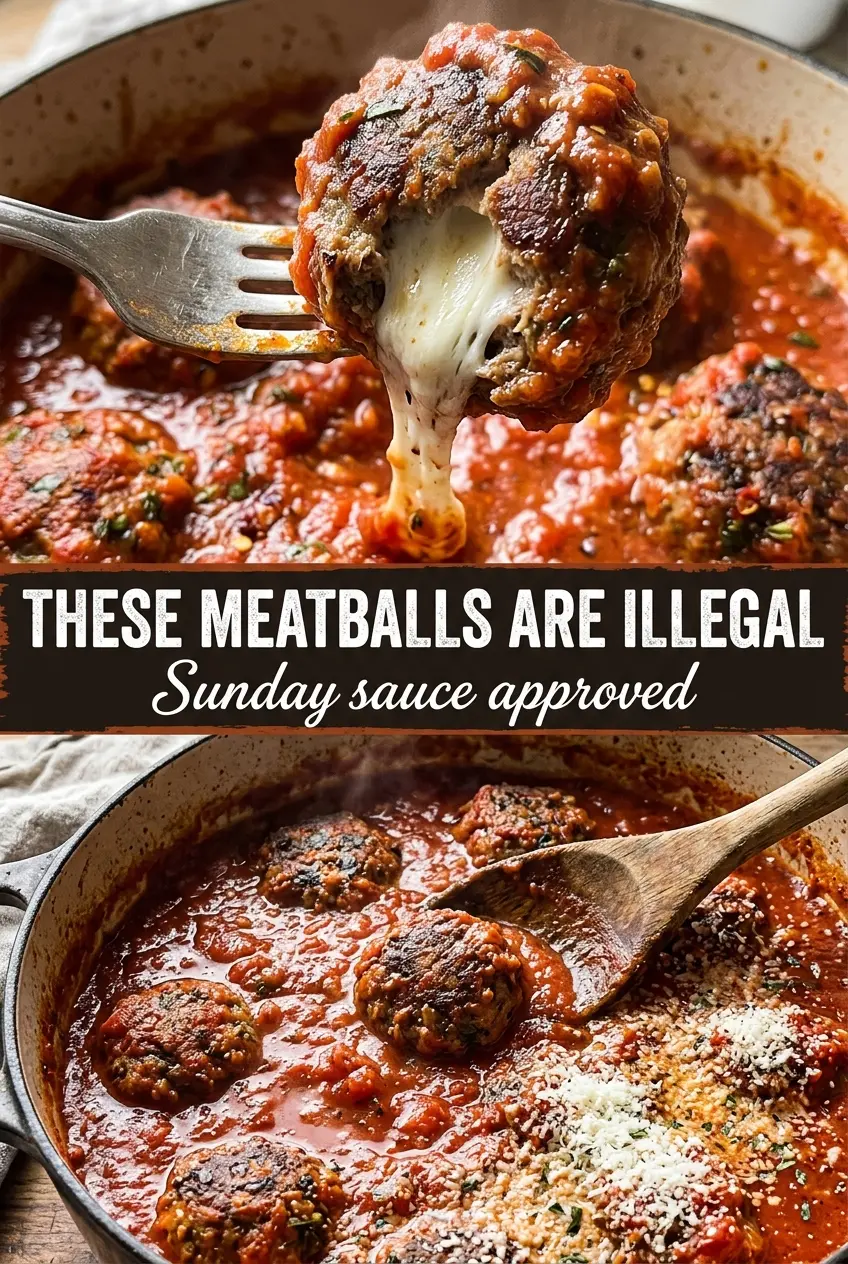
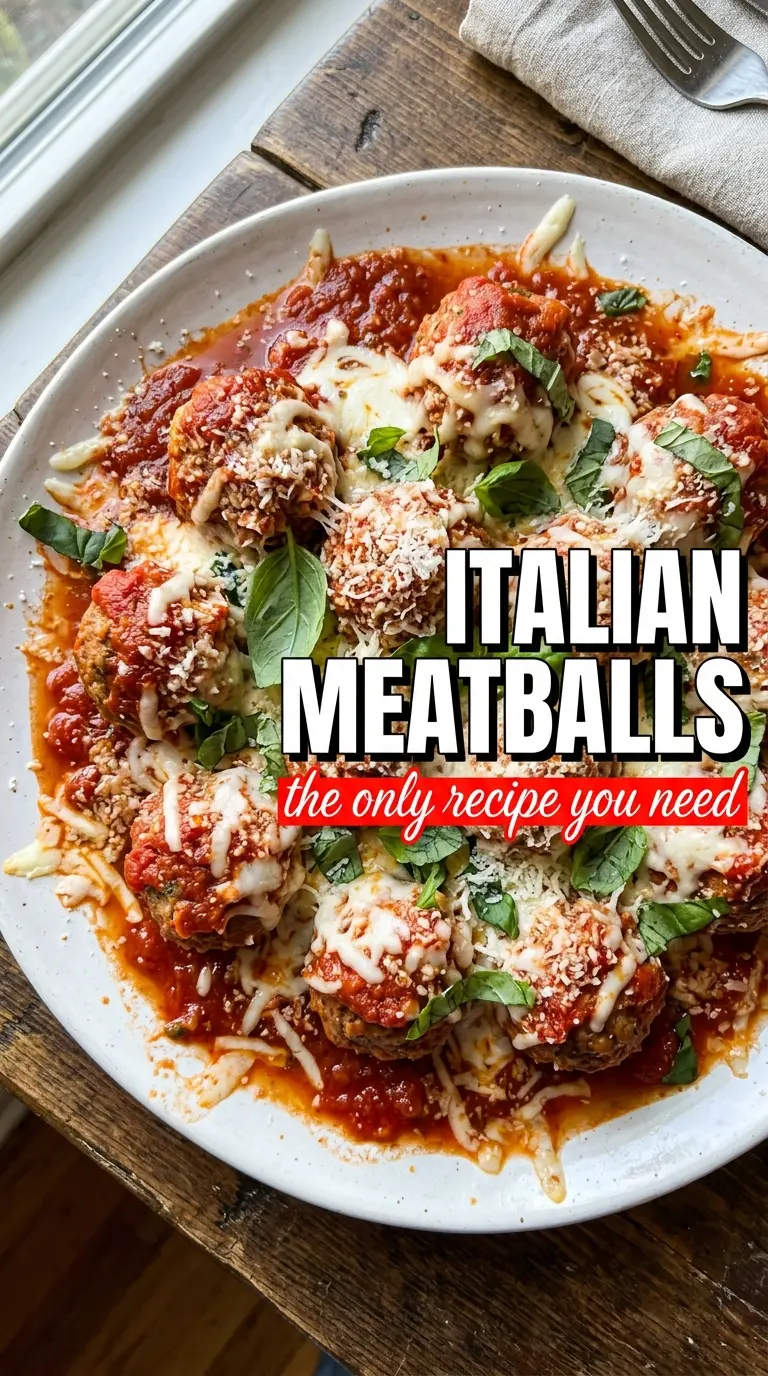
Giant Italian meatballs should taste rich and tender in the center with a browned crust that holds together in the sauce, not dense little hockey pucks that dry out before the marinara has a chance to do its job. This version gets that balance by soaking the breadcrumbs in milk first, then mixing the meat gently so the texture stays light and the finished meatballs stay juicy after simmering.
The beef and pork combination matters here. Beef brings the deep, savory base, while pork adds softness and a little natural sweetness that keeps the meatballs from tasting flat. Browning them before they go into the sauce builds flavor you can’t get from simmering alone, and it also gives the marinara more to cling to. Once they finish cooking in the sauce, the edges stay firm while the inside turns almost spoon-tender.
Below, I’ll walk through the one part that trips people up most often: how to mix and brown meatballs without losing that tender texture. I’ve also included the swaps that still work if you need to adjust the meat, breadcrumbs, or serving style.
I followed the milk-soaked breadcrumb trick and the meatballs came out tender all the way through, even after simmering in the sauce. Browning them first gave the marinara such a good depth of flavor, and they held together perfectly over spaghetti.
Tender Italian meatballs with a browned crust and rich marinara are the kind of dinner that disappears fast.
The Breadcrumbs Are There for Texture, Not Bulk
The biggest mistake with meatballs is packing in too much bread or mixing too long. The soaked breadcrumbs here aren’t filler; they hold onto moisture so the meat stays tender while the proteins set. If you skip the milk soak, the crumbs pull moisture from the meat instead of protecting it, and the centers turn tight and bouncy once they hit the sauce.
Gentle mixing matters just as much as the breadcrumb step. Once the meat starts to look uniform, stop. Overworking the mixture turns the finished meatballs dense, and you’ll notice it the second you cut one open. A soft hand gives you meatballs that hold their shape but still eat like real food, not compressed meatloaf.
- Fresh breadcrumbs — Fresh crumbs absorb milk evenly and keep the texture light. Dry, fine crumbs from a canister work in a pinch, but they make the mixture tighter and less tender.
- Whole milk — Full-fat milk gives the crumbs enough richness to keep the meat juicy. You can use 2% if that’s what you have, but don’t use water here; it doesn’t cushion the meat the same way.
- Parmesan — Grated parmesan adds salt, depth, and a little savoriness that carries through the sauce. Use the good stuff if you can, because the flavor shows up in every bite.
- Beef and pork — This blend gives you the best balance of structure and tenderness. If you use all beef, choose 85/15 so the meatballs don’t dry out.
What Each Ingredient Is Actually Doing in This Meatloaf or Meatballs
- Ground meat (the protein foundation) — Use 80/20 so it stays moist. Handle gently to keep texture tender instead of dense.
- Breadcrumbs or fillers (the binder) — These hold the meat together without making it dense. Soak in milk first so they add moisture.
- Egg (the structural binding agent) — This holds everything together during cooking. One egg per pound of meat is the right ratio.
- Onion and aromatics (the base flavor) — Mince finely so they distribute evenly. Raw onion softens as it cooks and becomes part of the texture.
- Seasonings (salt, pepper, Worcestershire, spices) — Build flavor boldly. The meat mixture carries the entire flavor profile.
- Milk or liquid (the moisture keeper) — This keeps the meatloaf tender instead of dense and dry. Don’t skip this step.
- Glaze or sauce (ketchup-based or other) — This adds sweetness, moisture, and flavor to the exterior. Apply strategically so it caramelizes.
- Resting time (the final step) — Let the meatloaf rest 10 minutes so it sets and slices cleanly. Cutting too soon makes it fall apart.
Brown First, Then Let the Sauce Finish the Job
Soaking the Breadcrumbs
Stir the breadcrumbs into the milk and let them sit until the liquid disappears and the mixture looks soft and pasty. That quick soak keeps the crumbs from staying dry in the center of the meatball, which is where gritty texture starts. If there’s excess milk left in the bowl after five minutes, the breadcrumbs weren’t fresh enough and you should let them stand a minute or two longer before mixing.
Mixing Without Compacting
Add the meat, egg, parmesan, garlic, herbs, salt, and pepper to the soaked crumbs, then mix with your hands just until everything is evenly distributed. The mixture should look cohesive but still loose enough to shape without feeling sticky or gummy. If you keep kneading after that point, the meat tightens and the meatballs lose that soft, almost silky center after cooking.
Browning for Flavor and Structure
Heat the oil until it shimmers, then brown the meatballs in batches so they have room to sear instead of steam. You’re looking for a deep golden crust on several sides, not a full cook through at this stage. If the skillet is crowded, the meatballs release moisture and turn pale, and that missing browning shows up later as a flatter sauce.
Finishing in Marinara
Once the meatballs are browned, nestle them into the marinara, cover the pan, and let them simmer gently until cooked through. The sauce should bubble lazily, not boil hard; a hard boil can break the meatball surface and make the texture grainy. Give the pan a gentle shake once or twice instead of stirring, which keeps the meatballs intact and lets the sauce cling to every side.
How to Adapt These Meatballs Without Losing the Tender Center
Gluten-Free Version
Swap the fresh breadcrumbs for gluten-free fresh breadcrumbs in the same amount. The milk soak still matters, because the point is moisture retention, not the type of bread. The texture stays tender as long as the crumbs are soft before they go into the meat.
All-Beef Meatballs
Use 1 1/2 pounds of ground beef and keep it around 85/15 so the meatballs don’t dry out. You’ll lose a little of the sweetness and softness pork brings, so don’t overbrown them or simmer too aggressively. A little extra parmesan helps replace some of the richness.
Dairy-Free Adjustment
Replace the milk with unsweetened plain oat milk or an unsweetened dairy-free milk that tastes neutral. Skip the parmesan or use a dairy-free hard cheese alternative if you know it melts and seasons well. The flavor gets a little less savory without the cheese, so taste the meat mixture before shaping and add a bit more salt if needed.
Make-Ahead and Freezer Friendly
Shape the raw meatballs and chill them for up to 24 hours before browning, or freeze them on a tray until solid and store them in a bag for later. Browning from thawed gives the best crust, but you can brown from frozen over lower heat if needed. The sauce-and-simmer finish still works the same way.
Storage and Reheating
- Refrigerator: Store cooked meatballs and sauce for up to 4 days. The flavor gets even better after a day, and the sauce thickens as it sits.
- Freezer: Freeze fully cooled meatballs in sauce for up to 3 months. Portion them into airtight containers so they thaw evenly and don’t get crushed.
- Reheating: Reheat gently on the stove over low heat with the lid on, stirring only occasionally. High heat can make the meatballs firm and can break the sauce, especially if it has already thickened in the fridge.