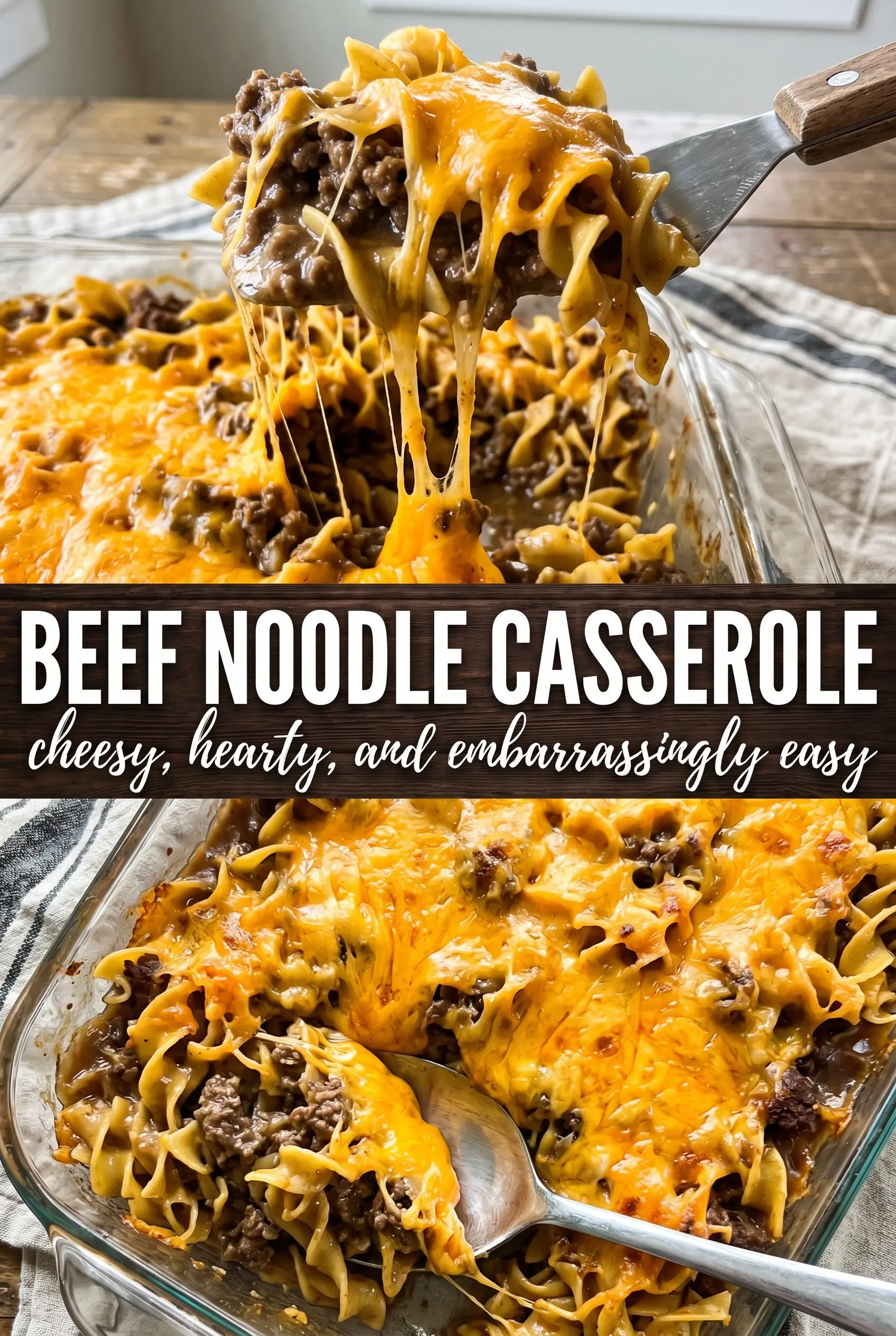
Cheesy, creamy, and sturdy enough to feed a hungry table, beef noodle casserole earns its spot in the dinner rotation fast. The noodles stay tender without turning mushy, the beef mixture brings a savory, oniony base, and the melted cheddar on top gives every scoop that pull-apart finish people expect from a proper casserole.
What makes this version work is the balance in the sauce. Sour cream and milk loosen the canned soups just enough so they coat the noodles instead of clumping around them, and Worcestershire adds the background depth that keeps the whole dish from tasting flat. Browning the beef well before it goes into the bake matters too; those browned bits carry most of the flavor.
Below, you’ll find the timing cue that keeps the noodles from overcooking in the oven, plus a few swaps that make the casserole easier to adapt for what’s already in your kitchen.
The sauce baked up creamy instead of watery, and the cheddar on top formed that perfect golden crust. I made it on a weeknight and everyone went back for seconds.
Save this beef noodle casserole for nights when you want a creamy, cheesy bake with pantry ingredients and almost no fuss.
The Creamy Sauce Stops Being Heavy When You Thin It the Right Way
A lot of beef noodle casseroles end up dense because the soup mixture goes in too thick and the noodles soak up every bit of moisture in the oven. This version stays creamy because the sour cream and milk loosen the condensed soups before they hit the pan, so the sauce can settle around the noodles instead of drying into clumps.
Draining the beef matters, but don’t wipe the skillet clean after browning. A little fat and the browned bits left behind give the sauce a deeper, meatier taste once the noodle mixture goes together. If your casserole ever bakes up greasy, the beef was probably not drained well enough before it mixed with the dairy.
What the Soups, Sour Cream, and Cheddar Each Bring to the Dish
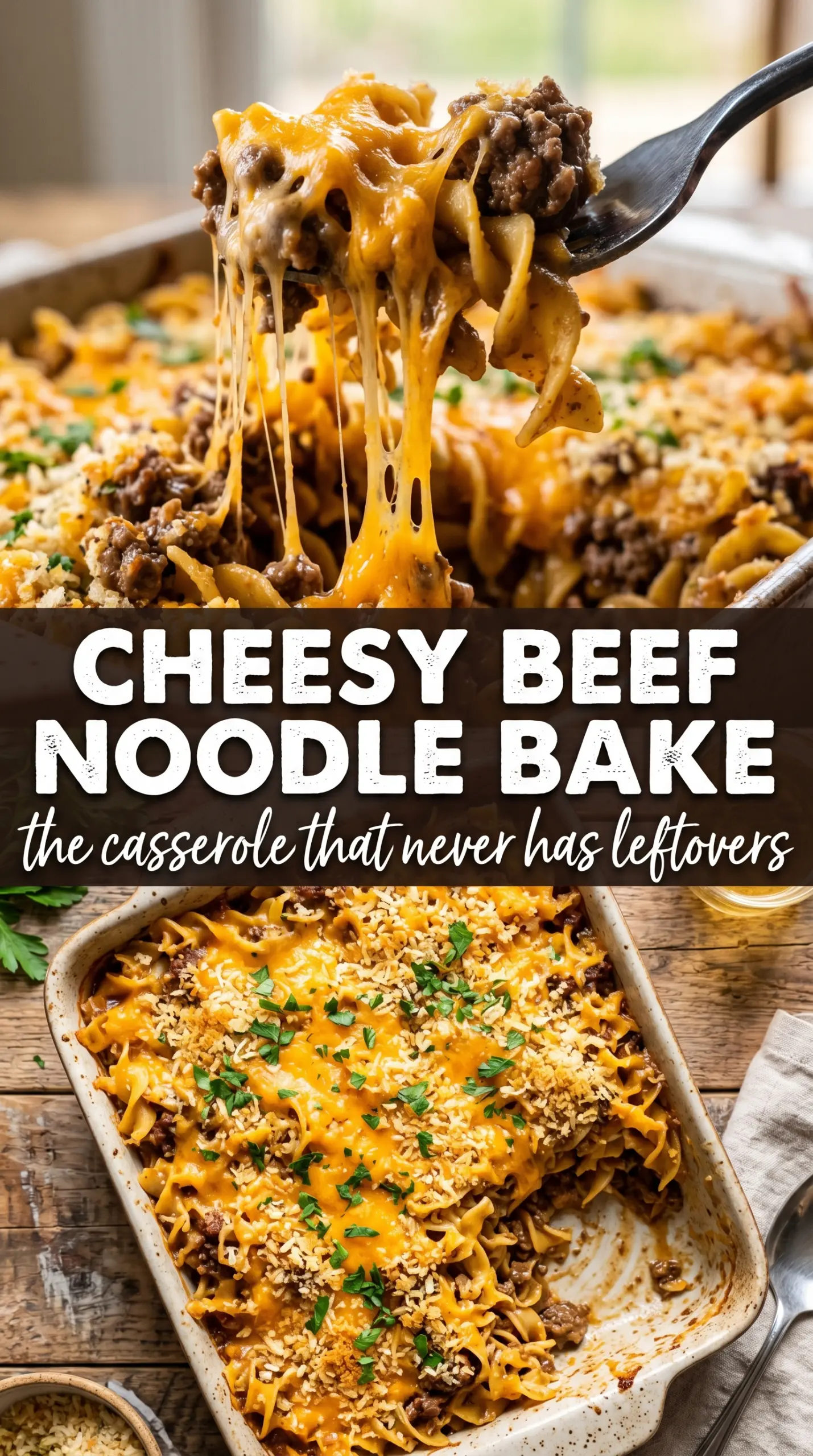
- Cream of mushroom soup — This gives the casserole its savory base and a little earthy depth. A store-brand can work fine here because it gets blended with the other dairy, so the final flavor depends more on seasoning than on the brand name.
- Cream of chicken soup — This rounds out the sauce and keeps the mushroom flavor from taking over. If you only have two cans of the same soup, use them, but expect a slightly narrower flavor.
- Sour cream — This is what gives the filling that tangy, creamy finish. Full-fat sour cream holds up best in the oven; lower-fat versions can turn a little looser, especially if the casserole sits before serving.
- Egg noodles — Cook them just to al dente. They keep softening in the oven, and if they’re fully cooked before baking, the casserole can turn pasty instead of tender.
- Cheddar cheese — Shred it yourself if you can. Pre-shredded cheese melts fine, but freshly grated cheddar gives you a smoother top with better stretch and less of that powdery coating effect.
Building the Bake So the Noodles Stay Tender, Not Mushy
Brown the Beef First
Cook the ground beef with the onion until the meat is no longer pink and the onion has softened and started to turn translucent. You want some browned bits in the pan, not just gray crumbles, because that’s where the casserole gets its backbone. If the skillet looks crowded or wet, keep cooking until the moisture evaporates and the meat starts to sizzle again.
Make the Sauce Smooth Before It Touches the Noodles
Whisk the soups, sour cream, milk, and Worcestershire together until there are no streaks left. This step keeps the casserole even, so you don’t end up with pockets of sour cream or dry noodles in the middle. If the mixture looks too thick to coat a spoon, add another splash of milk instead of forcing it through.
Stop the Noodles at Just the Right Moment
Cook the egg noodles until they still have a little firmness at the center, then drain them well before mixing. They finish in the oven, and that final bake is what keeps them from breaking apart when you scoop the casserole. If you overcook them on the stovetop, there’s no getting that texture back.
Bake Until the Edges Bubble
Spread the mixture into the baking dish, top with cheddar, and bake uncovered until the edges are bubbling and the cheese has melted into a golden layer. That bubbling at the edge tells you the filling is hot all the way through, not just warm on top. Let it rest for a few minutes before serving so the sauce settles and the first scoop doesn’t run across the plate.
How to Stretch, Lighten, or Rework This Casserole Without Losing the Comfort
Use turkey instead of beef
Ground turkey works well if you season it a little more boldly. It’s leaner, so drain it less aggressively and keep the Worcestershire in the mix to replace some of the savoriness you lose with the swap.
Make it gluten-free
Use certified gluten-free egg noodles and check that your soups and Worcestershire sauce are gluten-free as well. The texture stays close to the original, though the noodles may soften a little faster once baked.
Add vegetables without watering it down
Stir in cooked mushrooms, peas, or steamed broccoli after the sauce is mixed and before the casserole goes into the dish. Raw vegetables release too much moisture and can thin the filling, so cook them first if you want the bake to stay creamy.
Make it ahead and bake later
Assemble the casserole, cover it tightly, and refrigerate it for up to a day before baking. Add 10 to 15 extra minutes in the oven if it’s going in cold, and wait to add the cheese topping if you want the top to stay softer rather than deeply browned.
Storage and Reheating
- Refrigerator: Store leftovers covered for 3 to 4 days. The noodles will soften a bit as they sit, but the flavor stays strong.
- Freezer: This casserole freezes well for up to 2 months. Freeze in portions or as a whole baked casserole, wrapped tightly, and thaw overnight before reheating.
- Reheating: Reheat covered in the oven at 325°F until hot in the center, or use the microwave in shorter bursts with a splash of milk stirred in. The common mistake is blasting it too long uncovered, which dries out the noodles before the center heats through.