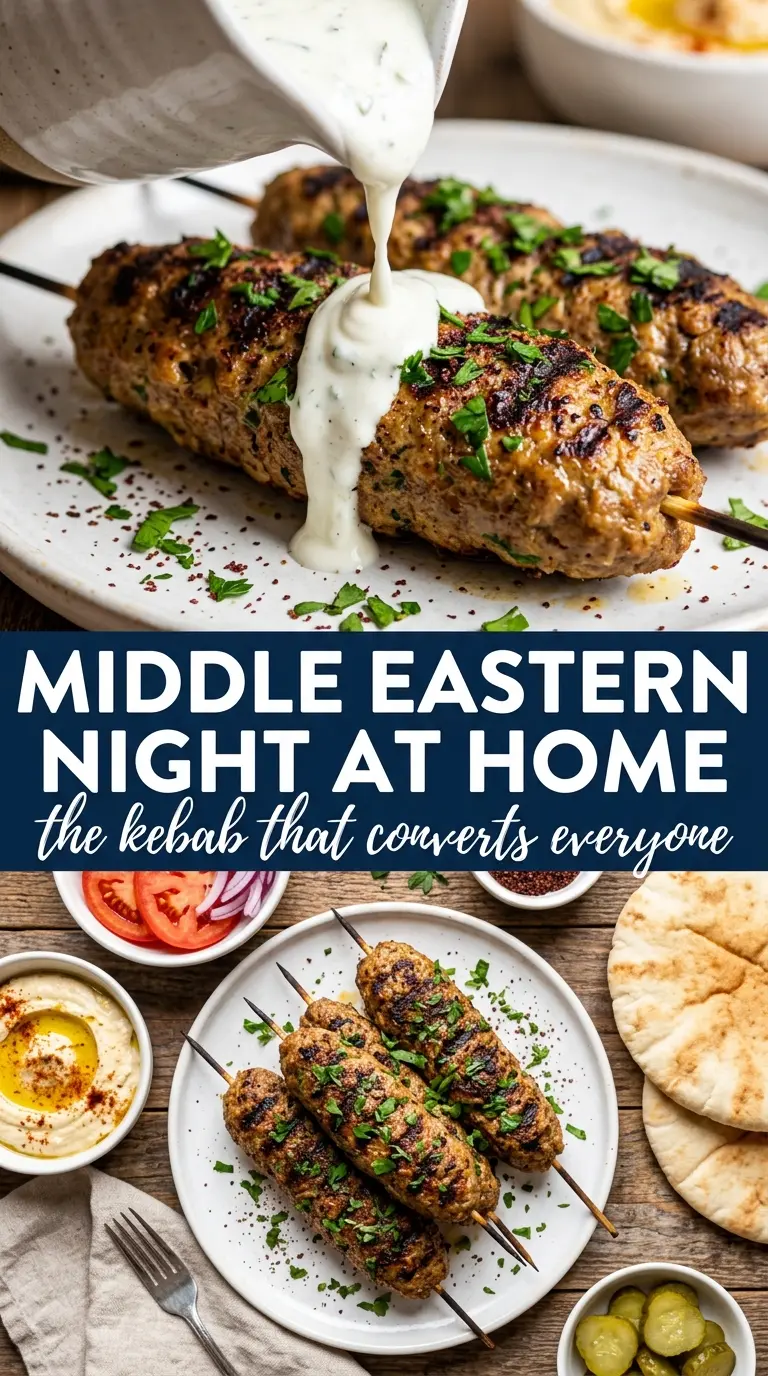
Beef kafta kebabs hit the grill with a deep, savory crust and stay juicy all the way through when the meat is mixed and shaped the right way. The best ones have that unmistakable blend of cumin, coriander, garlic, and parsley, plus just enough char to make the edges crisp without drying out the center. Served with flatbread, tomatoes, onion, and tzatziki, they turn a simple pack of ground beef into the kind of dinner people reach for with both hands.
The texture depends on two things: first, mixing the beef until the seasonings are evenly distributed and the mixture starts to feel cohesive, and second, chilling the shaped kebabs so they don’t slump on the grill. Grated onion matters here because it brings moisture and flavor without leaving big chunks that can make the kebabs fall apart. The spice blend is warm and balanced, not hot, with cinnamon quietly rounding out the meat instead of taking over.
Below you’ll find the detail that keeps kafta from cracking, the ingredient choices that matter most, and a few useful variations for when you want to change the serving style or cook them without a grill.
The kebabs held together on the skewers after chilling, and the cumin-coriander mix tasted spot on. I got a nice char on the outside without losing the juicy center.
Save these beef kafta kebabs for the next grill night when you want juicy spiced ground beef with crisp char and almost no cleanup.
The Reason These Kafta Hold Their Shape on the Grill
Kafta falls apart for one of two reasons: the meat is too loose, or it goes onto the grill before it has had time to firm up. Ground beef with enough fat gives the kebabs structure and juiciness, but the mixture still needs to be worked until it starts to cling together. That doesn’t mean beating it into paste. It means mixing long enough that the onions, herbs, and spices become part of the meat instead of sitting inside it.
Grated onion is the quiet fix here. It disappears into the mixture, keeps the kebabs moist, and helps them cook up tender instead of dense. Chilling is not optional. Once the logs are shaped around the skewers, cold time lets the fat settle and the surface tighten, which is what keeps the kebabs from drooping when they hit the heat.
- Mixing until cohesive — Stop when the beef looks uniform and slightly sticky. If you under-mix, the kebabs can crack at the first turn.
- 80/20 beef — This ratio gives you enough fat for flavor and browning without turning the grill into a flare-up zone.
- Grated onion — Use the fine side of a box grater so the onion melts into the meat. Chopped onion leaves gaps that weaken the shape.
- Thirty-minute chill — If the logs still feel soft, give them another 10 minutes. Cold kafta turns more cleanly and holds a sharper edge on the grill.
What Each Spice Is Doing in the Kafta Mixture
The spices here aren’t just for flavor; they’re there to make the beef taste fuller and more complete. Cumin and coriander bring the classic warm backbone, smoked paprika adds a little grill-friendly depth, and cinnamon gives the mixture a subtle roundness that keeps the kebabs from tasting flat. Cayenne is there for a quiet heat, not a burn, so the kebabs stay balanced next to cool tzatziki and fresh vegetables.
- Cumin and coriander — These are the core flavors. If you swap them out, the kebabs stop tasting like kafta and start tasting generic.
- Smoked paprika — Adds a deeper color and a faint smoky note, which helps even if you’re cooking on a grill pan instead of charcoal.
- Cinnamon — Use the amount listed. Too much and it turns sweet; the right amount makes the beef taste warmer and more savory.
- Fresh parsley — It brightens the meat and breaks up the richness. Dried parsley won’t do the same job here.
- Garlic and onion — Fresh alliums matter in this recipe. Powder can work in a pinch, but it won’t give you the same moist, aromatic finish.
Shaping and Grilling the Kafta Without Losing the Skewer
Forming the Logs
Divide the meat mixture into four portions and press each one firmly around a skewer, shaping long oval logs with your hands. Keep the thickness even so they cook at the same rate from end to end. If the meat sticks to your hands, wet them lightly with cold water. Loose packing is the enemy here; the kebab needs enough pressure to grip the skewer and stay together.
Chilling Before Heat
Lay the skewers on a tray and refrigerate them for 30 minutes. That resting time firms the fat and gives the spices a chance to settle into the meat. If you’re in a hurry and skip this step, the outside can brown before the kebab sets, which makes turning messy and increases the chance of breakage. Cold skewers also release cleaner from the grill.
Getting the Char Right
Preheat the grill or grill pan to medium-high and oil it well. Cook the kafta for 3 to 4 minutes per side, turning carefully with tongs once the first side has defined grill marks and no longer sticks. If you try to move them too early, they can tear. You’re looking for deep char lines, a browned crust, and a center that feels firm but still juicy when pressed lightly.
How to Adapt These Beef Kafta Kebabs for Different Meals
Gluten-Free Serving Plate
The kebabs themselves are naturally gluten-free, so the only thing to watch is what you serve alongside them. Use gluten-free flatbread or rice, and check the tzatziki if you’re buying it prepared. You still get the same juicy, spiced beef with no change to the grill method.
Dairy-Free Mezze Plate
Skip the tzatziki and serve the kafta with hummus, tahini sauce, or a chopped cucumber-tomato salad. You lose the cool tang of yogurt, but the beef and spices stand up well on their own and still feel complete with fresh herbs and vegetables.
Pan-Seared Indoors
Use a lightly oiled grill pan or heavy skillet over medium-high heat if you don’t have a grill. You’ll get less smoke and a little less open-flame flavor, but the browned crust still develops well if you leave the kebabs alone long enough to sear before turning.
Make-Ahead for a Crowd
Shape the kebabs up to a day ahead and keep them covered in the fridge. The flavor gets a little deeper as they sit, and grilling is faster when the skewers are already formed. Don’t leave them uncovered or the surface will dry out and split more easily on the grill.
Storage and Reheating
- Refrigerator: Store cooked kafta in an airtight container for up to 4 days. The texture stays tender, though the exterior softens a bit after chilling.
- Freezer: Freeze cooked or uncooked shaped kebabs for up to 2 months. Wrap them well so the surface doesn’t dry out, and thaw in the fridge before cooking or reheating.
- Reheating: Warm gently in a 325°F oven or in a covered skillet over low heat until heated through. High heat dries out the beef fast, especially once it’s already cooked.
Questions I Get Asked About This Recipe
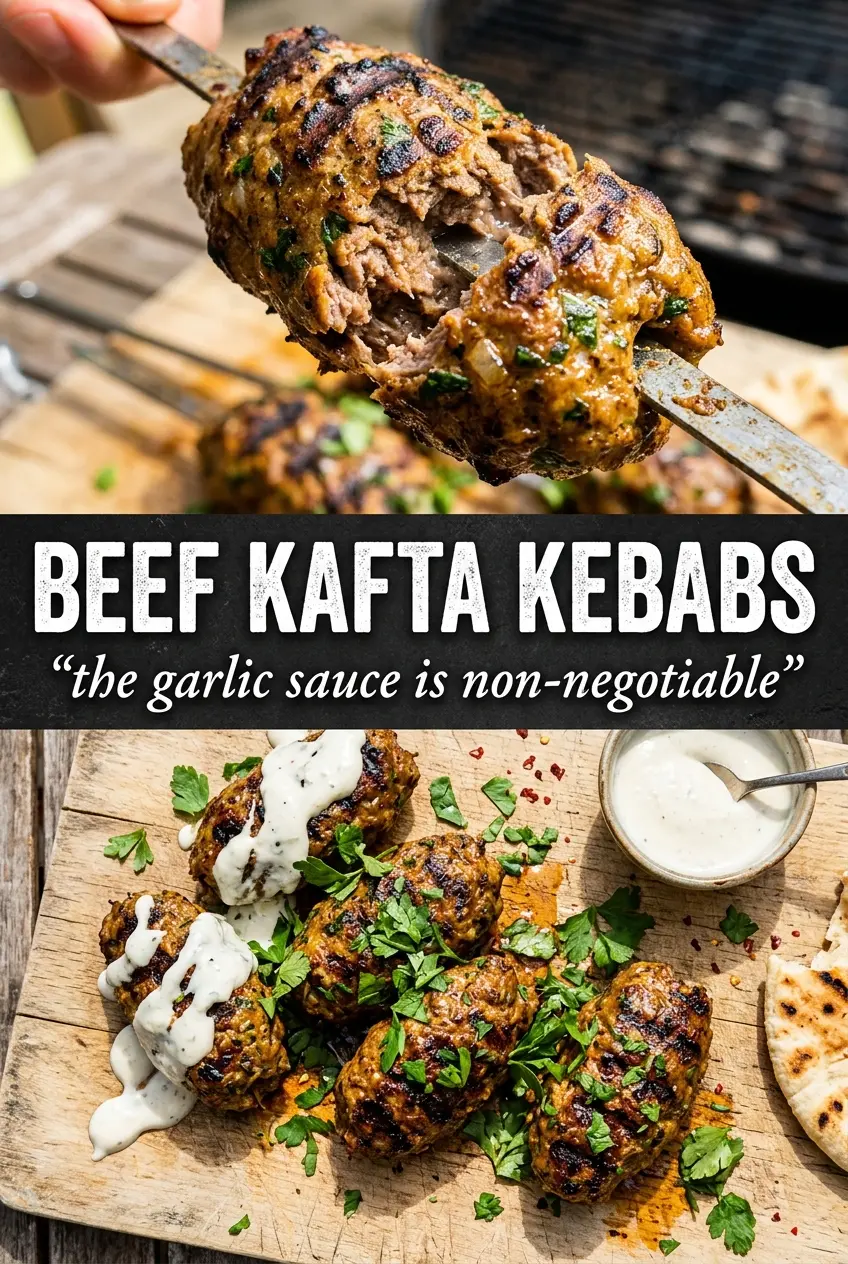
Beef Kafta Kebabs
Ingredients
Equipment
Method
- In a mixing bowl, combine ground beef with grated onion, minced garlic, chopped parsley, cumin, coriander, smoked paprika, cinnamon, cayenne, salt, and black pepper, then mix thoroughly until evenly blended.
- Shape the mixture into long oval logs around skewers, pressing firmly, then place on a sheet pan and refrigerate for 30 minutes so they hold their shape.
- Preheat a grill or grill pan to medium-high and oil the grates so the kafta doesn’t stick.
- Grill the kafta for 3–4 minutes per side, turning carefully, until cooked through with deep char marks and slightly crisp edges.
- Serve immediately with warm flatbread, sliced tomato, red onion, and tzatziki.