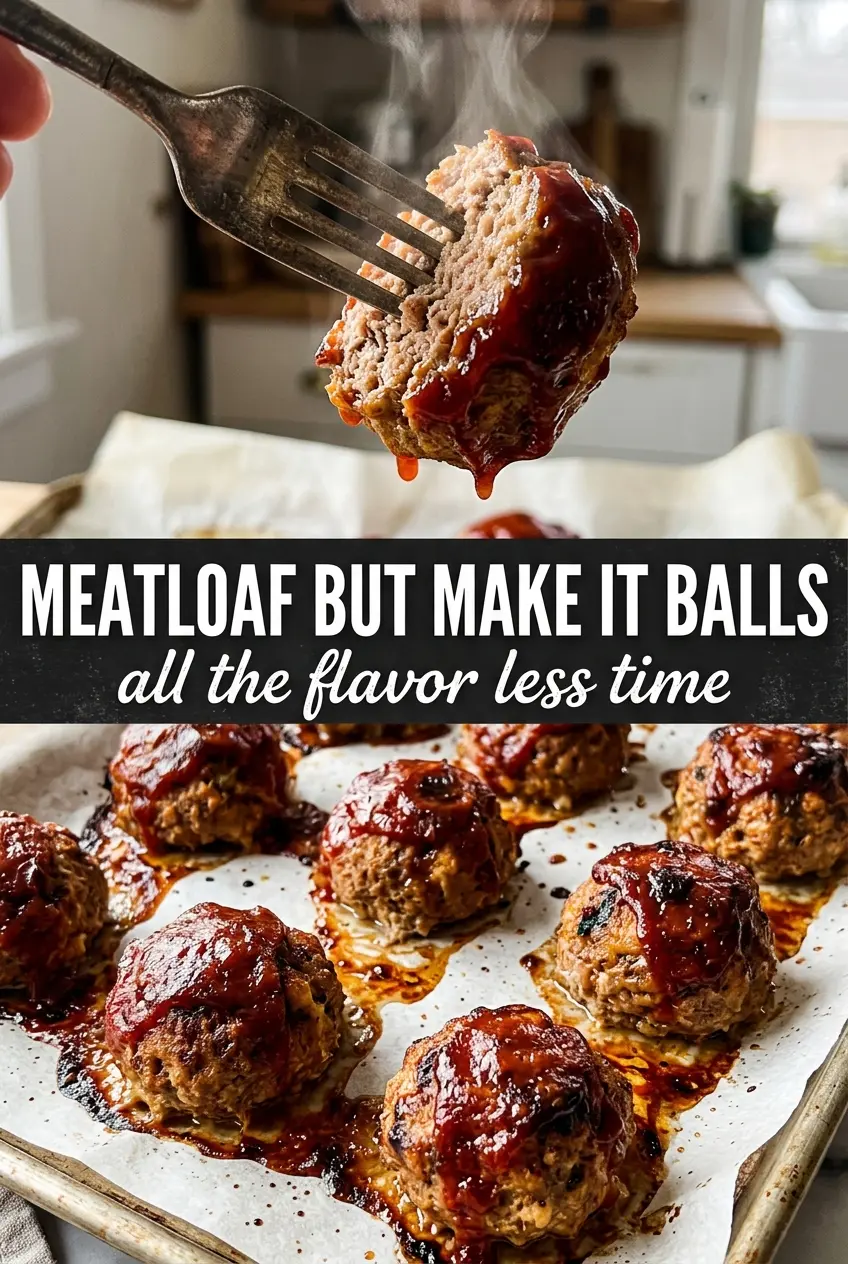
Meatloaf meatballs take everything people love about classic meatloaf and turn it into something faster, easier to portion, and a lot more fun to serve. Each meatball bakes with a browned exterior, a tender middle, and a sticky ketchup glaze that caramelizes just enough on top to give you that old-school meatloaf finish without waiting for a loaf pan to do its thing.
The trick is treating the mixture like meatloaf, not like delicate restaurant meatballs. A little milk, breadcrumbs, and egg keep the texture soft, while grated onion and Worcestershire sauce build that savory, homestyle flavor right through the center. The glaze goes on before baking, which means it sets on the meatballs instead of sliding off after the fact.
Below, I’ll walk through the one step that keeps them tender, the ingredient swaps that still hold together, and the best way to bake them so the glaze gets glossy and browned instead of burnt.
The glaze browned beautifully and the meatballs stayed so tender inside. I baked them right on parchment and they held their shape perfectly, even after spooning on extra sauce at the table.
Save these ketchup-glazed meatloaf meatballs for the nights when you want comfort food with a caramelized finish and no loaf pan required.
The Reason These Meatballs Stay Tender Instead of Dense
Meatloaf-style meatballs can go wrong fast if the mixture gets packed too tightly. Once ground beef is overmixed, the proteins tighten up and the finished meatballs turn springy instead of soft. The goal here is a mixture that just comes together, then gets portioned and baked without being handled over and over again.
The other piece that matters is moisture. Grated onion and milk keep the center juicy, while breadcrumbs give the meat enough structure to hold the glaze without collapsing on the pan. If the mixture feels sticky, that’s normal; if it feels dry and crumbly, the meatballs will crack before they finish baking.
- Ground beef — An 80/20 blend gives you enough fat for flavor and tenderness. Leaner beef works, but the meatballs will be a little drier unless you’re careful not to overbake them.
- Breadcrumbs — These act like the binder you’d want in a meatloaf slice. Plain breadcrumbs are best here because seasoned crumbs can push the salt level too far once the glaze goes on.
- Grated onion — This melts into the mixture and seasons it from the inside. Finely grated onion matters more than chopped onion, which can leave little pockets that interrupt the texture.
- Worcestershire sauce — This is where the savory depth comes from. There isn’t a substitute that tastes exactly the same, but soy sauce plus a tiny splash of vinegar can get you partway there in a pinch.
What Each Ingredient Is Actually Doing in This Meatloaf or Meatballs

- Ground meat (the protein foundation) — Use 80/20 so it stays moist. Handle gently to keep texture tender instead of dense.
- Breadcrumbs or fillers (the binder) — These hold the meat together without making it dense. Soak in milk first so they add moisture.
- Egg (the structural binding agent) — This holds everything together during cooking. One egg per pound of meat is the right ratio.
- Onion and aromatics (the base flavor) — Mince finely so they distribute evenly. Raw onion softens as it cooks and becomes part of the texture.
- Seasonings (salt, pepper, Worcestershire, spices) — Build flavor boldly. The meat mixture carries the entire flavor profile.
- Milk or liquid (the moisture keeper) — This keeps the meatloaf tender instead of dense and dry. Don’t skip this step.
- Glaze or sauce (ketchup-based or other) — This adds sweetness, moisture, and flavor to the exterior. Apply strategically so it caramelizes.
- Resting time (the final step) — Let the meatloaf rest 10 minutes so it sets and slices cleanly. Cutting too soon makes it fall apart.
How to Bake Meatloaf Meatballs So the Glaze Caramelizes, Not Burns
Mix the Meat Just Until It Holds Together
Combine the beef, breadcrumbs, eggs, milk, grated onion, garlic, Worcestershire, and seasonings with your hands or a fork, but stop the second the mixture looks even. The mixture should feel soft and a little loose, not compacted. If you squeeze it hard into a dense mass, the baked meatballs will come out tough.
Shape Them for Even Baking
Roll the mixture into golf ball-sized portions and place them on a parchment-lined baking sheet with a little space between each one. Uniform size matters here because smaller meatballs finish too early and dry out while larger ones need longer and can split under the glaze. If your hands are sticking, a quick rinse in cold water keeps the shaping clean.
Brush on the Glaze Before the Oven
Stir the ketchup, brown sugar, and mustard together until smooth, then brush it generously over each meatball. That topping needs direct oven heat to set and caramelize. If you wait until the end, it sits on top like a sauce; when it goes on before baking, it becomes that sticky, browned layer that tastes like classic meatloaf crust.
Bake Until Just Cooked Through
Slide the tray into a 400°F oven and bake until the glaze is browned and the meatballs are cooked through, usually 18 to 22 minutes. The top should look glossy and darkened at the edges, not scorched. If you’re unsure, cut one open; the center should be no longer pink and the juices should run clear.
Make Them Gluten-Free Without Losing the Meatloaf Texture
Swap the breadcrumbs for a gluten-free breadcrumb blend in the same amount. If you use almond flour instead, the meatballs will be softer and less classic in texture, so stick with crumbs if you want that real meatloaf feel.
Swap the Beef for a Lighter Mix
Use half ground beef and half ground turkey if you want a lighter version. Turkey needs the same gentle handling, but it’s leaner, so the onion and milk matter even more to keep the center from drying out.
Make the Glaze Less Sweet
Cut the brown sugar back to 1 tablespoon and add a little extra mustard for a sharper finish. You’ll lose some of the sticky caramel edge, but the glaze will read more savory and less like barbecue sauce.
Storage and Reheating
- Refrigerator: Store leftovers in an airtight container for up to 4 days. The glaze may thicken a bit in the fridge, but the meatballs stay moist.
- Freezer: They freeze well after baking. Cool completely, freeze on a tray, then transfer to a bag or container for up to 3 months.
- Reheating: Reheat covered in a 325°F oven or in the microwave at medium power with a splash of water or extra glaze. High heat dries out the edges before the center warms through.