Loaded ground beef and potatoes skillet is the kind of one-pan dinner that lands on the table hot, crispy, and gone before the pan even cools. The potatoes turn golden at the edges while the beef picks up all that smoky, savory seasoning, and the melted cheddar ties everything together in the best way. Add the cold sour cream, green onions, and bacon crumbles at the end, and you get that loaded baked potato feeling without turning on the oven.
The part that makes this work is giving the potatoes a head start in the skillet. They need time against the hot pan to develop a crust before the beef goes in, or they’ll steam and stay soft. Yukon golds are the right choice here because they hold their shape and still go creamy in the center, and a cast iron skillet helps keep the heat steady enough for browning.
Below, I’ve included the timing trick that keeps the potatoes crisp, the best way to layer the cheese so it melts without getting greasy, and a few smart swaps if you want to change up the toppings or make it fit what’s already in your fridge.
The potatoes got those crispy edges I always hope for, and the cheddar melted right over the beef instead of turning oily. My husband went back for seconds before I even sat down.
Save this loaded ground beef and potatoes skillet for the nights when you want crispy potatoes, melted cheddar, and one pan to do the work.
The Trick to Crispy Potatoes Before the Beef Goes In
The biggest mistake in a skillet like this is crowding the potatoes or rushing them. If they go in with the beef too soon, they soften before they ever brown, and the whole dish loses its best texture. Give the potatoes 12 to 15 minutes on their own, and don’t stir them constantly; let them sit long enough to build color on the bottom before you move them around.
Yukon gold potatoes hold up especially well here because they get tender without falling apart. A cast iron skillet helps, but the real key is medium-high heat and enough oil to coat the bottom. If the pan looks dry, the potatoes will stick before they crisp.
- Yukon gold potatoes — These are creamy inside and sturdy enough to hold a crust. Russets can work, but they’re more likely to break down and go fluffy instead of staying in neat browned cubes.
- Ground beef — Use an 80/20 blend if you can. It brings enough fat for flavor, and you can drain the excess after browning so the skillet doesn’t turn greasy.
- Sharp cheddar — Sharp cheese gives you more flavor for the same amount, which matters because it’s finishing the dish, not disappearing into it. Pre-shredded works in a pinch, but freshly shredded melts smoother.
- Bacon crumbles — These are a topping, not a base ingredient, so use what you have. Cooked and well-drained bacon gives the best salty crunch; the dish still works without it, but it won’t taste fully loaded.
How to Layer the Skillet So It Stays Crispy and Melts Cleanly
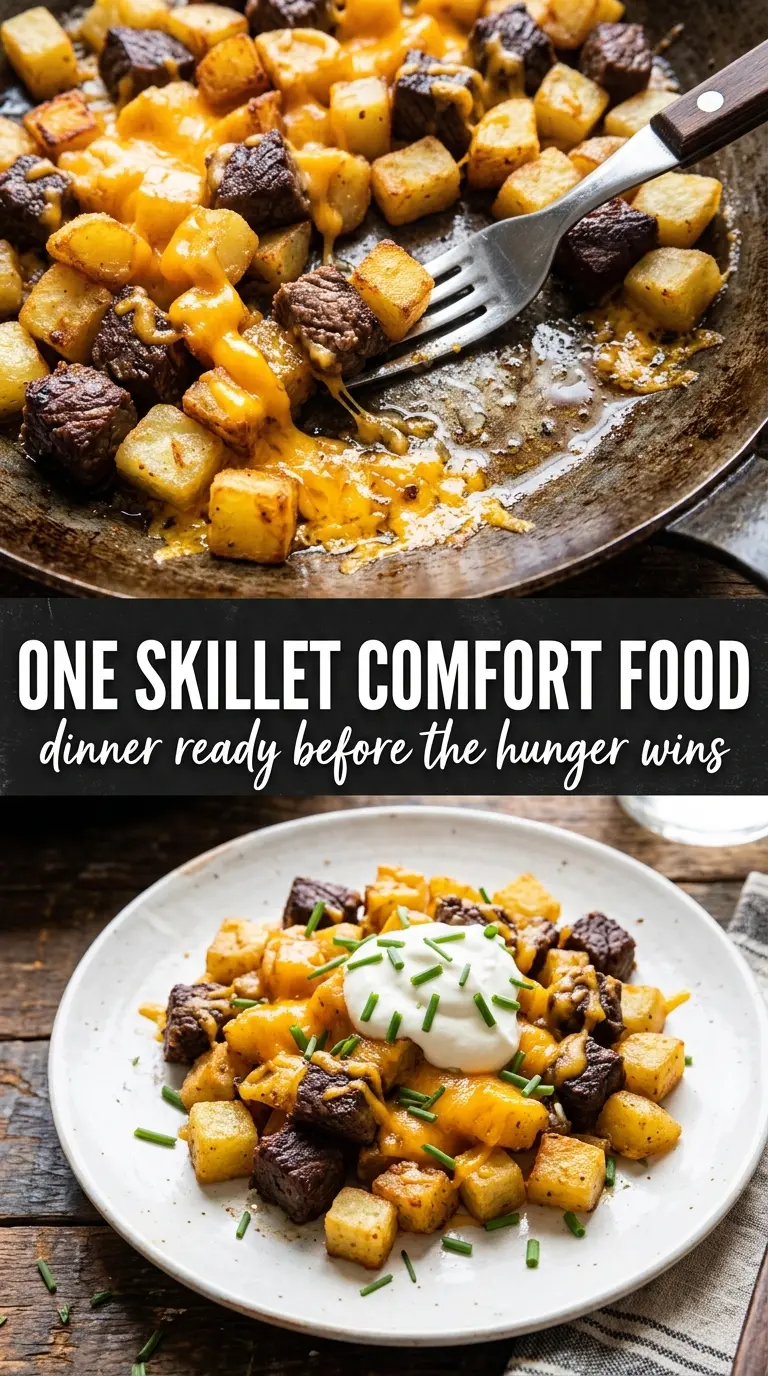
- Ground beef — Brown it after the potatoes have already developed color. If you add it too early, the meat releases moisture and the potatoes start steaming instead of crisping.
- Onion and bell pepper — These go in after the beef browns so they soften in the savory drippings. Dice them small so they cook through in the short final simmer without leaving crunchy pieces behind.
- Garlic and spices — Add them near the end of the sauté so they bloom in the hot fat without scorching. Smoked paprika gives the skillet that loaded, almost campfire-like depth, and garlic powder fills in where fresh garlic alone would be too sharp.
- Sour cream, green onions, and bacon crumbles — These belong on top at the end. The cold sour cream cuts through the richness, the green onions brighten the whole pan, and the bacon keeps the finish salty and crisp.
Building the Skillet Without Losing the Crunch
Start with the potatoes and give them room
Heat the olive oil first, then add the cubed potatoes in a single layer if you can. Let them cook mostly undisturbed so the bottoms turn deep golden before you start stirring. If they’re sticking hard right away, the pan wasn’t hot enough; if they’re browning too fast on the outside and still raw inside, lower the heat a little and give them time.
Brown the beef in the same pan
Push the potatoes to one side and add the beef and onion straight into the skillet. Break the meat up as it cooks so you get small browned pieces instead of gray clumps. Drain off excess fat if there’s a lot pooled in the pan, but leave a little behind for flavor. That fat helps carry the garlic and paprika in the next stage.
Finish with cheese and toppings
Stir in the bell pepper, garlic, and garlic powder, then cook just until the pepper loses its raw edge. Mix everything together, sprinkle the cheddar over the top, and cover the pan for about 2 minutes so the cheese melts without overcooking the potatoes. Add the sour cream, green onions, and bacon after the heat is off so the toppings stay distinct instead of disappearing into the skillet.
How to Adapt This for What’s in Your Kitchen
Make it dairy-free
Skip the cheddar and sour cream, then top the skillet with sliced green onions and a spoonful of dairy-free yogurt if you want that cool finish. You’ll lose some of the classic loaded-potato richness, but the savory beef and crisp potatoes still carry the dish.
Swap in sweet potatoes for a different edge
Sweet potatoes work, but they brown faster and soften sooner, so keep the pieces a little larger and watch the heat. The result is less classic diner-skillet and more sweet-savory hash, which is a nice change if you want something a little lighter.
Use ground turkey instead of beef
Ground turkey works well if you season it generously and don’t skip the smoked paprika. It’s leaner, so the skillet won’t taste as rich, but the cheese and bacon topping help bring back enough savoriness to keep it satisfying.
Storage and Reheating
- Refrigerator: Store leftovers in an airtight container for up to 4 days. The potatoes soften a little, but the flavor holds up well.
- Freezer: Freeze for up to 2 months, but expect the potatoes to be softer after thawing. Freeze in portions and thaw overnight in the refrigerator before reheating.
- Reheating: Warm leftovers in a skillet over medium heat with a small splash of oil or in the oven at 350°F until heated through. Microwaving works, but it softens the potatoes the fastest and mutes the crisp edges.
Questions I Get Asked About This Recipe
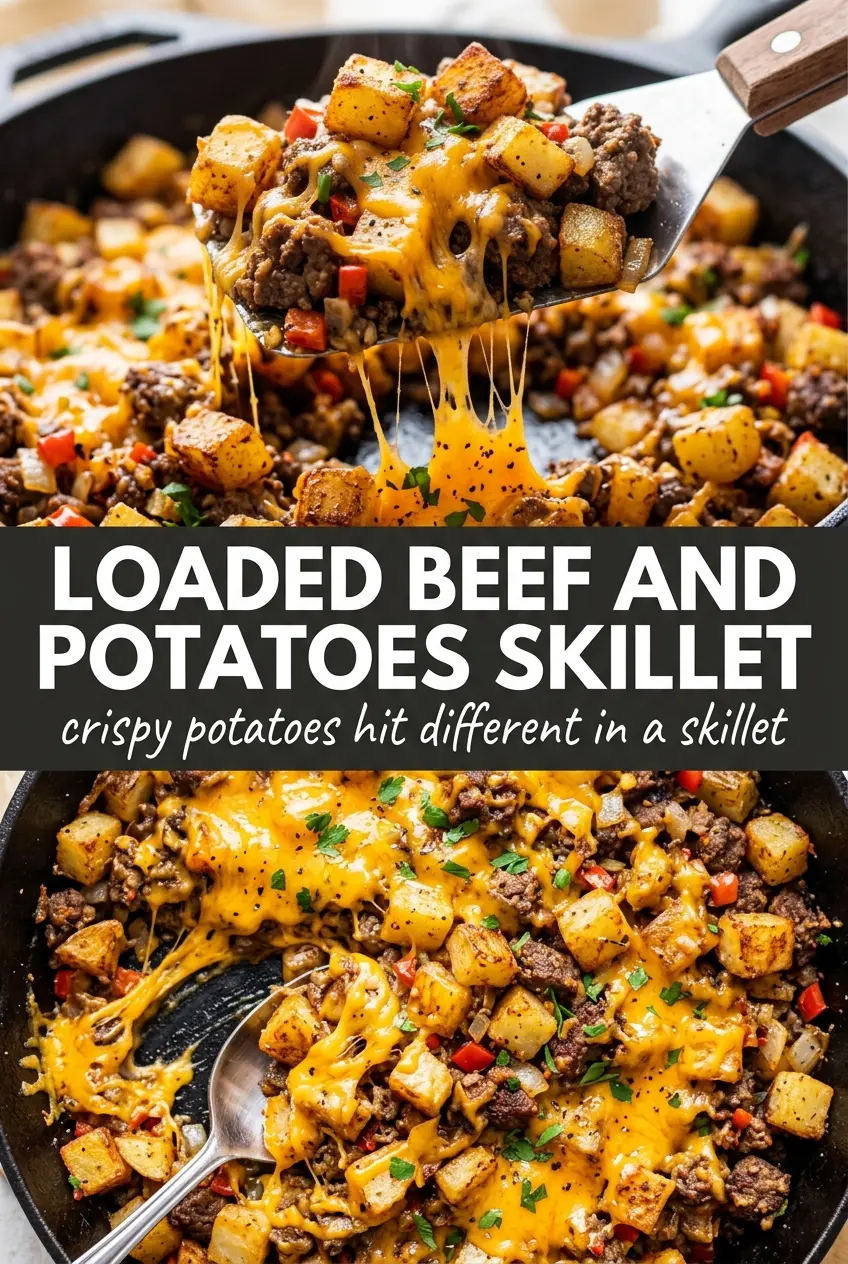
Loaded Ground Beef and Potatoes Skillet
Ingredients
Equipment
Method
- Heat 2 tbsp olive oil in a large cast iron skillet over medium-high heat until shimmering. Add the cubed Yukon gold potatoes and stir occasionally, cooking 12–15 minutes until golden and crispy; season with salt, pepper, and smoked paprika as they cook.
- Push the potatoes to the side of the skillet and add the ground beef and diced onion. Cook, breaking the beef apart, until browned and then drain any excess fat.
- Add the diced green bell pepper, minced garlic, and garlic powder and cook for 3 more minutes, stirring so the spices coat the beef and vegetables.
- Mix everything together in the skillet so the potatoes and beef are evenly combined. Top with the shredded sharp cheddar, cover, and cook 2 minutes until the cheese melts.
- Turn off the heat and top with sour cream, green onions, and cooked bacon crumbles before serving.