Moist, tender crock pot meatloaf is one of those dinners that quietly earns a permanent spot in the rotation. The slow cooker keeps the loaf gently steaming while the glaze turns sticky and dark on top, so you get slices that hold together without drying out. The texture lands somewhere between classic meatloaf and pot roast tenderness, which is exactly why this version disappears fast at the table.
The trick is starting with a real foil sling and not overworking the meat. Grated onion melts into the mixture as it cooks, breadcrumbs and milk keep the interior soft, and the Worcestershire gives the beef a deeper, savory backbone without making it taste “sauced.” The glaze gets half its time before cooking and the rest at the end, which keeps the top glossy instead of slipping off into the juices.
Below, I’ve included the one detail that keeps the loaf from collapsing when you lift it out, plus the substitutions that still give you a juicy result if you need to work with what’s in the kitchen.
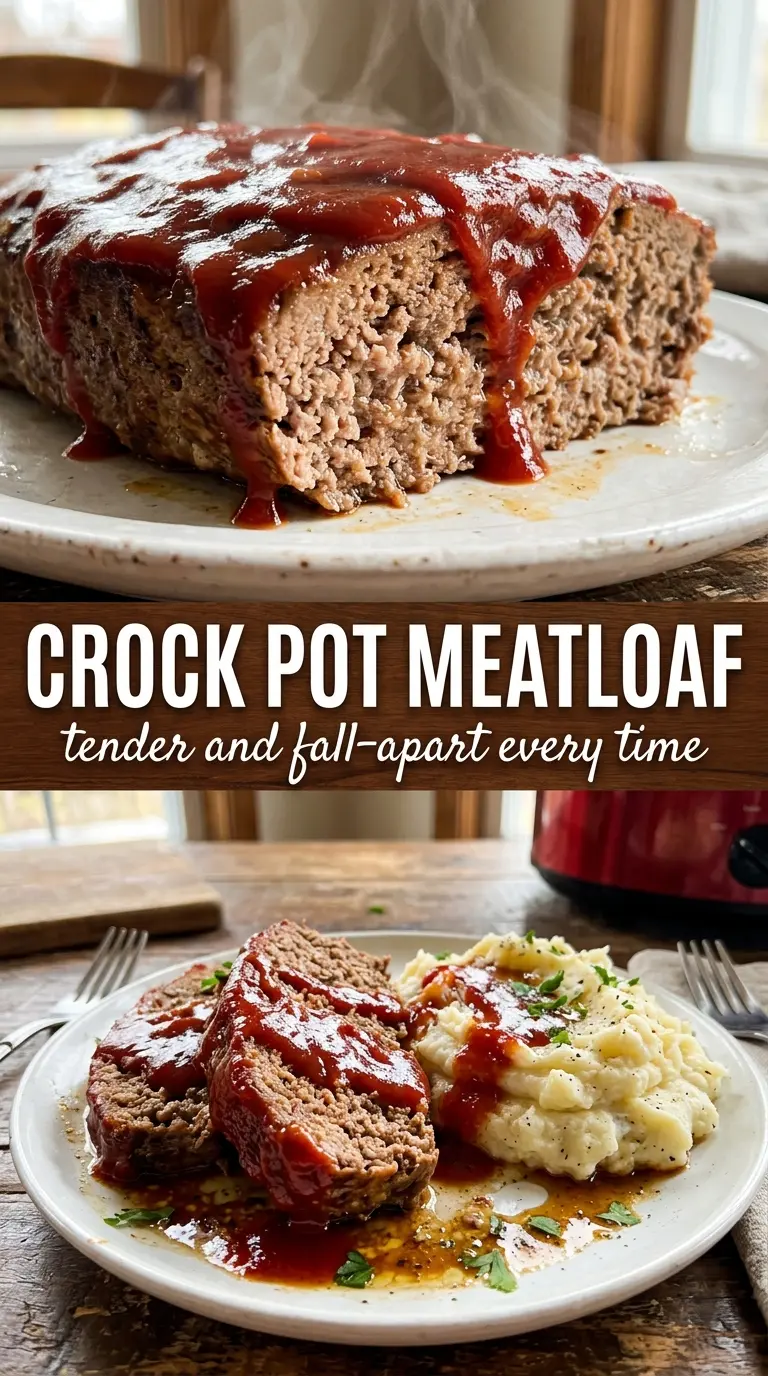
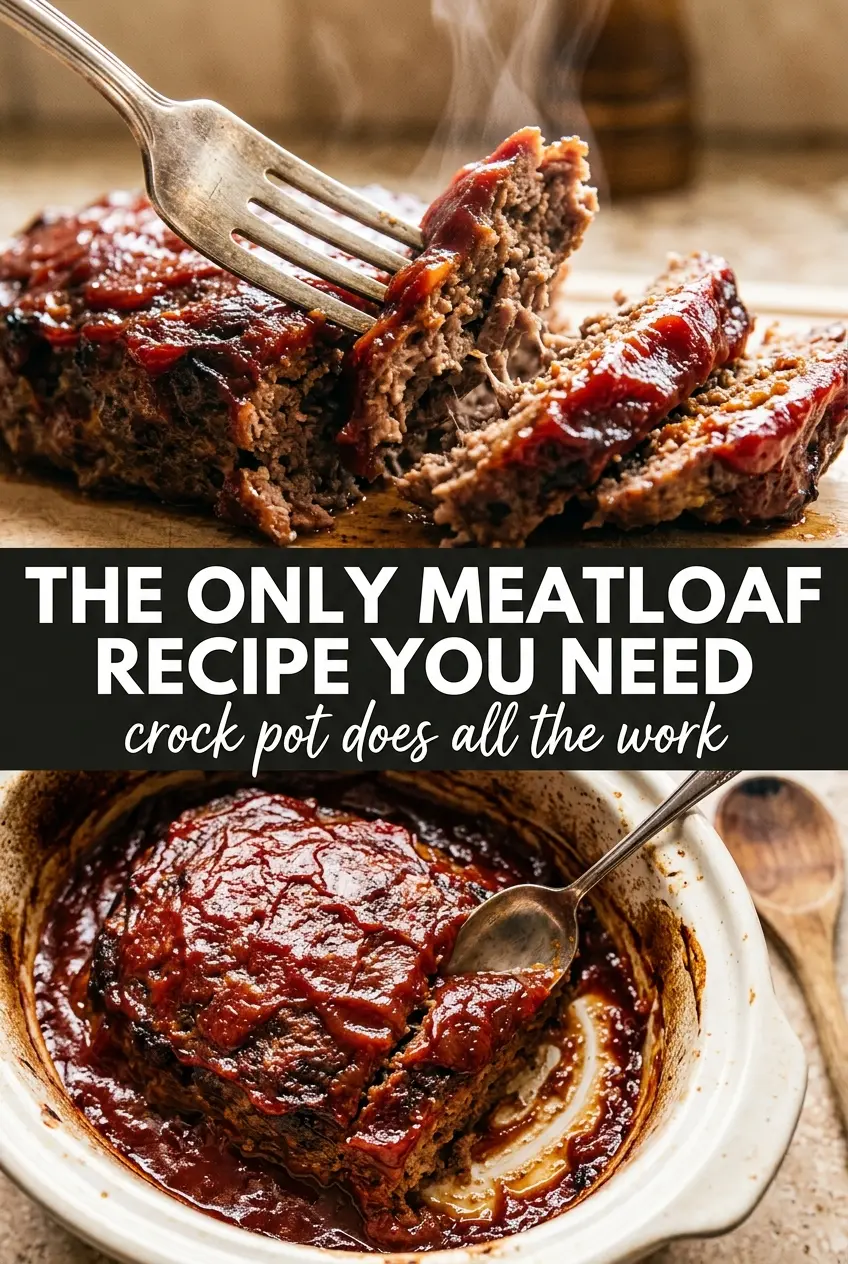
The foil sling made it so easy to lift the meatloaf out, and the middle stayed juicy all the way through. The glaze thickened up on the second round and didn’t slide off when I sliced it.
Crock pot meatloaf with that sticky ketchup-brown sugar glaze stays juicy and slices cleanly — save this one for an easy set-and-forget dinner.
Why the Foil Sling Matters More Than the Slow Cooker Setting
A lot of crock pot meatloaf problems start at the bottom of the cooker. If the loaf sits directly in the insert, it steams in its own fat and can turn soft, greasy, or awkward to lift out. The crossed foil sling fixes that by giving you handles and a little lift, so the loaf cooks evenly and comes out in one piece instead of breaking apart at the edges.
The other mistake is packing the mixture too tightly. Meatloaf needs enough structure to slice, but it also needs air pockets for tenderness. Stir just until the ingredients are combined and stop there. Once the beef turns pasty, the finished loaf gets dense instead of juicy.
- Ground beef — An 80/20 blend gives the best balance of flavor and moisture. Leaner beef works, but the loaf can eat a little dry unless you keep the milk and onion exactly as written.
- Grated onion — This disappears into the meat and seasons it from the inside out. Chopped onion can work, but grated onion keeps the texture smoother and helps the loaf stay tender.
- Breadcrumbs and milk — These are the moisture insurance. The breadcrumbs absorb the milk and hold onto it during the long cook, which is why the slices stay soft instead of crumbly.
- Worcestershire sauce — This brings the savory depth that makes meatloaf taste like meatloaf. Soy sauce can stand in if needed, but use a little less because it’s saltier and sharper.
- Glaze ingredients — Ketchup gives the familiar tang, brown sugar rounds it out, and apple cider vinegar keeps the topping from tasting flat. The vinegar matters more than people think; without it, the glaze can turn cloying.
What Each Ingredient Is Actually Doing in This Meatloaf or Meatballs
- Ground meat (the protein foundation) — Use 80/20 so it stays moist. Handle gently to keep texture tender instead of dense.
- Breadcrumbs or fillers (the binder) — These hold the meat together without making it dense. Soak in milk first so they add moisture.
- Egg (the structural binding agent) — This holds everything together during cooking. One egg per pound of meat is the right ratio.
- Onion and aromatics (the base flavor) — Mince finely so they distribute evenly. Raw onion softens as it cooks and becomes part of the texture.
- Seasonings (salt, pepper, Worcestershire, spices) — Build flavor boldly. The meat mixture carries the entire flavor profile.
- Milk or liquid (the moisture keeper) — This keeps the meatloaf tender instead of dense and dry. Don’t skip this step.
- Glaze or sauce (ketchup-based or other) — This adds sweetness, moisture, and flavor to the exterior. Apply strategically so it caramelizes.
- Resting time (the final step) — Let the meatloaf rest 10 minutes so it sets and slices cleanly. Cutting too soon makes it fall apart.
Building a Meatloaf That Holds Together After Hours in the Slow Cooker
Mixing the Loaf Without Packing It Tight
Combine the beef, breadcrumbs, eggs, milk, onion, garlic, Worcestershire, seasoning, and salt and pepper in a large bowl. Use your hands or a fork and stop as soon as everything looks evenly distributed. The mixture should feel soft and a little sticky, not dry or stiff. If you knead it like bread dough, the finished loaf will turn dense and springy instead of tender.
Shaping and Setting the Foil Sling
Lay two long sheets of foil in a cross inside the slow cooker and grease them lightly. Form the meat mixture into an even loaf and set it right on the foil. Leave a little space around the edges so the hot air and steam can move around it. If the loaf is pressed hard against the sides, the outside can overcook before the center reaches temperature.
Glazing in Two Rounds
Stir together the ketchup, brown sugar, and vinegar, then spread half over the loaf before cooking. That first layer caramelizes into the surface and gives you deeper color. The second half goes on near the end, when the meatloaf is already cooked through, so the glaze thickens and stays shiny instead of disappearing into the juices.
Cooking to Temperature, Not Just Time
Cook on Low for 5 to 6 hours or High for 2.5 to 3 hours, then check for 160°F in the center. Slow cookers vary more than people expect, so temperature is the only reliable finish line. If the top still looks pale when the center is done, leave the lid off for the last short glaze set rather than pushing the cook time much farther.
Resting Before the First Slice
Lift the loaf out with the foil sling and let it rest for 10 minutes before cutting. That pause keeps the juices from flooding the cutting board. If you slice too soon, even a perfectly cooked meatloaf can seem loose and wet in the middle.
How to Adjust This Crock Pot Meatloaf Without Losing the Juicy Center
Make It Gluten-Free
Swap the breadcrumbs for gluten-free breadcrumbs in the same amount. The texture stays close to the original, though some brands absorb a little more liquid, so if the mixture feels stiff, add another splash of milk before shaping.
Use Turkey Instead of Beef
Ground turkey works, but it needs the moisture from the onion and milk even more than beef does. Choose dark meat turkey if you can, and don’t skip the glaze, since turkey tastes milder and benefits from the extra tang and sweetness on top.
Make the Glaze Less Sweet
Cut the brown sugar back to 1 tablespoon and add an extra teaspoon of vinegar. You’ll get a sharper, more savory finish that works well if you don’t want the classic ketchup-forward taste.
Storage and Reheating
- Refrigerator: Store sliced meatloaf in an airtight container for up to 4 days. It stays moist, and the flavor gets even better by the next day.
- Freezer: Freeze cooled slices wrapped tightly or packed with parchment between them for up to 3 months. Thaw overnight in the fridge before reheating.
- Reheating: Warm slices covered in the oven at 300°F with a spoonful of water or extra glaze for 10 to 15 minutes. The biggest mistake is blasting it in the microwave too long, which squeezes out the juices and tightens the texture.
Answers to the Questions Worth Asking
Crock Pot Meatloaf
Ingredients
Equipment
Method
- Create a foil sling by laying two sheets of foil in a cross pattern inside the slow cooker and grease lightly so the meatloaf won’t stick.
- Mix ground beef, breadcrumbs, eggs, whole milk, grated onion, minced garlic, Worcestershire sauce, Italian seasoning, garlic powder, and salt and pepper until combined.
- Shape the mixture into a loaf and place it on the foil sling.
- Mix the glaze ingredients (ketchup, brown sugar, and apple cider vinegar) and spread half over the top of the meatloaf, forming a thin sticky layer.
- Cook on Low for 5–6 hours (or High for 2.5–3 hours) until the internal temperature reaches 160°F, with the glaze looking set around the edges.
- Spread the remaining glaze over the top and cook on High for 20 minutes until the glaze is visibly set and darker, with steam rising around the loaf.
- Use the foil to lift the meatloaf out of the slow cooker.
- Rest the meatloaf for 10 minutes so juices redistribute and the slices hold together.
- Slice and serve with the glaze on top.