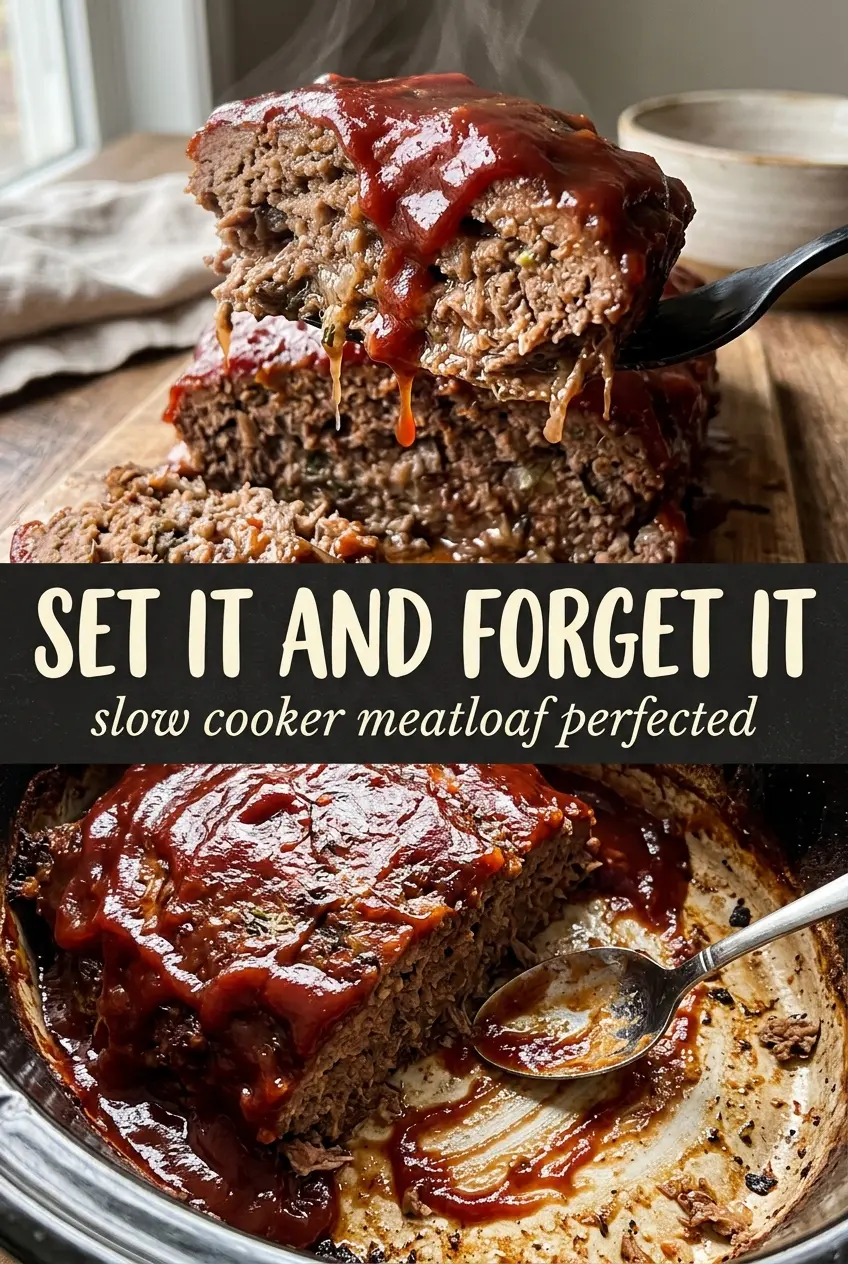
Slow cooker meatloaf comes out with the kind of tenderness a regular loaf pan can’t always deliver. The edges stay juicy, the center slices cleanly, and the ketchup glaze turns sticky instead of burning on the bottom of the pan. It’s the kind of dinner that feels old-school in the best way: simple ingredients, steady heat, and a loaf that holds together without drying out.
The trick is in the balance. Breadcrumbs, eggs, and milk keep the texture soft, while grated onion melts into the meat instead of leaving hard little pieces behind. I also like mixing the loaf just until everything is combined. Overworking ground beef makes meatloaf dense, and the slow cooker already does enough of the heavy lifting without extra help.
Below you’ll find the foil lining method that makes lifting the loaf out much easier, plus the timing that gives the glaze a chance to set without turning watery. If you’ve ever had slow cooker meatloaf fall apart on the plate, this version fixes that.
The loaf held together beautifully, and the glaze thickened on top instead of sliding off. I loved that the onion disappeared into the meat, so every bite was moist without getting mushy.
Save this slow cooker meatloaf for a tender, glazed dinner that slices cleanly and stays moist from edge to center.
The Part Most Meatloaves Get Wrong in a Slow Cooker
The slow cooker changes the texture in a way that works in your favor, but only if you keep the loaf compact and lift it out cleanly. If the meat mixture is too loose, it can slump as it cooks and release too much fat into the bottom of the pot. That’s why the foil sling matters here. It gives the loaf structure from the start and keeps the finished meatloaf from sitting in its own juices.
The other mistake is chasing color. A slow cooker won’t brown the top the way an oven does, so the glaze needs a final high-heat set at the end. That short blast thickens the ketchup-brown sugar coating and keeps it from looking wet and slick when you slice into it.
What Each Ingredient Is Actually Doing in This Meatloaf
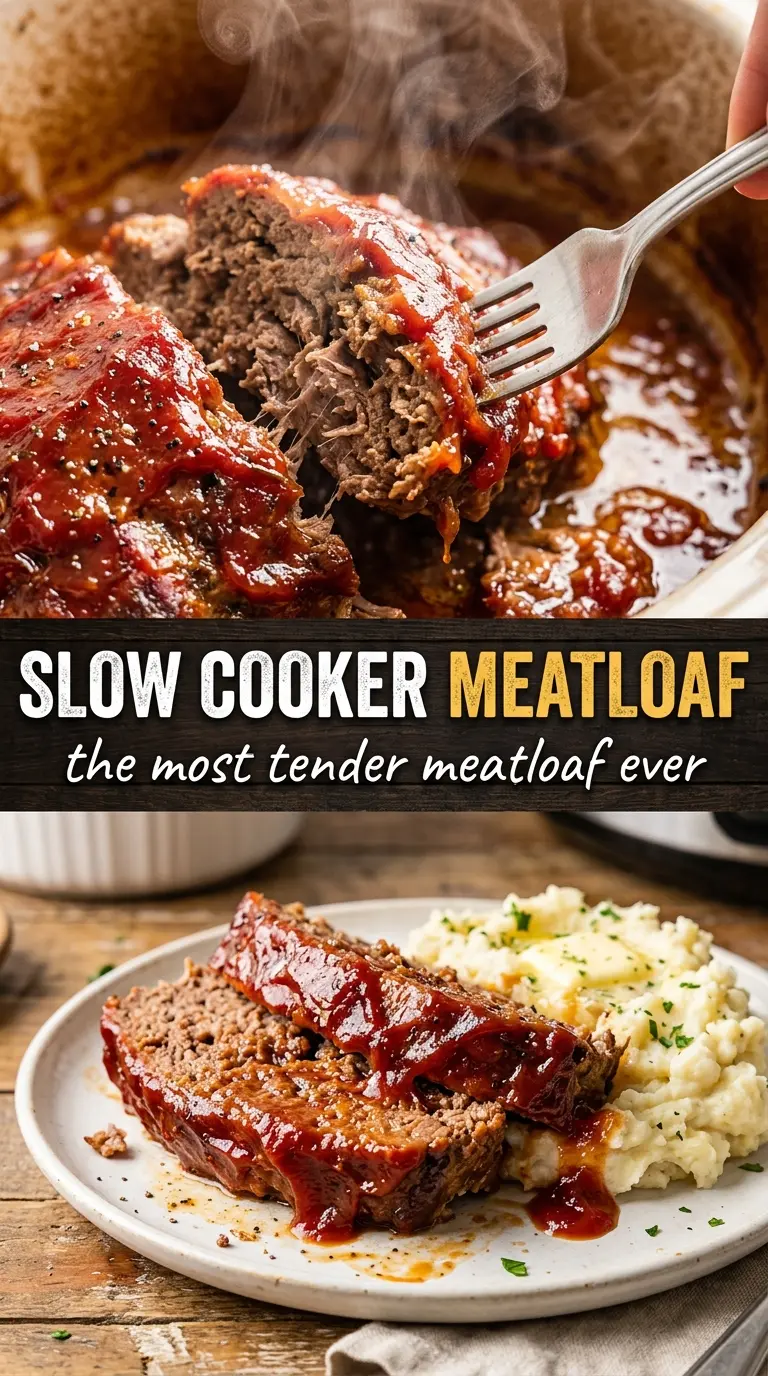
- Ground beef — Use 80/20 if you can. Leaner beef can work, but the loaf loses some of that plush, moist texture because the slow cooker doesn’t render fat the same way an oven roast does.
- Breadcrumbs, eggs, and milk — These are the binder and moisture team. Breadcrumbs soak up the liquid, eggs hold the loaf together, and milk keeps the texture soft instead of tight. If you skip the milk, the loaf still works, but it won’t slice as tender.
- Grated onion — This matters more than diced onion here. Grating lets the onion melt into the meat so you get flavor without crunchy bits or raw onion pockets.
- Worcestershire sauce — It adds depth that ketchup alone can’t give. There’s no perfect substitute for the same savory tang, but soy sauce works in a pinch; use a little less because it’s saltier.
- Ketchup, brown sugar, and Worcestershire in the glaze — This combination gives you sweetness, acidity, and a sticky finish. Brown sugar helps the topping set instead of staying thin and runny.
Building the Loaf So It Holds Together
Mixing Without Packing It Down
Combine the beef, breadcrumbs, eggs, milk, onion, garlic, Worcestershire, seasoning, salt, and pepper just until the mixture looks even. The texture should be cohesive but still soft. If you knead it like bread, the finished loaf turns firm and springy instead of tender. Cold hands help if the mixture feels sticky, but stop mixing the moment the ingredients are distributed.
Shaping and Lining the Slow Cooker
Line the insert with foil and leave enough overhang to lift the loaf out later. That overhang is what keeps the meatloaf from breaking when it’s done. Shape the loaf into a compact oval or rectangle and set it in the foil. Leave a little space around the sides so heat can move evenly and the loaf cooks through without steaming into a soggy mass.
Glazing and Finishing at the End
Spread on half the glaze before cooking so the top picks up flavor while it heats. During the long cook, the glaze softens and melds into the meat instead of scorching. Add the remaining glaze near the end, then give it a brief high-heat finish so it turns glossy and thick. Let the meatloaf rest before slicing, or the juices will run out onto the board instead of staying in each slice.
Three Ways to Adjust This Slow Cooker Meatloaf Without Ruining the Texture
Gluten-Free Version
Swap the breadcrumbs for certified gluten-free breadcrumbs or crushed gluten-free crackers. The loaf still binds well, but some GF crumbs absorb moisture faster, so don’t add extra unless the mixture feels loose.
Dairy-Free Meatloaf
Replace the milk with unsweetened plain oat milk or broth. Oat milk keeps the texture closer to the original, while broth gives you a slightly more savory finish. Avoid sweetened plant milks, which can throw off the glaze and the overall flavor.
Mixing in a Little More Richness
Swap half a pound of the beef for ground pork if you want a softer, richer loaf. Pork brings extra fat and a more delicate texture, but it also makes the meatloaf a little less beef-forward, so it works best when you want a gentler finish.
Storage and Reheating
- Refrigerator: Store slices in an airtight container for up to 4 days. The texture tightens a bit as it chills, but it stays moist if you keep some glaze with the slices.
- Freezer: This freezes well. Wrap individual slices tightly and freeze for up to 2 months, or freeze the whole loaf after cooling if you want a head start on a future dinner.
- Reheating: Reheat covered in a 300°F oven with a spoonful of water or extra glaze until warmed through. The common mistake is blasting it in the microwave, which dries out the edges before the center is hot.