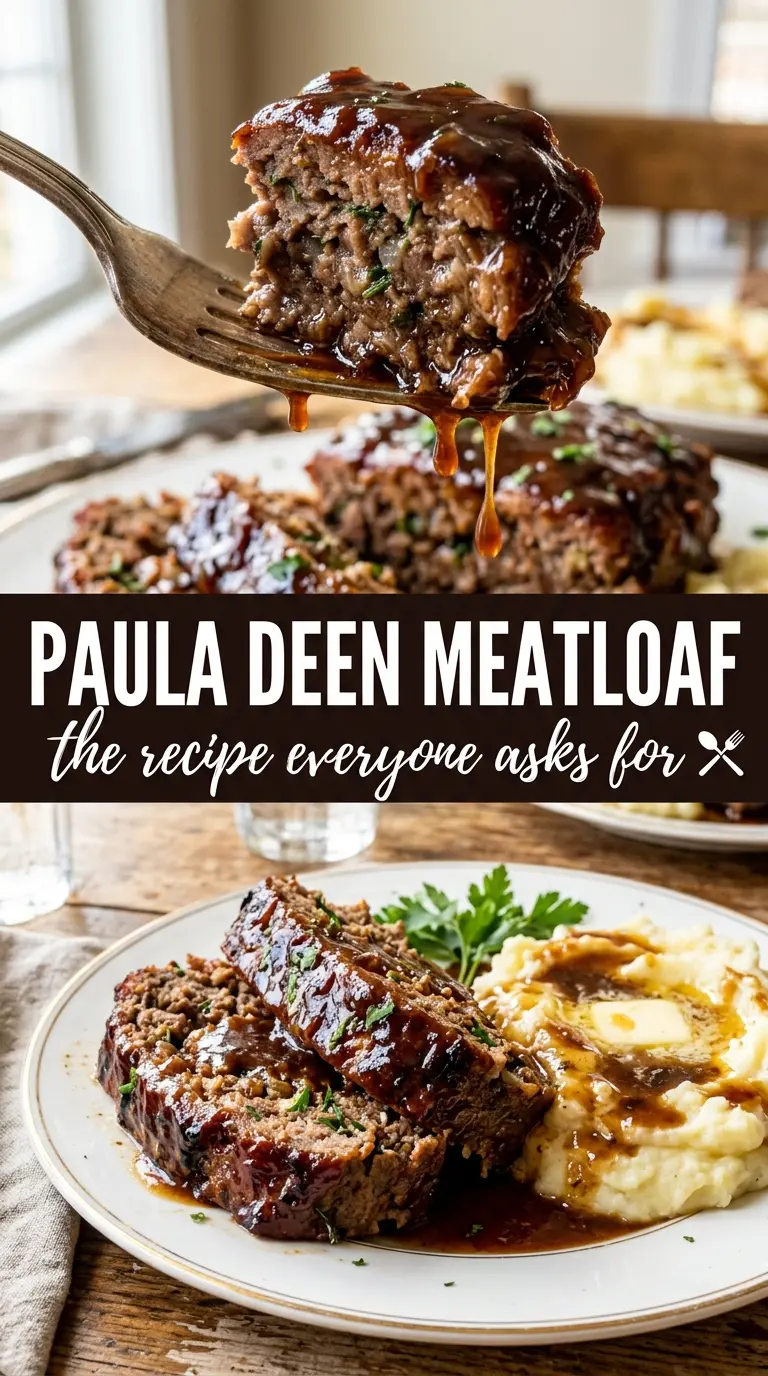
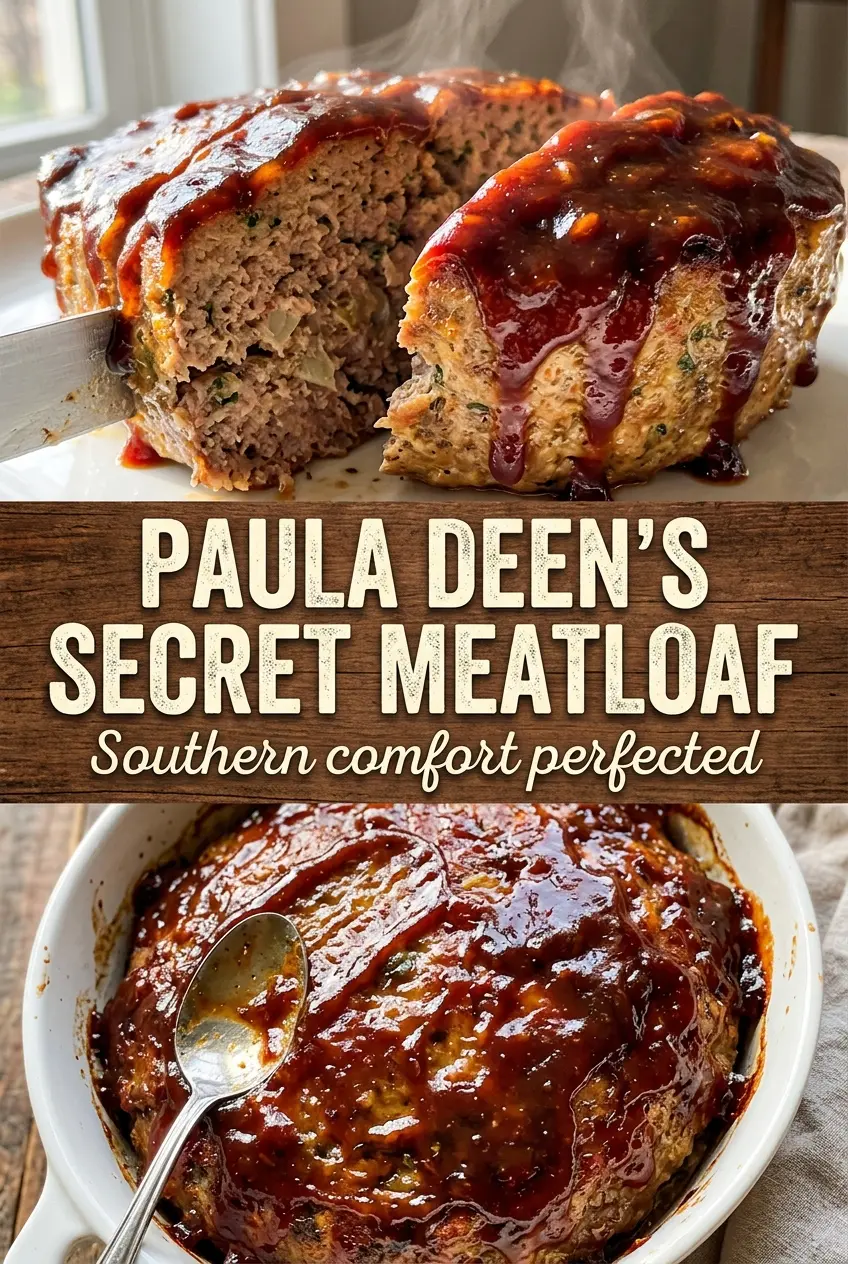
Paula Deen’s meatloaf bakes up the way a proper Southern meatloaf should: tender in the middle, sturdy enough to slice cleanly, and capped with a glossy ketchup glaze that turns sticky and caramelized in the oven. The loaf holds together without tasting dense, and every slice gets a little sweet-savory edge from the topping.
What makes this version work is the balance. Crushed crackers or breadcrumbs keep the texture light, milk softens the meat, and the onion and bell pepper add moisture without turning the loaf mushy. The glaze goes on before baking, not after, so it cooks into the top instead of sitting on it like an afterthought.
Below, I’ll walk through the small details that keep meatloaf from falling apart or turning dry, plus a few smart ways to adapt it without losing that old-fashioned comfort-food feel.
The glaze caramelized perfectly and the loaf held together in neat slices. I used saltines like you suggested and the texture was spot on, not heavy at all.
Paula Deen’s meatloaf with that caramelized ketchup-brown sugar top is the one to pin for a tender, sliceable Southern dinner.
The detail that keeps this meatloaf from turning heavy
Meatloaf gets dense fast when the mixture is packed too tightly or the binder is overworked. The goal here is a loaf that holds together when sliced but still eats tender, and that starts with mixing just until everything is evenly combined. Once the beef starts looking paste-like, you’ve gone too far.
The loaf pan helps this particular recipe keep its classic shape, but it also means the meat has less room to release fat as it bakes. That’s why the milk, cracker crumbs, and vegetables matter. They give the loaf enough structure to stay tall without drying out before the center reaches temperature.
- Ground beef — An 80/20 blend gives the best balance of flavor and moisture. Leaner beef can work, but the loaf will be drier unless you’re especially careful not to overbake it.
- Crackers or breadcrumbs — Crushed saltines bring a softer, more old-fashioned texture. Plain breadcrumbs work too, but if you use seasoned crumbs, cut back a little on the salt.
- Onion and green bell pepper — These add the signature Southern meatloaf flavor and a little moisture. Dice them finely so they melt into the loaf instead of creating rough pockets.
- Glaze ingredients — The ketchup, brown sugar, and mustard mixture is more than a topping. The sugar helps the surface caramelize, while the mustard keeps the sweetness from tasting flat.
What Each Ingredient Is Actually Doing in This Meatloaf or Meatballs
- Ground meat (the protein foundation) — Use 80/20 so it stays moist. Handle gently to keep texture tender instead of dense.
- Breadcrumbs or fillers (the binder) — These hold the meat together without making it dense. Soak in milk first so they add moisture.
- Egg (the structural binding agent) — This holds everything together during cooking. One egg per pound of meat is the right ratio.
- Onion and aromatics (the base flavor) — Mince finely so they distribute evenly. Raw onion softens as it cooks and becomes part of the texture.
- Seasonings (salt, pepper, Worcestershire, spices) — Build flavor boldly. The meat mixture carries the entire flavor profile.
- Milk or liquid (the moisture keeper) — This keeps the meatloaf tender instead of dense and dry. Don’t skip this step.
- Glaze or sauce (ketchup-based or other) — This adds sweetness, moisture, and flavor to the exterior. Apply strategically so it caramelizes.
- Resting time (the final step) — Let the meatloaf rest 10 minutes so it sets and slices cleanly. Cutting too soon makes it fall apart.
Building the loaf so it stays juicy and slices cleanly
Mix the base without crushing the meat
Combine the beef, onion, bell pepper, eggs, milk, crumbs, Worcestershire, garlic powder, salt, and pepper in a large bowl and mix with your hands just until the ingredients disappear into one another. If you keep squeezing and stirring, the proteins tighten up and the loaf bakes up firm instead of tender. The mixture should look cohesive but still a little loose before it goes into the pan.
Shape it into the pan, don’t press it hard
Press the meat mixture into a greased 9×5 loaf pan, but don’t pack it like clay. A gentle press is enough to remove air pockets and help it hold together, while heavy packing makes the final texture tight. Smooth the top so the glaze has an even surface to cling to.
Spread the glaze before baking
Stir the ketchup, brown sugar, and mustard together until smooth, then spread it evenly over the meatloaf before it goes in the oven. That topping caramelizes during baking and sets into a sticky layer instead of slipping off after the fact. If the glaze looks thin at first, that’s fine; it thickens as it bakes.
Bake to temperature, not just time
Bake at 350°F for 60 to 70 minutes until the internal temperature reaches 160°F and the glaze looks dark and lacquered at the edges. Oven times vary more than people expect, especially with loaf pans, so the thermometer is the part that keeps you from guessing. Pull it when the center is done, not when the top looks dark enough.
Let it rest before slicing
Give the meatloaf 10 minutes on the counter before cutting into it. That short rest lets the juices settle back into the meat instead of running onto the cutting board. If you slice too soon, even a well-made loaf can seem crumbly and wet.
How to adapt the glaze, the binders, and the pan to what you have
Use gluten-free crumbs for a gluten-free loaf
Swap the crackers for gluten-free breadcrumbs or crushed gluten-free crackers in the same amount. The texture stays close to the original, though very coarse crumbs can make the loaf feel a little looser, so mix until everything is evenly distributed.
Make it a little leaner without losing too much moisture
You can use ground beef that’s a bit leaner, but add an extra tablespoon of milk if the mixture seems dry before shaping. Lean meat gives you a slightly firmer slice and a less rich finish, so keep a close eye on the bake time and don’t let it run past 160°F.
Bake it free-form for more caramelized edges
Shape the loaf on a rimmed baking sheet instead of using a pan if you want more browned edges and a little less steam around the sides. It won’t look quite as tall, but the glaze sets up beautifully and the exterior gets a firmer crust.
Switch to turkey for a lighter version
Ground turkey works, but it needs the milk and binder even more than beef because it dries out faster. The flavor is milder, so the Worcestershire and glaze matter more; that’s what keeps the loaf from tasting flat.
Storage and Reheating
- Refrigerator: Store leftovers in an airtight container for 3 to 4 days. The glaze holds up well, though the slices firm up a little after chilling.
- Freezer: Meatloaf freezes well. Wrap slices or the whole cooled loaf tightly and freeze for up to 3 months; thaw in the fridge before reheating.
- Reheating: Warm slices covered in the oven at 325°F with a splash of broth or water in the pan. The biggest mistake is blasting it in the microwave until the edges turn rubbery and the glaze dries out.
Answers to the questions worth asking
Paula Deen's Meatloaf
Ingredients
Equipment
Method
- Preheat the oven to 350°F and grease a 9x5 loaf pan so the meatloaf releases cleanly.
- In a mixing bowl, combine ground beef, onion, green bell pepper, eggs, milk, crushed crackers or breadcrumbs, Worcestershire sauce, garlic powder, salt, and black pepper until just combined.
- Press the mixture firmly into the prepared loaf pan so it holds together when sliced.
- In a small bowl, mix ketchup, brown sugar, and prepared mustard, then spread evenly over the top.
- Bake for 60–70 minutes at 350°F until the internal temperature reaches 160°F and the glaze is caramelized and dark.
- Rest the meatloaf for 10 minutes before slicing so the juices set and each slice stays moist.
- Slice and serve with Southern sides.