
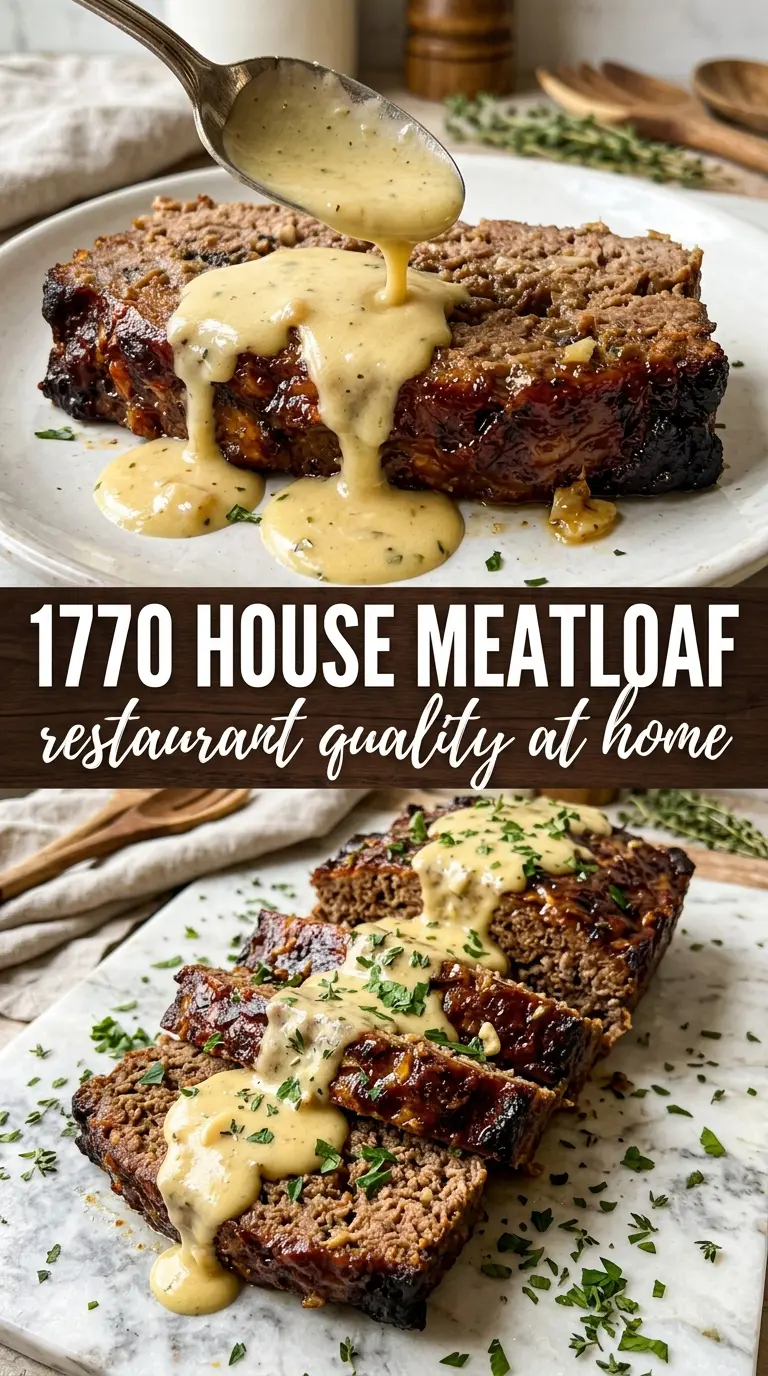
Rustic meatloaf gets a different kind of attention when the outside turns deeply caramelized and the inside stays dense, tender, and full of herbs. The garlic sauce changes the whole plate. It’s creamy, mellow, and rich enough to turn a classic supper into something that feels restaurant-worthy without asking for fussy technique.
What makes this version work is the balance in the mix and the free-form bake. Breadcrumbs soaked in milk keep the loaf from tightening up, while the combination of beef and pork gives you flavor and enough fat for a moist slice that still holds together. Sautéed onion matters here too. Raw onion can taste sharp and leave the loaf a little loose; cooking it first softens the edge and folds right into the meat.
Below, you’ll find the small details that keep the loaf from going dense and the sauce from turning grainy. The roasting, resting, and slicing order matters more than people expect, especially when you want clean slices instead of a crumbly plate.
The loaf held together beautifully and the garlic sauce was silky after blending. I used the full rest time and the slices came out clean instead of falling apart.
Save this 1770 House Meatloaf with Garlic Sauce for the nights when you want a caramelized meatloaf and a silky roasted garlic sauce on the same plate.
The Trick Behind a Meatloaf That Slices Cleanly
A lot of meatloaves turn dense because the mixture gets packed too tightly or baked in a way that traps steam. This one stays better behaved because it’s shaped free-form on a sheet pan, which lets the exterior brown instead of steaming in a loaf pan. That browned shell gives you flavor and a slice that holds together when you cut into it.
The other thing that matters is the breadcrumb mixture. Soaking the crumbs in milk first helps them act like a binder instead of a dry filler. If the meat feels pasty, it’s usually been mixed too long. Stop as soon as everything is evenly combined, because overworking ground meat tightens it up in the oven.
- Free-form shaping — This gives you better browning than a pan-baked loaf and keeps the edges from going soft.
- Milk-soaked breadcrumbs — They bring moisture into the meat mixture and keep the texture tender without making it loose.
- Sautéed onion — Cooked onion blends into the loaf more smoothly than raw onion and avoids that harsh bite.
- Rest time — The loaf finishes setting as it rests. Slice too early and the juices run out instead of staying in the meat.
What Each Ingredient Is Doing in the Loaf and Sauce
The beef is the backbone here. An 80/20 grind gives you enough fat for flavor and a slice that stays juicy. Leaner beef can work, but the loaf gets drier and the garlic sauce has to carry more of the meal than it should.
Pork softens the texture and adds a rounder, sweeter note. If you need to swap it out, ground turkey can replace it in a pinch, but the finished loaf will be lighter and less rich. The sauce is built on roasted garlic, and that’s not negotiable if you want the mellow, sweet edge that makes this recipe stand out. Raw garlic would taste sharp and aggressive in the cream sauce.
- Ground beef and ground pork — The combination gives the loaf flavor, fat, and tenderness. Use all beef if needed, but expect a firmer result.
- Roasted garlic — Roasting turns sharp garlic soft and sweet. It’s what makes the sauce taste layered instead of one-note.
- Heavy cream — This gives the sauce body. Half-and-half can work, but the sauce will be thinner and less plush.
- Dijon and Worcestershire — These don’t read as mustard or sauce in the finished loaf. They deepen the savoriness and make the meat taste seasoned all the way through.
Building the Loaf and Finishing the Garlic Sauce
Soaking the Breadcrumbs
Stir the breadcrumbs into the milk and give them about 5 minutes to hydrate before anything else goes into the bowl. They should look soft and swollen, not dry and dusty. If there’s extra milk sitting in the bowl, squeeze it off so the mixture doesn’t turn loose in the oven. That little bit of restraint keeps the loaf sliceable.
Mixing Without Overworking
Add the beef, pork, onion, garlic, Worcestershire, Dijon, thyme, salt, pepper, and soaked breadcrumbs, then mix just until the ingredients disappear into each other. The mixture should hold together when you press it, but it shouldn’t look mashed. If you keep stirring after that point, the meat gets tight and the finished texture turns heavy.
Shaping for Better Browning
Form the loaf into a free-form oval on a parchment-lined baking sheet. Leave a little space around it so the heat can circulate and the edges can caramelize. A compact loaf bakes more evenly than one that’s spread out too thin, but if it’s too tall, the center takes forever to come up to temperature. Aim for a shape that looks sturdy and even from end to end.
Roasting and Resting
Bake until the internal temperature reaches 160°F, which usually takes 60 to 70 minutes. The top should look deeply browned and the edges should pull slightly away from the parchment. Let it rest for 10 minutes before slicing. If you cut immediately, the juices run onto the board and the slices won’t stay neat.
Blending the Roasted Garlic Sauce
Squeeze the roasted garlic into a saucepan with the broth and cream, then simmer it for a few minutes until everything is hot and unified. Stir in the butter at the end for a smoother finish, then blend until the sauce turns velvety. If the sauce looks grainy, it usually means the heat was too high when the cream went in. Keep it at a gentle simmer, not a boil, and it will stay silky.
How to Adapt This Meatloaf for Different Tables
Gluten-Free Version
Swap the breadcrumbs for certified gluten-free breadcrumbs in the same amount. The loaf will still hold together, but some GF crumbs absorb liquid differently, so watch the mixture after it sits for a minute. If it looks wet, add a spoonful more crumbs rather than piling on extra meat.
Dairy-Free Adaptation
Use unsweetened plain non-dairy milk for soaking the breadcrumbs and replace the cream in the sauce with full-fat coconut milk or an unsweetened oat-based cooking cream. The sauce won’t taste exactly the same, but it will still coat the meatloaf nicely. Keep the heat low so the substitute doesn’t separate.
Using Only Beef
If you don’t want to use pork, replace it with more ground beef and add a tablespoon of olive oil to help the mixture stay tender. The loaf will taste a little meatier and less plush, so don’t overbake it. Pull it as soon as it hits temperature and let the rest do its work.
Make-Ahead Dinner
Shape the loaf a few hours ahead, cover it, and refrigerate it until you’re ready to bake. Let it sit on the counter while the oven heats so it doesn’t go in ice-cold. The sauce is best made fresh, but the garlic can be roasted ahead and kept in the fridge for a day or two.
Storage and Reheating
- Refrigerator: Store leftovers in an airtight container for up to 4 days. The loaf stays moist, and the sauce will thicken as it chills.
- Freezer: The meatloaf freezes well, sliced or whole, for up to 2 months. Freeze the sauce separately if possible; cream sauces can separate a little when thawed, though they usually come back together with gentle reheating.
- Reheating: Reheat slices covered in a 300°F oven with a splash of broth or water until warmed through. For the sauce, warm it slowly over low heat and whisk often. High heat is what makes a cream sauce split.