Charred blackened shrimp turn fast, and that’s exactly why they land in the regular dinner rotation. The spice crust gets smoky and a little fierce in the skillet, while the shrimp stay juicy underneath instead of turning rubbery. Piled over fluffy rice with avocado, corn, and sharp red onion, the whole bowl hits that sweet spot between bold and fresh.
The key is a dry shrimp surface and a skillet hot enough to smoke before the seafood goes in. That combo gives you actual blackening instead of just seasoned shrimp sitting in a pan. Butter carries the spices, but it also browns quickly, so the shrimp need a short cook and a confident flip. If the pan isn’t hot enough, the coating steams and slides off; if it’s hot enough, the edges grab beautifully.
Below, I’m breaking down the part that matters most: how to get that dark crust without overcooking the shrimp, plus a few smart swaps for rice, toppings, and heat level.
The shrimp picked up a deep crust in under 3 minutes per side, and the rice bowl with avocado and lime tasted like a restaurant lunch, not something I threw together on a Tuesday.
Save these blackened shrimp bowls for the nights when you want smoky shrimp, cool avocado, and a fast rice bowl with a little Cajun heat.
The Trick to Blackening Shrimp Without Turning Them Tough
Blackened shrimp only work when the pan is hot enough to sear the spice blend before the shrimp overcook. Shrimp go from tender to tight in a narrow window, so the goal isn’t to keep them on the heat longer for more color. The color comes from contact with a properly heated skillet and enough spice on the surface to toast, not from extra time.
Dry shrimp matter more here than in most quick skillet dinners. Any surface moisture turns the spice blend muddy and keeps the crust from forming. Cast iron helps because it holds heat when the shrimp hit the pan, which keeps the temperature from dropping too sharply. If your skillet is lightly smoking before the shrimp go in, you’re in the right zone.
What Each Ingredient Is Doing in This Bowl
- Large shrimp — Bigger shrimp hold up better to the high heat and give you a better ratio of crust to tender center. Smaller shrimp cook too fast and are easier to overdo before the spices darken.
- Paprika, cayenne, garlic powder, onion powder, thyme, oregano, and black pepper — This is the blackening blend. Paprika gives color and a little sweetness, cayenne brings heat, and the dried herbs round out the spice without making the coating taste flat.
- Butter — Butter helps the spices cling and browns in the skillet for that nutty, smoky edge. You can use oil if needed, but you’ll lose some of that deeper finish.
- White rice — Rice acts like a neutral base that catches the seasoning and shrimp juices. Jasmine or long-grain both work well as long as the grains stay fluffy, not sticky.
- Avocado, corn, red onion, cilantro, and lime — These toppings keep the bowl from feeling heavy. Avocado cools the heat, corn adds sweetness, red onion brings bite, cilantro freshens everything up, and lime wakes up the shrimp right before serving.
Building the Bowls in the Right Order
Mixing the Spice Blend
Stir the paprika, garlic powder, onion powder, cayenne, thyme, oregano, and black pepper together first so the heat lands evenly on every shrimp. A shallow bowl works better than a deep one because it lets you coat quickly without packing on too much seasoning in one spot. If the blend looks clumpy, break it up with your fingers before the shrimp go in.
Coating the Shrimp
Pat the shrimp dry with paper towels until the surface feels tack-free. Toss them in the spice mixture until each one is evenly coated, then shake off the excess so the pan doesn’t fill with loose spices that can scorch before the shrimp are done. If the coating looks paste-like, there’s still too much moisture on the shrimp.
Getting the Sear
Melt the butter in a large cast-iron skillet over medium-high heat and wait until it’s sizzling hard and just starting to smoke. Add the shrimp in a single layer and leave them alone for the first minute so the crust can set. Flip once the bottoms are deeply charred and the shrimp have curled into a loose C shape; if they turn into tight O shapes, they’ve gone too far.
Assembling the Bowl
Spoon the hot rice into bowls first, then pile the shrimp on top so their juices soak into the rice a little. Scatter the corn, avocado, and red onion around the shrimp instead of burying them underneath, which keeps the textures distinct. Finish with cilantro and a generous squeeze of lime right at the table so the citrus stays bright.
How to Adapt These Shrimp Bowls for Different Tables
Make it dairy-free
Use olive oil or avocado oil instead of butter. You’ll still get a good sear, but the spice crust will taste a little cleaner and less nutty than the butter version.
Turn down the heat
Cut the cayenne in half if you want more smoky heat than sharp heat. The shrimp still read as blackened because the paprika and char do most of the work; the bowl just finishes gentler.
Make it low-carb
Swap the rice for cauliflower rice or shredded cabbage. Cauliflower rice keeps the bowl light and neutral, while cabbage adds crunch and stands up well to the hot shrimp and lime.
Use what you’ve got for toppings
Swap the corn for diced tomatoes, cucumber, or shredded lettuce if that’s what’s in the fridge. The important part is keeping one creamy topping, one crisp topping, and one bright finishing element so the bowl doesn’t eat flat.
Storage and Reheating
- Refrigerator: Store the shrimp and rice separately for up to 2 days. The shrimp stay best when they aren’t sitting on the avocado and lime.
- Freezer: The cooked shrimp can be frozen, but the texture softens a little after thawing. Freeze them flat in a sealed bag and skip freezing the toppings and rice if you want the best result.
- Reheating: Warm the shrimp gently in a skillet over low heat or in short bursts in the microwave. High heat makes them rubbery fast, so reheat only until just warmed through, then rebuild the bowl with fresh toppings.
Answers to the Questions Worth Asking
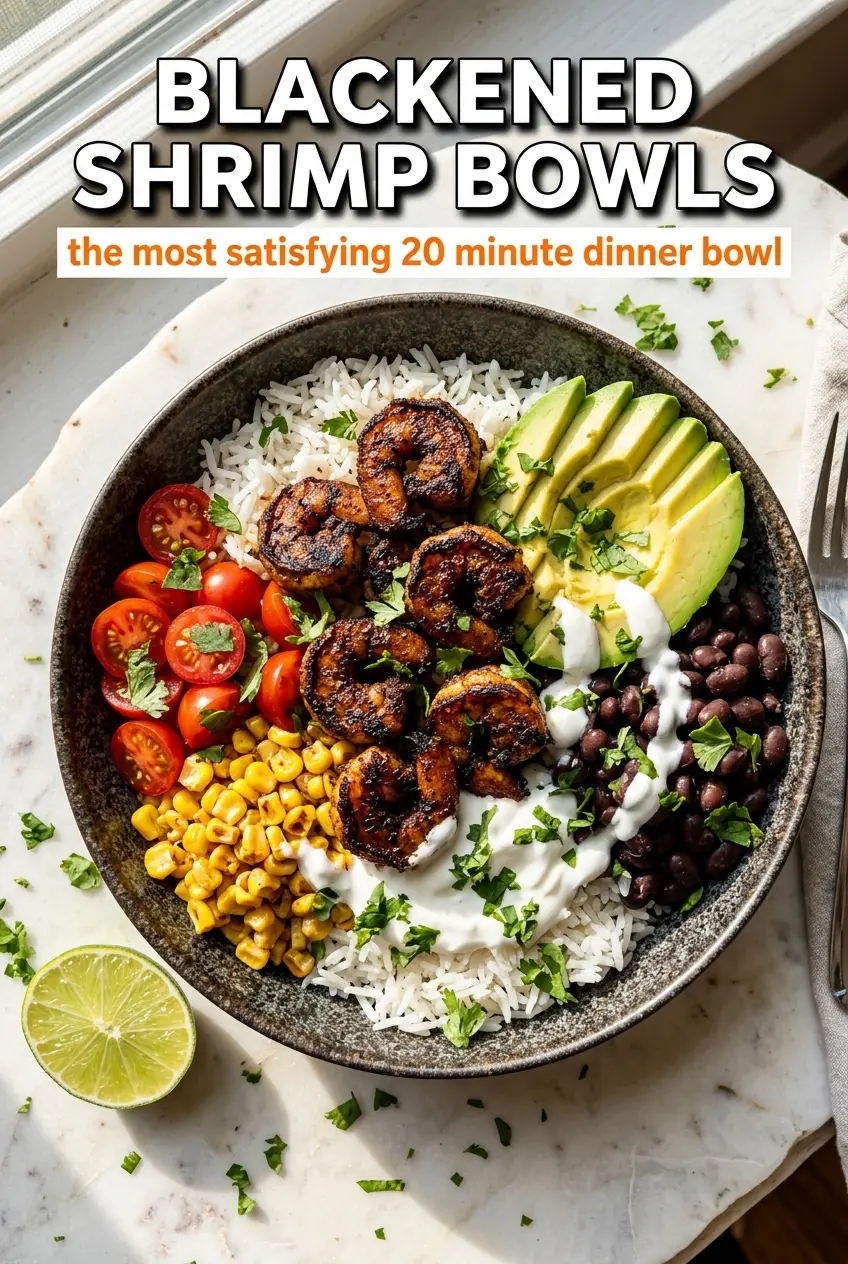
Blackened Shrimp Bowls
Ingredients
Equipment
Method
- Mix paprika, garlic powder, onion powder, cayenne pepper, dried thyme, dried oregano, and black pepper in a shallow bowl, stirring until evenly combined and vividly speckled (no dry streaks).
- Set the bowl aside so the shrimp can be coated right after pat-drying for best spice adhesion and char formation.
- Pat large shrimp dry, then coat evenly with the blackening spice mixture so every shrimp surface has a uniform rub and dark specks cling visibly.
- Melt butter in a large cast-iron skillet over medium-high heat until smoking, with active shimmering and a slight haze indicating it’s hot enough to char.
- Add shrimp in a single layer and cook 2-3 minutes per side until charred and cooked through, flipping once when deep blackened patches form and juices look set.
- Divide cooked white rice among four bowls and spread into an even base so toppings don’t sink.
- Top each bowl with blackened shrimp, avocado slices, corn, and thinly sliced red onion for color contrast and even bites in every scoop.
- Garnish with fresh cilantro and serve with lime wedges, squeezing over the top right before eating for brightness.