Silky pasta, charred corn, and a sharp hit of Cotija turn this elote pasta carbonara into the kind of dinner that disappears fast. The sauce clings to every strand instead of pooling at the bottom of the bowl, and the bacon brings just enough smoky crunch to keep each bite moving. Tajín and lime keep the richness from feeling heavy, so the whole dish tastes bright, salty, and a little bit addictive.
What makes this version work is the order of operations. The yolks, cheeses, and seasoning get whisked together first, then the hot pasta and corn wake everything up off the heat. That keeps the eggs from scrambling and gives you a glossy sauce instead of a grainy one. The pasta water matters here too; it loosens the mixture just enough to turn the cheese and yolks into something creamy without any cream at all.
Below, I’m walking through the one part that trips people up most: how to add the egg mixture without breaking it. I also included a few smart swaps for when you want to use what’s in the fridge and still keep the dish in balance.
The sauce turned out silky instead of scrambled, and the charred corn with the tajín gave it that elote flavor my husband kept talking about. We had zero leftovers.
Save this elote pasta carbonara for the night you want creamy spaghetti, charred corn, and bacon in one pan.
The Secret to Carbonara Texture When Corn Joins the Pan
The biggest risk here isn’t the corn. It’s the eggs. Carbonara depends on residual heat, not direct heat, and that matters even more when you add juicy corn and a little extra moisture from the bacon pan. If the skillet is screaming hot when the yolks go in, the sauce tightens too fast and turns into soft curds instead of a smooth coating.
That’s why the pasta gets tossed with the corn mixture off the burner first. The starch on the noodles helps the sauce grab, and the corn adds just enough texture that the dish still feels light. If the sauce looks thin at first, keep tossing for a few seconds before adding more pasta water. It thickens as the cheese melts and the yolks emulsify.
- Off-heat tossing keeps the egg yolks creamy instead of scrambled.
- Pasta water brings starch, which helps the sauce cling and smooth out.
- Hot pasta does the cooking work for the yolks without taking them too far.
- Charred corn adds sweetness and a little bite so the dish doesn’t eat like plain cream sauce.
What Each Ingredient Is Actually Doing in This Dish
There’s no heavy cream in this carbonara, and you don’t miss it when the ingredients are doing their jobs. Egg yolks bring the richness and body. Cotija gives salt and a crumbly, milky edge that feels very elote. Parmesan adds sharper depth and helps the sauce finish with more structure than Cotija alone would give. Tajín is not just garnish here; a little goes into the sauce so the chile-lime tang runs through the whole bowl instead of sitting on top.
Fresh corn matters if you want the sweet pop and the charred edges. Frozen corn works in a pinch, but it needs a hot pan and a little patience so it can dry out and brown instead of steaming. Bacon is worth keeping in the recipe because the fat seasons the corn and the crisp pieces add contrast against the creamy pasta. Cilantro and lime go in at the end for freshness, which is what keeps this from tasting flat.
- Spaghetti gives the sauce long strands to coat, which is why this dish eats like carbonara instead of a skillet pasta with toppings.
- Cotija is the elote backbone here. Parmesan alone won’t give the same salty crumble.
- Tajín brings chile, lime, and salt together in one move, which is why it works better than seasoning in separate layers.
- Lime juice should go in at the end. Add it too early and the bright edge gets lost in the heat.
The 20 Minutes That Matter Most
Cooking the Pasta to Real Al Dente
Salt the water well and cook the spaghetti until it still has a firm bite in the center. You want it slightly under where you’d normally stop for plain pasta because it finishes in the sauce. Reserve at least a cup of pasta water before draining; that cloudy water is part of the sauce, not an afterthought. If you drain the pasta and forget the water, the sauce still works, but it won’t have the same silkiness.
Rendering the Bacon and Char the Corn
Cook the chopped bacon until it’s crisp and the fat in the pan smells nutty, not burnt. Pull the bacon out first so it stays crunchy. Then add the corn to that rendered fat and let it sit long enough to pick up real color before stirring. If you stir constantly, the kernels soften without getting those browned edges that make this taste like elote instead of plain corn pasta.
Building the Sauce Off the Heat
Whisk the yolks, cheeses, tajín, and cilantro in a bowl before anything gets too hot. Add the hot pasta to the skillet with the corn, then take the pan off the burner before the egg mixture goes in. Toss fast and add pasta water a splash at a time until the sauce loosens and turns glossy. If it starts to look grainy, stop adding heat immediately and work in a little more water while tossing; the sauce usually comes back together.
Finishing with Bacon, Lime, and the Final Seasoning
Fold the bacon back in once the sauce is smooth. Then hit the pasta with lime juice, salt, and pepper to sharpen everything at the end. Taste after the lime goes in, because it can wake up the salt level enough that you don’t need much more. Serve right away while the sauce is still fluid and glossy; carbonara tightens as it sits.
How to Adapt This for What’s in Your Kitchen
Make It Dairy-Free Without Losing the Elote Feel
Use a dairy-free Parmesan-style alternative and a salty vegan crumb or finely grated nut-based cheese in place of Cotija. The texture will be a little less creamy and a little less sharp, but the egg yolks and pasta water still build a glossy sauce. Keep the bacon if you eat it, since the fat helps carry the corn flavor.
Swap the Bacon for a Vegetarian Version
Leave out the bacon and sauté the corn in butter or olive oil until it browns at the edges, then add a pinch of smoked paprika for depth. You’ll lose the salty crunch, so add a little extra Cotija and taste carefully with the lime at the end. The dish becomes lighter, but it still keeps that elote-corn character.
Use Frozen Corn When Fresh Isn’t Happening
Thaw the corn first, then cook it in the bacon fat over medium-high heat until the moisture cooks off and the kernels pick up color. If you skip that drying step, the pan steams and the flavor falls flat. Fresh corn tastes sweeter and brighter, but frozen corn still gives good results if you brown it properly.
Storage and Reheating
- Refrigerator: Store in an airtight container for up to 3 days. The sauce will firm up and the pasta will drink in some of the moisture.
- Freezer: I don’t recommend freezing this one. Egg-based sauces tend to turn grainy after thawing, and the corn loses its crisp edge.
- Reheating: Warm it gently in a skillet over low heat with a splash of water or milk, tossing until loosened. High heat is what breaks the sauce, so don’t blast it in the microwave unless you’re okay with a drier, less silky result.
Questions I Get Asked About This Recipe
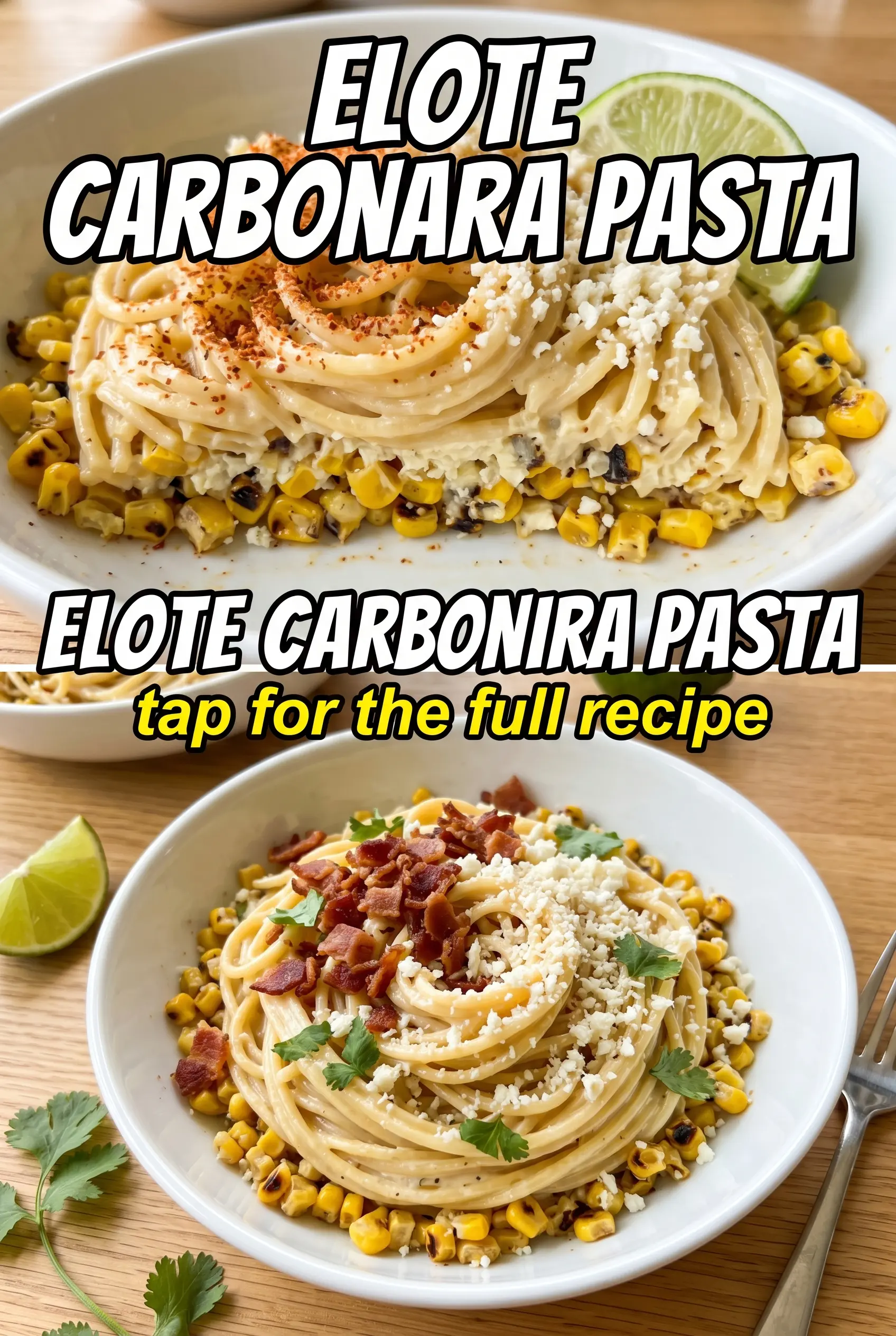
Elote Pasta Carbonara
Ingredients
Equipment
Method
- Bring a large pot of salted water to a boil, then add spaghetti and cook until al dente, about 8-10 minutes. Visual cue: pasta should be tender but still firm at the center.
- Scoop and reserve 1 cup pasta water, then drain the spaghetti. Visual cue: keep pasta water slightly cloudy for sauce texture.
- In a bowl, whisk together egg yolks, Cotija, Parmesan, tajín, and cilantro until smooth and thick. Visual cue: the mixture turns pale and glossy.
- Cook chopped bacon in a large skillet over medium heat until crispy, about 8-10 minutes, then remove and set aside. Visual cue: bacon pieces look deep golden and render fat.
- Add corn kernels to the bacon fat in the same skillet and cook 3-4 minutes over medium-high heat, stirring occasionally, until charred. Visual cue: you should see browned spots on most kernels.
- Combine hot pasta with the corn mixture off the heat in the skillet. Visual cue: steam should rise, but the mixture should not be actively boiling.
- Quickly stir in the egg mixture, adding reserved pasta water a little at a time until creamy, about 1-2 minutes. Visual cue: sauce coats the pasta and turns silky rather than scrambled.
- Toss in the crispy bacon, then season with lime juice, salt, and pepper and serve immediately. Visual cue: glossy coating and visible corn and bacon throughout.