Light, airy sponge cake, cool pastry cream, and fresh strawberries make this French strawberry cake the kind of dessert that disappears fast once it reaches the table. The cake stays delicate instead of heavy, the cream adds a soft custard layer, and the strawberries bring just enough sweetness and brightness to keep each bite clean and balanced.
What makes this version work is the structure. Separating the eggs gives the cake lift without relying on a dense batter, and folding the whites in at the end keeps that batter from losing air. The pastry cream also matters here; it gives the cake that classic patisserie feel, but it has to be thick enough to hold the layers without sliding once the cake chills.
Below, you’ll find the one place this cake usually goes wrong, how to keep the sponge tender, and a few smart swaps if your strawberries are a little tart or your schedule needs a make-ahead dessert.
The sponge came out light and springy, and the pastry cream held its shape after chilling. I loved that the strawberries stayed whole on top instead of turning the cake soggy.
Save this French strawberry cake for the next time you want a delicate sponge, pastry cream, and fresh strawberries in one elegant dessert.
The Small Detail That Keeps the Sponge Light Instead of Dense
This cake depends on air. The egg yolks and sugar are whipped first until pale and thick, which gives the batter its base structure before the flour goes in. Then the whipped whites lift everything else, so the finished crumb stays soft instead of tight and bready. If you rush the folding or beat the whites past stiff peaks until they look dry and clumpy, the cake loses that gentle rise and bakes up less elegant.
The other place people lose the texture is in the final mixing. Once the flour goes in, stop as soon as it disappears. Overmixing at that stage knocks out the air you just worked in, and the sponge turns heavier than it should.
What the Pastry Cream and Strawberries Are Really Doing Here
- Pastry cream — This is the layer that turns a simple sponge cake into a proper French-style dessert. It needs to be thick enough to hold clean slices, so use a fully chilled cream, not one that still feels loose or warm. If you need to make it ahead, chill it tightly pressed with plastic wrap on the surface so it doesn’t form a skin.
- Whole strawberries — Whole berries give the cake its jewel-like finish and keep the decoration from looking busy. If your berries are large, halve a few for the middle layer so the cake stacks more evenly, then save the prettiest whole ones for the top.
- Eggs, separated — The separation is not optional here. The yolks build richness and color, while the whites create lift without making the cake taste eggy. Cold eggs are easier to separate cleanly, but let the yolks come to room temperature before mixing so they whip more smoothly with the sugar.
- Vegetable oil — Oil keeps the sponge tender even after chilling. Butter can work, but it sets firmer in the fridge and gives a less supple crumb. If you swap in melted butter, the cake will taste a little richer, but it won’t stay as soft straight from the refrigerator.
Building the Layers Without Crushing the Cake
Whipping the Base
Beat the egg yolks and sugar until the mixture turns pale yellow and falls from the whisk in thick ribbons. That change matters more than the timer. If the mixture still looks grainy, keep going, because under-whipped yolks won’t hold enough air for the cake to rise properly. Stir in the oil, water, and vanilla until the mixture looks smooth and glossy before adding the dry ingredients.
Folding in the Whites
Whip the egg whites until they hold stiff peaks that stand upright when you lift the beater. Fold them in gently with a spatula, using broad sweeps from the bottom of the bowl. If you see streaks of white at the end, that’s better than overmixing; a few streaks disappear in the oven, but a deflated batter won’t recover.
Baking and Cooling Completely
Pour the batter into the pan and bake until the top springs back and a toothpick comes out clean. The cake should look set at the edges and just barely golden on top. Let it cool all the way before slicing, or the crumb will tear and the cream will melt into the layers instead of sitting neatly between them.
Assembling the Cake
Slice the cake into two even layers with a long serrated knife. Spread the pastry cream in an even layer, then arrange the strawberries so they sit flat and don’t slide when the top goes on. Chill the finished cake for at least an hour before serving so the cream firms up and the layers cleanly settle together.
How to Adapt This Cake for Different Kitchens and Occasions
Dairy-Free Version
Use a dairy-free pastry cream made with plant milk and thicken it well before chilling. The sponge itself is already dairy-free as written, so the texture stays close to the original; the only tradeoff is a slightly less rich cream layer.
If Your Strawberries Aren’t Very Sweet
Toss the berries with a light dusting of powdered sugar and let them sit for 10 minutes before assembling. That draws out a little juice and softens the tart edge without turning them jammy. Don’t overdo the sugar or the fruit will leak and make the layers slippery.
Make-Ahead for a Dinner Party
Bake the sponge and make the pastry cream a day ahead, then assemble the cake the morning you plan to serve it. That gives the cream time to set without letting the strawberries weep for too long. The cake slices best after a full chill, but it’s still at its prettiest within the first 24 hours.
Gluten-Free Adaptation
Use a good 1:1 gluten-free flour blend in place of the all-purpose flour and mix only until combined. The cake will be a touch more delicate when slicing, but the layered structure still works as long as the batter isn’t overhandled.
Storage and Reheating
- Refrigerator: Store covered for up to 3 days. The strawberries soften over time, but the flavor stays good.
- Freezer: I don’t recommend freezing the assembled cake. The pastry cream and berries lose their texture after thawing.
- Reheating: Serve chilled or let slices sit at room temperature for 15 to 20 minutes. Don’t warm this cake in the microwave, or the cream will loosen and the sponge will turn gummy.
Questions I Get Asked About This Recipe
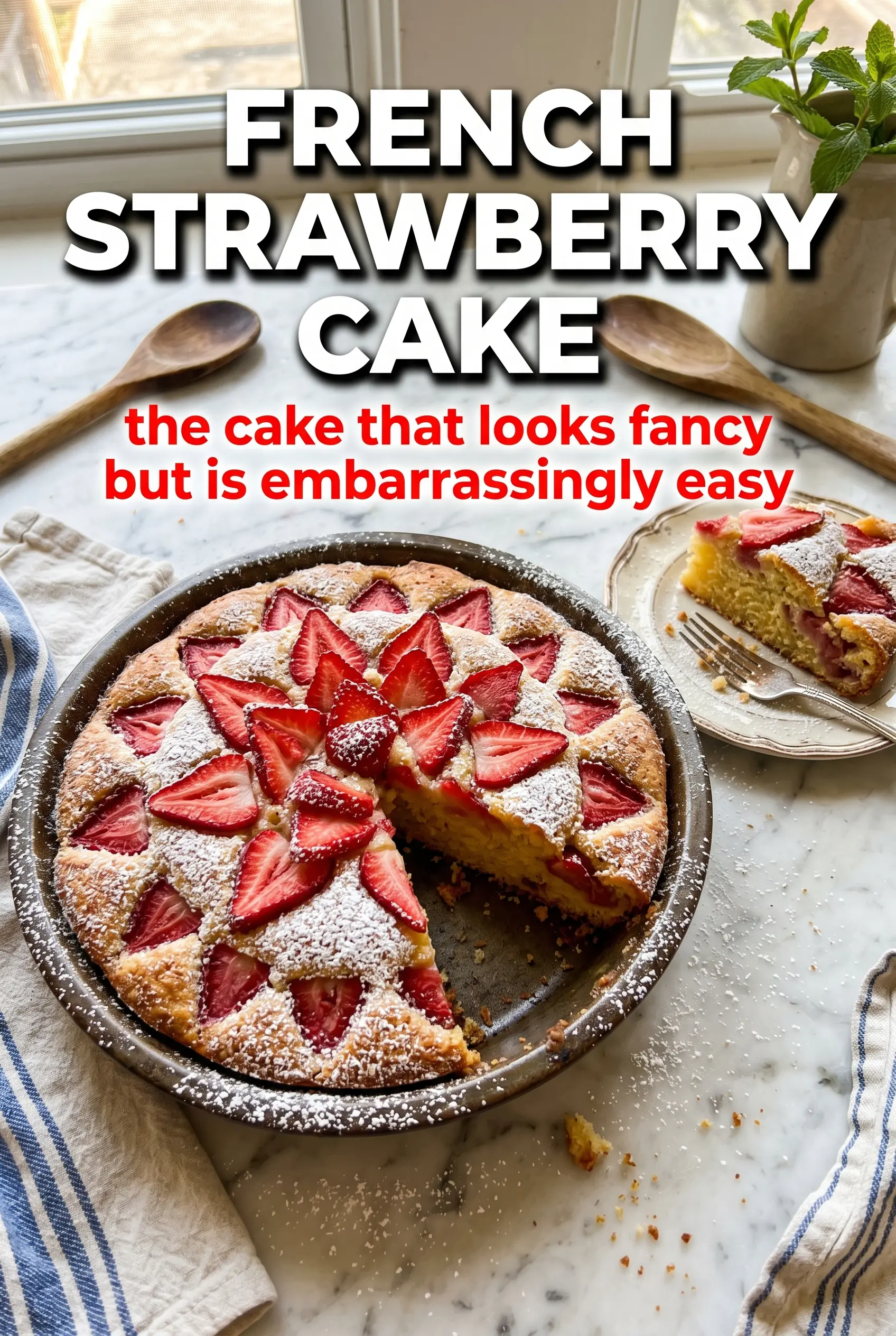
French Strawberry Cake
Ingredients
Equipment
Method
- Preheat the oven to 350°F. Line a sheet pan and place a 9-inch round cake pan nearby for quick setup.
- Whisk together all-purpose flour, baking powder, and salt until evenly distributed. The mixture should look uniform with no visible lumps.
- Beat the egg yolks with granulated sugar until pale and thick, about 3 minutes. The ribbon should fall back slowly and hold its shape briefly.
- Add vegetable oil, water, and vanilla extract to the yolk mixture. Mix just until smooth and glossy.
- Fold the flour mixture into the yolk mixture. Stop when you no longer see dry streaks to keep the batter light.
- In a separate bowl, beat the egg whites until stiff peaks form. The peaks should stand straight when you lift the whisk.
- Gently fold the beaten egg whites into the batter. Keep a light hand so the batter stays airy.
- Pour the batter into the 9-inch round cake pan. Tap once on the counter to release large air bubbles.
- Bake for 30 minutes at 350°F, until a toothpick comes out clean. The top should look lightly golden and spring back when touched.
- Cool completely before slicing. The cake must be fully cool so the layers and pastry cream don’t slide.
- Slice the cake into two layers. Use a level, even cut so the stacks stay stable.
- Spread half the pastry cream on the bottom layer. The cream layer should cover evenly to the edges.
- Arrange half the whole strawberries on top of the pastry cream. Place them as jewel-like whole pieces for a decorative surface.
- Add the top cake layer on top of the strawberries. Press gently just enough to adhere.
- Spread the remaining pastry cream over the top layer. Smooth it into an even layer for clean slices.
- Arrange the remaining whole strawberries on top in a decorative pattern. Tuck them slightly into the cream so they stay put.
- Dust the cake with powdered sugar. The surface should show a light, even snowfall.
- Refrigerate the cake for at least 1 hour before serving. Chill until set so the layers hold together.