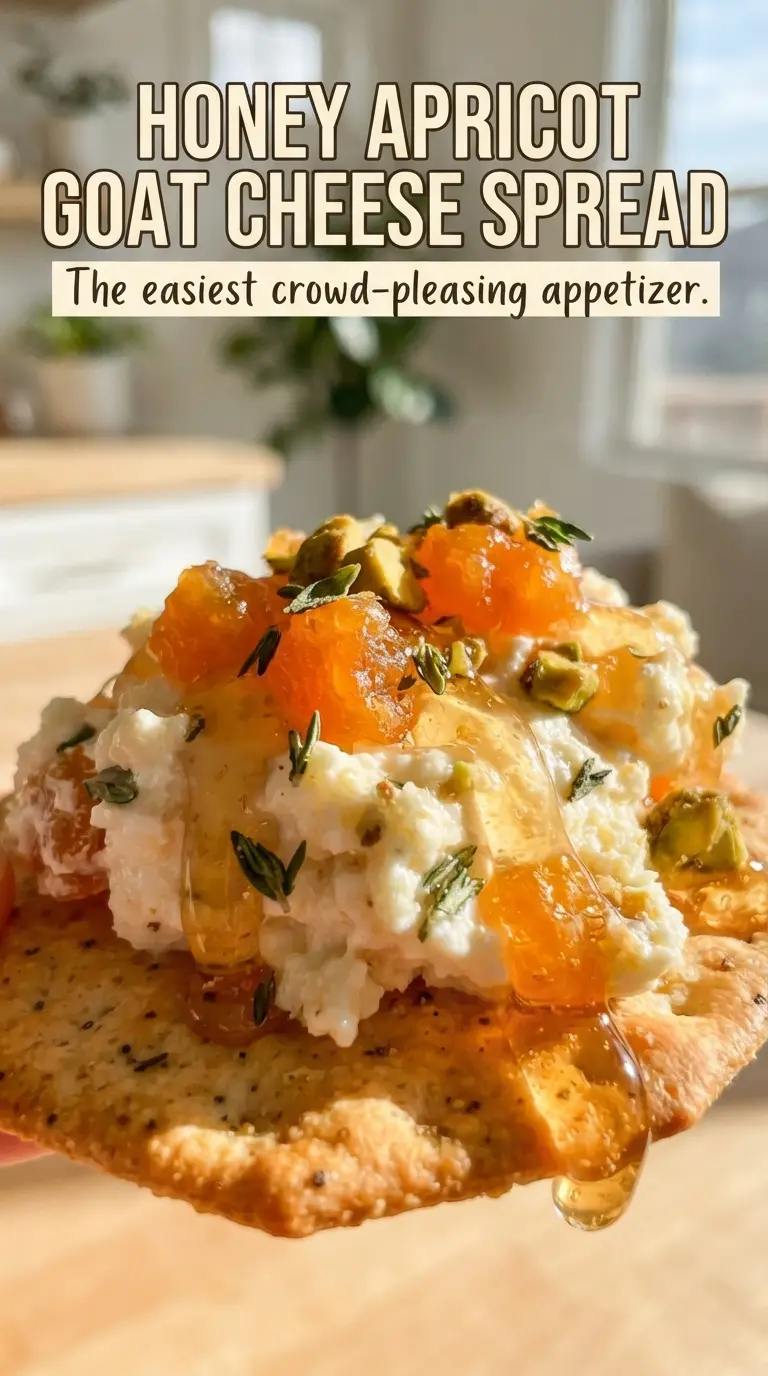
Honey apricot goat cheese spread is the kind of appetizer that disappears fast because it hits all the right notes at once: cool and creamy, sweet and tangy, a little salty, with enough crunch on top to keep every bite interesting. It looks polished on the table, but it takes barely any effort, which is exactly why it earns a place in my regular appetizer rotation.
The key is softening the goat cheese and cream cheese fully before beating them with a splash of milk. That extra milk loosens the mixture just enough to make it fluffy instead of dense, and it spreads cleanly into a bowl without fighting you. Warming the apricot preserves with honey for just a few seconds makes the topping spoonable and glossy, so it settles into the swirl instead of sitting in clumps.
Below, I’ve added a few small adjustments that make this dip-style spread work even better: how to keep the base light, what to change if you want a sharper or milder cheese flavor, and a couple of smart swaps if you need to adapt what you’ve got on hand.
The goat cheese turned fluffy instead of dense, and the warm apricot-honey swirl made it look like something from a fancy party platter. I used crostini and every last bit got scraped up.
Like this honey apricot goat cheese spread? Save it to Pinterest for your next appetizer board when you want creamy cheese, sweet apricot, and a fast no-cook topping.
The Mistake That Makes Goat Cheese Spread Dense Instead of Whipped
Goat cheese spreads can go from elegant to heavy fast, and the difference usually comes down to temperature and mixing. Cold cheese won’t whip smoothly, and if the cream cheese is still firm, you end up with little stubborn bits instead of a light, spoonable base. Let both cheeses soften all the way at room temperature so they blend into one creamy mixture before you even think about the toppings.
The milk matters here too. It doesn’t thin the spread into runny territory; it just gives the cheeses enough looseness to whip up airy and smooth. If your mixture looks stiff after beating, add another teaspoon of milk at a time rather than dumping in more all at once. That keeps the texture plush instead of soft and slack.
What Each Ingredient Is Doing in This Sweet-Savory Spread
- Goat cheese — This is the tangy backbone of the spread. Use a fresh, soft log for the cleanest flavor; older goat cheese can taste sharper and a little chalky. If you want a milder result, swap in an extra 2 ounces of cream cheese, but you’ll lose some of the signature tang.
- Cream cheese — This rounds out the goat cheese and gives the spread body. Full-fat cream cheese holds the best texture, especially once chilled. Low-fat works in a pinch, but the spread will be a little less plush.
- Apricot preserves and honey — These are the sweet layer that turns the whole thing into more than just cheese with fruit on top. Warming them briefly makes the preserves loose enough to swirl and spoon. If the mixture is too hot, it can melt the cheese surface and muddy the presentation, so stop as soon as it becomes fluid.
- Dried apricots — Freshen the flavor and add chewy little bursts that keep each bite from feeling one-note. Chop them finely so they distribute across the top instead of falling off the crackers. If yours are tough, soak them in warm water for 5 minutes, dry them well, then chop.
- Pistachios and thyme — The pistachios bring crunch and a gentle nutty note, while thyme adds an herbaceous edge that keeps the sweetness in check. Swap in chopped walnuts if that’s what you have, but pistachios look the prettiest and stay crisp longer.
How to Build the Swirl and Toppings So Every Bite Stays Balanced
Whipping the Cheese Base
Beat the goat cheese, cream cheese, and milk until the mixture looks lighter in color and smooth enough to spread without dragging. A hand mixer makes this easy, but a sturdy spoon and some patience work too if the cheeses are fully softened. If you still see small curds, keep mixing; those bits won’t disappear on their own once the spread is plated.
Creating the Serving Bowl Swirl
Spoon the cheese into a shallow bowl and use the back of the spoon to push it outward, leaving a shallow well in the center. That little dip gives the apricot topping somewhere to pool instead of sliding to the edges. If the bowl is too deep, the topping disappears into the cheese and you lose the pretty contrast that makes this appetizer stand out.
Loosening the Apricot-Honey Topping
Warm the apricot preserves and honey for only 20 to 30 seconds, then stir until the mixture looks glossy and pourable. You want it loose, not hot. If it boils or gets too thin, it can soak into the cheese instead of sitting in that shiny layer on top.
Finishing With Crunch and Salt
Scatter the chopped apricots, pistachios, thyme, and flaky salt over the top right before serving. The salt is not optional; it sharpens the apricot and makes the goat cheese taste fuller. Add the crackers or crostini at the last minute so they stay crisp and don’t soften from the cheese.
How to Adapt This for Different Tables and Diets
Make it milder for mixed crowds
Use 3 ounces goat cheese and 5 ounces cream cheese if you want the tang to soften a little. The spread will taste less assertive and a bit more like a whipped cheese dip, which works well when some people are nervous about goat cheese.
Make it dairy-free with a plant-based spread
Swap in a dairy-free whipped cream cheese style spread and a tangy plant-based soft cheese. The result won’t taste exactly like goat cheese, but it will still give you a creamy base that holds the apricot topping well. Choose a brand with some acidity so the final spread doesn’t taste flat.
Make it gluten-free without changing the recipe
The spread itself is naturally gluten-free. Serve it with gluten-free crackers, seeded crisps, or sliced vegetables, and keep an eye on cross-contamination if you’re serving a mixed board.
Swap the apricot for another stone fruit preserve
Peach or orange marmalade works if apricot isn’t in the pantry. Peach keeps the flavor soft and mellow, while marmalade adds more bitterness and a brighter citrus edge. Either swap changes the balance a little, so keep the honey modest if the preserve is already very sweet.
Storage and Reheating
- Refrigerator: Store the cheese base and toppings separately if possible, or covered together for up to 3 days. The nuts soften a little over time, but the flavor still holds.
- Freezer: Don’t freeze the finished spread. The dairy base turns grainy once thawed, and the topping loses its clean texture.
- Reheating: No reheating needed. If the spread has been chilled, let it sit at room temperature for 20 to 30 minutes so the texture loosens again before serving.
Questions I Get Asked About This Recipe

Honey Apricot Goat Cheese Spread
Ingredients
Equipment
Method
- Beat goat cheese, cream cheese, and milk until light and smooth, scraping the bowl as needed for an even texture.
- Transfer the mixture to a shallow serving bowl and spread it smooth, making a swirl in the center.
- Warm apricot preserves with honey in a microwave for 20-30 seconds, then stir until loose and pourable.
- Spoon the apricot honey over the goat cheese, keeping the glaze centered over the swirl.
- Top with dried apricots, pistachios, thyme, and flaky sea salt for contrast and crunch.
- Serve immediately with crackers or crostini on the side.