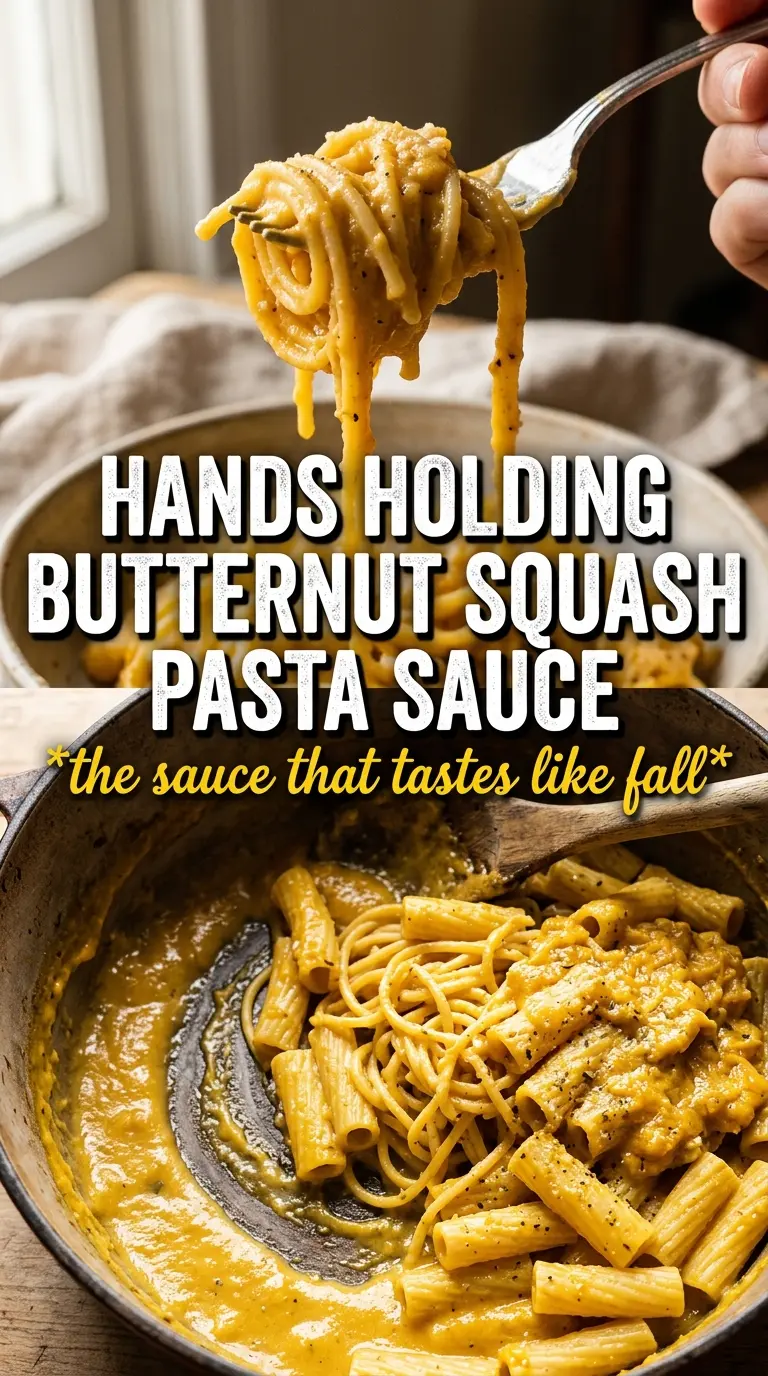
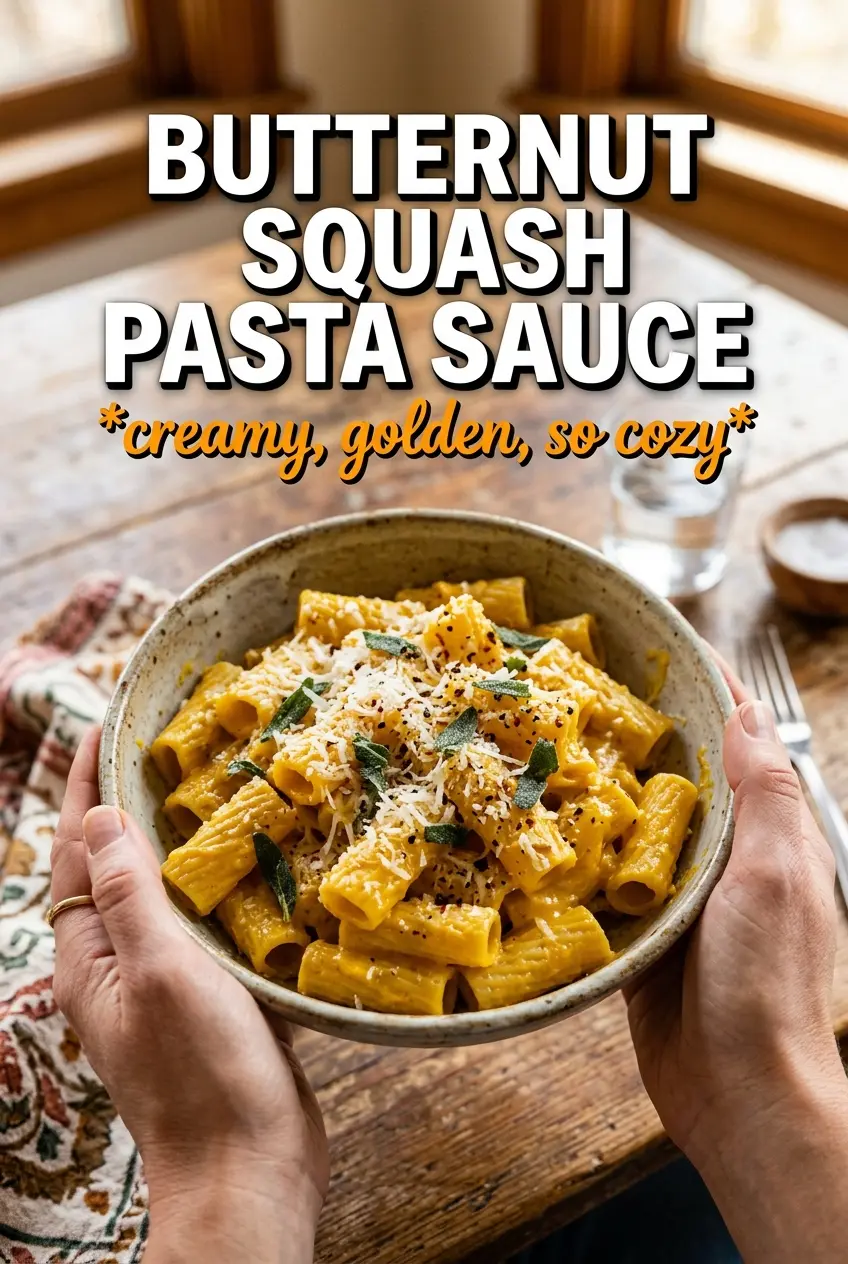
Silky butternut squash pasta sauce clings to rigatoni with the kind of body that makes every bite feel finished. The squash brings a gentle sweetness, the parmesan sharpens it, and the sage keeps the whole pan from tasting flat. It lands in that sweet spot between cozy and polished: rich enough to feel like comfort food, light enough that you still want a second bowl.
What makes this version work is the way the squash is cooked until it practically collapses, then blended completely smooth before the cream and cheese go in. That order matters. If you add dairy before the squash is tender, you end up chasing texture instead of building it. The pasta water at the end is the other small thing that matters most; it loosens the sauce just enough so it coats the noodles instead of sitting in a heavy layer at the bottom of the bowl.
Below, I’ve included the best ways to keep the sauce silky, what to swap if you need a dairy-free version, and the reheating trick that keeps leftovers from turning thick and gluey.
The sauce turned out velvety and coated the rigatoni perfectly. I liked that the squash cooked down fast, and the sage gave it that little savory edge instead of making it taste one-note.
Love the silky squash sauce and crispy sage? Save this rigatoni recipe for the nights when you want something cozy, creamy, and a little bit special.
The Reason This Sauce Stays Silky Instead of Grainy
The biggest mistake with squash-based sauces is rushing the blend. If the squash isn’t fully tender before you puree it, the sauce turns slightly fibrous and never gets that clean, velvety finish. Let the squash simmer until a spoon breaks it apart with no resistance, then blend until there are no visible bits left. That smooth base is what keeps the sauce feeling rich instead of pasty.
The other place people lose the texture is with the parmesan. Cheese wants gentle heat, not a boiling pot. Pull the sauce back to a low simmer after blending, then stir in the cream and parmesan off the hottest part of the burner if your stove runs strong. If the sauce ever looks grainy, it’s usually because the cheese seized before it had a chance to melt into the squash.
What Each Ingredient Is Actually Doing In This Dish
- Butternut squash — This is the body of the sauce. It gives you natural sweetness and enough starch to help the sauce cling to pasta. Fresh squash works best here because it blends smoother than frozen cubes, which can carry extra water.
- Onion and garlic — They build the savory base that keeps the sauce from tasting like baby food. Cook the onion until soft and translucent, then add the garlic only briefly so it stays sweet instead of bitter.
- Broth — This cooks the squash and determines how concentrated the sauce tastes. Vegetable broth keeps the dish vegetarian; chicken broth gives it a slightly deeper, rounder flavor. Use a low-sodium version if you want tighter control over the final seasoning.
- Heavy cream — This smooths the squash into a proper pasta sauce and gives it that glossy finish. Half-and-half will work in a pinch, but the sauce will be a little lighter and less plush.
- Parmesan — Parmesan adds salt, umami, and thickness. Grate it finely so it melts in quickly; pre-shredded cheese can stay a little sandy.
- Sage — Fresh sage is one of the few ingredients that can stand up to the squash’s sweetness. It adds a savory edge that makes the whole sauce taste finished. If you only have dried sage, use much less and add it with the broth so it has time to soften.
Building the Sauce So It Clings to Pasta, Not the Pot
Softening the Onion First
Warm the olive oil in a large pot and cook the onion until it’s soft and translucent, about 5 minutes. You’re not trying to brown it hard; you’re laying down sweetness and a little savory depth. Add the garlic and sage only after the onion has softened, because garlic burns faster than almost anything else in the pan. If it starts to brown too quickly, lower the heat right away.
Cooking the Squash Until It Collapses
Add the cubed squash and broth, bring everything to a boil, then drop it to a simmer. The squash should be tender enough that a spoon cuts through it without any fight, which usually takes about 20 minutes. If the liquid cooks down too fast before the squash softens, add a splash of water or more broth. The goal is soft squash, not aggressively reduced broth.
Blending Before the Dairy Goes In
Blend the mixture until it’s completely smooth before adding the cream and parmesan. An immersion blender works best here because you can control the texture right in the pot, and there’s less chance of making a mess with hot liquid. If you use a countertop blender, let the mixture cool slightly and blend in batches. The key is a silky puree with no visible squash fibers left behind.
Finishing the Sauce and Coating the Pasta
Stir in the cream, parmesan, nutmeg, and red pepper flakes, then let the sauce simmer gently for about 5 minutes. It should thicken a little and turn glossy, not boil hard. Toss in the cooked pasta and loosen it with pasta water as needed until the sauce coats every ridge of the rigatoni. If it looks thick in the pan, it will look even thicker on the plate, so stop just shy of what seems perfect.
How to Adapt This for Dairy-Free, Lighter, or More Savory
Dairy-Free Version
Swap the cream for full-fat coconut milk or an unsweetened oat cream and use nutritional yeast in place of the parmesan. Coconut milk gives the sauce extra richness, while oat cream keeps the flavor more neutral. You’ll lose a little of the sharp savory edge from parmesan, so add an extra pinch of salt and a little more black pepper at the end.
A More Savory, Less Sweet Sauce
Add a pinch more red pepper flakes and an extra tablespoon of parmesan if you want the sauce to lean less sweet and more dinner-party savory. A splash of dry white wine after the onion cooks down also helps, as long as you let it reduce before adding the squash. That tiny step keeps the sauce from tasting one-note.
For a Thicker, Clingier Finish
Use less pasta water at the end and let the finished sauce sit on low heat for an extra minute or two. That gives the parmesan a chance to tighten the sauce slightly. This works well if you’re serving a shape like rigatoni or penne, where you want the sauce to settle into the tubes instead of pooling underneath.
Storage and Reheating
- Refrigerator: Store leftovers in an airtight container for up to 4 days. The sauce will thicken as it chills.
- Freezer: The sauce freezes well for up to 2 months, though it’s best frozen without the pasta. Cool it completely, then freeze in portions for easier reheating.
- Reheating: Warm it gently on the stove with a splash of broth, milk, or water to loosen it back up. Don’t blast it over high heat or the dairy can separate and the sauce can turn grainy.
Questions I Get Asked About This Recipe
Butternut Squash Pasta Sauce
Ingredients
Equipment
Method
- Heat 2 tablespoons olive oil in a large pot over medium heat. Sauté the onion for 5 minutes until softened and fragrant.
- Add the garlic and chopped sage to the pot. Cook for 2 minutes, stirring, until the garlic smells mellow and the sage is fragrant.
- Add the peeled, cubed butternut squash and 3 cups vegetable or chicken broth. Bring to a boil, then reduce to a simmer and cook for 20 minutes until the squash is very tender.
- Blend the mixture completely smooth using an immersion blender. Blend until no visible squash pieces remain and the sauce looks silky.
- Stir in the heavy cream, grated parmesan, nutmeg, and red pepper flakes. Simmer for 5 minutes, stirring occasionally, until the sauce thickens slightly.
- Cook the rigatoni or penne until al dente, then reserve pasta water. Toss the pasta into the sauce and loosen with pasta water as needed until it clings evenly.
- Season with salt and pepper to taste. Taste and adjust right before serving.