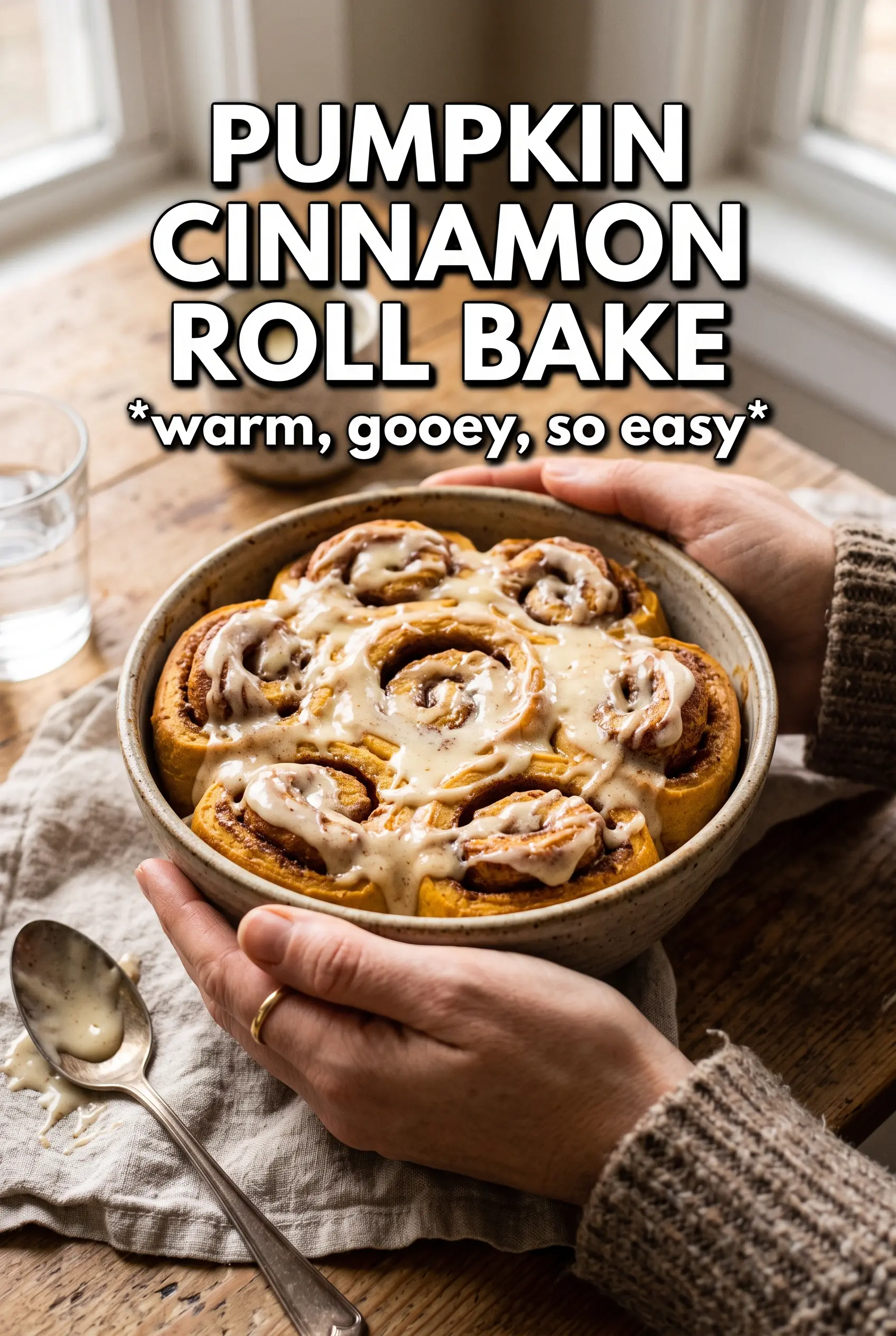
Pumpkin cinnamon roll bake comes out soft in the middle, puffed and golden on top, with the edges carrying that caramelized cinnamon-roll chew that people usually hope for and rarely get in a casserole. The pumpkin custard seeps into every quartered roll, so each bite tastes like a cross between baked French toast and a bakery pan of sticky rolls, but with less fuss and no proofing time.
The trick is cutting the rolls before they go into the pan and letting the custard sit on them for a few minutes before baking. That short soak gives the eggs and pumpkin time to move into the cracks without turning the whole dish soggy. The maple syrup in the frosting matters too — it loosens the packets just enough to make a smooth drizzle that tastes warm and autumny instead of straight-from-the-tube sweet.
Below, you’ll find the exact cue I use to stop the bake at the right moment, plus a few smart swaps if you want to make it dairy-free or prep it ahead for a crowd.
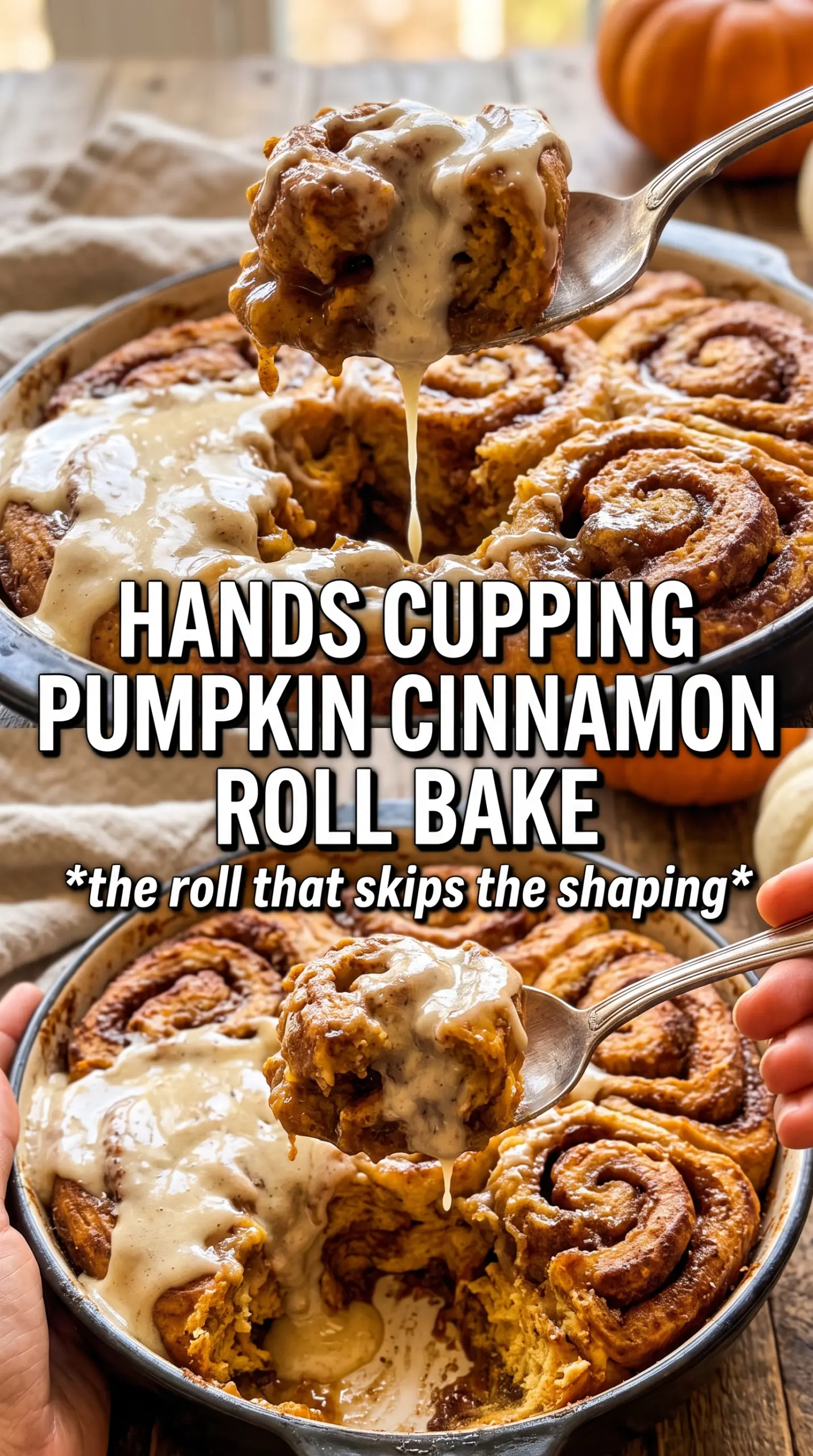
The pumpkin custard soaked into the cinnamon roll pieces perfectly, and the frosting with maple syrup was the best part. Mine baked up fluffy in the middle with just the right golden edges.
Pumpkin Cinnamon Roll Bake is the kind of breakfast casserole that disappears fast — save it for the mornings when you want soft rolls, pumpkin spice, and maple frosting in one pan.
The Soak That Keeps the Rolls from Baking Dry
The biggest mistake with cinnamon roll bakes is treating them like a dump-and-bake casserole. If the custard doesn’t have a little time to settle around the cut edges, you end up with dry tops and a wet bottom layer that never quite turns into one cohesive bake. The five-minute soak in this recipe is enough to get the pumpkin mixture into the cracks without dissolving the rolls into mush.
Cutting each roll into quarters gives you more surface area, which means more of that cinnamon-sugar spiral can catch the custard and caramelize in the oven. That’s why this version bakes up with pieces that are tender inside but still have structure. If your pan is overfilled or the rolls are packed too tightly, the middle steams instead of puffing, so spread them out in a true single layer.
What Each Ingredient Is Actually Doing in This Bake
- Refrigerated cinnamon rolls — These bring the structure and the cinnamon-sugar swirl. Use the cream cheese frosting that comes with them because it ties into the maple drizzle later. A homemade dough won’t behave the same way here, and you’d lose the shortcut that makes this breakfast so low-effort.
- Pumpkin puree — This gives the custard body and a gentle earthy sweetness. Use plain pumpkin puree, not pumpkin pie filling, or the bake turns overly sweet and spiced before you’ve even added the cinnamon and pumpkin pie spice.
- Heavy cream — Cream adds richness and keeps the custard from baking up rubbery. Whole milk works in a pinch, but the texture will be a little lighter and less plush.
- Brown sugar, pumpkin pie spice, cinnamon, vanilla, and salt — These season the custard so it tastes complete, not flat. The salt matters because canned rolls and frosting are sweet enough already; it keeps the pumpkin from reading one-note.
- Maple syrup in the frosting — This is the small detail that makes the finish taste homemade. It thins the frosting just enough for drizzling and adds a rounder sweetness that fits the pumpkin better than plain frosting alone.
Building the Custard Around the Cinnamon Rolls
Cutting and Spreading the Rolls
Cut each cinnamon roll into quarters and scatter the pieces into a greased 9×13 baking dish. Don’t press them down hard; they need room for the custard to move around them and for the dough to expand as it bakes. If the pieces are packed tightly, the center stays dense and gummy while the top browns too fast.
Whisking the Pumpkin Custard
Whisk the eggs, pumpkin puree, cream, brown sugar, pumpkin pie spice, cinnamon, vanilla, and salt until the mixture looks smooth and fully blended. You want the pumpkin completely broken up so there aren’t streaks of puree in the finished bake. If you see lumps, keep whisking before it goes into the pan, because once it’s poured over the rolls those pockets are hard to fix.
Letting the Bake Soak Before It Goes In
Pour the custard evenly over the cinnamon roll pieces, then let the pan sit for five minutes. That pause is where the texture starts to work itself out. The tops absorb enough custard to stay soft, and the undersides begin drawing in the pumpkin mixture before the oven sets everything in place.
Knowing When It’s Done
Bake at 350°F for 30 to 35 minutes, until the bake is puffed and golden at the edges. The center should look set, not sloshy, with only a tiny bit of softness left when you nudge the pan. If the top is browning fast but the middle still looks wet, tent it loosely with foil for the last stretch so the eggs finish cooking without the rolls drying out.
Finishing with the Maple Frosting
Stir the frosting packets with maple syrup until smooth, then drizzle over the warm bake. Warm casserole pulls the frosting into the nooks and crannies, which is exactly what you want. If the pan is piping hot, the drizzle will melt and disappear; wait just a couple minutes off the heat so you still see ribbons of frosting on top.
How to Adapt This for a Smaller Morning or a Dairy-Free Table
Dairy-Free Version
Use a full-fat canned coconut milk or unsweetened dairy-free cream in place of the heavy cream, and check that your cinnamon rolls are dairy-free before buying them. The bake will still set, but the flavor will lean slightly richer and less buttery. Skip the frosting packets only if needed and use a simple powdered sugar glaze with a splash of maple syrup instead.
Make-Ahead Overnight Bake
Assemble the dish through the custard pour, cover it, and refrigerate overnight. In the morning, bake it straight from the fridge and add a few extra minutes if needed. The rolls will absorb more custard while they rest, which gives you a softer, more unified texture.
Extra-Spiced Brunch Version
Add an extra 1/2 teaspoon of pumpkin pie spice and a pinch more cinnamon if you want the spice to stand up a little more against the sweetness of the rolls and frosting. This version tastes bolder and a bit warmer, which is nice if you’re serving it with coffee or salty breakfast sides.
Storage and Reheating
- Refrigerator: Store covered for up to 4 days. The rolls soften a little more as they sit, but the flavor holds up well.
- Freezer: Freeze individual portions tightly wrapped for up to 2 months. The texture is best after thawing in the fridge overnight; the frosting should be added after reheating if possible.
- Reheating: Warm in the microwave in short bursts or cover and reheat in a 300°F oven until heated through. Don’t blast it on high heat or the eggs can turn spongy before the center warms.