These Crockpot Asian meatballs turn out tender, saucy, and deeply savory with a sticky ginger-soy glaze that clings to every bite. The meatballs stay soft inside from the slow cooker, but they still hold their shape because they’re browned first. That quick sear matters. It gives the finished dish more flavor and keeps the texture from going mushy in the sauce.
The glaze is built from ingredients that each have a job: soy sauce for salt and backbone, hoisin for body and sweetness, honey for that glossy finish, and rice vinegar to keep everything from tasting heavy. A little cornstarch slurry at the end tightens the sauce into something spoonable instead of watery. If you’ve ever had a slow cooker meatball recipe that tasted thin or one-note, this version fixes both problems.
Below, I’ll walk through the browning step that makes the biggest difference, plus the little timing detail that keeps the sauce thick instead of cloudy. I’ve also included a few smart swaps for different proteins and diets, because this recipe is easy to adapt without losing what makes it good.
The glaze thickened up exactly when you said it would, and the meatballs stayed tender instead of falling apart. I served them over jasmine rice and my husband went back for seconds before I sat down.
Save these Crockpot Asian meatballs for the nights when you want a sticky ginger-soy glaze and almost no hands-on work.
The Browning Step That Keeps These Meatballs from Going Soft
The slow cooker does the gentle cooking, but the skillet does the flavor work. Browning the meatballs before they go into the Crockpot gives you a firmer exterior, deeper savory notes, and a little insurance against a soft, steamed texture. If you skip that step, they’ll still cook through, but the sauce has to do all the heavy lifting and the finished dish tastes flatter.
Don’t crowd the pan. If the meatballs sit too close together, they steam instead of browning, and that means less color and less flavor in the glaze later. You’re looking for a light crust on the outside, not a hard sear. The meatballs finish cooking in the slow cooker, so the goal here is structure and flavor, not full doneness.
- Breadcrumbs and egg — These keep the meatballs tender and help them hold together through a long cook. Too many breadcrumbs make them bready, so stick close to the measured amount.
- Ground beef or pork — Pork gives a softer, richer result, while beef brings a little more savory edge. A 50/50 mix works well if you want both.
- Fresh ginger and garlic — Fresh is worth it here. Powdered versions won’t give the same bright bite, and that freshness keeps the glaze from tasting heavy.
- Sesame oil — This is one place where the toasted flavor matters. A little goes a long way, so don’t add more than listed unless you want it to dominate the sauce.
What Each Part of the Glaze Is Really Doing
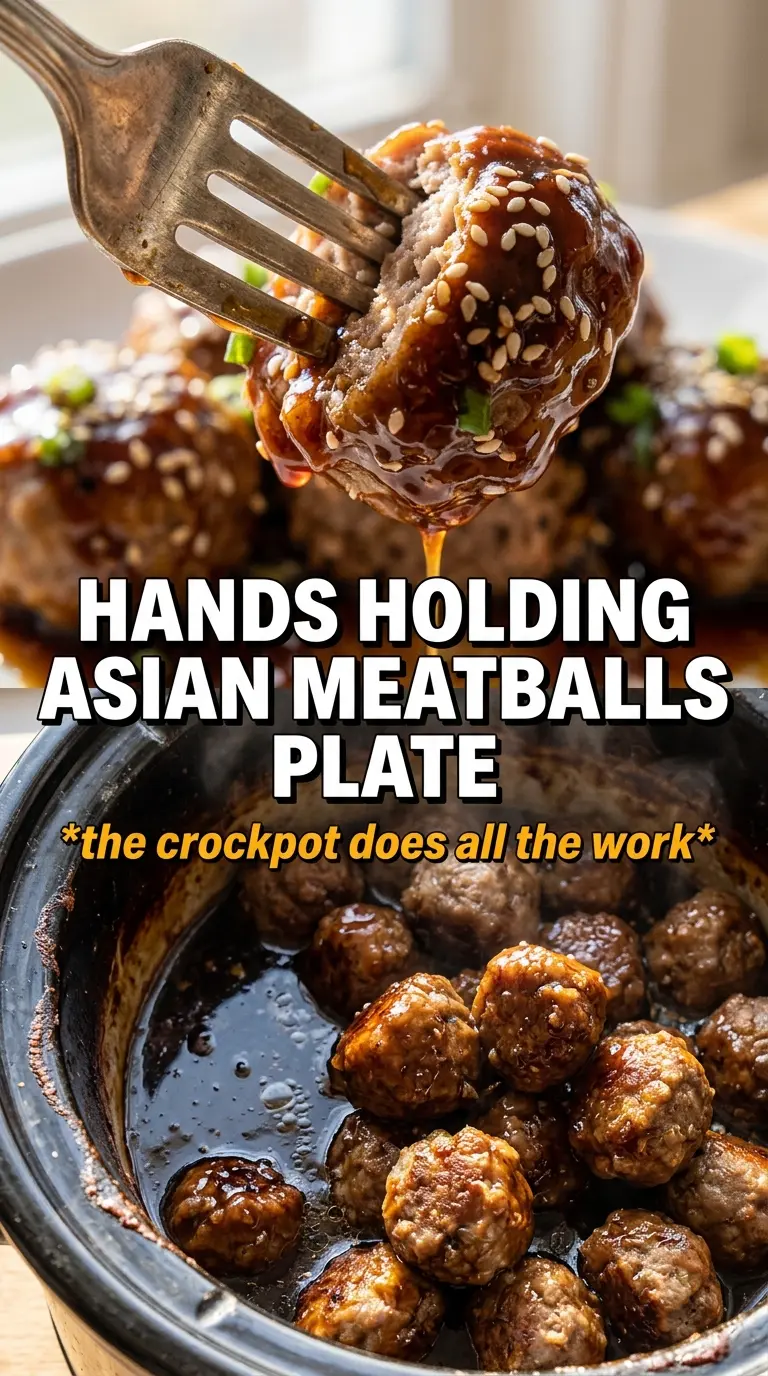
- Hoisin sauce — This gives the glaze its body, sweetness, and that dark, lacquered look. There isn’t a perfect substitute for it, but a mix of barbecue sauce and a little extra soy can stand in if you’re stuck.
- Honey — Honey helps the sauce cling to the meatballs and gives the finish that sticky shine. Brown sugar works in a pinch, but the glaze won’t be quite as smooth.
- Rice vinegar — This keeps the sauce from tasting one-dimensional. If you use another vinegar, keep it mild; strong vinegar will fight the hoisin instead of balancing it.
- Cornstarch slurry — Stir this in at the end, not at the beginning. The sauce needs time to simmer and thicken on High, and if you add the slurry too early it can turn the glaze a little dull or gluey.
- Sriracha — This doesn’t make the dish spicy-hot, it just wakes up the sauce. Leave it out if you want a milder version, but don’t skip the acid and salt elsewhere or the glaze will taste soft.
Getting the Sauce Thick, Glossy, and Stuck to the Meatballs
Mixing and Rolling the Meatballs
Combine the meatball ingredients just until everything looks evenly mixed. Overworking the meat makes the meatballs dense, and dense meatballs don’t stay as tender after four hours in the slow cooker. Roll them into even 1.5-inch balls so they cook at the same pace. If some are much larger than others, the smaller ones can overcook before the rest are ready.
Browning for Better Flavor
Use a skillet over medium heat and give the meatballs space. Turn them gently as they brown, just until you have color on several sides. They don’t need to cook all the way through here; the slow cooker will handle that. If the pan starts smoking hard, the heat is too high and the outside will cook before the inside firms up.
Slow Cooking in the Glaze
Pour the whisked glaze over the browned meatballs and cook on Low for 3 to 4 hours. The sauce should stay at a gentle simmer, not a hard boil. Boiling can tighten the meatballs too much and make the glaze reduce too aggressively around the edges. If your slow cooker runs hot, check early at the three-hour mark so the meatballs stay juicy.
Thickening at the End
Stir the cornstarch slurry into the sauce and switch the cooker to High for about 20 minutes. That final burst of heat wakes up the cornstarch and turns the sauce shiny and spoon-coating. If the sauce looks thin after 20 minutes, leave the lid off for a few more minutes on High so steam can escape. Don’t add the slurry while the cooker is still on Low; it thickens better with a bit more heat.
Turkey Meatballs for a Lighter Bowl
Ground turkey works well if you want a leaner version, but it needs the browned exterior even more than beef or pork. Use 93% lean or a mix with a little fat so the meatballs don’t dry out, and handle the mixture gently because turkey tightens faster in the slow cooker.
Gluten-Free Meatballs
Swap in certified gluten-free breadcrumbs and use a gluten-free soy sauce or tamari. The texture stays nearly the same, and the glaze still thickens the same way with cornstarch. Just check your hoisin, since some brands contain wheat.
Milder Sweet-Savory Version
Leave out the sriracha and cut the honey back by a tablespoon if you want a less sweet finish. The sauce will taste a little sharper and less sticky, but it still coats the meatballs well. This version is good for serving kids or anyone who prefers the ginger and soy to stay front and center.
Storage and Reheating
- Refrigerator: Store leftovers in an airtight container for up to 4 days. The sauce will thicken as it chills, which is normal.
- Freezer: These freeze well. Cool completely, then freeze the meatballs and sauce together for up to 2 months. Thaw in the refrigerator before reheating so the glaze loosens evenly.
- Reheating: Warm gently on the stove over low heat or in the microwave at medium power. Add a splash of water if the sauce has tightened too much. High heat can make the meatballs tough and can cause the glaze to separate at the edges.
Answers to the Questions Worth Asking
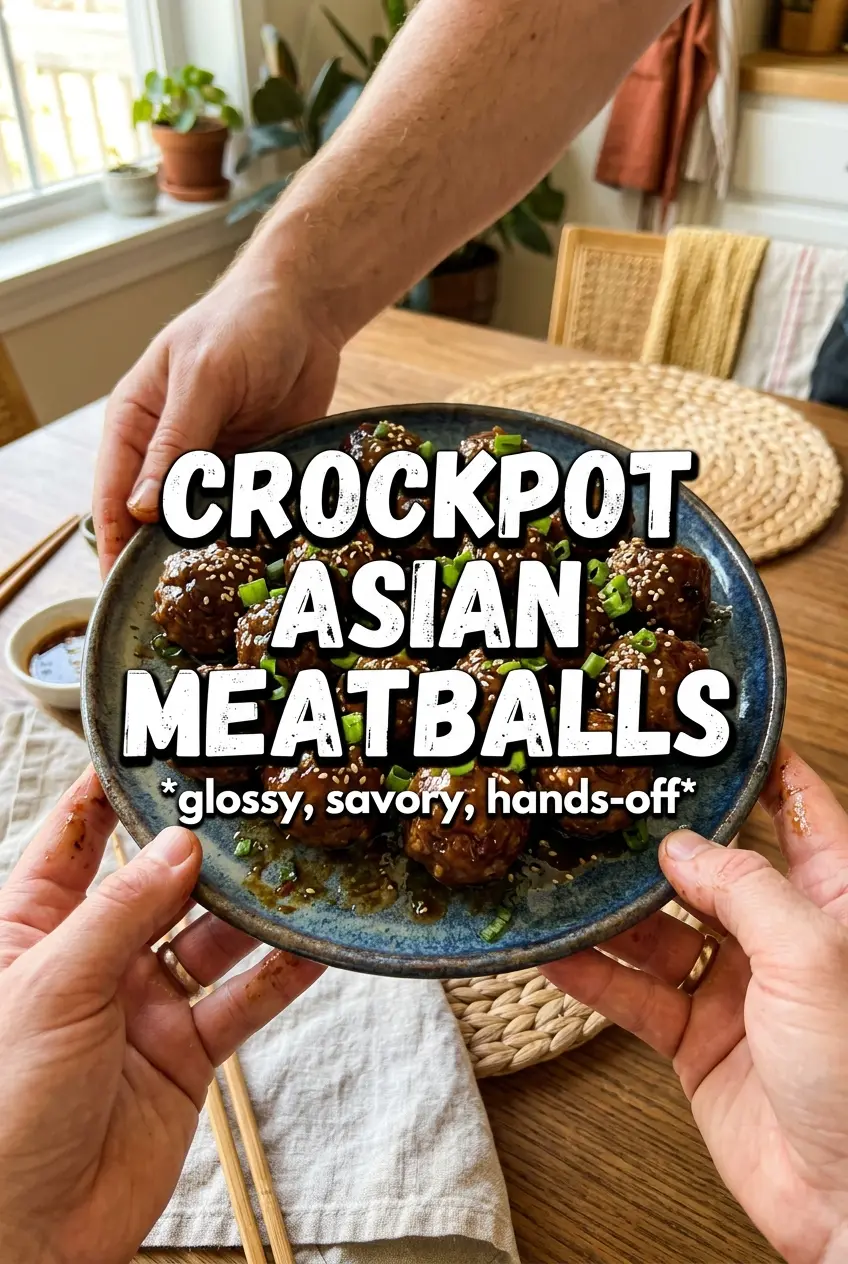
Crockpot Asian Meatballs
Ingredients
Equipment
Method
- Mix the ground beef or pork, breadcrumbs, egg, minced garlic, grated fresh ginger, soy sauce, sesame oil, and minced green onions until combined. Roll into 1.5-inch meatballs and keep them evenly sized so they cook through at the same rate.
- Heat a cast iron skillet over medium-high heat, then brown the meatballs in batches. Cook until deeply browned on the outside, then transfer them to the Crockpot.
- Whisk soy sauce, hoisin sauce, honey, rice vinegar, sesame oil, minced garlic, grated fresh ginger, and sriracha until smooth. Pour the glaze over the meatballs in the Crockpot so the tops are coated.
- Cook on Low for 3-4 hours or High for 2 hours, until the meatballs are cooked through and the sauce is bubbling around the edges. Keep the lid on during cooking to maintain heat.
- Stir cornstarch and water together to form a slurry. Add the slurry to the sauce and cook on High for 20 minutes, stirring once, until thickened and glossy.
- Serve the meatballs over rice, spooning the sticky sauce over the top. Finish with sesame seeds and sliced green onions.