Apple cider cheesecake brings together the tang of baked cream cheese, a buttery graham crust, and a spiced cider topping that settles into every slice without turning the filling soggy. The texture is what makes it worth repeating: dense and silky in the center, with a crust that stays crisp enough to give each bite a little snap. It tastes familiar at first, then the reduced cider comes through with a deeper apple note that keeps the whole dessert from feeling heavy.
The key is reducing the cider before it ever touches the batter. That concentrates the flavor without adding extra liquid, which helps the cheesecake set cleanly instead of baking up loose or watery. A water bath also matters here because it keeps the edges from overbaking before the center is done. The cider syrup on top is cooked separately for the same reason — it gives you a glossy finish and concentrated apple flavor instead of a thin glaze that runs off the plate.
Below you’ll find the small details that matter most, including how to keep the filling smooth, when the cheesecake is actually done, and how to make the topping thick enough to cling to each slice.
The cider flavor came through beautifully, and the cheesecake set up with that creamy center I always hope for. The topping thickened just enough to stay on the slice instead of running everywhere.
Save this apple cider cheesecake for the days when you want a silky baked cheesecake with a spiced cider drizzle on top.
The Reason the Cider Gets Reduced Before It Ever Meets the Batter
Cheesecake batter already carries plenty of moisture from the cream cheese, eggs, and sour cream. If you pour in straight cider, the filling can lose its clean slice and bake up with a softer, sometimes slightly loose center that never quite firms the way you want. Reducing the cider first concentrates the apple flavor and keeps the batter balanced.
This is also the difference between a cheesecake that tastes faintly spiced and one that tastes like apple cider from the first bite. The reduced cider blends into the batter without thinning it, so the texture stays dense and velvety instead of turning pudding-like. The water bath then does its job properly because it isn’t fighting extra liquid in the filling.
- Reduced apple cider — This is the ingredient that makes the cheesecake taste like cider instead of just cinnamon cheesecake. Reduce it until it’s syrupy and measure after reducing, not before.
- Brown sugar — It brings a deeper, caramel note that works with the cider. Granulated sugar will sweeten the filling, but it won’t give the same warmth.
- Sour cream — It loosens the batter just enough while adding tang, which keeps the cheesecake from tasting flat. Full-fat Greek yogurt can stand in, but the texture will be a touch sharper and less plush.
What Each Ingredient Is Actually Doing in This Cheesecake
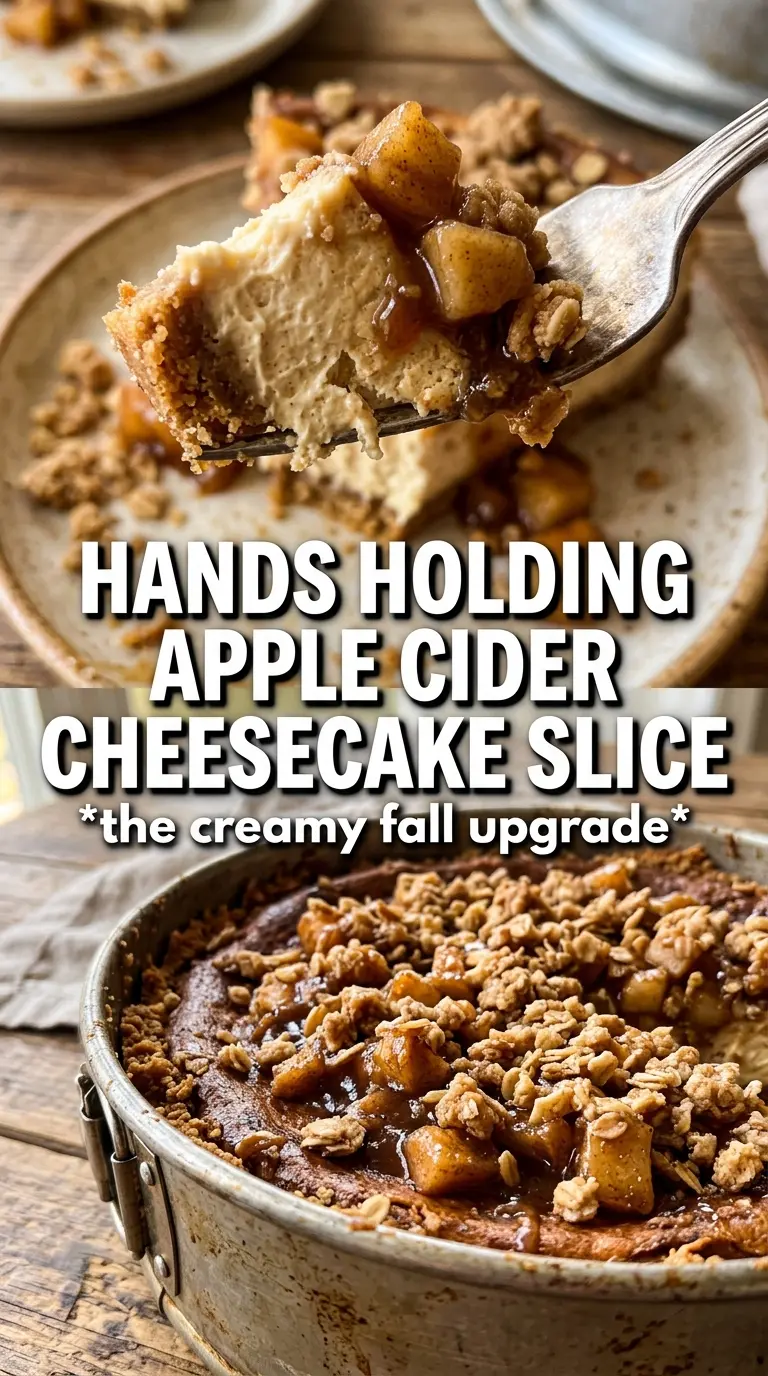
- Graham cracker crumbs — They give you a sturdy base with a little sweetness and crunch. Crush them finely so the crust presses together instead of crumbling apart when sliced.
- Cinnamon and nutmeg — These don’t make the cheesecake taste like pie spice overload; they support the cider and brown sugar. Keep them measured, because too much nutmeg can take over fast.
- Cream cheese — Use full-fat blocks and soften them fully so the batter turns smooth without lumps. Whipped or tub-style cream cheese doesn’t behave the same in baked cheesecake.
- Eggs — They set the filling. Add them one at a time and stop mixing as soon as each one disappears, or you’ll beat in too much air and the cheesecake can crack as it bakes.
- Cider syrup topping — This finishes the cake with a glossy, concentrated apple note. Let it reduce until it lightly coats a spoon; if it stays thin, it will run off the slice instead of staying put.
How to Keep the Center Creamy Without Cracking the Top
Building a Smooth Batter
Start with cream cheese that has softened all the way through. If the center is still cool, you’ll end up chasing lumps around the bowl and overmixing before you realize it. Beat the cream cheese and brown sugar until completely smooth, then add the reduced cider, sour cream, spices, vanilla, and eggs just until combined. The batter should look thick and glossy, not fluffy.
Baking in a Water Bath
Set the springform pan inside a larger pan and add hot water around it so the heat stays gentle and even. That slower bake keeps the edges from drying out before the center is done. Pull the cheesecake when the edges look set and the middle still has a slight jiggle, like gelatin that hasn’t fully settled. If the top starts to color deeply before the center moves, the oven is running hot and the cheesecake needs a looser shield of foil or a lower rack.
Cooling and Chilling the Right Way
Let the cheesecake cool completely before it goes into the refrigerator. If you rush it while it’s still warm, condensation can form on the surface and make the top look dull or wet. After chilling, the texture tightens into that dense, clean slice you want. The long chill isn’t optional here; it’s what turns a soft baked filling into a proper cheesecake.
Finishing With the Cider Drizzle
Cook the topping until it reduces by half and takes on a light syrupy sheen. It should coat the back of a spoon and fall in a slow ribbon, not splash like juice. Spoon or drizzle it over each slice just before serving so the crust stays crisp and the top keeps its shine.
Three Ways to Adjust This Cheesecake Without Losing the Apple Cider Character
Gluten-Free Crust
Swap the graham crackers for a gluten-free graham-style crumb or a gluten-free vanilla cookie crumb. The texture stays crisp and sliceable as long as you use the same butter ratio and press the crust firmly into the pan.
Dairy-Free Version
Use a full-fat dairy-free cream cheese designed for baking and replace the sour cream with an unsweetened dairy-free yogurt. The filling will be a little softer and the tang slightly different, but reducing the cider still gives you the same apple-forward flavor.
Make-Ahead for a Dinner Party
Bake the cheesecake a day ahead and hold the cider topping separately in the fridge. Add the drizzle right before serving so the top stays neat and the crust doesn’t soften from sitting under the sauce.
Extra-Spiced Filling
If you want the cider spice to read more clearly, add an extra 1/4 teaspoon cinnamon or a pinch of cloves. Keep it restrained; too much spice will cover the reduced apple flavor instead of supporting it.
Storage and Reheating
- Refrigerator: Store covered for up to 5 days. The crust softens a little after the first day, but the filling stays creamy.
- Freezer: Freeze slices without the cider topping for up to 2 months. Wrap them tightly and thaw overnight in the refrigerator for the cleanest texture.
- Reheating: Cheesecake is best served cold or just barely cool. If you want to take the chill off, let a slice sit at room temperature for 15 to 20 minutes; microwaving can make the filling greasy and uneven.
Questions I Get Asked About This Recipe
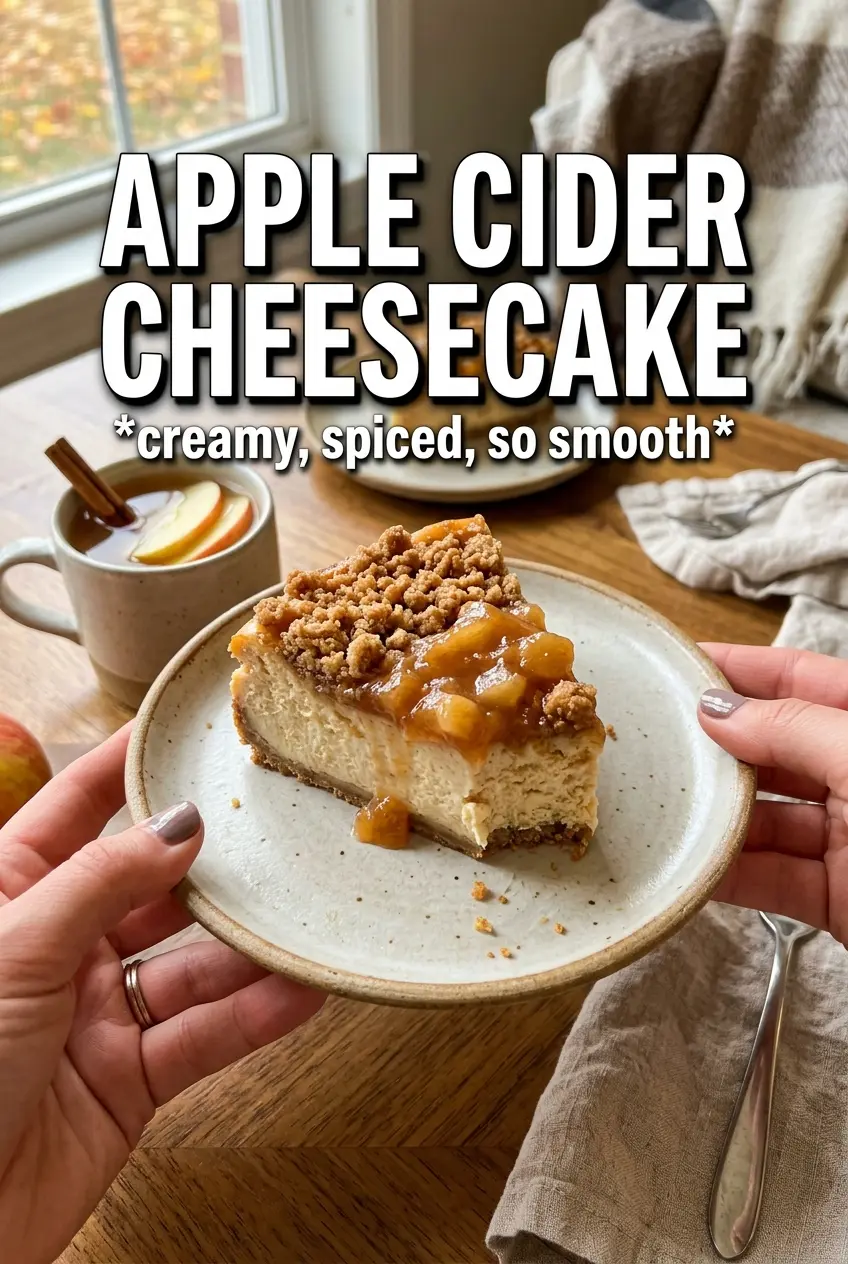
Apple Cider Cheesecake
Ingredients
Equipment
Method
- Reduce the 1/2 cup apple cider until it becomes syrupy and reduced to 1/4 cup, then cool completely.
- Preheat the oven to 325F, press the graham cracker crumbs mixture into a 9-inch springform pan, and bake for 10 minutes until set.
- Beat the softened cream cheese and packed brown sugar smooth until no lumps are visible.
- Add the reduced cider, then beat until incorporated and the batter looks glossy.
- Add the eggs one at a time, mixing just until each egg disappears so the batter stays smooth.
- Mix in the sour cream until the batter turns pale and creamy.
- Add the cinnamon, nutmeg, and vanilla and mix briefly until evenly speckled.
- Pour the cheesecake batter over the baked crust, place the springform into a water bath, and bake at 325F for 55-60 minutes until the edges are set but the center still looks slightly soft.
- Cool the cheesecake completely at room temperature so the surface stops steaming and the center firms slightly.
- Refrigerate the cheesecake for 6 hours until fully chilled and sliceable.
- Simmer the 1 cup apple cider with 2 tablespoons brown sugar and 1/4 teaspoon cinnamon until reduced by half into a syrup.
- Drizzle the cider syrup over each slice right before serving for a shiny, spiced finish.