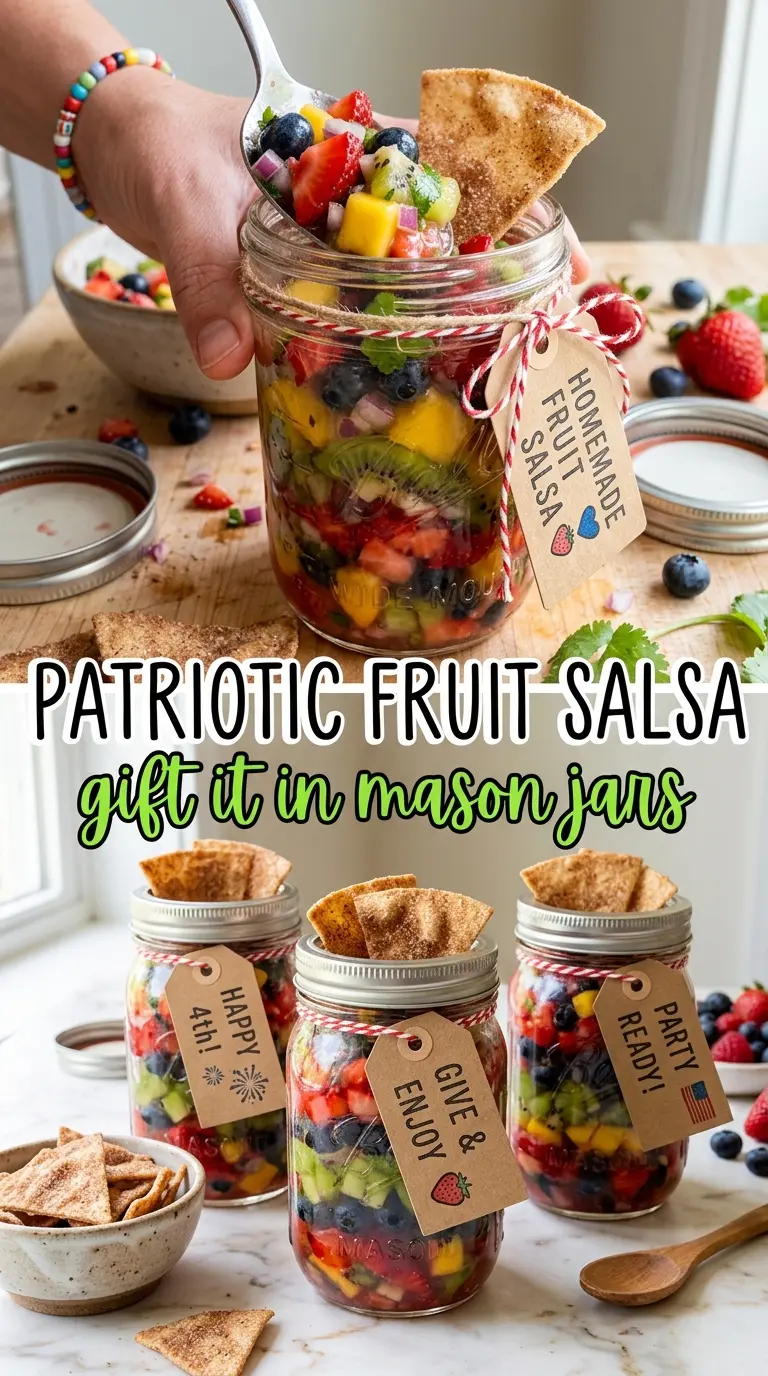
Bright, juicy fruit salsa has a way of disappearing fast, and this red, white, and blue version earns that reaction every time. The strawberries and peaches soften just enough in the honey-lime syrup to turn glossy and spoonable, while the blueberries stay whole and pop against the sweeter fruit. Served with cinnamon sugar chips, it lands somewhere between snack and dessert, which is exactly why it gets picked up first at a party.
The key is cutting the fruit small and evenly so the salsa holds together instead of turning watery. A short chill in the fridge gives the honey, lime, and mint time to pull out just enough juice without bruising the berries. That balance matters here: too much stirring and you get mush; too little time and the flavors stay separate.
Below, I’ve included the little details that keep the texture fresh, plus a few smart swaps if you need to work with what’s in your kitchen.
I chilled it for the full 30 minutes and the honey-lime syrup was just right. The strawberries stayed in little pieces instead of turning soupy, and the cinnamon pita chips were the perfect match.
Love the sweet-tart crunch of this 4th of July fruit salsa? Save it to Pinterest for your next red, white, and blue party snack.
The Secret to Keeping This Fruit Salsa Fresh, Not Watery
Fruit salsa fails when the fruit is cut too large or left to sit too long without enough acidity. The strawberries and peaches need to be diced small so the honey and lime can coat every piece, but not so fine that they collapse into juice. Blueberries hold their shape better than the other fruit, which is why they add body instead of turning the bowl soft.
- Strawberries — Use ripe berries, but not overripe ones. Soft strawberries break down fast and make the salsa loose.
- White peaches or nectarines — These bring the sweetest, most fragrant bite. Firm fruit works best because it stays defined after chilling.
- Honey — This does more than sweeten. It helps the lime juice cling to the fruit and gives the salsa that light syrupy sheen.
- Lime juice and zest — The juice brightens the fruit while the zest adds the citrus aroma that keeps the salsa from tasting flat. Bottled juice works in a pinch, but fresh lime makes a noticeable difference here.
- Fresh mint — A small amount is enough. Chop it finely so it disappears into the fruit instead of reading like a garnish.
What Each Ingredient Is Actually Doing in This Recipe
- Primary ingredient (the star) — Quality matters most. Choose the best you can find.
- Cooking medium (oil, butter, or broth) — This carries flavors and prevents dryness.
- Seasonings (salt, pepper, spices, herbs) — Layer flavors so nothing overpowers. Build depth gradually.
- Aromatics (garlic, onion, herbs) — Cook with fat to bloom flavors. Become the foundation.
- Supporting ingredients — Complement the main ingredient without overpowering it.
- Sauce or liquid (if applicable) — Brings flavors together. Balance richness with acid.
- Acid (lemon, vinegar, wine, or other) — Brightens and prevents flat-tasting results.
- Final finish (garnish, glaze, or sauce) — Prevents one-dimensional taste and adds visual appeal.
How to Mix the Fruit So It Stays Chunky and Glossy
Cutting the Fruit Evenly
Dice the strawberries and peaches into small, similar-sized pieces so each spoonful has a balanced mix. If the fruit pieces are all over the place, the bigger chunks slide off the chips while the tiny ones turn to juice. Keep the blueberries whole. They give the salsa shape and a clean burst of sweetness.
Coating Without Crushing
Add the honey, lime juice, lime zest, and mint, then fold gently with a spoon or spatula. The goal is to coat the fruit, not mash it. If you stir hard, the strawberries lose their edges and the bowl starts looking soupy before it ever reaches the table.
Chilling for the Right Texture
Thirty minutes in the fridge is enough for the flavors to mingle and the fruit to release a light syrup. Any longer and the salsa can get softer than you want, especially if the fruit was very ripe to begin with. Stir once more right before serving so the juices redistribute and the top doesn’t look dry.
How to Adapt This for Different Crowds
Make it dairy-free and gluten-free without changing a thing
This recipe already fits both of those needs as written. Serve it with gluten-free cinnamon chips, gluten-free graham crackers, or plain sliced fruit if you want a lighter option.
Swap the peaches for mango
Mango brings a softer, tropical sweetness and a more slippery texture, so cut it a little larger than the strawberries. It changes the character of the salsa, but it still works beautifully with lime and mint.
Use frozen fruit only if it’s the last resort
Frozen fruit softens as it thaws, which means the salsa will be juicier and less crisp. If you have to use it, thaw completely, drain it well, and expect a softer bowl with more liquid at the bottom.
Add a little heat for an adults-only version
A tiny pinch of chili flakes or finely minced jalapeño gives the salsa a sweet-heat edge that plays well with the cinnamon chips. Start small; the fruit should still taste bright and refreshing, not spicy.
Storage and Reheating
- Refrigerator: Best the day it’s made, but it will hold for up to 2 days. After that, the fruit softens and the bowl gets noticeably juicier.
- Freezer: Don’t freeze it. The fruit turns mushy when thawed and the fresh texture is lost.
- Reheating: No reheating needed. If the salsa has been sitting in the fridge, give it a gentle stir and drain off a little excess juice if needed before serving.
Questions I Get Asked About This Recipe
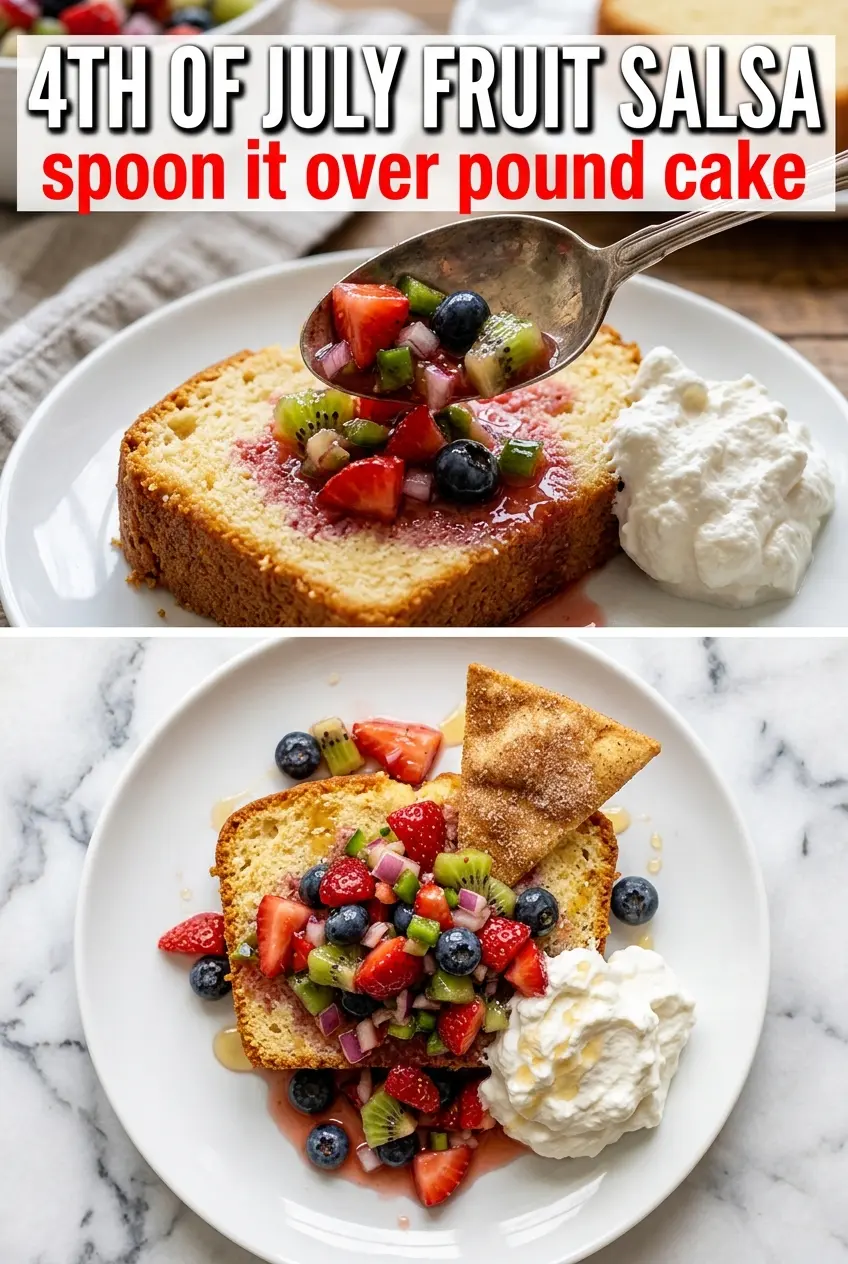
4th of July Fruit Salsa
Ingredients
Method
- Dice the strawberries and peaches into small, uniform pieces and place them in a medium bowl with the blueberries.
- Add the honey, lime juice, lime zest, and chopped mint, then stir gently to combine without mashing the fruit.
- Cover the bowl and refrigerate for 30 minutes to allow the flavors to meld and the juices to release, checking visually once or twice for a glossy coating.
- Stir once more before serving so the syrup redistributes evenly across the fruit.
- Transfer to a serving bowl and serve with cinnamon sugar chips, with the fruit clearly showing red, white, and blue colors.