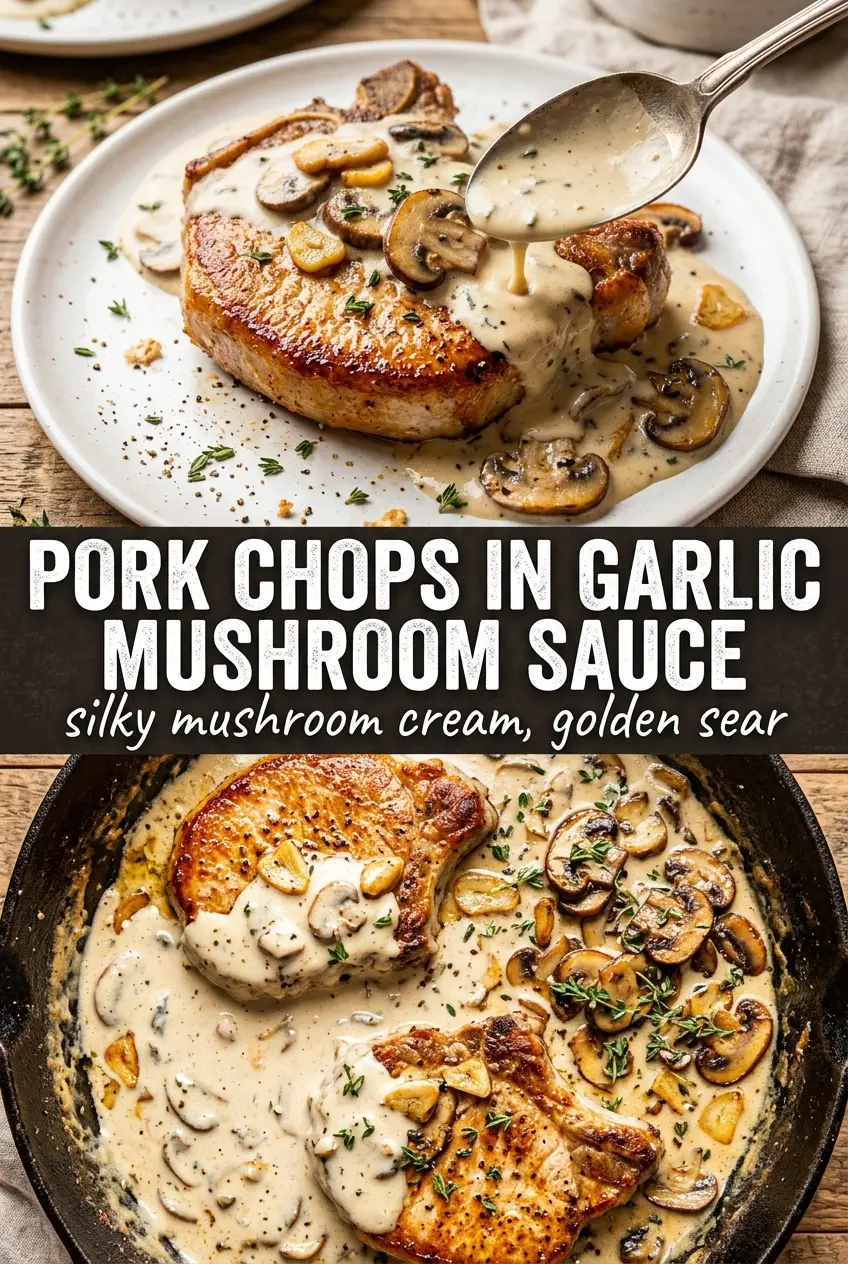
Pork chops in garlic mushroom sauce hit that sweet spot between weeknight practical and company-worthy. The pork stays juicy, the mushrooms turn deeply browned instead of watery, and the sauce comes together glossy and savory enough to spoon over everything on the plate. It tastes like a dish that took much longer than it did.
What makes this version work is the order. The chops sear first, then the mushrooms cook in the same pan until they’ve given up their moisture and started to caramelize. That browned fond is the backbone of the sauce, and the splash of sherry or white wine lifts it cleanly without making the finished dish taste sharp. A little cornstarch at the end gives the sauce body fast, so it clings to the pork instead of pooling underneath it.
Below, you’ll find the small details that keep the pork tender and the sauce rich, plus a few swaps for when you want to change things up without losing what makes the dish work.
The mushrooms browned instead of steaming, and the sauce thickened up just enough to coat the pork without getting gluey. My husband kept reaching for bread to get every drop.
Save these pork chops in garlic mushroom sauce for the nights when you want a pan dinner with a deep brown gravy and almost no cleanup.
The Part Most Pork Chop Recipes Rush: The Sear
The sear is not just about color here. It creates the browned bits that give the sauce its depth, and it helps the pork hold onto moisture instead of turning bland and gray in the pan. The chops need enough heat to form a crust, but not so much that the outside burns before the center has a chance to cook through.
Boneless chops work well as long as they’re an even 1 inch thick. Thinner chops overcook too fast, and thicker ones need more time than the recipe allows. If the pan looks crowded, sear in batches; steam is the enemy of a good crust.
What the Mushrooms and Broth Are Really Doing Here

- Boneless pork chops — These cook quickly and stay tender when seared and finished in the sauce. If you use bone-in chops, add a few extra minutes and check the center with a thermometer.
- Mixed mushrooms — A mix gives you better texture and more complex flavor than a single type. Cremini, baby bella, and shiitake all work; white button mushrooms are fine, but they’ll be milder and less deeply savory.
- Dry sherry or white wine — This is the deglazing liquid that pulls up the browned bits and keeps the sauce from tasting flat. Use a dry wine you’d actually drink, not cooking wine, which can leave the sauce harsh and salty.
- Beef broth — It gives the sauce a darker, meatier base that suits pork better than chicken broth does. If beef broth is what you have, use it; if not, low-sodium chicken broth works, but the sauce will be lighter.
- Cornstarch slurry — This thickens the sauce quickly without making it heavy. Stir it in only after the liquid is simmering, or it can clump and stay chalky instead of turning glossy.
Building a Glossy Sauce Without Ending Up with a Thin Pan of Liquid
Season and Sear the Pork
Pat the chops dry before they hit the pan, then season them well with salt and pepper. Lay them in the olive oil and leave them alone until the bottom develops a deep golden crust and they release easily. If they stick hard, they’re not ready yet; forcing them tears the surface and leaves you with pale, uneven browning.
Caramelize the Mushrooms Properly
Once the pork is out, add the butter and mushrooms and let them sit long enough to give off moisture before stirring often. The pan should go from wet to quiet to browned, and that’s the point where the flavor starts building. If the mushrooms still look pale and soft, keep going; watery mushrooms will dilute the sauce instead of enriching it.
Deglaze and Thicken the Pan Sauce
Add the garlic and thyme for just 30 seconds, then pour in the sherry or wine and scrape the bottom of the pan right away. The liquid should bubble and reduce slightly before the broth goes in. When you stir in the cornstarch slurry, keep the sauce at a steady simmer; if it boils hard, the texture can turn slightly broken instead of smooth and glossy.
Finish the Pork in the Sauce
Return the chops to the pan and spoon the sauce over the top. Simmer just until the pork is cooked through and the sauce clings to the spoon, about 3 minutes. If the chops sit in the sauce too long after they’re cooked, they can lose that just-seared texture, so pull the pan as soon as the center is done.
How to Adapt These Pork Chops for a Different Pantry or Diet
Make It Dairy-Free
Swap the butter for more olive oil or a plant-based butter that browns well. The sauce will still taste rich because the mushrooms and broth carry most of the flavor, though you’ll lose a little of that round, buttery finish.
Use Bone-In Pork Chops
Bone-in chops add flavor and stay juicy, but they need longer on the stove. Sear them the same way, then finish them in the sauce a few minutes longer until the center reaches temperature; the bone slows cooking, so don’t rely on color alone.
Skip the Wine
Use an equal amount of extra broth with a small splash of apple cider vinegar or lemon juice for brightness. You’ll miss a little of the wine’s depth, but the sauce will still have enough acidity to lift the mushrooms and keep the finish from tasting heavy.
Storage and Reheating
- Refrigerator: Store leftovers in an airtight container for up to 3 days. The sauce may thicken as it chills.
- Freezer: The pork freezes okay, but the mushroom sauce can loosen and lose a little texture. Freeze in a sealed container for up to 2 months if needed, then thaw overnight in the fridge.
- Reheating: Warm gently in a covered skillet over low heat with a splash of broth or water. High heat dries out the pork fast and can make the sauce separate, so go slow and stop as soon as the chops are heated through.