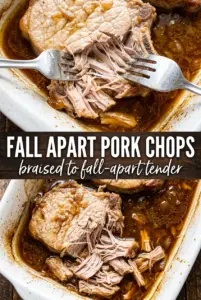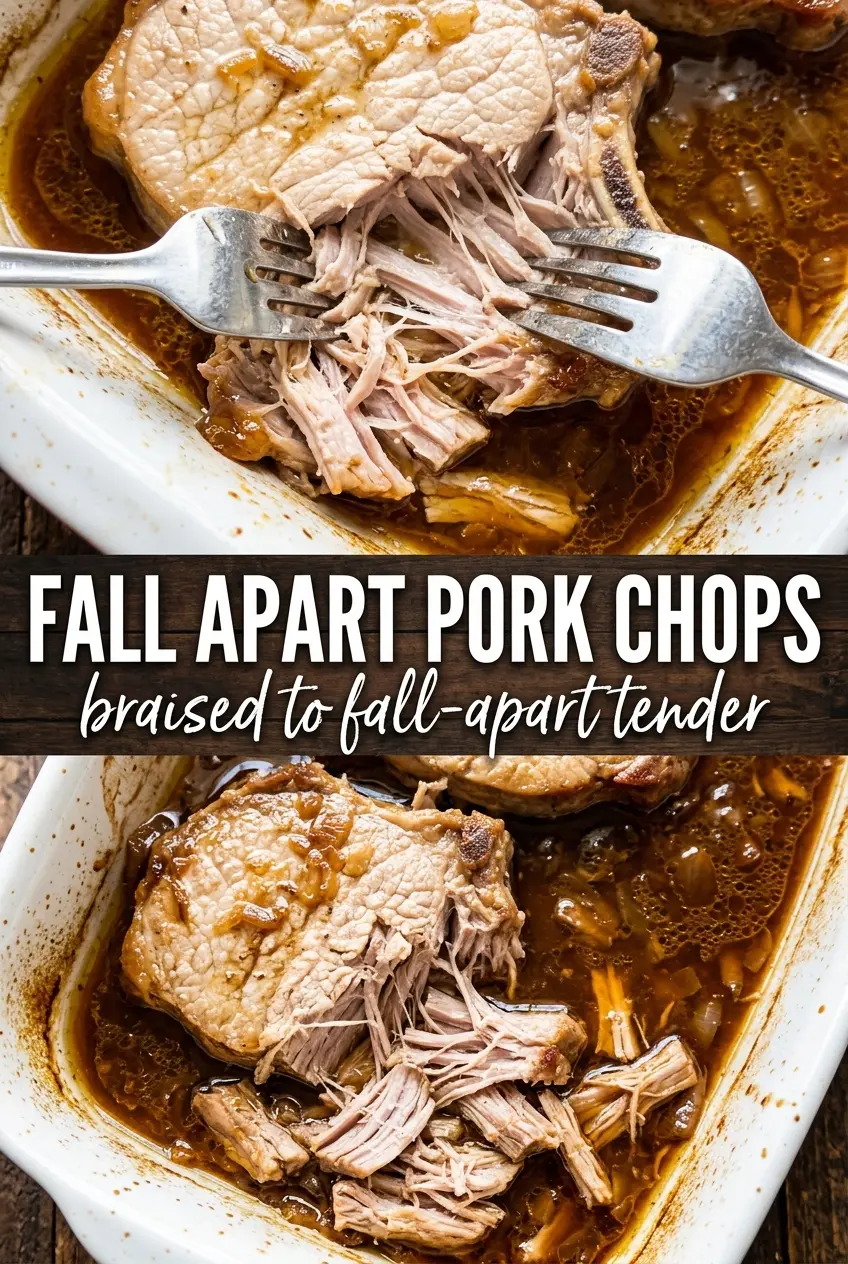
Pork chops braised low and slow until they collapse under a fork are one of those dinners that feel far bigger than the effort they ask from you. The meat turns spoon-tender, the onions melt into the gravy, and the whole pan comes out smelling like comfort in its purest form. This is the kind of meal that makes people hover in the kitchen waiting for dinner to hit the table.
The trick is treating pork chops like a braise, not a quick pan-sear. Thick bone-in chops hold up best because they stay juicy through the long oven time, and the cream of mushroom soup gives the sauce body without needing a separate roux. Searing first builds the deep savory base, then the covered oven time does the slow work that turns the meat tender instead of dry.
Below you’ll find the small details that matter here: how to keep the gravy smooth, what the pork should look like when it’s done, and the one storage note that makes leftovers just as good the next day.
The pork was fork-tender after two hours and the gravy thickened up beautifully with the mushroom soup. I served it over mashed potatoes and my husband went back for seconds before I even sat down.
Save these fall apart pork chops for the night you want tender braised pork and silky mushroom gravy without a lot of hands-on work.
The Mistake That Turns Braised Pork Chops Tough Instead of Tender
The biggest failure with braised pork chops is cooking them like a fast stovetop dinner and expecting soft, shreddable meat. Thin chops dry out before the sauce has time to do its job, and an uncovered braise loses too much moisture. Thick bone-in chops give you the margin you need, and the tight foil cover traps steam so the pork can relax into tenderness instead of tightening up.
Another detail that matters is the sear. You want a brown crust, not a black one. That first pan contact gives the gravy depth later, but if the heat is too high or the chops are crowded, they steam and never build that base flavor. A clean, hot pan and a few minutes per side is all you need before the oven takes over.
What Each Ingredient Is Doing in the Gravy
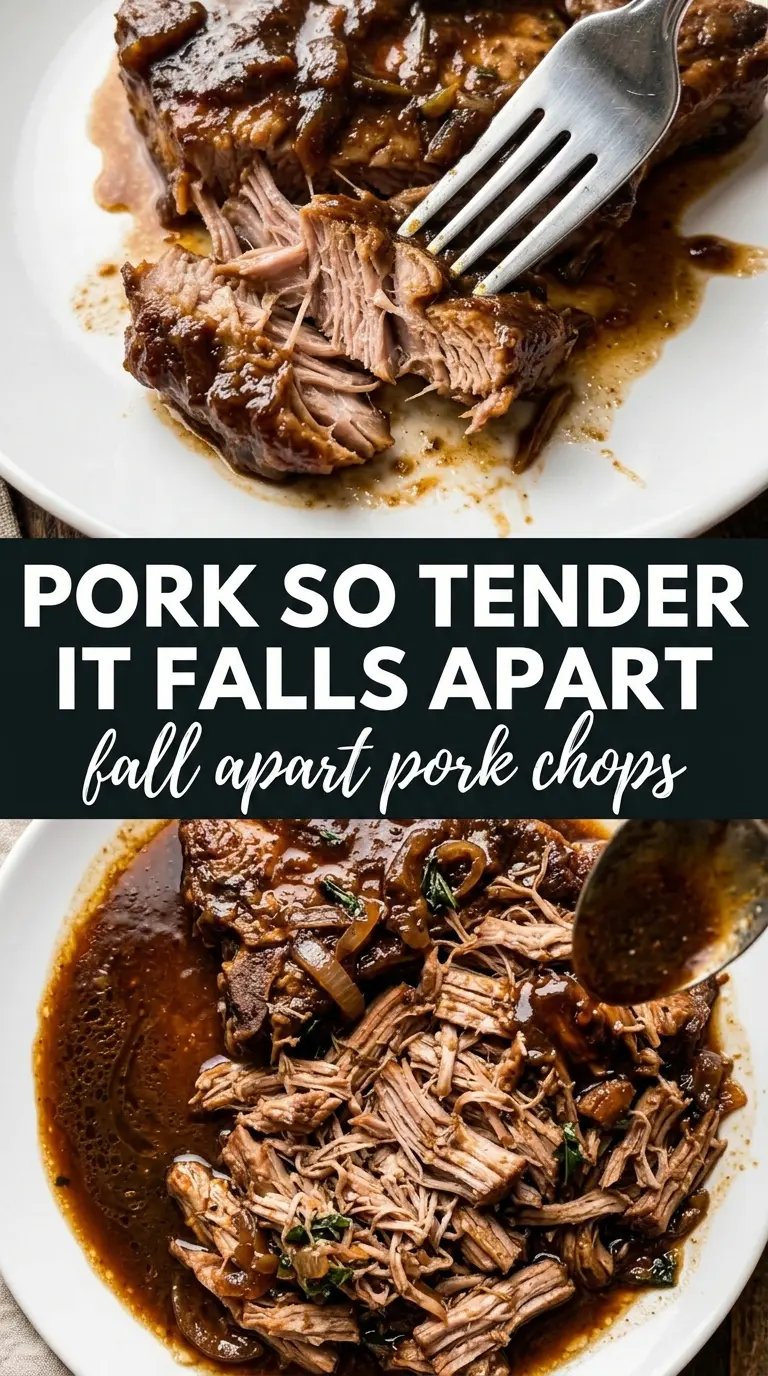
- Thick bone-in pork chops — These hold up to the long braise and stay juicier than thin boneless chops. Bone-in meat has more forgiveness, which matters when you’re cooking for nearly two hours. If you only have boneless, reduce the oven time and check early so they don’t go from tender to stringy.
- Cream of mushroom soup — This is the shortcut that gives the sauce body and a built-in savory mushroom base. It melts into the broth and coats the pork without needing flour or a separate cream reduction. If you want the smoothest sauce, whisk it with the broth before it goes into the pan so you don’t end up with lumps.
- Chicken broth — Broth thins the soup into something spoonable and gives the pork a braising liquid that doesn’t taste flat. Use a low-sodium version if your soup is already salty. Water won’t give you the same depth.
- Worcestershire sauce — A small amount makes the gravy taste fuller and a little more rounded. It doesn’t read as a separate flavor, but you notice when it’s missing. There isn’t a perfect substitute, though soy sauce works in a pinch if you use less and keep the salt light.
- Onion and garlic — These build the aromatic layer in the same pan where the pork was seared, which is where the flavor lives. The onion softens into the sauce, and the garlic gives a warm background note. Don’t rush this part or the gravy can taste raw and sharp.
How to Braise the Pork So It Falls Apart
Seasoning and Searing the Chops
Pat the pork chops dry, then season them well with salt, pepper, and garlic powder. When the oil is hot, lay the chops in and let them sit long enough to develop a deep brown crust before turning. If they stick at first, leave them alone for another minute; once they’re ready, they’ll release more easily. The goal is color, not cooking them through.
Building the Pan Base
Take the chops out and cook the sliced onion in the same pan until it softens and picks up the browned bits. Add the garlic for just 30 seconds so it stays fragrant and doesn’t burn. Then whisk the soup, broth, and Worcestershire until smooth and pour it in, scraping the pan as you go. If you skip the scraping, you leave behind the best flavor in the pan.
Low Oven Heat and Tight Covering
Set the chops back into the liquid, add the thyme, and cover the dish tightly with foil before it goes into the 300°F oven. That low temperature is what keeps the pork from seizing up while the connective tissue slowly breaks down. The foil needs to seal well; if steam escapes, the sauce reduces too quickly and the pork can end up dry on top. After about 1.5 hours, check for fork tenderness, then keep going until the meat pulls apart easily.
The Finish and Serving
Once the chops are tender, spoon the gravy over the top and finish with parsley. The sauce should look silky and coat the back of a spoon, not watery. If it seems a little thin, let it sit uncovered for a few minutes before serving so it can settle. These are best over mashed potatoes, rice, or noodles that can catch every bit of gravy.
How to Adapt These Pork Chops for the Pantry You Have
Dairy-Free Without Losing the Creamy Gravy
This recipe is already naturally dairy-free as written, which is one reason it works so well for a braise. Just double-check your soup and broth labels, since some brands add milk solids or butter flavoring. The finished gravy still comes out rich because the soup provides the creamy body.
Gluten-Free Swaps That Still Give You Body
Use a gluten-free cream of mushroom soup and a certified gluten-free Worcestershire sauce. The texture stays the same because the soup is doing the thickening, not a flour roux. If your soup is a little looser than the original, uncover the pan for the last 10 minutes so the gravy tightens up.
Boneless Chops in a Shorter Timeline
Boneless chops work, but they need less time because they don’t have the same fat and bone protection. Start checking around 60 to 75 minutes, and pull them when they give easily with a fork. If you cook them for the full bone-in time, they’ll still taste good, but the texture can turn a little stringy.
Storage and Reheating
- Refrigerator: Store leftovers in an airtight container for up to 3 days. The gravy thickens as it chills, which helps the pork stay moist.
- Freezer: This freezes well for up to 2 months. Freeze the pork with plenty of gravy so the meat doesn’t dry out when thawed.
- Reheating: Warm gently on the stovetop or in a covered dish in a 300°F oven until hot. Don’t blast it in the microwave on high, or the pork can tighten up and the sauce can separate.