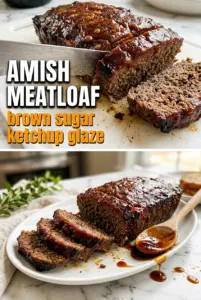
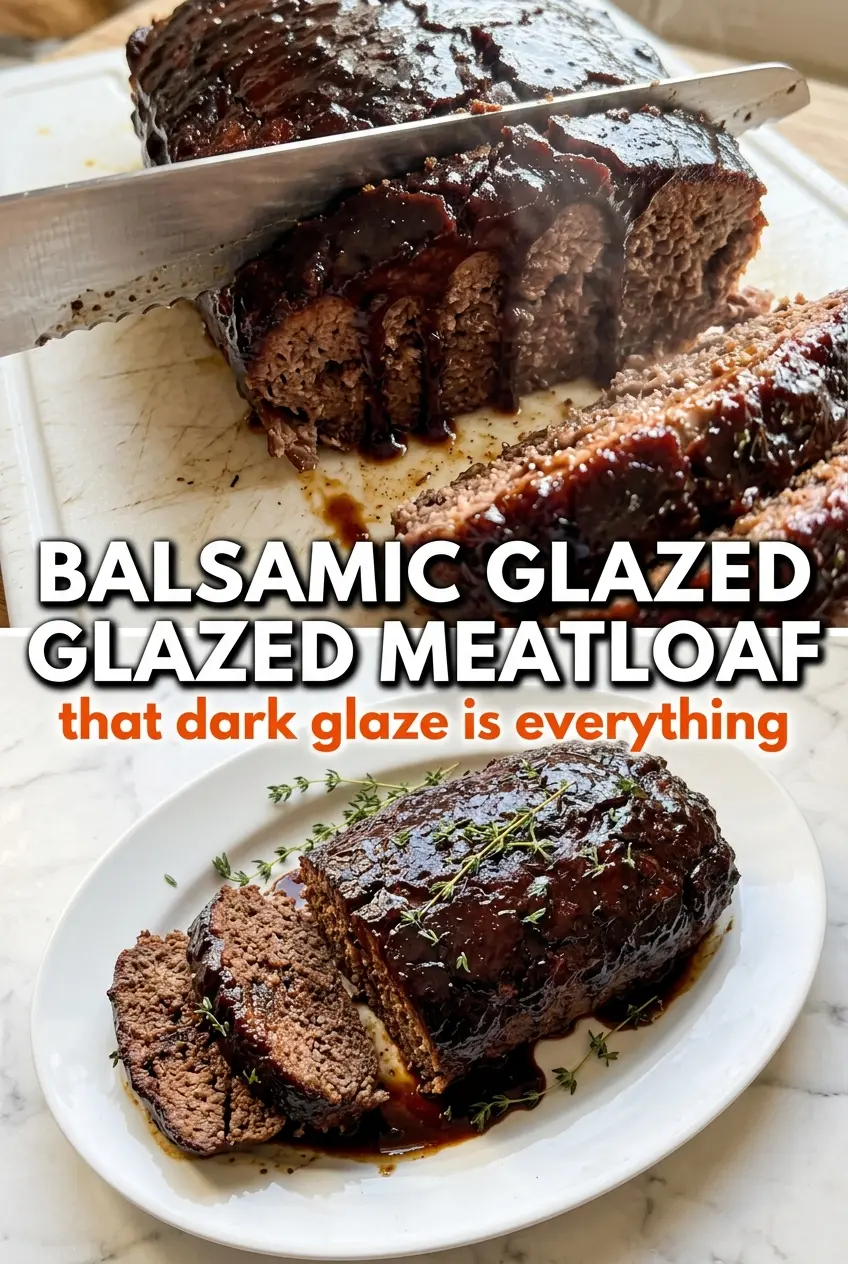
Deeply savory meatloaf with a glossy balsamic glaze earns its place at the table because it slices cleanly, stays juicy, and lands with that sweet-tangy finish that makes a simple dinner feel cared for. The glaze bakes into a dark, caramelized shell on top instead of sliding off, and the loaf itself holds together without turning dense or dry.
The trick is in the balance. Ground beef brings flavor, ground pork softens the texture, and the milk-breadcrumb mixture keeps the loaf tender without making it wet. Grating the onion instead of chopping it finer means the juices disappear into the meat, so you get moisture and flavor without pockets that can make slicing messy. The balsamic glaze is built separately and reduced just enough to cling before it goes on the loaf, which gives you a lacquered finish instead of a thin, sharp sauce.
Below, I’m walking through the part that matters most: how to keep the loaf tender, how to get that glaze to caramelize instead of burn, and what to change if you need to work with what’s already in the pantry.
The glaze thickened up beautifully and stayed on the meatloaf instead of running all over the pan. I used the leftovers in sandwiches the next day and it sliced cleanly even after chilling.
Save this balsamic glazed meatloaf for the nights when you want a caramelized glaze, tender slices, and a dinner that feels a little more dressed up.
The Part That Keeps the Glaze From Sliding Off
Most meatloaf glaze problems start with the surface. If the loaf is too wet or too tightly packed, the glaze never gets a chance to cling and caramelize. This version uses a free-form loaf on a baking sheet, which gives the heat room to work on all sides and lets the top dry just enough to grab the balsamic mixture.
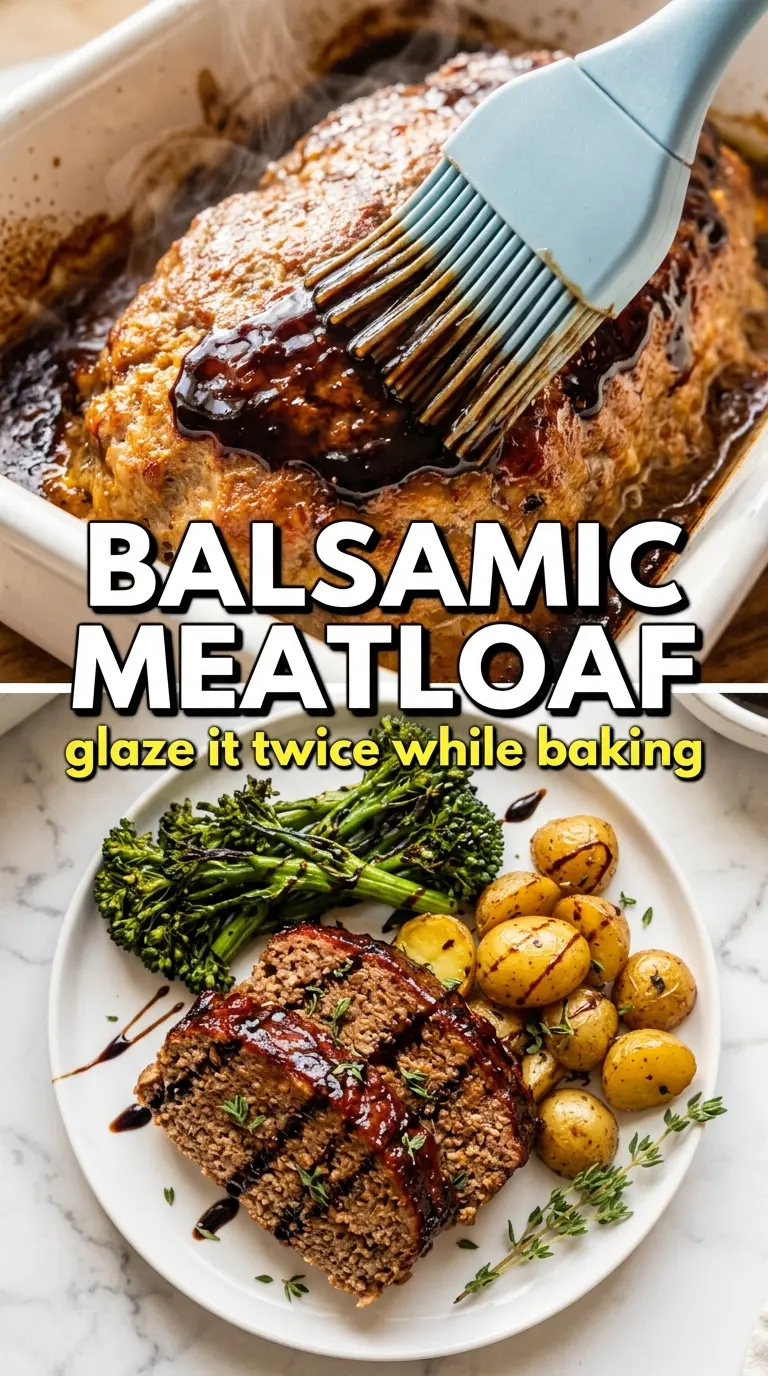
The other key is timing. Half the glaze goes on after it has simmered briefly and thickened, then the rest goes on near the end so the sugars darken without burning. If you put all of it on at the beginning, the glaze can go from glossy to bitter before the center of the loaf is done.
What Each Ingredient Is Doing in the Pan
- Ground beef — This is the backbone of the loaf. Use an 80/20 blend if you can, because it brings enough fat for flavor and tenderness without leaving the finished slices greasy.
- Ground pork — Pork softens the texture and rounds out the beef. If you skip it, the loaf still works, but it will taste leaner and a little less plush.
- Breadcrumbs and milk — Together they act like a cushion inside the meat. The milk hydrates the crumbs so they stay tender in the oven instead of pulling moisture out of the loaf.
- Grated onion — This melts into the mixture and seasons it from the inside. Chopped onion can leave little crunchy bits; grated onion disappears and keeps the texture smoother.
- Worcestershire, thyme, garlic — These build the savory base so the glaze doesn’t have to do all the work. Fresh thyme is worth using here because it keeps the loaf tasting bright instead of heavy.
- Balsamic vinegar, brown sugar, ketchup, Dijon — This is the glaze that turns the top into a sticky, glossy cap. The vinegar brings tang, the sugar helps it lacquer, the ketchup adds body, and the Dijon keeps the sweetness in check.
How to Mix, Shape, and Glaze Without Losing the Texture
Building the Meat Mixture
Combine the beef, pork, breadcrumbs, eggs, milk, grated onion, garlic, Worcestershire, thyme, salt, and pepper in a large bowl and mix just until everything looks evenly combined. Stop as soon as the ingredients come together; overmixing compresses the meat and gives you a tight, bouncy loaf instead of a tender one. The mixture should hold its shape when pressed, but it shouldn’t feel pasty.
Shaping the Loaf for Even Baking
Form the mixture into a free-form loaf on a foil-lined baking sheet rather than packing it into a pan. A loaf pan traps fat and steam, which can soften the crust and make the glaze less dramatic. Shape it so it’s even from end to end and slightly rounded on top, because thin edges dry out before the middle is done.
Cooking the Glaze and Timing the Brush-On
Simmer the balsamic vinegar, brown sugar, ketchup, and Dijon in a small saucepan for 3 to 4 minutes until it looks slightly syrupy. You’re not looking for a thick jam; it should coat the back of a spoon and brush on in a smooth layer. Paint half over the loaf, bake it until the surface starts to set, then brush on the rest for the final stretch so it turns dark and glossy instead of scorched.
Knowing When It’s Done
Bake the loaf until the center reaches 160°F and the glaze is deeply caramelized. If you slice too early, the juices run and the loaf can seem looser than it really is. Let it rest for 10 minutes after baking so the juices settle back into the meat and the slices stay neat.
Three Ways to Make This Meatloaf Fit Your Table
Gluten-Free Version
Swap the breadcrumbs for certified gluten-free breadcrumbs or finely crushed gluten-free crackers. The loaf still holds together, but the texture may be a touch softer, so let it rest before slicing. Check that your Worcestershire sauce is gluten-free too, since that’s the one ingredient people miss.
Dairy-Free Adjustment
Use unsweetened plain non-dairy milk in place of the whole milk. The loaf still stays tender because the liquid’s job is moisture, not richness, though whole milk gives a slightly fuller result. Don’t use a strongly flavored milk like sweetened vanilla oat milk or the glaze and garlic will taste off.
More Tangy, Less Sweet Glaze
If you like a sharper finish, cut the brown sugar back to 2 tablespoons and add another teaspoon of Dijon. That keeps the glaze shiny but shifts it toward savory and tart instead of candy-sweet. It’s a good move if you’re serving the meatloaf with mashed potatoes or another rich side.
Make It Ahead for a Busy Night
Shape the loaf and mix the glaze up to 24 hours ahead, then keep both covered in the fridge. Bake straight from cold, adding a few extra minutes if the center is still chilled when it goes into the oven. This is one of those dishes that gets easier, not harder, when you prep it in advance.
Storage and Reheating
- Refrigerator: Store slices in an airtight container for up to 4 days. The glaze will firm up and the flavor gets even deeper after a day.
- Freezer: Freezes well. Wrap individual slices tightly and freeze for up to 3 months so you can reheat only what you need.
- Reheating: Reheat covered in a 300°F oven with a spoonful of water or broth in the pan so the meat stays moist. The common mistake is blasting it in the microwave until the glaze turns sticky and the edges dry out.
Answers to the Questions Worth Asking
Balsamic Glazed Meatloaf
Ingredients
Equipment
Method
- Preheat the oven to 350°F and line a baking sheet with foil for easy release.
- Simmer the balsamic glaze ingredients in a small saucepan for 3–4 minutes, until slightly syrupy, then brush half over the loaf.
- Combine ground beef, ground pork, breadcrumbs, eggs, whole milk, grated onion, minced garlic, Worcestershire sauce, fresh thyme, salt, and pepper.
- Shape the mixture into a free-form loaf on the lined baking sheet.
- Bake the loaf for 55 minutes at 350°F, then brush the remaining glaze over the top.
- Bake 15 more minutes until the internal temperature reaches 160°F and the glaze is caramelized, visibly crackling and glistening.
- Rest the meatloaf for 10 minutes before slicing so the juices set and the glaze stays glossy.