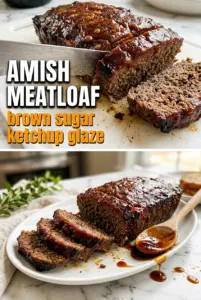
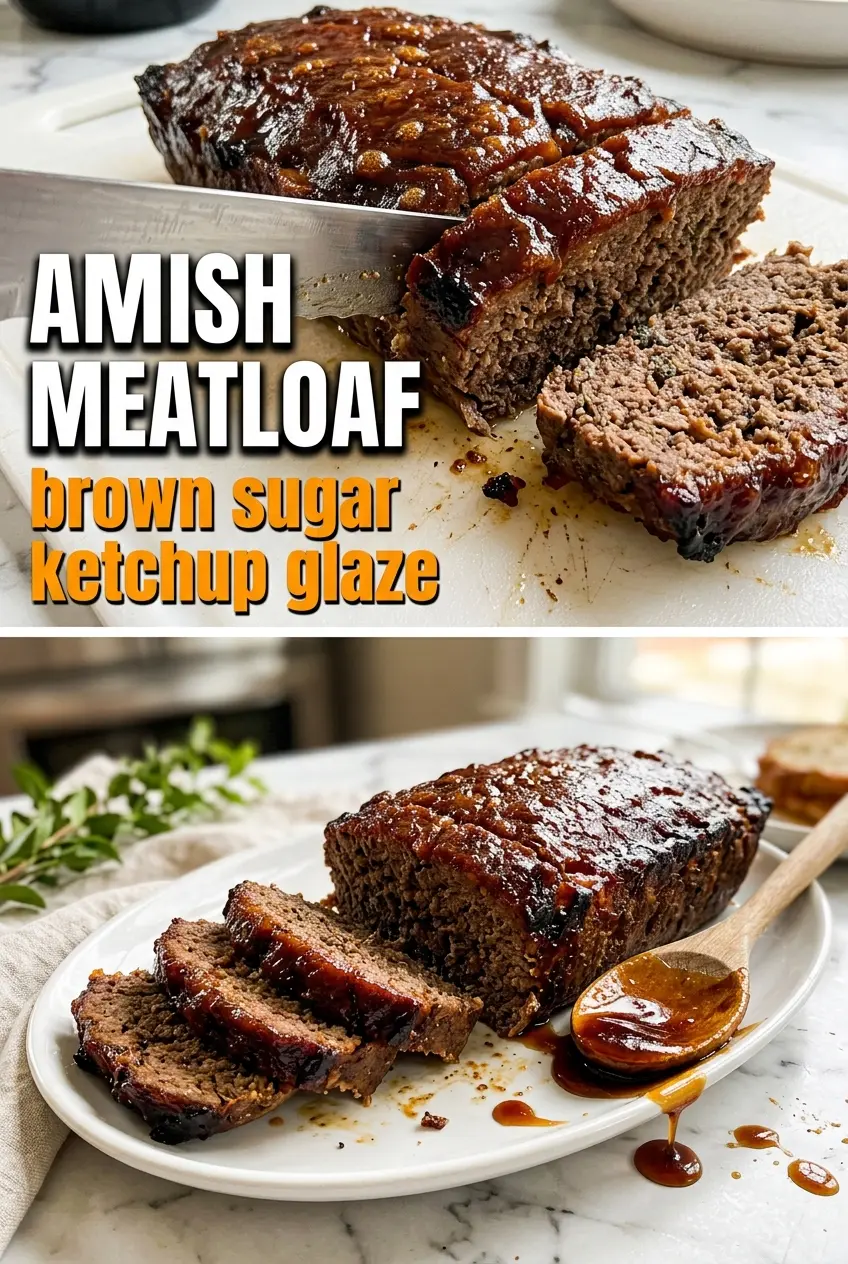
Amish meatloaf lands on the plate with a dense, old-fashioned slice that holds together cleanly and tastes like it came from a well-loved family table. The texture is hearty without being heavy, and the sweet-tangy ketchup glaze bakes into a sticky top that catches on the edges just enough to give each bite a little contrast. It’s the kind of meatloaf that doesn’t need any apology or modern makeover to earn repeat dinners.
What makes this version work is the balance between beef, pork, milk, eggs, and crushed saltines. The pork adds richness, the crackers keep the loaf tender without turning it soft, and the grated onion disappears into the mixture so you get flavor without big chunks that can break up the slice. Pressing the meat firmly into the pan matters here, too — this isn’t a loose, airy loaf. It should bake up compact, sliceable, and satisfying.
Below, I’ll walk through the one step that keeps the loaf from falling apart, the glaze timing that gives you the best finish, and a few variations for changing the meat or making it fit what you’ve got in the kitchen.
The loaf sliced beautifully, and the glaze caramelized just enough without burning. I used the full resting time and it stayed juicy instead of crumbling on the plate.
Save this Amish Meatloaf for a hearty dinner with a caramelized ketchup glaze and the dense, old-fashioned slice that holds its shape.
The Trick to a Meatloaf That Slices Cleanly Instead of Crumbling
Most meatloaves fall apart for one of two reasons: they’re mixed too loosely, or they’re packed with ingredients that make them bouncy instead of cohesive. This version leans old-fashioned on purpose. The crushed saltines and eggs bind the loaf, while the milk softens the mixture just enough to keep the crumb from turning dry.
The other detail that matters is the onion. Grating it instead of dicing it gives you the flavor without hard pieces that can create weak spots in the loaf. Once the mixture goes into the pan, press it in firmly and smooth the top. Air pockets are what make slices break apart when you cut them.
- Ground beef and pork — The beef gives structure and the pork brings richness. You can use all beef in a pinch, but the loaf will be leaner and a little less tender.
- Crushed saltine crackers — These act as the binder and soak up the milk and juices. Breadcrumbs can work, but saltines give the more classic Amish-style texture.
- Grated onion — This melts into the mixture and seasons it evenly. If you use chopped onion instead, keep the pieces very fine so they cook through and don’t leave gaps in the loaf.
What Each Ingredient Is Actually Doing in This Recipe
- Primary ingredient (the star) — Quality matters most. Choose the best you can find.
- Cooking medium (oil, butter, or broth) — This carries flavors and prevents dryness.
- Seasonings (salt, pepper, spices, herbs) — Layer flavors so nothing overpowers. Build depth gradually.
- Aromatics (garlic, onion, herbs) — Cook with fat to bloom flavors. Become the foundation.
- Supporting ingredients — Complement the main ingredient without overpowering it.
- Sauce or liquid (if applicable) — Brings flavors together. Balance richness with acid.
- Acid (lemon, vinegar, wine, or other) — Brightens and prevents flat-tasting results.
- Final finish (garnish, glaze, or sauce) — Prevents one-dimensional taste and adds visual appeal.
Why the Glaze Goes On Twice
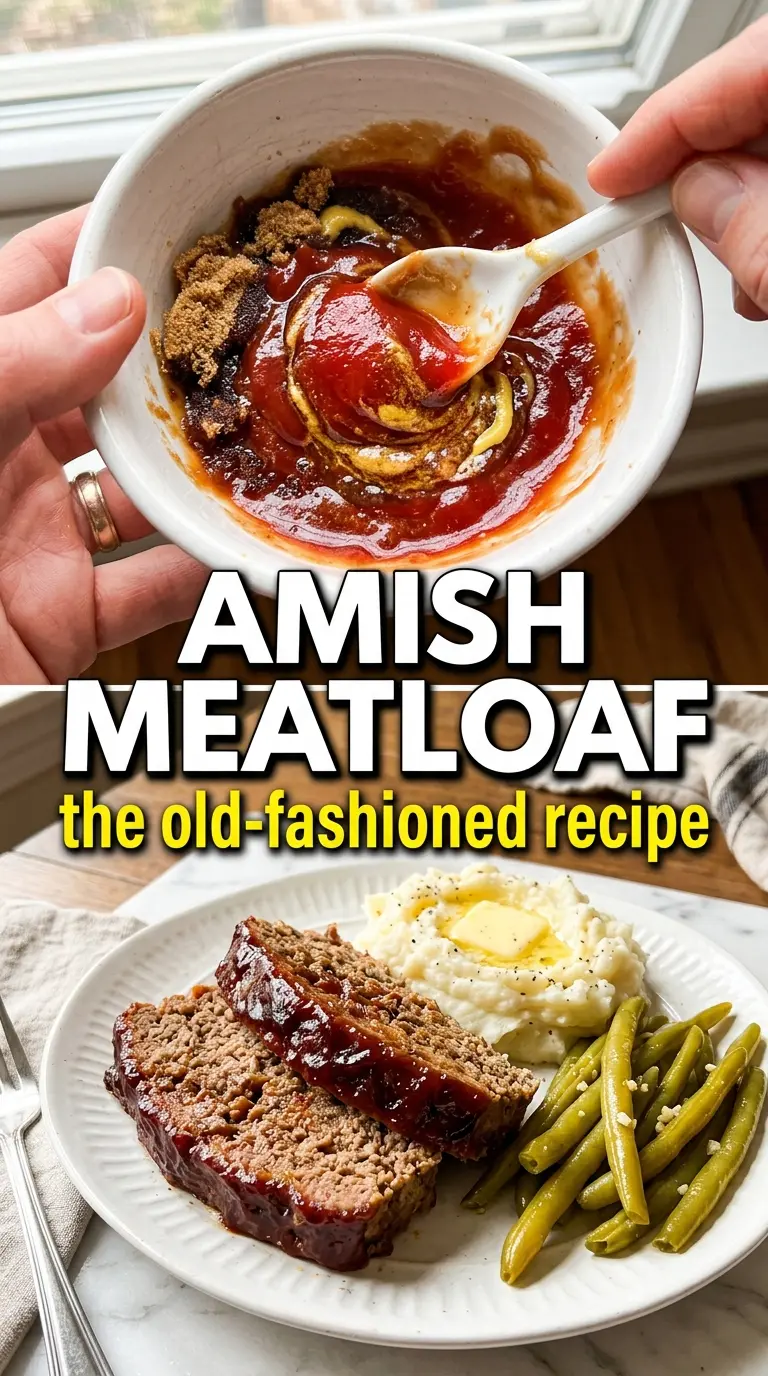
The glaze isn’t just for sweetness. It gives the top a lacquered finish and keeps the surface from drying out during the long bake. A quick mix of ketchup, brown sugar, and apple cider vinegar gives you that classic tangy-sweet coating that settles into the meat rather than sitting on top like frosting.
Brushing on half the glaze first lets it set, then the second layer goes on during the last stretch of baking so it caramelizes instead of scorching. If you put it all on at the start, the sugar can darken too fast and the top can taste harsh. The timing here gives you a glossy finish and a cleaner, deeper flavor.
The Bake and Rest That Keep This Loaf Juicy
Mix Just Until the Ingredients Come Together
Combine the beef, pork, crackers, eggs, milk, onion, Worcestershire, mustard, parsley, salt, and pepper until the mixture looks evenly distributed, then stop. If you keep working it, the proteins tighten and the loaf bakes up dense in a tough way instead of in that sturdy, sliceable way you want. The mixture should hold together when pressed, not look whipped or paste-like.
Press It Firmly Into the Pan
Pack the meat mixture into a greased 9×5 loaf pan and smooth the top with the back of a spoon or your hand. A loose shape can slump and split while it bakes, but a firmly packed loaf cooks evenly and slices neatly. If the top looks rough or mounded, it can brown unevenly and the glaze won’t spread as cleanly.
Bake, Glaze Again, Then Wait
Start the loaf at 350°F and bake it for 55 minutes before adding the rest of the glaze. After that, give it the final 15 minutes and check for an internal temperature of 160°F in the center. Let it rest for 10 minutes before slicing. If you cut too early, the juices run out and the slices break; that short rest is what keeps the texture compact and moist.
Three Ways to Adapt This Old-Fashioned Loaf Without Losing the Point
Make It Without Pork
Use 2 1/2 pounds of ground beef instead of the beef-and-pork blend. The loaf will still hold together, but it won’t have quite the same richness, so the glaze and Worcestershire matter a little more for depth.
Gluten-Free Version
Swap the saltines for gluten-free crackers or plain gluten-free breadcrumbs in the same amount. You’re still looking for a dry ingredient that can soak up the milk and bind the loaf, so don’t reduce the amount unless the mixture feels wet.
Lower-Sugar Glaze
Cut the brown sugar back to 1 tablespoon and keep the vinegar. The glaze will be a little sharper and less sticky, but it still gives you that classic red, caramelized top without as much sweetness.
Storage and Reheating
- Refrigerator: Store slices in an airtight container for up to 4 days. The loaf firms up as it chills, which makes it even easier to slice for sandwiches or reheating.
- Freezer: Freeze cooled slices or the whole loaf tightly wrapped for up to 3 months. Wrap well so the glaze doesn’t dry out and the edges don’t pick up freezer flavor.
- Reheating: Warm slices covered in a 300°F oven with a splash of broth or water for about 15 minutes, or heat gently in the microwave at medium power. High heat dries meatloaf fast, so slow reheating keeps the texture tender.
Answers to the Questions Worth Asking
Amish Meatloaf
Ingredients
Equipment
Method
- Preheat oven to 350°F and grease a 9x5 loaf pan for easy release.
- In a mixing bowl, combine ground beef, ground pork, crushed saltine crackers, eggs, whole milk, grated onion, Worcestershire sauce, prepared mustard, dried parsley, salt, and black pepper until evenly combined.
- Press the mixture firmly into the loaf pan and smooth the top so it bakes evenly.
- Mix ketchup, brown sugar, and apple cider vinegar, then spread half of the glaze over the top for an old-fashioned caramelized finish.
- Bake at 350°F for 55 minutes until the top looks set and slightly dry around the edges.
- Spread the remaining glaze over the loaf, then bake at 350°F for 15 more minutes until the internal temperature reaches 160°F.
- Rest the meatloaf for 10 minutes before slicing so the juices settle and the dense texture holds together.
- Slice and serve with traditional sides.