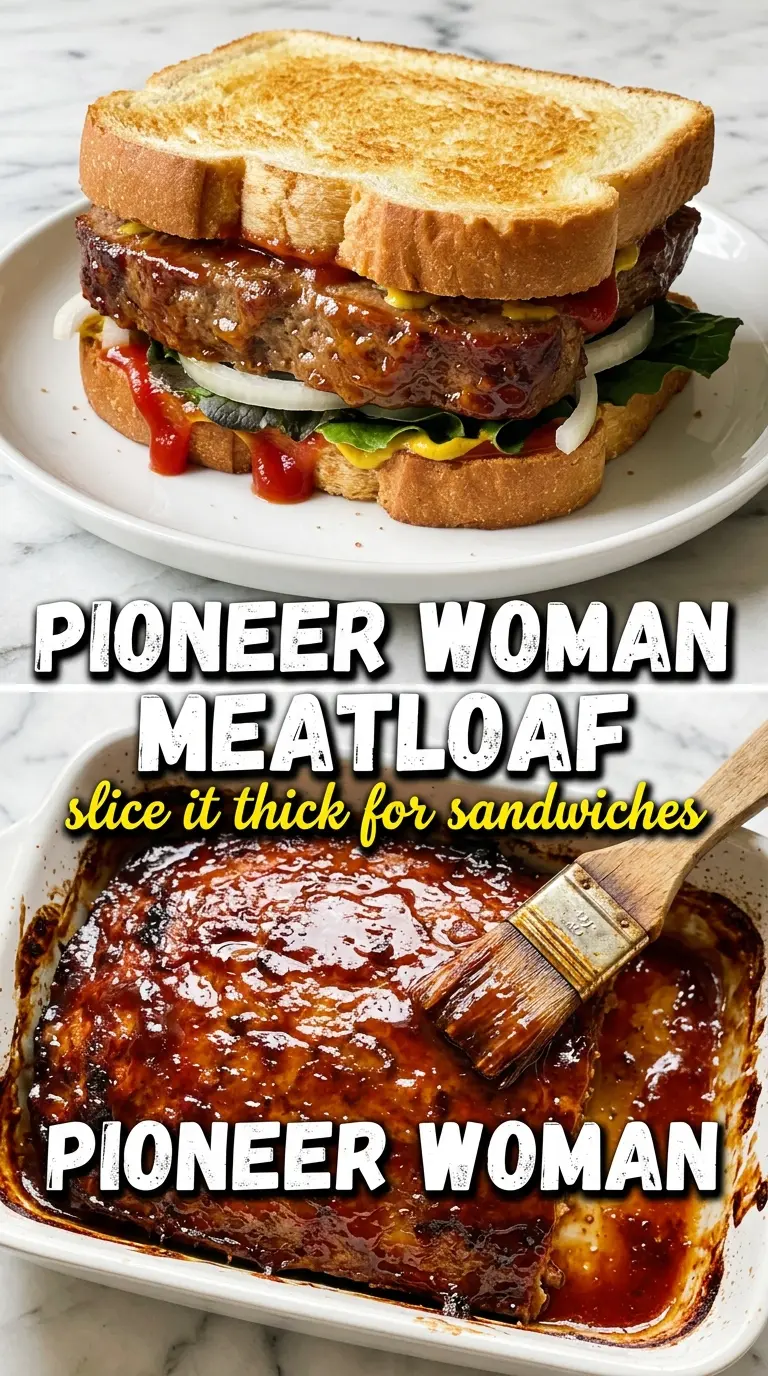
What makes this meatloaf worth keeping in the regular dinner rotation is the texture: dense enough to slice cleanly, but still moist and tender in the middle with a glaze that bakes into a sticky, tangy cap. The beef-and-pork blend gives it more flavor than an all-beef loaf, and the grated onion practically disappears into the mixture while keeping the whole thing juicy. The ketchup and brown sugar glaze isn’t there just for sweetness; it settles into a lacquered top that balances the savory meat underneath.
The trick with this style of meatloaf is restraint. Breadcrumbs, milk, and eggs bind the mixture without turning it bready, and the grated onion adds moisture without leaving sharp chunks behind. You don’t need to work the mixture until it looks smooth — that’s how meatloaf turns tight and springy instead of tender. The loaf pan helps it hold that classic shape, and the two-stage glaze gives you a deeper finish than brushing it on once at the start.
Below, I’ve broken down the parts that matter most, from the reason the pork blend works to the one resting step that keeps the slices from falling apart on the plate. If you’ve ever had meatloaf come out dry, crumbly, or bland, this version fixes all three problems without making the process fussy.
The grated onion and milk kept the loaf so moist, and the glaze set up with that sticky edge I always want. Mine sliced cleanly after resting, which never happens when I rush it.
Save this Pioneer Woman-style meatloaf for the nights when you want a tender beef-and-pork loaf with a sticky ketchup-brown sugar glaze.
The Reason This Loaf Stays Tender Instead of Turning Dense
Most dry meatloaves start with good intentions and end with overworked meat. Once ground beef and pork are mixed too long, the proteins tighten up and the finished loaf eats like a brick. This version avoids that by leaning on a light hand and on ingredients that bring moisture from the inside, not just from the glaze on top.
The grated onion matters here because it blends into the meat instead of creating pockets that can make slices fall apart. The milk softens the breadcrumbs before they go into the oven, which helps them act like a cushion rather than a filler. And baking it in a loaf pan keeps the shape neat, but the real protection against dryness is pulling it when the center reaches 160°F and letting it rest before slicing.
What the Beef, Pork, and Glaze Are Each Doing Here
- Ground beef — This gives the loaf its structure and familiar beefy base. An 80/20 blend is ideal if you’re choosing from the store, because leaner beef can bake up dry.
- Ground pork — Pork brings fat and a softer texture that keeps the finished loaf from tasting one-note. If you skip it, the loaf still works, but it loses that deeper, more savory richness.
- Plain breadcrumbs and milk — These work together as the binder. The milk softens the crumbs first, which helps the loaf stay tender instead of compacted.
- Grated onion and garlic — Grated onion disappears into the mixture and adds moisture without sharp chunks. The garlic gives background flavor; minced fresh garlic is stronger than powder here and makes the loaf taste homemade, not flat.
- Worcestershire and thyme — Worcestershire adds salt, tang, and that beefy depth you can’t get from seasoning alone. Fresh thyme is subtle but important; it keeps the flavor from tasting like plain meat with ketchup on top.
- Ketchup glaze with brown sugar and mustard — This is the part that turns the top glossy and sticky. Brown sugar helps it caramelize, mustard sharpens the sweetness, and the second layer of glaze near the end of baking keeps it from burning before the loaf finishes.
Building the Loaf So It Holds Together and Slices Cleanly
Mix the meat just until it comes together
Combine the beef, pork, breadcrumbs, eggs, milk, onion, garlic, Worcestershire, thyme, salt, and pepper in a large bowl and stop as soon as the mixture looks evenly distributed. If you keep stirring after that, the loaf gets tight and rubbery once baked. The mixture should feel soft and a little wet, not dry and crumbly.
Press it into the pan without packing it down
Spoon the mixture into a greased 9×5 loaf pan and press it in gently so there aren’t air pockets, but don’t mash it flat like cookie dough. A packed loaf bakes up heavy and loses the tender texture you want. Smooth the top with your fingers or the back of a spoon so the glaze can spread evenly.
Brush on the glaze in two passes
Stir the ketchup, brown sugar, mustard, and Worcestershire together until smooth, then spread half over the top before baking. That first layer sets into the meat, and the second layer added after 55 minutes builds a thicker, darker finish. If you add it all at the start, the sugar can scorch before the center is done.
Rest before slicing
Pull the loaf when the center hits 160°F, then leave it alone for 10 minutes. That rest gives the juices time to settle back into the meat, which is why the slices hold together instead of crumbling on the cutting board. Use a sharp knife and cut in one clean motion.
How to Adapt This Meatloaf Without Losing the Good Part
Make it all beef if that’s what you have
You can use 2 pounds of ground beef instead of the beef-and-pork blend, but the loaf will be a little firmer and less rich. Choose beef that isn’t extra lean, or the finished slices will dry out faster.
Gluten-free version with the same texture
Swap the breadcrumbs for a certified gluten-free breadcrumb or crushed gluten-free crackers. The goal is still a soft binder, so use the same volume and don’t pack the mixture any tighter than usual.
Dairy-free adjustment
Replace the milk with an unsweetened plain non-dairy milk. Oat milk works best because it has enough body to soften the breadcrumbs without adding a noticeable flavor.
Mini loaves for faster serving
Shape the mixture into smaller loaves or use a muffin tin for individual portions. They bake faster and give you more glazed surface, but you’ll need to start checking earlier because the centers will reach temperature sooner.
Storage and Reheating
- Refrigerator: Store slices in an airtight container for up to 4 days. The glaze stays tasty, though the loaf firms up a bit as it chills.
- Freezer: It freezes well. Wrap individual slices tightly and freeze for up to 3 months, then thaw in the refrigerator before reheating.
- Reheating: Warm slices covered in a 300°F oven with a splash of broth or water in the pan, or microwave them gently at medium power. High heat dries out the edges before the center is hot.
Answers to the Questions Worth Asking

Pioneer Woman's Meatloaf
Ingredients
Equipment
Method
- Preheat the oven to 350°F and grease a 9x5 loaf pan so the meatloaf releases cleanly.
- Combine ground beef, ground pork, breadcrumbs, eggs, whole milk, grated onion, minced garlic, Worcestershire sauce, fresh thyme, salt, and black pepper in a large bowl, mixing just until no dry bits remain.
- Press the mixture into the loaf pan and smooth the top for even baking.
- Mix the ketchup, brown sugar, mustard, and a dash of Worcestershire, then spread half over the top of the loaf.
- Bake at 350°F for 55 minutes, then spread the remaining glaze over the loaf.
- Bake for 15 more minutes at 350°F until the internal temperature reaches 160°F and the glaze looks dark and set.
- Rest the meatloaf for 10 minutes before slicing so the juices settle and the slices stay intact.
- Slice and serve with mashed potatoes and green beans.