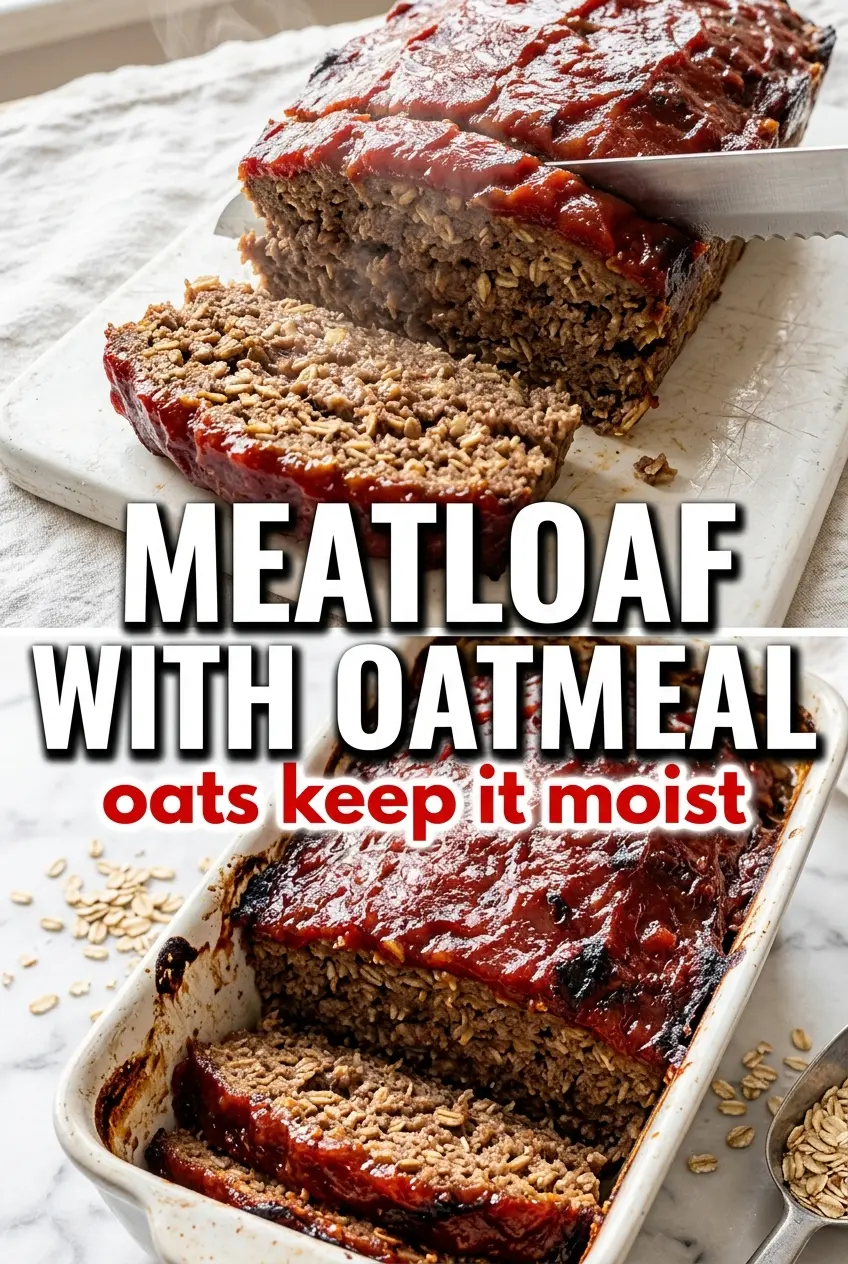
Meatloaf with oatmeal stays tender in a way breadcrumb versions sometimes miss. The oats soften in the milk, then disappear into the beef just enough to hold everything together without turning the slice dense or pasty. What you get instead is a moist, sliceable loaf with a little texture in the background and a glaze that caramelizes into the top instead of sliding off.
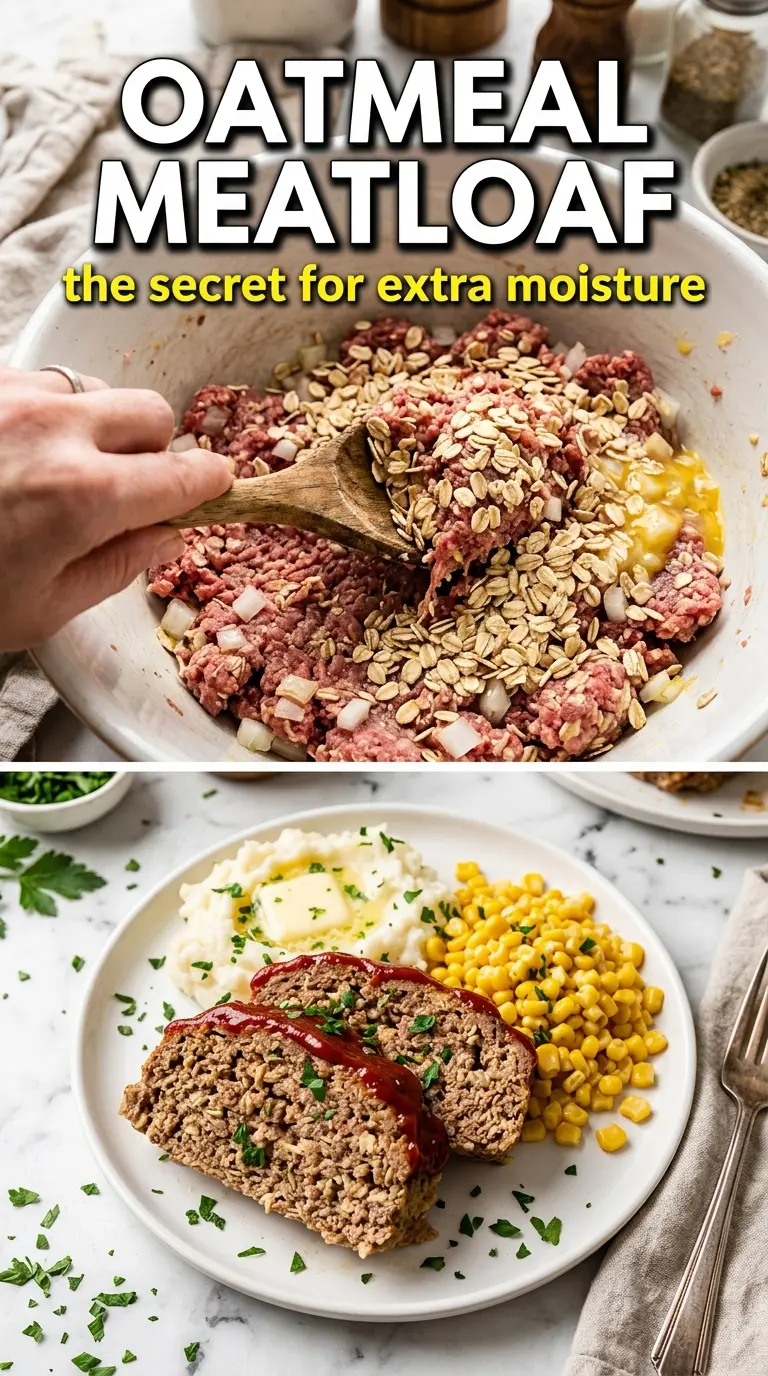
The trick is treating the oats like part of the structure, not a filler. Soaking them first gives them time to plump up, which keeps them from stealing moisture from the meat while it bakes. Grated onion does the same kind of quiet work here, melting into the mixture and adding flavor without leaving big chunks that can make the loaf fall apart.
Below, I’ve included the detail that matters most for this kind of meatloaf: how to keep it from getting heavy, how to know when the center is set, and what changes if you need a gluten-free version or a different meat blend.
The oats made the meatloaf hold together beautifully, and it stayed moist all the way through. The glaze thickened up right on the top, and leftovers sliced cleanly the next day.
Save this oatmeal meatloaf for nights when you want a moist, no-breadcrumb dinner that slices cleanly and reheats well.
The Oats Need Time to Soak, Not Just Stir In
Most dry meatloaf happens because the binder never hydrates before it hits the oven. Old-fashioned oats need that five-minute soak in milk so they soften and thicken the mixture from the inside instead of acting like little dry pellets that pull moisture out of the beef while it bakes. That one small pause changes the whole texture.
There’s another quiet advantage here: oats help the loaf stay tender even after a full bake and a rest on the counter. If you skip the soak or rush the mix, the loaf can turn tight around the edges before the center is done. A gentle hand keeps the meat from packing down too hard, which matters as much as the ingredient list.
- Old-fashioned rolled oats — These hold their shape enough to give the loaf structure, but they soften into the meat much better than quick oats. Quick oats can work in a pinch, but they make the texture a little more uniform and less hearty.
- Grated onion — This is better than chopped onion here because it melts into the meatloaf and keeps every slice moist. If you use chopped onion, the pieces stay more noticeable and the loaf can feel chunkier.
- Worcestershire sauce — This adds depth and saltiness that plain beef doesn’t have on its own. There isn’t a perfect substitute, but a mix of soy sauce and a splash of vinegar gets close if that’s what you have.
- Whole milk — The fat content helps the oats soften without tasting watery. Lower-fat milk works, but the loaf won’t feel quite as plush.
What Each Ingredient Is Actually Doing in This Recipe
- Primary ingredient (the star) — Quality matters most. Choose the best you can find.
- Cooking medium (oil, butter, or broth) — This carries flavors and prevents dryness.
- Seasonings (salt, pepper, spices, herbs) — Layer flavors so nothing overpowers. Build depth gradually.
- Aromatics (garlic, onion, herbs) — Cook with fat to bloom flavors. Become the foundation.
- Supporting ingredients — Complement the main ingredient without overpowering it.
- Sauce or liquid (if applicable) — Brings flavors together. Balance richness with acid.
- Acid (lemon, vinegar, wine, or other) — Brightens and prevents flat-tasting results.
- Final finish (garnish, glaze, or sauce) — Prevents one-dimensional taste and adds visual appeal.
Building the Loaf So It Stays Moist All the Way Through
Soften the oats first
Stir the oats into the milk and let them sit until they look swollen and the mixture has thickened a little. You’re not waiting for a paste; you’re waiting for the oats to stop tasting raw. If they still look dry after five minutes, give them another minute or two before they go into the bowl.
Mix the beef lightly
Add the soaked oats, eggs, grated onion, garlic, Worcestershire, and seasonings to the ground beef, then mix just until everything looks evenly distributed. Overmixing is the fastest way to get a heavy meatloaf, because the beef proteins tighten up and squeeze out moisture. Stop as soon as the mixture holds together when pressed.
Shape and glaze without overpacking
Press the mixture into a greased 9×5 loaf pan and smooth the top, but don’t mash it down with force. A light press leaves enough air for the loaf to bake up tender instead of compact. Spread half the glaze over the top before baking, then add the rest near the end so it caramelizes instead of burning.
Cook to temperature, not just time
Bake until the center reaches 160°F and the top is glossy and deeply browned at the edges. If the glaze starts to darken too quickly, tent the pan loosely with foil for the last stretch. Let the loaf rest for 10 minutes before slicing so the juices settle and the slices stay intact.
How to Adapt This Meatloaf When You Need a Different Binder
Make it gluten-free
This recipe is already close, but the Worcestershire sauce needs a quick label check because some brands contain gluten. Use a certified gluten-free version and keep the oats labeled gluten-free if cross-contamination matters in your kitchen. The texture stays the same.
Swap the beef blend for a lighter loaf
Use half ground beef and half ground turkey if you want a lighter flavor and a leaner finish. Add a tablespoon of olive oil or a little extra milk, because turkey dries out faster than beef and needs the extra moisture to stay tender.
Use quick oats in a pinch
Quick oats will work, but the loaf comes out a little softer and less textured. Skip any extra soaking time if you use them, because they absorb liquid faster and can turn the mixture loose if they sit too long.
Make it ahead for an easier dinner
You can mix and shape the loaf a day ahead, cover it tightly, and refrigerate it until baking time. The oats continue to hydrate in the fridge, so the texture is even a little better the next day. Add the glaze right before it goes in the oven.
Storage and Reheating
- Refrigerator: Store slices in an airtight container for up to 4 days. The loaf stays moist, and the flavor deepens a little by day two.
- Freezer: Freeze individual slices wrapped tightly, then place them in a freezer bag for up to 3 months. Thaw overnight in the fridge for the best texture.
- Reheating: Warm slices covered in a 325°F oven with a splash of water or a spoonful of extra glaze until heated through. Microwaving works, but it can dry out the edges fast if you overdo it.
Questions I Get Asked About This Recipe
Meatloaf with Oatmeal
Ingredients
Equipment
Method
- Preheat the oven to 350°F and grease a 9x5 loaf pan. This prevents sticking so the loaf releases cleanly.
- Mix the old-fashioned rolled oats with whole milk and let soak for 5 minutes until the oats soften. Stop when the mixture looks thick and cohesive.
- Combine ground beef, soaked oats, eggs, grated onion, minced garlic, Worcestershire sauce, garlic powder, dried thyme, salt, and black pepper. Mix just until evenly combined for a tender slice.
- Press the mixture into the loaf pan and smooth the top. Pack it firmly but avoid overworking the meat.
- Mix the glaze ingredients and spread half over the meatloaf. Use a spoon to coat the surface evenly so it caramelizes.
- Bake at 350°F for 55–65 minutes, until the internal temperature reaches 160°F. The top should look browned and set when it’s done.
- At the 45-minute mark, spread the remaining glaze over the meatloaf. Return to the oven so the glaze thickens and caramelizes.
- Rest the meatloaf for 10 minutes before slicing. This helps the juices redistribute so the interior stays moist.