Pork tenderloin in creamy mushroom sauce with pasta lands in that sweet spot between weeknight practical and dinner-party worthy. The pork stays tender if you sear it fast and pull it out before it overcooks, while the mushrooms soak up the pan drippings and build a sauce that tastes like it took far more effort than it did. Toss it all with wide pasta ribbons and you get a bowl that feels rich, balanced, and complete.
The key is building the sauce in the same pan you used for the pork. Those browned bits are the base of the whole dish, and the white wine lifts them off the skillet before the cream goes in. I also keep the pork in medallions instead of whole strips, because smaller pieces warm through quickly and stay juicy while the sauce finishes.
Below you’ll find the small details that keep the sauce silky, the pork tender, and the pasta coated instead of drowned. The mushroom step matters more than people think, and there’s a simple way to keep the parmesan from turning grainy.
The sauce thickened up beautifully and the pork stayed tender instead of drying out. I loved how the mushrooms picked up all the flavor from the pan, and the pasta coated evenly without getting gloppy.
Save this pork tenderloin pasta for the night you want a creamy mushroom sauce that clings to every ribbon of pasta.
The Part That Keeps Pork Tenderloin Tender Instead of Dry
Pork tenderloin cooks fast, and that speed is both the advantage and the trap. If it stays in the pan too long while the sauce finishes, it turns from silky to chalky in a hurry. The fix is to sear it hard for color, set it aside, and return it only at the end for a short warm-through. That keeps the medallions juicy while the mushrooms and cream do the slow work.
The other thing people miss is heat control once the dairy goes in. A hard simmer is enough to thicken the cream and broth mixture; boiling it just makes the sauce taste flat and can push the parmesan toward grainy. Low, steady heat gives you a sauce that coats the pasta instead of clinging in streaks.
What Each Ingredient Is Actually Doing in the Skillet
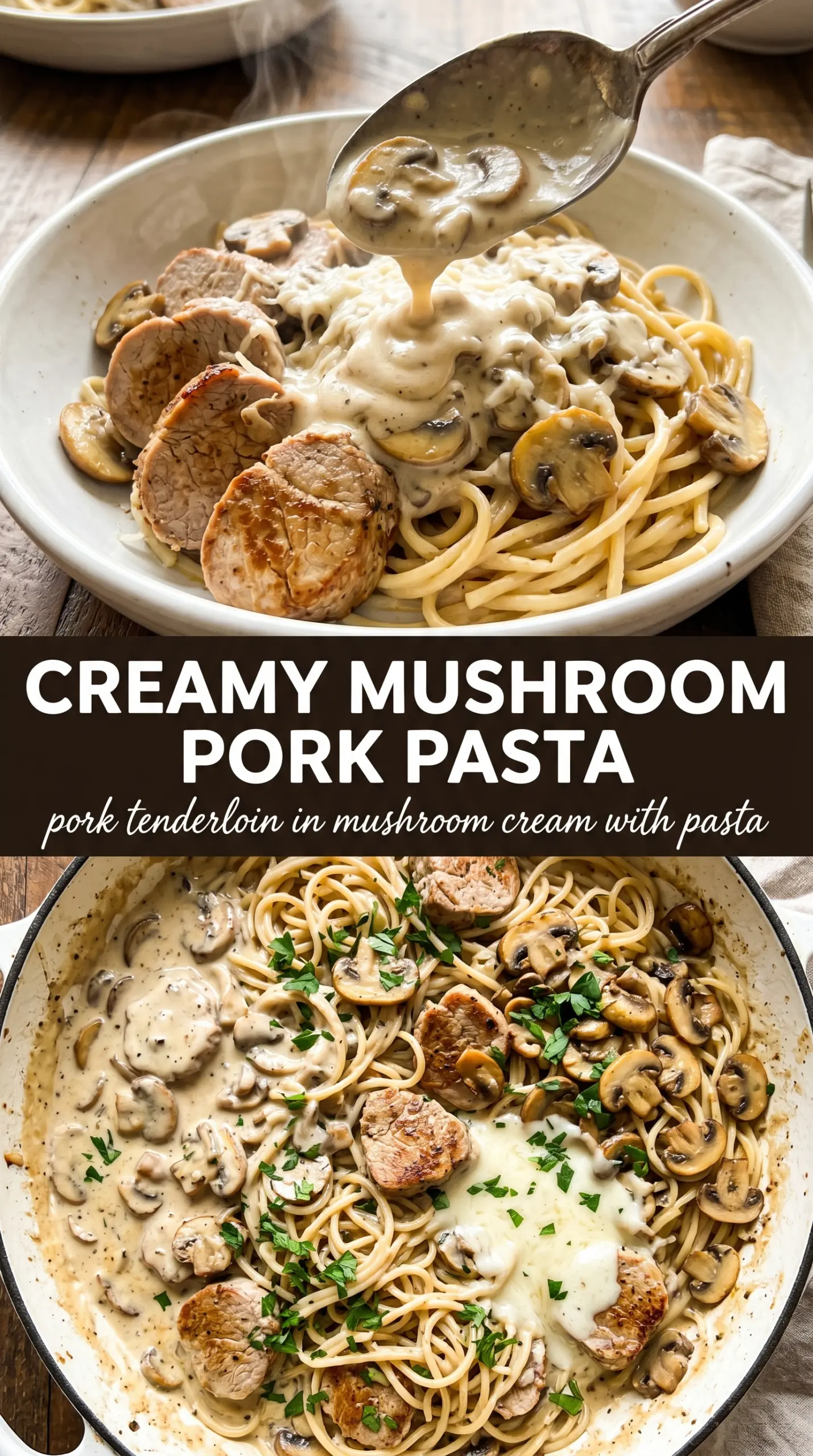
- Pork tenderloin — This is the lean cut that gives you tender medallions in a short cook time. Slice it into even pieces so every piece finishes at the same pace; uneven cuts lead to some dry edges and some underdone centers.
- Cremini mushrooms — They bring the earthy, savory backbone of the sauce. Brown them properly before adding the garlic, or they’ll steam and lose that deep flavor.
- Dry white wine — It loosens the browned bits from the pan and adds brightness so the cream doesn’t taste heavy. A dry Sauvignon Blanc or Pinot Grigio works well; skip anything sweet.
- Heavy cream — This gives the sauce its body and helps it cling to the pasta. Half-and-half can work in a pinch, but the sauce will be thinner and needs a gentler simmer.
- Parmesan — Freshly grated melts smoothly and seasons the whole skillet. Pre-grated cheese often has anti-caking starches that make the sauce less silky.
- Pappardelle or fettuccine — Wide noodles hold onto the sauce better than thinner pasta. Cook it just to al dente so it can finish in the sauce without going soft.
Building the Sauce Before the Pasta Joins the Pan
Searing the Pork Fast
Heat the oil until it shimmers, then lay the pork medallions in without crowding the pan. You want a deep golden crust in about 2 minutes per side, not a pale gray exterior. If the pork sticks, it’s not ready to turn yet; it will release once the browning sets. Pull it to a plate as soon as the outside is colored, because it will finish later in the sauce.
Letting the Mushrooms Brown, Not Steam
Add the butter to the same skillet and give the mushrooms room to spread out. They’ll first release liquid, then start to sizzle again as that moisture cooks off and the edges turn bronze. That second stage is where the flavor lives. If the pan is crowded, the mushrooms will go soft and watery instead of savory, so cook them in batches if needed.
Turning the Drippings into Creamy Sauce
Stir in the garlic and thyme just until fragrant, about 30 seconds, then pour in the wine and scrape the bottom of the pan. Let it simmer until it smells sharp and reduced, then add the cream and broth. The sauce should bubble lazily and thicken enough to lightly coat a spoon in 5 to 6 minutes. Add the parmesan off the hottest part of the burner and stir until it melts smooth; if it looks grainy, the heat was too high.
Finishing with Pasta and Pork
Return the pork and its juices to the skillet, then simmer gently until the medallions are heated through. Add the cooked pasta and toss until every ribbon is coated in sauce. If the skillet looks tight, splash in a little pasta water to loosen it. Finish with parsley for freshness, because the dish is rich enough to need that clean last note.
Three Ways to Make This Pork Tenderloin Pasta Fit Your Table
Make it dairy-free with a lighter sauce
Swap the butter for more olive oil and use full-fat coconut cream or an unsweetened oat-based cooking cream in place of the heavy cream. The sauce won’t taste exactly the same, but it will still feel rich if you keep the heat low and add the parmesan-style element only if your substitute melts well.
Make it gluten-free without losing the silkiness
Use your favorite gluten-free pasta and cook it just shy of done so it doesn’t break apart when tossed with the sauce. The sauce itself is naturally gluten-free as written, but you’ll want to reserve a little pasta water in case the gluten-free noodles soak up more liquid than expected.
Turn it into a mushroom-forward dinner without the pork
Skip the pork and double the mushrooms, then finish with a handful of spinach if you want more volume. You lose the seared meatiness, but you gain a vegetarian pasta that still tastes deeply savory because the browned mushrooms and parmesan carry the whole dish.
Storage and Reheating
- Refrigerator: Store leftovers in an airtight container for up to 3 days. The pasta will absorb some sauce, so it gets thicker after chilling.
- Freezer: I don’t recommend freezing the finished pasta dish. Cream sauces can separate after thawing, and the pasta softens too much.
- Reheating: Warm gently on the stove over low heat with a splash of broth or cream, stirring often. High heat is the fastest way to break the sauce and tighten the pork.
Questions I Get Asked About This Recipe
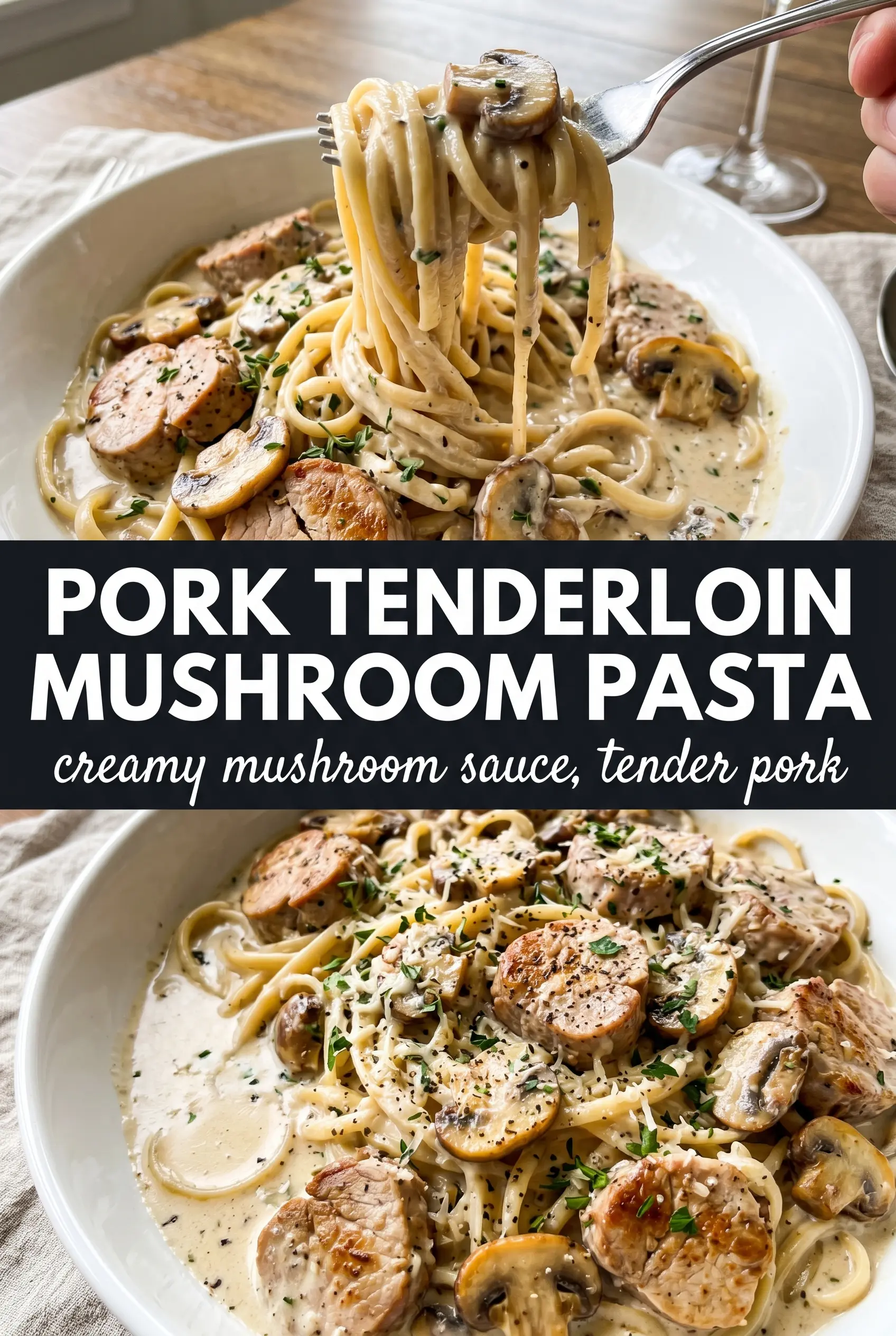
Pork Tenderloin in Creamy Mushroom Sauce with Pasta
Ingredients
Equipment
Method
- Season the pork medallions with salt and pepper, then sear in olive oil over high heat for 2 minutes per side until golden. Transfer the pork to a plate and set aside.
- Melt the butter in the same pan, then cook the mushrooms over medium-high heat until golden. Stir in the garlic and thyme and cook for 30 seconds.
- Deglaze with the white wine and simmer for 2 minutes. Pour in the cream and chicken broth and keep the liquid at a gentle simmer.
- Simmer the sauce for 5–6 minutes until it thickens, then stir in the parmesan until smooth. Return the pork medallions to the pan.
- Gently simmer for 3 minutes, just until the pork is heated through. Toss the sauce with the cooked pasta and serve, garnishing with fresh parsley.