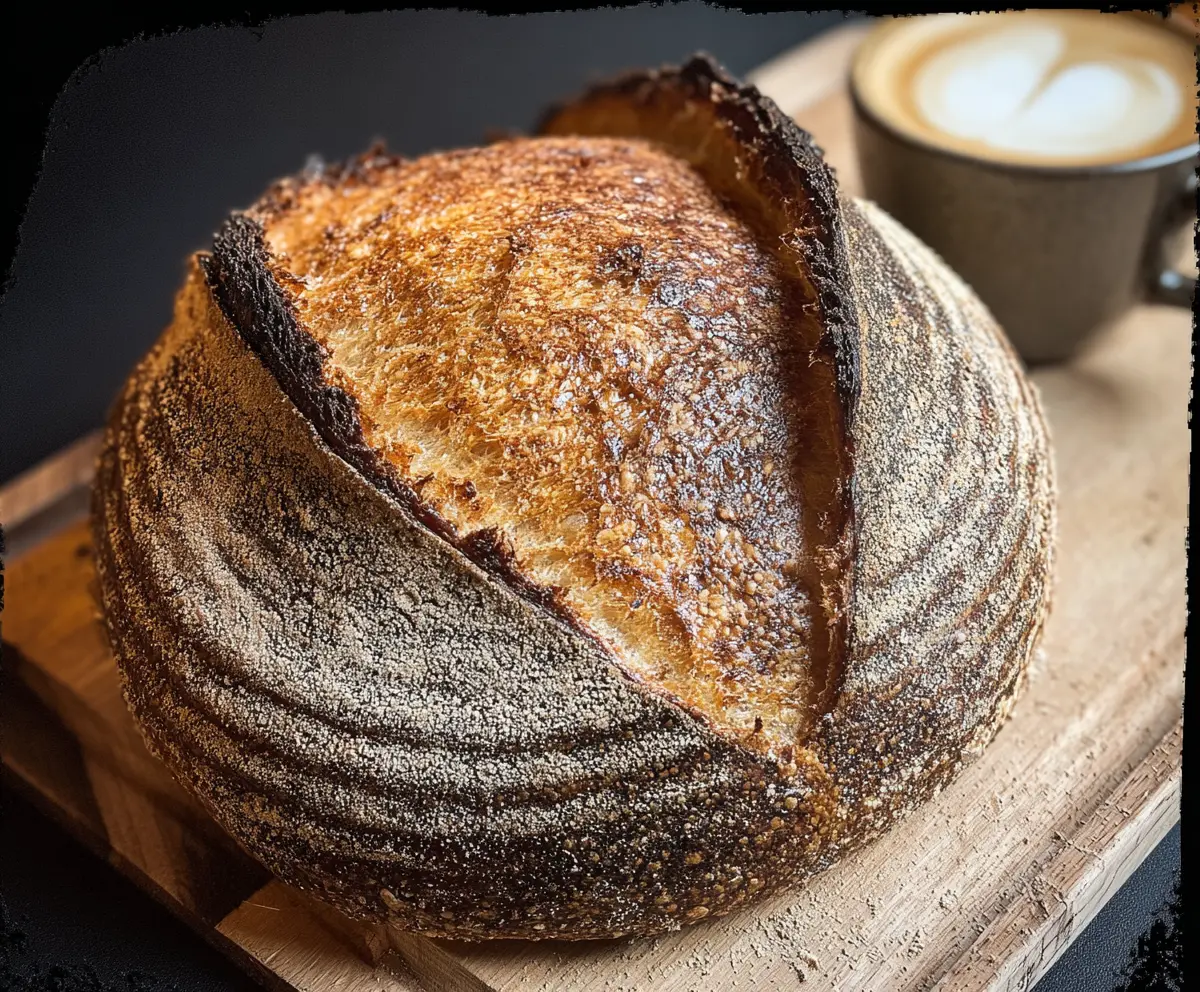
This crusty sourdough bread pairs perfectly with a warm cup of coffee. Its tangy flavor and chewy texture make it hard to resist, especially when fresh out of the oven!
I love spreading a little butter on a warm slice while enjoying my morning brew. Trust me, it’s a combo that makes breakfast feel special every day! ☕️🥖
Key Ingredients & Substitutions
Bread Flour: Use unbleached bread flour for the best crust and chew. If you need a substitute, look for all-purpose flour, but your bread may be less chewy and the crumb might be softer.
Sourdough Starter: It’s crucial that your starter is active and bubbly! If you don’t have one, you could buy commercial yeast, but the flavor won’t be the same. Try feeding your starter a few hours before baking for best results.
Water: Room temperature water works best for fermentation. If your kitchen is cool, consider using slightly warmer water to help activate the starter quicker, but avoid hot water which can kill it!
Salt: Salt boosts flavor and controls yeast activity. I prefer sea salt for its taste, but kosher salt works just fine. If you’re watching sodium intake, you could reduce the amount slightly.
Why is the Autolyse Step Important?
The autolyse lets the flour absorb water, helping gluten development without kneading. This step enhances the dough’s structure, aiding in its rise. Here’s how to do it:
- Mix flour and water until there are no dry bits.
- Cover it and let it rest for about 30 to 45 minutes before adding the starter and salt.
How do I Shape the Dough for a Boule?
Shaping your dough correctly is key for a good rise. Here’s a simple way to shape into a boule:
- Turn the dough onto a floured surface.
- Gently stretch the edges towards the center one at a time.
- Flip the dough over so the seam side is down.
- Tighten the boule by pulling it towards you while rotating it to create surface tension.
What’s the Best Baking Method for Crusty Bread?
Using a Dutch oven or baking stone helps trap steam, giving your bread a great crust. Follow these tips for success:
- Preheat to 250°C (482°F) for at least 30 minutes.
- Score the dough before placing it in the oven to control how it expands.
- After 20 minutes with the lid on, remove it and reduce the temperature for that beautiful brown crust.
Remember, patience is key in sourdough baking, so enjoy the process!
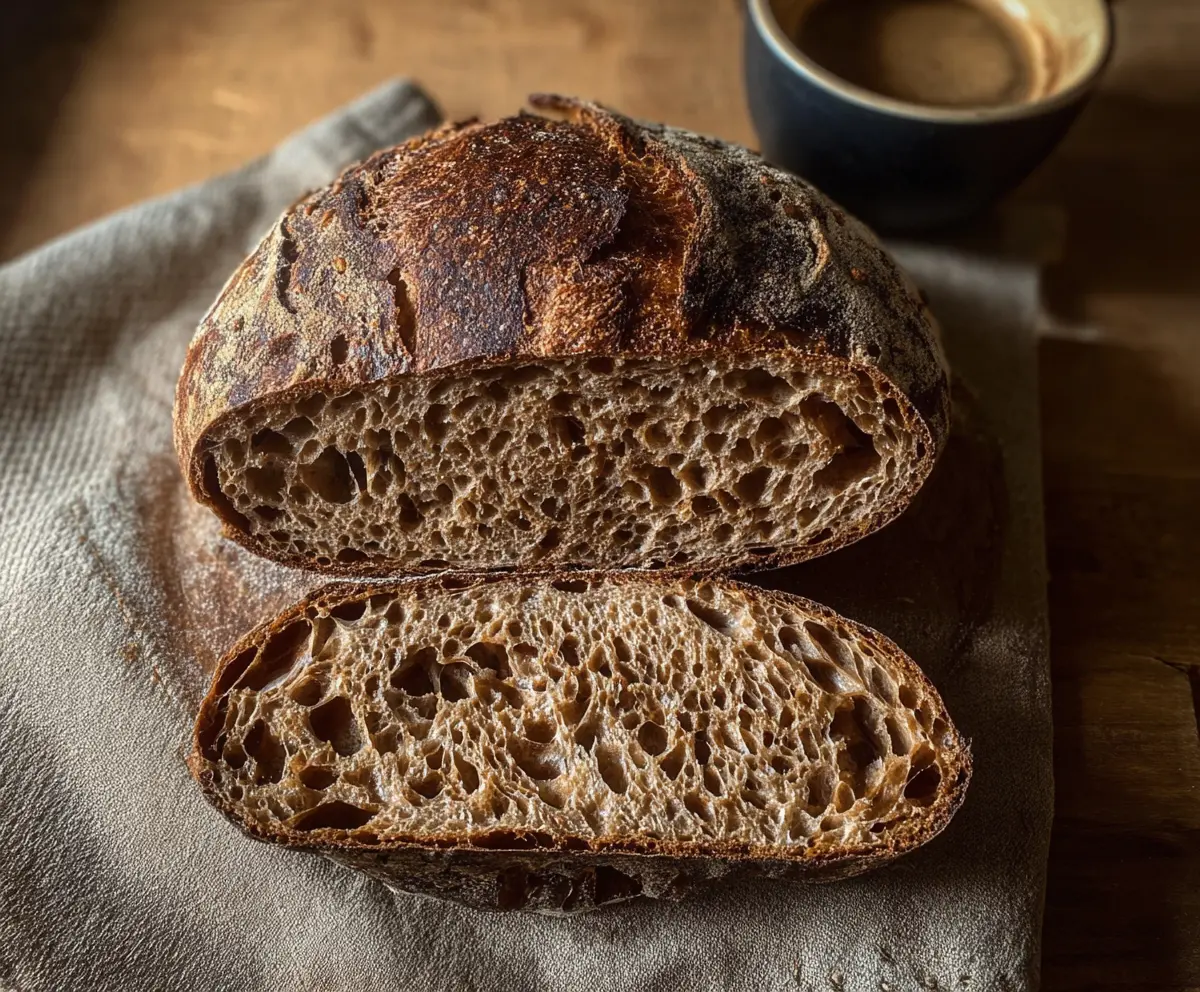
How to Make Crusty Sourdough Bread
Ingredients You’ll Need:
- 500g bread flour (unbleached)
- 350g water (room temperature)
- 100g active sourdough starter (fed and bubbly)
- 10g salt
How Much Time Will You Need?
This recipe takes about 30 minutes of prep time, followed by a bulk fermentation period of 2 to 3 hours. After that, you’ll chill the dough overnight (8 to 12 hours) and bake it, which takes around 45 minutes in total. So, be prepared for a total of about 12 to 15 hours, including resting and baking time!
Step-by-Step Instructions:
1. Mixing the Dough:
In a large mixing bowl, combine the 500g of bread flour with 350g of room temperature water. Use your hands or a spoon to mix until there are no dry bits of flour left. Cover the bowl with a cloth or plastic wrap and let it rest for 30 to 45 minutes. This resting time is called autolyse and helps develop the dough’s texture.
2. Adding Starter and Salt:
After the resting time, add your 100g of active sourdough starter and 10g of salt to the dough mixture. Gently mix everything together with your hands or a dough scraper until the starter and salt are fully incorporated into the dough.
3. Bulk Fermentation:
Now it’s time to let the dough rise! Keep it covered in a warm spot (ideally between 21–24°C or 70–75°F) for 2 to 3 hours. During this time, every 30 minutes, perform a stretch and fold by gently pulling one edge of the dough up and folding it over itself, turning the bowl as you go. Repeat this about 4 times each hour to strengthen the dough.
4. Shaping the Boule:
After bulk fermentation, lightly flour a clean surface and turn the dough out onto it. Shape the dough into a round boule by gently folding the edges toward the center, then flip it seam side down. With your hands, pull and rotate the dough to create a tight ball, helping it maintain its shape.
5. Cold Fermentation:
Next, place your shaped dough into a well-floured banneton (or a bowl lined with a floured kitchen towel). Cover it and refrigerate overnight (8–12 hours). This cold ferment develops flavor and texture in your bread.
6. Preheating the Oven:
The next day, about 30 minutes before you are ready to bake, preheat your oven to 250°C (482°F) with a Dutch oven or baking stone inside. This helps create a perfect baking environment for your bread.
7. Baking the Bread:
When you’re ready to bake, carefully transfer the dough onto a piece of parchment paper. Use a sharp knife or blade to score the surface of the dough. This will help control how the bread expands while baking.
8. Baking Process:
Place the dough with the parchment paper into the hot Dutch oven or onto the baking stone. Cover with the lid if using a Dutch oven to trap steam, and bake for 20 minutes. The steam helps create a lovely crust!
9. Finishing the Bake:
After 20 minutes, remove the lid from the Dutch oven (if using). Lower the oven temperature to 230°C (446°F) and continue to bake for an additional 20 to 25 minutes, until the crust is a deep golden brown and crispy.
10. Cooling:
Once baked, remove the bread from the oven and let it cool completely on a wire rack. Cooling allows the crumb to set up perfectly. After it has cooled, slice it up and enjoy your crusty sourdough bread with a nice cup of coffee!
Congratulations! You’ve just baked a delicious crusty sourdough loaf that’s perfect for sharing or savoring on your own.
Can I Use Whole Wheat Flour Instead of Bread Flour?
Yes, you can substitute part or all of the bread flour with whole wheat flour, but it may alter the texture and flavor slightly. If using 100% whole wheat, consider increasing the water by about 10-20% as whole wheat absorbs more moisture.
What If My Dough Seems Too Sticky During Mixing?
It’s normal for the dough to be sticky, especially with sourdough! If it feels excessively tacky and hard to work with, you can add a little more flour (1-2 tablespoons at a time) until it reaches a workable consistency. Just be careful not to overdo it!
Can I Bake This Bread Without a Dutch Oven?
Absolutely! If you don’t have a Dutch oven, you can use a baking stone or a baking sheet. If using a baking sheet, place a pan of water at the bottom of the oven to create steam for a crustier loaf.
How Should I Store the Sourdough Bread?
Once completely cooled, store the bread in a paper bag at room temperature for up to 3 days for best crust retention. For longer storage, slice it and freeze the pieces in a zip-top bag. Just pop them in the toaster when you’re ready to enjoy!