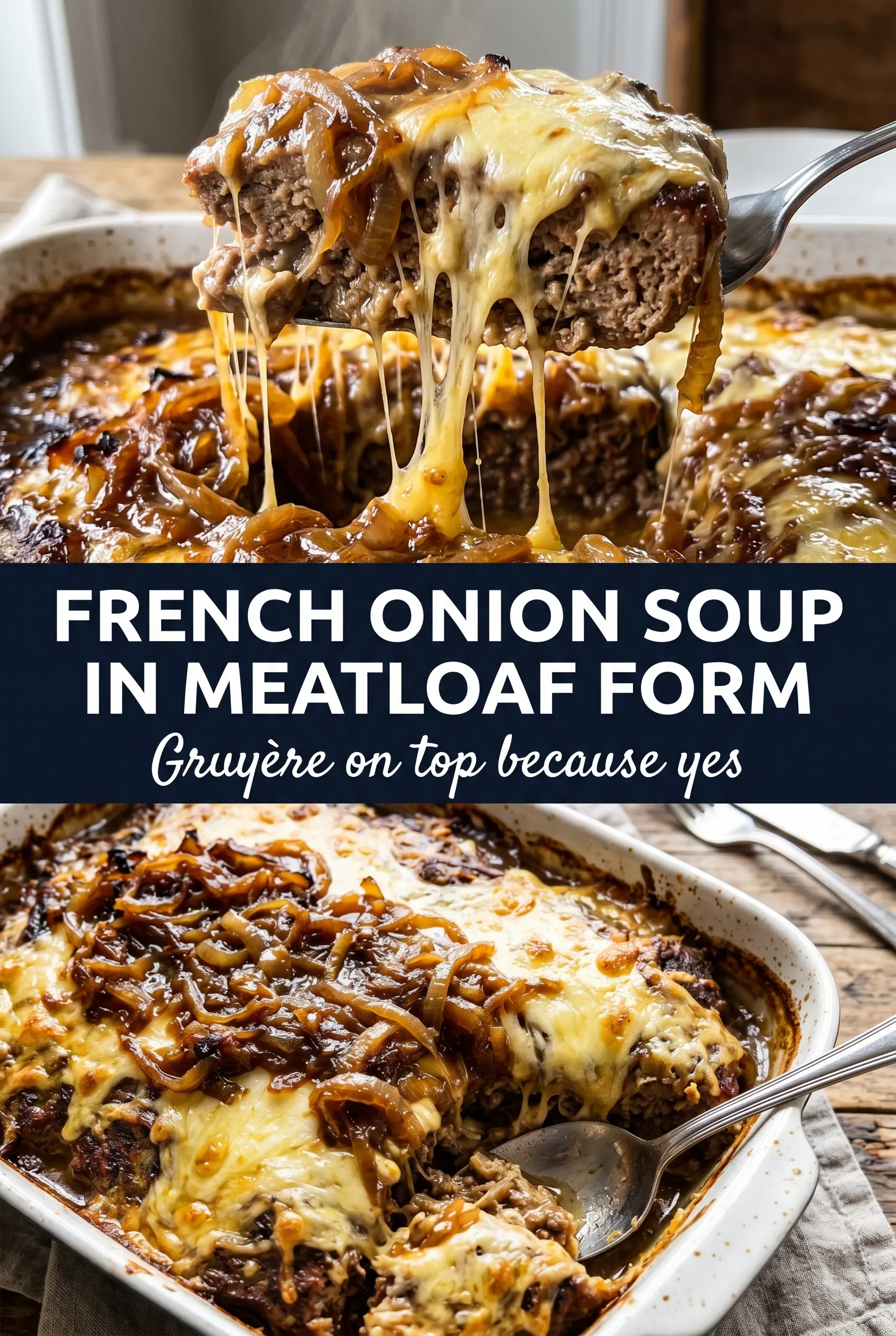
Deeply savory French onion meatloaf brings all the comfort of classic meatloaf and layers it with the sweet, rich finish of caramelized onions and melted Swiss cheese. The loaf stays hearty and sliceable, while the topping turns it into something that feels a little special without getting fussy. It’s the kind of dinner that lands on the table and gets quiet for a minute because everyone’s waiting for the first bite.
The trick is treating the onions like part of the main event, not just a garnish. Caramelizing them first gives the topping its signature sweetness, and baking the loaf before adding them keeps the onions from getting buried and steam-softened. French onion soup mix does a lot of the seasoning work here, but Worcestershire and a short rest after baking keep the meatloaf from tasting flat or falling apart when sliced.
Below, I’ll walk through the part that matters most: getting the onions deeply browned without rushing them, choosing the right cheese, and knowing exactly when the loaf is done so it stays juicy instead of dry.
The onions on top were sweet and jammy, and the Swiss melted into the loaf without sliding off. I baked it to 160 and let it rest, and the slices held together perfectly.
Love the caramelized onion topping and melted Swiss on this French onion meatloaf? Save it to Pinterest for a cozy dinner that slices cleanly and tastes even better the next day.
The Onion Topping Is What Keeps This Meatloaf From Tasting Ordinary
Most meatloaves lean on the same base formula and end up tasting fine but forgettable. This one changes once the onions go deep golden and sweet, because that topping adds a second layer of flavor that the loaf itself can’t provide. If you rush the onions, you lose the whole point. They need enough time to turn soft, jammy, and browned at the edges so they melt into the cheese instead of sitting on top as a plain cooked garnish.
The other thing that matters is timing. Bake the meatloaf first so it can set, then add the onions and Swiss during the last stretch. That keeps the cheese bubbly and the onions glossy instead of dried out. It also gives the loaf a better structure, which matters when you’re serving thick slices with mashed potatoes or bread to catch the juices.
- Ground beef — Use a blend with enough fat to stay juicy, but not so much that the loaf turns greasy. An 80/20 mix works well here.
- French onion soup mix — This is doing the heavy seasoning work. It brings onion flavor, salt, and savory depth in one packet, which is why this tastes like French onion soup instead of plain beef loaf.
- Breadcrumbs and milk — This is the panade that keeps the meatloaf tender. If you skip the milk, the loaf can bake up dense and crumbly.
- Swiss cheese — Swiss melts cleanly and gives you that classic French onion soup finish. Gruyère works too if you want a sharper, nuttier top.
- Onions — Yellow onions caramelize best. Red onions will work in a pinch, but they taste a little sharper and don’t turn as sweet.
What Each Ingredient Is Actually Doing in This Meatloaf or Meatballs

- Ground meat (the protein foundation) — Use 80/20 so it stays moist. Handle gently to keep texture tender instead of dense.
- Breadcrumbs or fillers (the binder) — These hold the meat together without making it dense. Soak in milk first so they add moisture.
- Egg (the structural binding agent) — This holds everything together during cooking. One egg per pound of meat is the right ratio.
- Onion and aromatics (the base flavor) — Mince finely so they distribute evenly. Raw onion softens as it cooks and becomes part of the texture.
- Seasonings (salt, pepper, Worcestershire, spices) — Build flavor boldly. The meat mixture carries the entire flavor profile.
- Milk or liquid (the moisture keeper) — This keeps the meatloaf tender instead of dense and dry. Don’t skip this step.
- Glaze or sauce (ketchup-based or other) — This adds sweetness, moisture, and flavor to the exterior. Apply strategically so it caramelizes.
- Resting time (the final step) — Let the meatloaf rest 10 minutes so it sets and slices cleanly. Cutting too soon makes it fall apart.
Building the Loaf So It Stays Juicy Under the Cheese
Mix the Base Without Packing It Tight
Combine the beef, breadcrumbs, eggs, milk, soup mix, Worcestershire, salt, and pepper just until everything looks evenly distributed. Overmixing compacts the meat and gives you a dense loaf that slices like a brick. The mixture should hold together when pressed, but it shouldn’t look pasty. If it seems a little loose before baking, that usually settles out in the oven.
Let the Loaf Bake Before You Top It
Press the mixture into a greased 9×5 loaf pan and bake it until it has started to set, about 50 minutes. This first bake gives the loaf structure so it doesn’t slump when the onions and cheese go on top. If you add the topping too early, the onions can sink and the cheese can overbrown before the center reaches temperature. You’re looking for a firm surface and clear juices around the edges, not full browning.
Finish with Onions and Swiss
Spoon the caramelized onions over the top, then lay the Swiss slices across the surface so they overlap a little. Return the pan to the oven until the cheese is melted and bubbling and the internal temperature hits 160°F. Pull it at temperature, not after it starts drying out. The last 15 to 20 minutes are for melting and melding, not further cooking the meat into dryness.
Rest Before Slicing
Let the meatloaf rest for 10 minutes before you cut into it. That pause keeps the juices in the loaf instead of running out the second you slice through the middle. If you rush this step, the first few slices will still taste good, but they’ll be messy and wet on the plate. A short rest gives you cleaner slices and better texture all the way through.
How to Adapt This Meatloaf When You Need a Small Shift
Make It Gluten-Free
Swap the breadcrumbs for certified gluten-free breadcrumbs or crushed gluten-free crackers. The texture stays close to the original as long as you keep the milk in the mix, since that moisture is what keeps the loaf tender rather than dry and compact.
Use Ground Turkey Instead of Beef
Ground turkey works, but it needs the extra fat from the milk, eggs, and cheese to stay from tasting lean and dry. Use the same method, but watch the temperature closely because turkey dries out faster than beef. The flavor will be a little lighter and less rich, though the onion topping still carries the dish.
Swap the Swiss Cheese
Gruyère gives you a more classic French onion soup finish, while provolone melts a little softer and milder. Cheddar will work if that’s what you have, but it changes the flavor from French onion territory to a sharper, more standard cheesy meatloaf.
Storage and Reheating
- Refrigerator: Store leftovers in an airtight container for up to 4 days. The onions will soften a little more, but the flavor holds up well.
- Freezer: It freezes well in slices. Wrap tightly and freeze for up to 3 months, then thaw in the fridge before reheating.
- Reheating: Warm slices covered in a 300°F oven until heated through, or use the microwave in short bursts with a splash of broth on top. High heat dries out the beef and toughens the cheese, so go low and slow.