
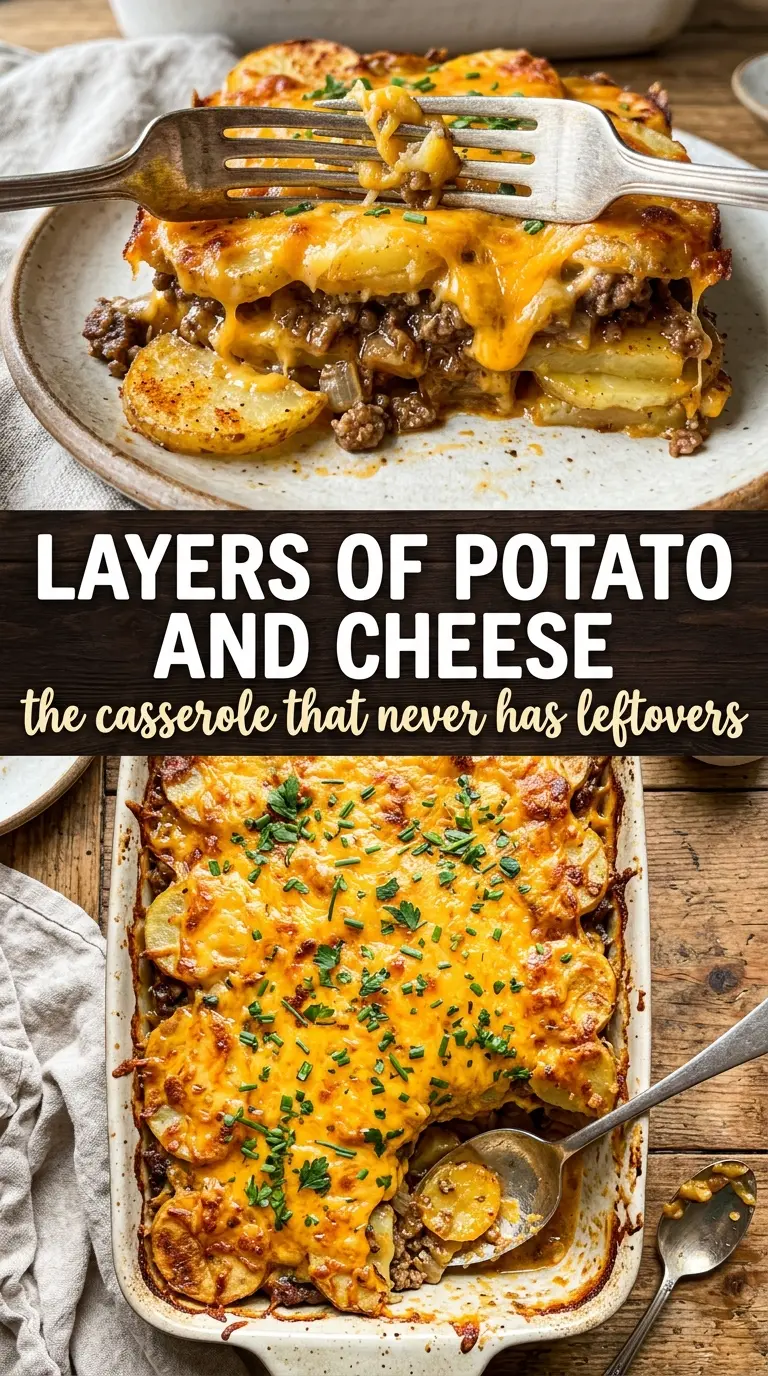
Golden on top, tender in the middle, and packed with seasoned beef and soft layers of potato, cheesy hamburger potato casserole is the kind of dinner that disappears fast once it hits the table. The potatoes soak up the savory mushroom-cheddar sauce as they bake, while the uncovered finish gives you that crisp, bronzed top that makes every scoop worth serving a little taller.
What makes this version work is the balance between moisture and structure. The soup mixture keeps the potatoes from drying out, but the beef is browned first so the casserole doesn’t turn greasy or muddy. Thin potato slices matter here, too. They cook through evenly in the time the dish spends covered, then finish under the cheese without falling apart.
Below, I’m walking through the little details that keep the layers from slipping, the sauce from turning gluey, and the top from going pale. There’s also a good swap for when you want to change up the cheese or make it a little lighter without losing the comfort-food feel.
The potatoes were tender all the way through and the top browned up beautifully after uncovering it. I also liked that the beef stayed flavorful instead of getting lost in the sauce.
Save this cheesy hamburger potato casserole for the nights when you want layered potatoes, beef, and a crisp cheddar top without extra fuss.
Why the Potatoes Need to Be Thin Before Anything Else
The biggest failure point in a casserole like this is uneven potatoes. Thick slices look fine going into the dish, then come out with some pieces soft and others stubbornly firm. Thin, even slices cook at the same pace, which matters because the beef and soup mixture don’t have a lot of extra time to rescue undercooked potatoes once the top starts browning.
Covered baking does the heavy lifting here. The foil traps steam so the potatoes soften before the cheese goes on, and that first 45 minutes is where the texture gets built. If you skip the tight cover or let it leak, the top dries out before the center is ready, and you end up chasing doneness instead of serving dinner.
- Russet potatoes — These break down just enough to turn tender without collapsing into mash. They’re the best choice if you want the casserole to slice and scoop cleanly.
- Ground beef — Browning it first adds flavor and keeps the dish from tasting flat. If you use a leaner blend, you may not need to drain much fat, but don’t skip the browning.
- Cream of mushroom soup and cheddar cheese soup — This is the shortcut that gives the casserole body and richness. Homemade sauce can work, but it needs to be thick enough to coat the potatoes without running to the bottom of the pan.
- Sharp cheddar — Pre-shredded cheese melts fine, but freshly shredded cheddar gives you a cleaner melt and a better top. Mild cheddar will work, but sharp cheddar gives the finished dish more edge.
Building the Layers So the Casserole Stays Creamy, Not Watery
- Ground beef — Brown it with the onion before it goes into the casserole. That step cooks off excess moisture and gives the meat more flavor than just baking it raw in the sauce.
- Onion and garlic — The onion softens with the beef and keeps the filling from tasting one-note. Add the garlic after draining so it cooks in the fat left behind instead of burning in the pan.
- Soup mixture — Whisk the soups with milk until smooth before layering. That extra step helps the sauce distribute evenly instead of clumping in pockets between the potatoes.
- Sharp cheddar — Save the cheese for the final bake. If it goes in too early, it can turn greasy and lose that browned, melty finish on top.
Getting the Center Tender Without Burning the Top
Browning the Beef Base
Cook the ground beef with the diced onion over medium-high heat until the meat is no longer pink and the onion has softened. Drain the fat before adding the garlic, then stir in the garlic powder, onion powder, salt, and black pepper. If you leave too much fat in the pan, the casserole can turn oily instead of creamy, especially once the soups go in.
Mixing the Sauce
Whisk the cream of mushroom soup, cheddar cheese soup, and milk until smooth. The mixture should pour easily but still look thick enough to cling to a spoon. If it seems too stiff, add a splash more milk; if it’s too thin, the casserole will bake up loose and the potatoes may slide around when you serve it.
Stacking the Dish
Layer half the sliced potatoes in the baking dish, then half the beef, then half the sauce. Repeat with the remaining potatoes, beef, and sauce. Press the layers down gently with the back of a spoon so the sauce settles between the slices; don’t stir everything together or you’ll lose the even layers that make each scoop hold together.
Finishing the Bake
Cover tightly with foil and bake until the potatoes are almost tender, then uncover, add the shredded cheddar, and bake until the cheese is melted and the top is deeply golden. The casserole is ready when a knife slides through the potatoes with little resistance and the edges are bubbling. If the top browns too fast before the center is done, loosely cover it again for the last stretch.
Use Colby Jack for a Milder Melt
Swap the sharp cheddar on top for Colby Jack if you want a softer, creamier cheese pull. You’ll lose some of the bite that cheddar brings, but the casserole will taste a little rounder and less sharp, which works well for kids or anyone who prefers a gentler cheese flavor.
Make It Gluten-Free
Use certified gluten-free cream soups and check the labels on your seasonings. The method stays the same, but this swap matters because the soups are the hidden source of gluten in most casseroles like this one.
Add More Vegetables Without Breaking the Bake
A layer of thin sliced mushrooms or frozen peas works well here, as long as you keep the amount modest. Too many vegetables add water and can loosen the sauce, so think of them as an accent rather than a second main layer.
Lighten the Sauce Slightly
You can replace half the milk with unsalted broth for a less rich sauce. The casserole will still be creamy, but the flavor lands a little more savory and less heavy, which is handy if you’re serving it with richer side dishes.
Storage and Reheating
- Refrigerator: Store covered for up to 4 days. The potatoes will firm up a bit as they sit, but the flavor holds well.
- Freezer: It freezes fairly well in portions, though the potatoes soften after thawing. Wrap tightly and freeze for up to 2 months for the best texture.
- Reheating: Reheat covered in a 325°F oven until hot through, or microwave smaller portions with a splash of milk to loosen the sauce. The common mistake is blasting it on high heat, which makes the edges dry before the center warms.