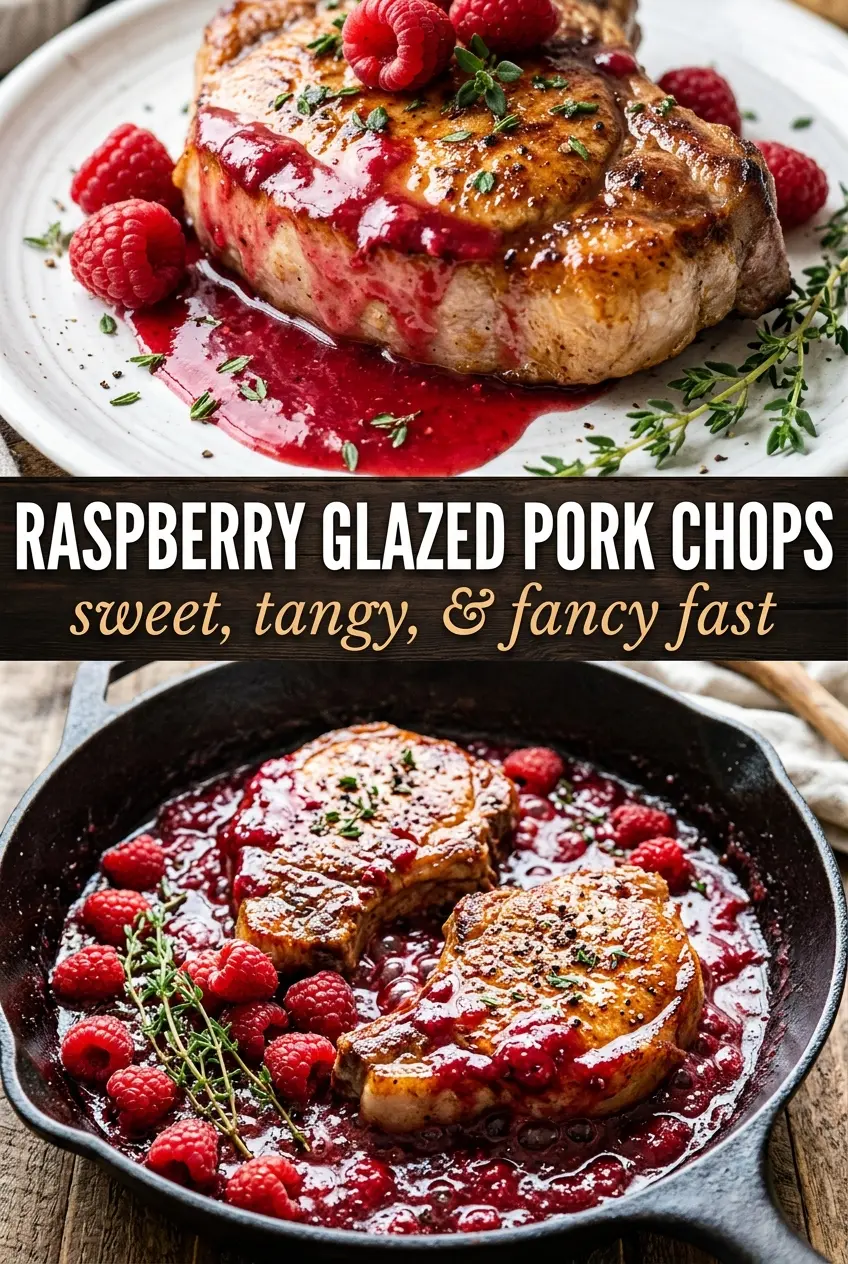
Pork chops covered in a glossy raspberry glaze hit that rare sweet spot between fast weeknight dinner and something you’d happily serve to company. The glaze turns sticky and jewel-toned in the pan, clinging to the meat instead of sliding off, and the balsamic keeps the fruit from tasting flat or candy-sweet. What you get is juicy pork with a sharp, bright finish that wakes everything up.
The trick is building the sauce in the same skillet after the chops come out. Those browned bits left behind from searing are the backbone of the glaze, and a quick simmer with jam, vinegar, Dijon, garlic, and broth turns them into something polished without taking much time. Bone-in chops help here too because they stay more forgiving while the sauce reduces.
Below, I’ve included the timing details that matter most, plus a few swaps for when you want a different fruit, need to work with what’s in the fridge, or want to stretch this into a full dinner without losing the glossy finish.
The glaze thickened up exactly like you said and coated the chops instead of pooling in the pan. The raspberry and balsamic combo tasted fancy, but it came together in barely 20 minutes.
Raspberry Glazed Pork Chops are sticky, savory, and bright — save this one for the night you want a quick skillet dinner that still feels special.
The Secret to Keeping Raspberry Glaze Sharp, Not Jammy
The biggest mistake with fruit glazes is letting them cook down until they taste like dessert topping. Raspberry jam brings body, but it needs balsamic and Dijon to keep the sauce lively and savory. If the pan is too hot when the jam goes in, the sugars can tighten up before the vinegar has a chance to round them out, and you end up with a sticky mess instead of a smooth glaze.
Start the glaze after the pork has browned and comes out of the skillet. That gives you control over the texture. The sauce should bubble gently and reduce until it coats a spoon, not cling in thick clumps. If it looks too loose, give it another minute; if it starts looking stiff, add a splash more broth and stir it off the heat for a few seconds.
What Each Ingredient Is Doing in the Skillet

- Bone-in pork chops — Bone-in chops stay juicier through the sear and the final glaze toss. A 1-inch thickness gives you enough time to develop color without overcooking the center. Boneless works, but it cooks faster and leaves less margin for error.
- Raspberry jam — This is the base of the glaze, not just sweetener. It gives you the body that fresh berries alone won’t provide, especially in a quick pan sauce. If you only have seedless jam, that works fine.
- Balsamic vinegar — This is what keeps the glaze from tasting flat. It sharpens the fruit and adds a dark, savory edge that belongs with pork. Use a decent balsamic here; the flavor stays noticeable.
- Dijon mustard — Dijon pulls the sauce together and helps it taste finished instead of one-note. It also cuts the sweetness without making the glaze taste mustardy. Whole grain Dijon works too if you want a little texture.
- Chicken broth — The broth loosens the jam just enough to let the sauce reduce evenly. If you skip it, the glaze can go from loose to sticky too fast. Water works in a pinch, but the broth gives better depth.
- Fresh rosemary and garlic — These keep the glaze anchored in the savory lane. Rosemary can take over if it’s chopped too coarsely, so mince it fine. Garlic only needs a short sauté; if it browns, it turns bitter fast.
Getting the Sear and Glaze to Work Together
Season and Sear the Pork First
Pat the chops dry, then season them well with salt and pepper before they ever hit the skillet. Moisture on the surface is what keeps you from getting that deep golden crust. Heat the olive oil until it shimmers, then lay the chops down and leave them alone until the first side releases cleanly. If you move them too early, they’ll tear and lose that browned surface the glaze needs.
Build the Sauce in the Same Pan
Take the chops out and lower the heat just enough to keep the garlic from scorching. Thirty seconds is enough for the garlic to turn fragrant; any longer and it starts to taste harsh. Stir in the jam, balsamic, Dijon, rosemary, and broth, scraping the skillet as you go. Those browned bits dissolve into the sauce and give the glaze its savory backbone.
Reduce Until It Coats, Then Return the Pork
Let the sauce simmer until it looks glossy and slightly thicker than you think you want. It should leave a clear trail when you drag a spoon through the pan. Put the chops back in and turn them through the glaze for the last couple of minutes, just long enough to warm them through and lacquer the surface. If you keep them in too long, the pork tightens and the glaze can over-reduce.
How to Adjust These Pork Chops Without Losing the Glaze
Use boneless chops for a faster dinner
Boneless pork chops cook faster and work fine here, but they dry out sooner, so shorten the sear and watch the final glaze time closely. Pull them as soon as they’re just cooked through. The tradeoff is less juiciness, but the sauce still gives you plenty of flavor.
Swap the raspberry jam for blackberry or cherry
Blackberry preserves bring a deeper, earthier fruit note, while cherry gives you a rounder sweetness. Keep the vinegar and Dijon the same so the sauce still reads savory. If your jam is very thick, add another splash of broth to keep the glaze smooth.
Make it dairy-free and gluten-free without changing the method
This recipe is already dairy-free and gluten-free as written, which is part of why it works so well for a quick dinner. Just check that your jam and broth are labeled accordingly. The technique stays the same, and the glaze still turns out glossy and spoonable.
Store leftovers for a second meal
Refrigerator: Store pork chops and glaze together in an airtight container for up to 3 days. The glaze will thicken as it chills, which is normal.
Freezer: The cooked pork freezes for up to 2 months, though the glaze may lose a little of its glossy texture after thawing. Freeze in a sealed container with the sauce to help protect the meat from drying out.
Reheating: Warm gently in a covered skillet over low heat with a splash of broth or water. High heat will tighten the pork and can make the glaze tacky instead of smooth.