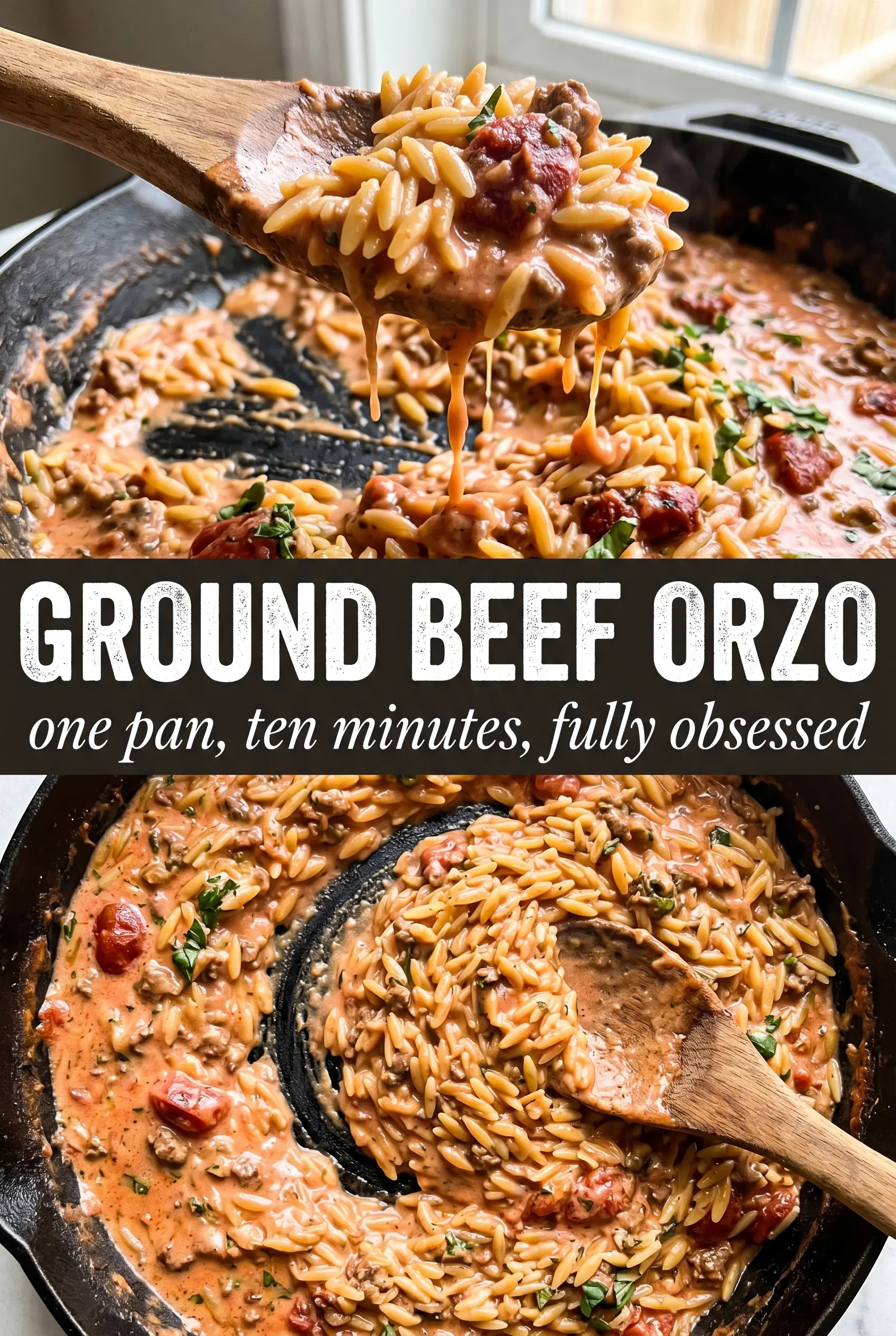
Ground beef orzo turns into the kind of skillet dinner that tastes like it took much longer than it did. The orzo cooks right in the tomato broth, so every little pasta shape absorbs flavor from the beef, onions, garlic, and spices instead of just getting coated at the end. The finish is rich and creamy, but it still keeps the bright edge of tomato that makes a bowl like this worth going back to for seconds.
The part that matters most is the order. Browning the beef first builds the base, and toasting the orzo for a minute before the liquid goes in gives the pasta a little extra depth and keeps the texture from turning flat. The cream and parmesan go in at the end, off the heat or over very low heat, so the sauce stays smooth instead of turning grainy.
Below, I’m walking through the small details that keep this skillet dinner from getting too thick, too loose, or bland. There’s also a simple way to adjust it if you want a lighter finish or need to swap in what you already have on hand.
The orzo stayed perfectly tender and the sauce thickened into that creamy tomato texture I was hoping for. My husband went back for a second bowl before I even sat down.
Save this creamy ground beef orzo skillet for the nights when you want a one-pan tomato sauce with real comfort and almost no cleanup.
The Step That Keeps Orzo Creamy Instead of Clumpy
Orzo behaves more like pasta than rice, but it still likes to tighten up fast once the liquid starts cooking down. The mistake that usually ruins this kind of skillet dinner is letting the orzo sit in a shallow puddle without stirring, which causes the bottom to thicken first while the top stays undercooked. Stirring occasionally during the covered simmer keeps the pasta moving through the liquid so it cooks evenly and the sauce stays silky.
The other thing worth watching is the heat after the cream goes in. Tomato sauce and dairy can get temperamental if they’re boiled hard together, and that’s when you end up with a sauce that looks broken or grainy instead of smooth and glossy. Keep the final simmer gentle, and the parmesan will melt into the sauce instead of turning stringy.
What Each Ingredient Is Actually Doing in This Skillet
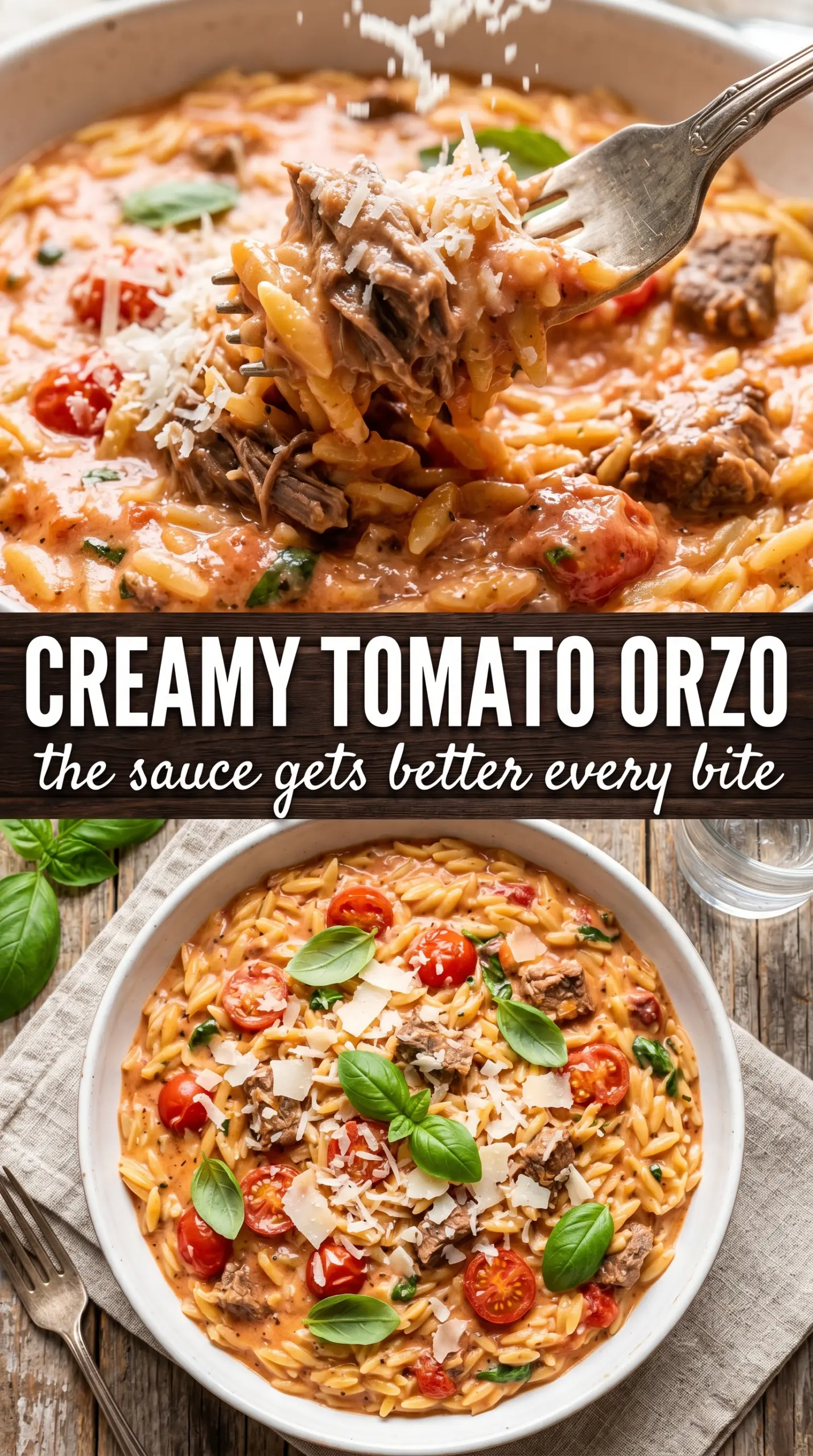
- Ground beef — Use an 80/20 or similar blend if you can. It gives you enough fat to brown well and build flavor, but you still want to drain the excess so the finished sauce doesn’t feel greasy.
- Orzo — This is what makes the dish feel substantial without turning it into a heavy casserole. Toasting it briefly in the pan gives the pasta a nuttier edge and helps it hold its shape better in the sauce.
- Crushed tomatoes — They give the sauce body and a thicker texture than diced tomatoes would. If all you have is tomato sauce, use it, but the final dish will be smoother and a little less textured.
- Beef broth — This adds depth that water can’t replace. The orzo cooks in it, so every bite gets seasoned from the inside out instead of just from the surface.
- Heavy cream — This is what turns the tomato base into a true cream sauce. Half-and-half will work in a pinch, but the sauce will be thinner and a little less luxurious.
- Parmesan — Add it off the heat so it melts cleanly. Pre-grated parmesan is fine here, but freshly grated melts smoother and gives the sauce a cleaner finish.
Building the Skillet So the Sauce Stays Smooth
Brown the Beef First
Cook the ground beef over medium-high heat until it loses its pink color and starts to pick up real browning on the bottom of the pan. That browned layer is flavor, and you want it in the final sauce, not washed away by adding liquid too early. If the pan looks crowded or watery, keep cooking until the moisture cooks off and the beef starts sizzling again.
Soften the Onion and Wake Up the Garlic
Once the beef is drained, add the onion and cook it until it turns translucent and slightly soft at the edges. Garlic only needs about a minute; any longer and it can turn sharp or bitter once the tomatoes go in. This is the point where the skillet should smell savory and sweet, not raw or burned.
Toast the Orzo Before It Simmeres
Stir the dry orzo into the pan and let it cook for about a minute before adding the liquids. That quick toast keeps the pasta from tasting flat and helps it absorb flavor as it cooks. If you skip this step, the dish still works, but the finished texture loses some of that deeper, risotto-like quality.
Finish with Cream and Parmesan
When the orzo is tender and most of the liquid is absorbed, stir in the cream and let the sauce thicken gently. You’re looking for a spoon-coating texture, not a thick paste, because the parmesan will tighten it up a little more once it goes in. Pull the pan off the heat before adding the cheese if the sauce is already thick enough; that keeps it glossy instead of grainy.
How to Adjust This for a Lighter Pan or a Different Pantry
Use ground turkey instead of beef
Ground turkey works well if you want a lighter skillet, but it needs a little extra help because it doesn’t bring the same built-in richness as beef. Add a small splash of olive oil when browning it, and don’t skip the smoked paprika, which gives the sauce a deeper backbone.
Make it dairy-free
Use a plain unsweetened oat or cashew cream in place of the heavy cream and skip the parmesan, or finish with a dairy-free parmesan alternative if you have one you trust. The sauce won’t be as rich, but it will still be creamy and balanced if you keep the heat low at the end.
Swap in a different short pasta
Small shells or ditalini can stand in for orzo, but they’ll need a little longer and may pull in slightly more liquid. Check the pan a few minutes early and add a splash of broth if the pasta is still firm before the sauce loosens up.
Storage and Reheating
- Refrigerator: Store leftovers in an airtight container for up to 4 days. The orzo will keep absorbing sauce, so the dish thickens as it sits.
- Freezer: It freezes, but the cream sauce loses some of its smoothness after thawing. If you plan to freeze it, stop just before adding the cream, then stir that in when reheating.
- Reheating: Warm it gently on the stovetop with a splash of broth or milk to loosen the sauce. Microwaving straight from the fridge without extra liquid is the easiest way to end up with dry, gluey pasta.