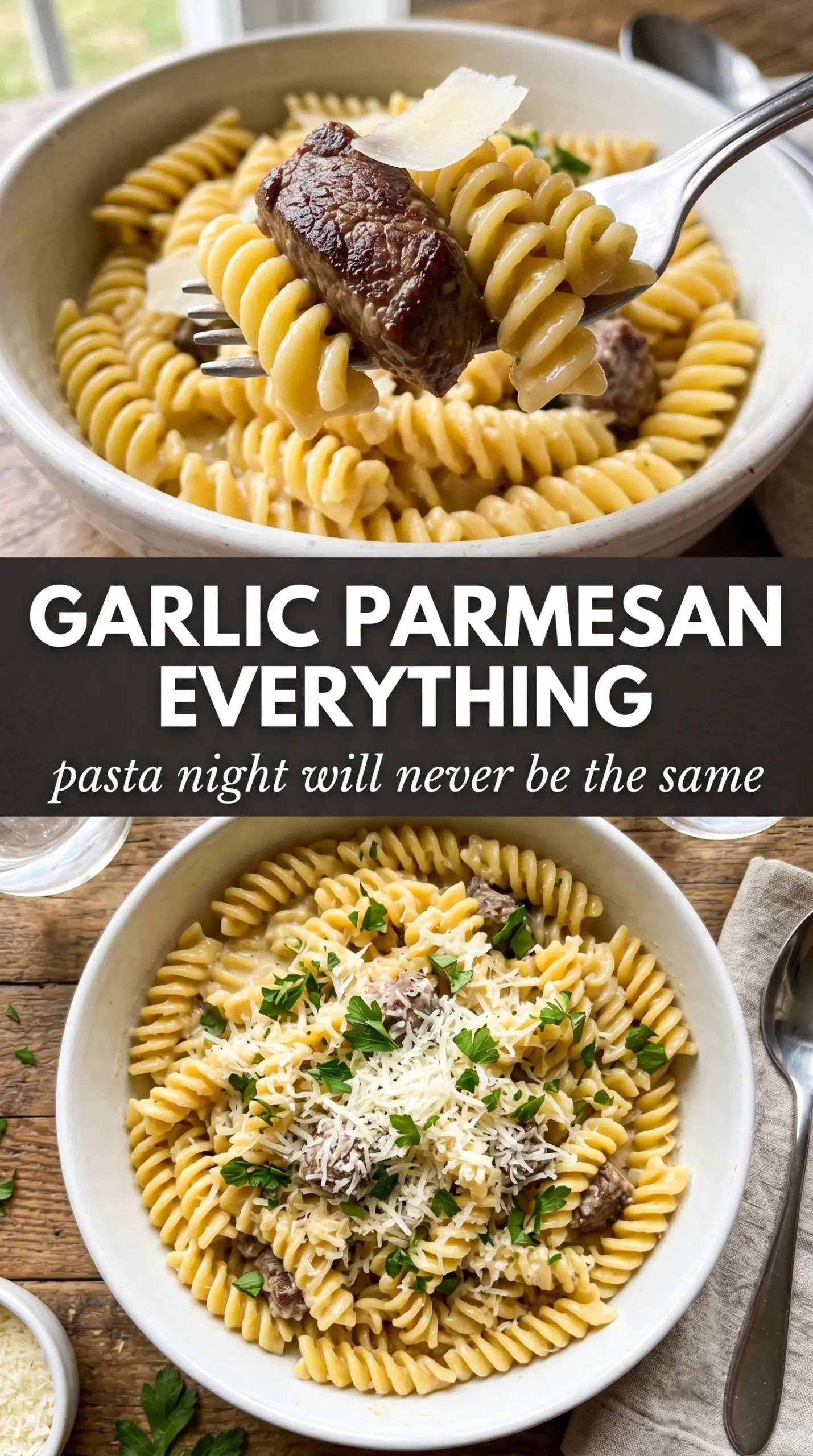
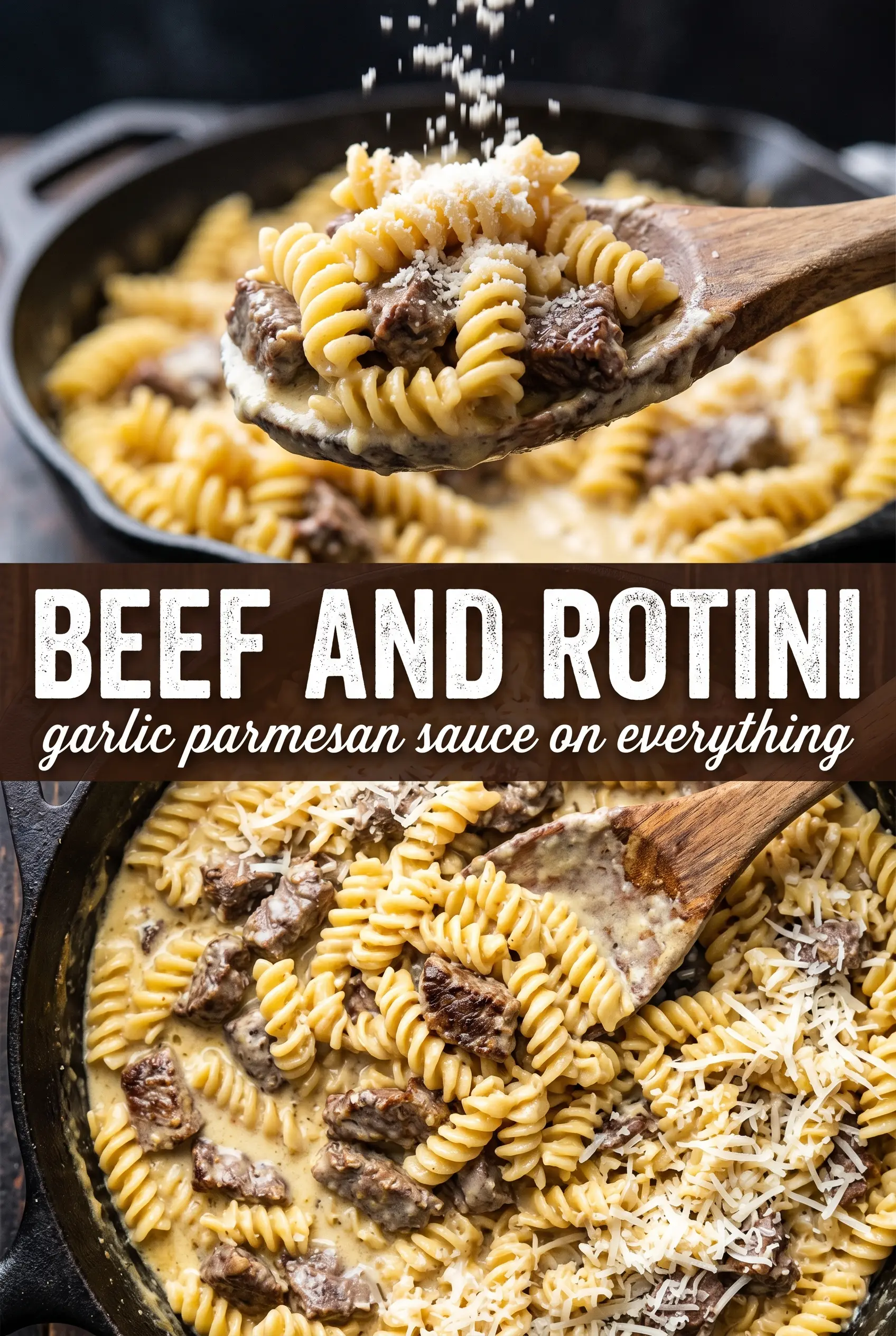
Beef and rotini in garlic Parmesan sauce hits that sweet spot between comforting and practical: the pasta cooks right in the sauce, the beef brings enough heft to make it a full meal, and the Parmesan melts into the spirals instead of just sitting on top. What you end up with is creamy, savory, and sturdy enough to hold up on a weeknight table without feeling heavy or bland.
The part that makes this version work is the order. Browning the beef first builds flavor in the pan, then the rotini simmers in broth and cream so it absorbs seasoning as it cooks. Parmesan goes in at the end, off the harder heat of the boil, which helps it melt smoothly instead of turning grainy. A little butter finishes the sauce with a gloss that clings to every twist of pasta.
Below you’ll find the small details that matter here: how to keep the sauce silky, what to do if it tightens up before the pasta is done, and a few easy swaps if you need to work with what’s already in the kitchen.
The rotini held onto the sauce perfectly, and the Parmesan stayed smooth instead of getting clumpy. I added a splash more broth at the end and it coated every bite.
Save this beef and rotini with garlic Parmesan sauce for the nights when you want one pan, a creamy finish, and pasta that cooks straight in the skillet.
The Reason the Pasta Cooks Better in the Sauce Than in a Separate Pot
The biggest mistake with skillet pasta is treating the liquid like plain boiling water. Here, the broth and cream do more than hydrate the rotini. They season it from the inside out while the starch from the pasta thickens the sauce naturally. That means the sauce tastes integrated instead of sitting around the noodles like an afterthought.
Rotini is the right shape for this job because the ridges and spirals catch the beef and sauce on every turn. If the heat is too high after the pasta goes in, the cream can reduce before the noodles are tender, leaving you with a tight pan and undercooked pasta. Keep it at a steady medium simmer, stir occasionally, and judge doneness by the bite of the pasta, not by how much liquid is left at the start.
- Rotini — The shape matters here. It traps sauce in the spirals and gives you a better bite than long pasta would. If you swap it, choose another short pasta with grooves or curves, like fusilli or penne.
- Beef broth — This does the heavy lifting for flavor. Water won’t replace it unless you compensate with more seasoning, and even then the sauce tastes flatter. Use low-sodium broth if you want more control over the salt at the end.
- Heavy cream — This gives the sauce body without curdling as easily as milk. Half-and-half works in a pinch, but the sauce will be thinner and needs a gentler simmer. Don’t boil it hard.
- Parmesan — Use a finely grated Parmesan that melts smoothly. Pre-shredded cheese can work, but it often has anti-caking agents that make the sauce a little less silky. Add it off the boil so it melts into the cream instead of clumping.
- Ground beef — An 85/15 or 90/10 blend gives enough flavor without flooding the pan with grease. If your beef is fattier, drain it after browning so the sauce doesn’t turn greasy.
What Each Ingredient Is Actually Doing in This Beef Dish
- Ground beef or beef pieces (proper cut) — Choose 80/20 for best flavor and texture. Pat dry so it browns.
- Oil (the browning medium) — High-heat oil essential for proper searing. Creates deep pan flavor.
- Seasonings (salt, pepper, spices) — Build flavor boldly. Beef carries the entire profile.
- Aromatics (garlic, onion, herbs) — Cook with oil to bloom flavors. Become the foundation.
- Sauce or braising liquid (broth, cream, or tomato) — This brings flavors together and adds richness. Balance with acid.
- Vegetables (rice, pasta, or fresh) — These add substance and prevent monotone texture.
- Acid (vinegar, wine, or tomato) — This brightens and prevents heavy beef flavor.
- Final garnish (herbs, cheese, or toppings) — These add color and fresh flavor. Add right before serving.
How to Keep the Sauce Creamy While the Pasta Finishes Cooking
Browning the Beef First
Cook the ground beef in a large skillet over medium-high heat until it’s deeply browned and no pink remains. Don’t stir constantly; let it sit long enough to take on color before breaking it up. That browned layer is where the savory flavor starts, and if the pan looks wet the beef is steaming instead of searing. Drain the excess fat once the meat is cooked so the finished sauce stays rich instead of oily.
Building the Skillet Sauce
Add the garlic and cook it just until fragrant, about a minute. Once it starts to smell sweet and sharp, move fast and stir in the rotini, broth, cream, Italian seasoning, and garlic powder. The liquid should come up to a boil before you reduce it; that initial heat jump helps the pasta start cooking evenly. If you let the garlic sit too long before the liquids go in, it can turn bitter.
Letting the Pasta Finish in the Pan
Cover the skillet, lower the heat to medium, and cook until the rotini is tender, stirring occasionally so nothing sticks on the bottom. Keep an eye on the liquid level. If the pan looks dry before the pasta is done, add a splash of broth. If there’s a little more liquid than you’d like when the noodles are tender, that’s fine — the butter and Parmesan will pull it together into a glossy sauce.
Finishing With Butter and Parmesan
Pull the skillet back from the hottest part of the burner before stirring in the butter and Parmesan. This is the point where creamy sauce can turn grainy if the heat is too aggressive. Stir until the cheese disappears and the sauce looks smooth and lightly thickened, then taste and adjust with salt and black pepper. The sauce should cling to the pasta, not pool at the bottom of the pan.
How to Adapt This for a Lighter Pantry, More Heat, or No Dairy
Make it lighter with half-and-half
Swap the heavy cream for half-and-half if you want a less rich sauce. The texture will be a little thinner, so let the pasta simmer uncovered for the last few minutes if needed. Keep the heat gentle or the dairy can separate before the sauce has a chance to thicken.
Add a little heat without changing the sauce
A pinch of red pepper flakes with the garlic adds a steady warmth that works well with the cream and Parmesan. You don’t need much. The goal is a little edge in the background, not a spicy sauce that covers the beef.
Make it gluten-free with the right pasta
Use a sturdy gluten-free rotini that holds its shape during simmering. Stir a little more often than you would with wheat pasta, since gluten-free noodles can stick or soften faster. If the sauce tightens up before the pasta is done, add broth in small splashes.
Storage and Reheating
- Refrigerator: Store in an airtight container for up to 4 days. The pasta will absorb some of the sauce as it sits, so expect it to thicken.
- Freezer: It freezes, but the cream sauce may separate slightly when thawed. If you want to freeze it, cool it completely and pack it in a sealed container for up to 2 months.
- Reheating: Reheat gently on the stove or in the microwave with a splash of broth or milk. High heat is the mistake here; it can make the sauce oily and the pasta dry out before it loosens again.
Answers to the Questions Worth Asking
Beef and Rotini in Garlic Parmesan Sauce
Ingredients
Equipment
Method
- Brown the ground beef in a large skillet over medium-high heat, breaking it apart, until no longer pink, then drain the fat.
- Add the minced garlic and cook for 1 minute, stirring, until fragrant.
- Stir in the uncooked rotini, beef broth, heavy cream, Italian seasoning, and garlic powder until everything is evenly combined.
- Bring the mixture to a boil, reduce heat to medium, cover, and cook 12–14 minutes, stirring occasionally, until the pasta is tender.
- Stir in the butter and grated parmesan until the sauce is silky and coats the pasta.
- Adjust salt and black pepper to taste, garnish with fresh parsley, and serve with extra parmesan.