Pasta salad gets a lot more interesting when the dressing actually tastes like something you’d spoon onto a plate by itself. In this Greek tzatziki pasta salad, the noodles are coated in a cool, garlicky yogurt sauce that clings instead of sliding off, and every bite lands with cucumber crunch, briny olives, and a little hit of dill. It eats like a side dish, but it’s hearty enough to hold its own at lunch.
The trick is building the tzatziki separately before it ever touches the pasta. Grating part of the cucumber and squeezing it dry keeps the dressing from turning watery, and the mix of Greek yogurt with a little sour cream gives you creaminess without making the salad heavy. Rinsing the pasta cold matters here too — you want it fully cooled so it doesn’t thin out the dressing or wilt the vegetables.
Below you’ll find the exact texture cues I look for, the ingredient swaps that still keep the salad bright, and a few variations for making it work with what’s in your fridge.
The tzatziki coated the pasta instead of pooling at the bottom, and the cucumber stayed crisp even after chilling. I made it the night before and it was still fresh and garlicky the next day.
Love this creamy Greek tzatziki pasta salad? Save it to Pinterest for an easy chilled side with crisp cucumber, tangy yogurt, and fresh dill.
The Cucumber Has to Be Dry, or the Dressing Turns Thin
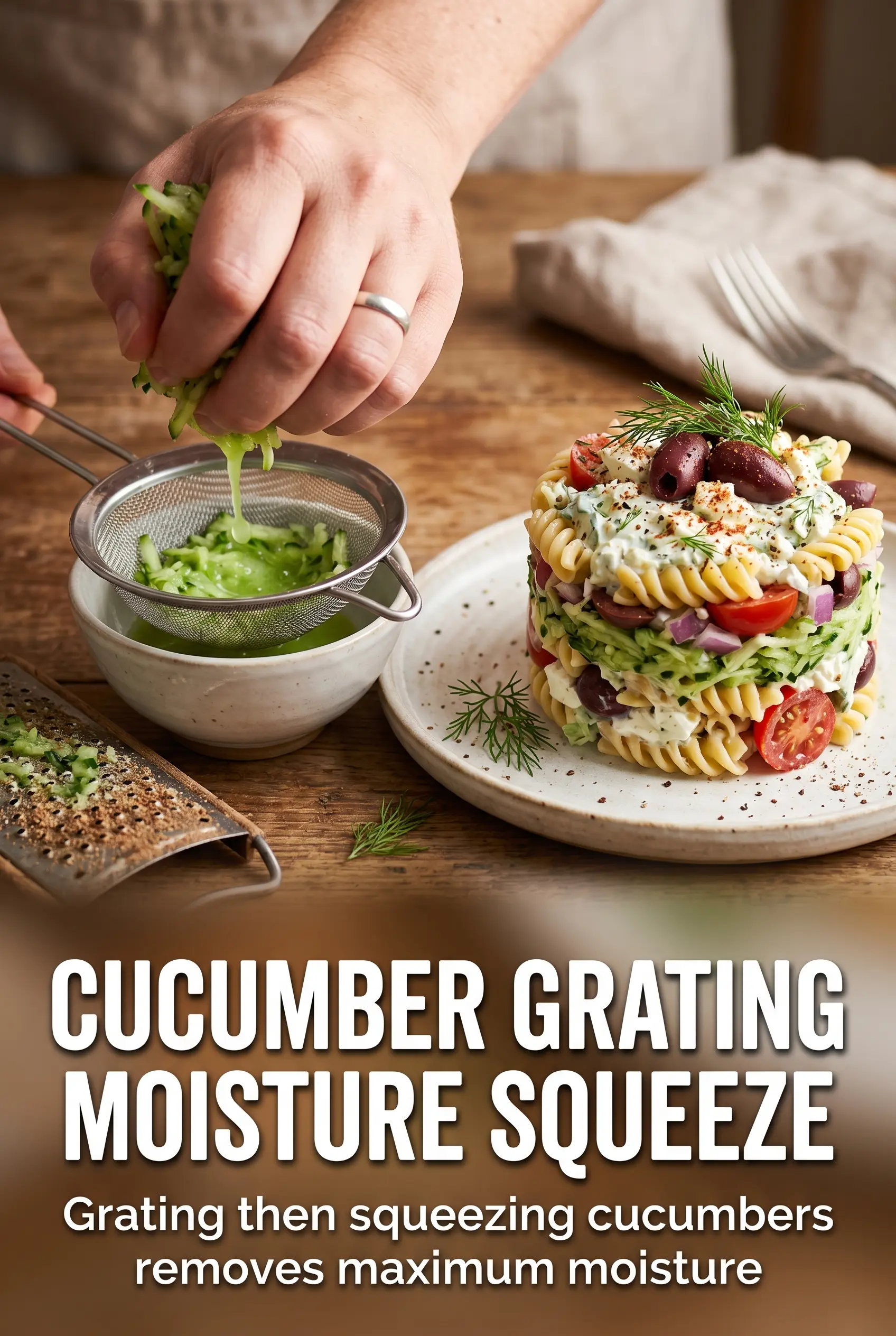
Most pasta salads go limp because the vegetables give up water after they’ve already been mixed in. That’s the big trap here. The grated cucumber in the tzatziki needs to be squeezed hard enough that it looks a little compact and damp, not dripping. If you skip that step, the yogurt loosens as it sits and you lose the thick coating that makes this salad work.
Cooling the pasta under cold water helps a lot, but the salad still needs that rest in the fridge. The dressing tightens back up as it chills, and the flavors of garlic, lemon, and dill settle into the noodles instead of tasting sharp and separate. I like this salad after at least an hour, and even better once it has had time to sit long enough for the pasta to absorb a little of the sauce.
What Each Ingredient Is Actually Doing in This Salad
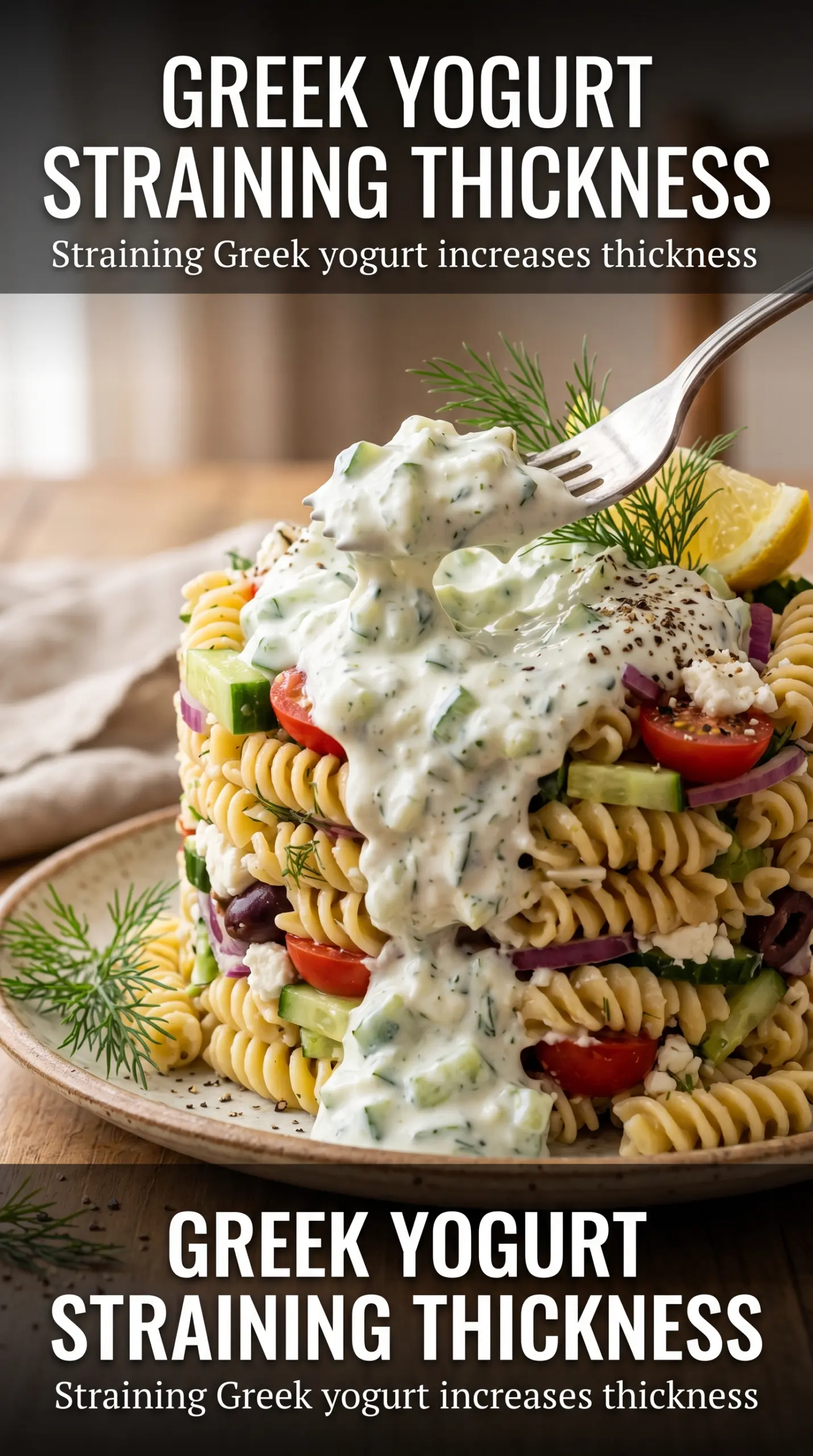
- Greek yogurt — This is the backbone of the dressing. It brings the tang and thick body that make the salad taste like tzatziki instead of plain pasta with a creamy coating. Use full-fat if you want the best texture; low-fat works, but it can taste a little sharper.
- Sour cream — A little sour cream softens the yogurt’s acidity and gives the dressing a smoother finish. You can swap in more Greek yogurt if needed, but the result will be a bit firmer and tangier.
- Cucumber, divided — Grate half for the dressing and dice the rest for crunch. That split is important: one part makes the sauce taste like tzatziki, the other part gives you cold, fresh texture in the bowl.
- Fresh dill — Dried dill won’t give the same clean, grassy lift. Fresh dill is what makes the salad taste bright and unmistakably Greek, so use it if you can.
- Feta and olives — These bring salt and brine, which keeps the salad from tasting flat. If your feta is particularly salty, hold back a little salt in the dressing and adjust at the end.
- Rotini or penne — Short pasta with ridges holds onto the sauce best. Smooth pasta works in a pinch, but it won’t catch as much dressing in every bite.
Building the Pasta Salad So the Sauce Stays Creamy
Cook the Pasta Past Al Dente by a Minute or Two
Boil the pasta until it’s just tender, then give it one quick rinse under cold water so it stops cooking and sheds the extra starch. For pasta salad, you want the noodles soft enough to eat cold without feeling tough, but not mushy. If the pasta is too firm now, it will stay a little chewy even after chilling.
Mix the Tzatziki Before You Combine Anything Else
Stir the Greek yogurt, sour cream, grated cucumber, garlic, lemon juice, dill, salt, and pepper together in a bowl first. The dressing should look thick and spoonable, not pourable. If it seems loose, the cucumber wasn’t squeezed dry enough, and that’s the point where you fix it before the whole salad turns watery.
Fold the Salad Together Without Crushing the Feta
Add the cooled pasta, diced cucumber, tomatoes, red onion, and olives to a large bowl, then spoon in the tzatziki and toss until everything is coated. Fold in the feta at the end so it stays in soft crumbles instead of smearing into the dressing. The salad should look glossy and creamy, with the vegetables still clearly defined.
Chill Until the Dressing Clings to the Noodles
Let the finished salad rest in the refrigerator for at least an hour before serving. That’s when the flavors pull together and the dressing settles into the pasta instead of sitting on the surface. If it looks a little thick after chilling, a spoonful of yogurt or a squeeze of lemon loosens it right back up.
How to Adjust It When You Need a Different Version
Make it dairy-free
Use a thick unsweetened dairy-free yogurt and skip the sour cream and feta, or replace the feta with a dairy-free version you already trust. The salad will still be creamy, but it will lean a little more toward bright cucumber-dill dressing than rich tzatziki.
Make it gluten-free
Swap in a sturdy gluten-free short pasta and cook it just until tender. Some gluten-free pastas soften a lot as they chill, so pull them from the water before they get too soft or the salad can turn pasty after resting.
Add protein for a main-dish lunch
Fold in chopped grilled chicken, chickpeas, or canned tuna after the pasta is coated. Chickpeas keep it vegetarian and hold up especially well in the cold dressing, while chicken makes the salad feel more like a full meal without changing the texture.
Storage and Reheating
- Refrigerator: Keeps for 3 to 4 days in a covered container. The pasta will absorb more dressing as it sits, so expect it to thicken a bit.
- Freezer: I don’t recommend freezing this salad. The yogurt and cucumber both change texture after thawing, and the dressing can turn grainy.
- Reheating: This salad is meant to be served cold. If it tightens up in the fridge, stir in a spoonful of yogurt or a small splash of lemon juice to bring the creaminess back instead of warming it.
Questions I Get Asked About This Recipe
Greek Tzatziki Pasta Salad
Ingredients
Method
- Cook the penne or rotini pasta according to package directions until al dente, then drain. Visual cue: steam stops rising from the colander and the pasta looks firm but tender.
- Rinse the drained pasta with cold water to stop the cooking. Visual cue: pasta turns cool and glossy rather than sticky-warm.
- Grate half the cucumber and squeeze out excess moisture, then set the drained cucumber aside. Visual cue: the grated cucumber clumps when squeezed and no longer drips.
- Mix the Greek yogurt, sour cream, minced garlic, lemon juice, chopped dill, salt, and black pepper in a bowl until smooth. Visual cue: the mixture looks creamy with visible flecks of dill.
- Stir the squeezed grated cucumber into the tzatziki. Visual cue: cucumber shreds are evenly distributed through the creamy dressing.
- In a large bowl, combine the cooled pasta with the remaining diced cucumber, halved cherry tomatoes, diced red onion, and sliced Kalamata olives. Visual cue: colors look bright and evenly spread.
- Add the tzatziki sauce and toss until the pasta is coated. Visual cue: every piece of pasta appears lightly covered in creamy white dressing.
- Gently fold in the crumbled feta cheese. Visual cue: feta forms soft, creamy crumbles without fully melting.
- Refrigerate the pasta salad for at least 1 hour before serving. Visual cue: dressing thickens slightly and the cucumbers look more vibrant after chilling.