Caprese pasta salad lands on the table with the kind of bright, clean flavor that disappears fast. The pasta gives it substance, the mozzarella stays creamy, and the tomatoes and basil bring that familiar caprese freshness that never gets old. Chilled just long enough, it settles into a dish that tastes balanced instead of watery, with every bite coated in balsamic and olive oil.
What makes this version work is the way the dressing clings to the pasta after a quick rinse and rest. Warm pasta would melt the mozzarella and dull the basil, while pasta that’s cooled properly holds the vinaigrette and keeps the salad lively. I also like cutting the tomatoes and tearing the basil by hand so the pieces feel irregular and fresh, not overly polished.
Below, you’ll find the small details that make this salad hold up for a picnic or potluck, plus a few smart swaps if you want to change the shape of the pasta, make it dairy-free, or prep it ahead without losing that caprese character.
The balsamic dressing coated everything without pooling at the bottom, and the mozzarella stayed soft after chilling. I brought it to a cookout and the bowl was scraped clean before the burgers were done.
Like this caprese pasta salad? Save it to Pinterest for the next potluck, picnic, or make-ahead lunch that needs bright basil, juicy tomatoes, and a balsamic finish.
The Trick Is Letting the Pasta Cool Before the Mozzarella Goes In
Caprese pasta salad can go flat fast if the pasta is still warm when you mix it. Heat softens the mozzarella too much, dulls the basil, and makes the tomatoes release more juice than you want. Cooling the pasta under cold water stops the cooking quickly and gives you a salad that stays bright instead of turning soft and murky.
The other thing that matters is the rest time. That hour in the fridge gives the balsamic vinegar a chance to settle into the pasta and tomatoes, and it lets the garlic mellow from sharp to rounded. If the salad tastes a little too punchy right after tossing, that usually fixes itself after chilling.
- Rinsed pasta — This isn’t the place for a starchy, saucy pasta finish. A cold rinse keeps the noodles separate and helps the dressing coat them evenly instead of grabbing onto a hot surface and tightening up.
- Ciliegine mozzarella — The small balls give you clean bites without extra cutting. Fresh mozzarella matters here; firmer block cheese won’t deliver the same soft, milky contrast against the tomatoes.
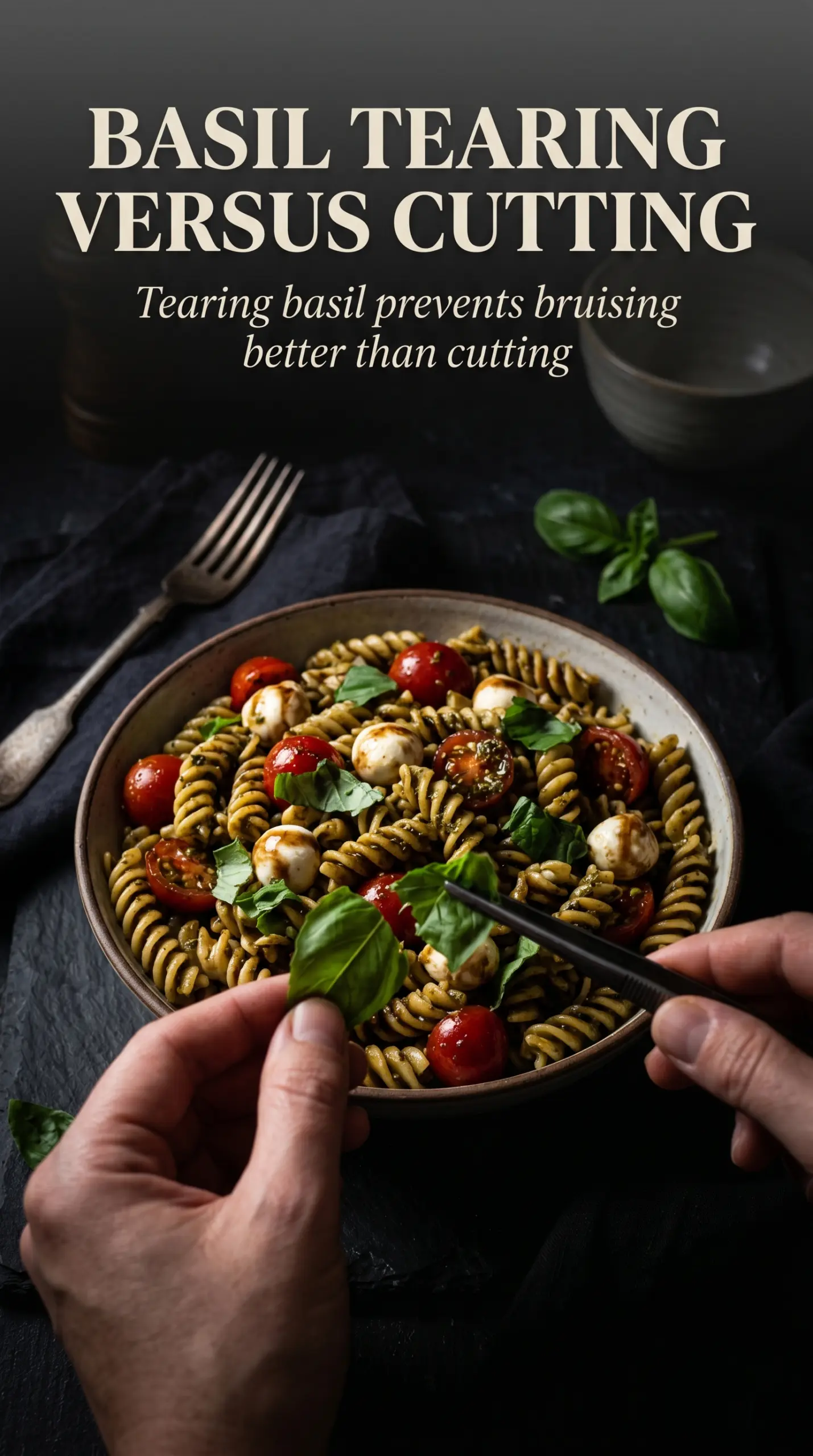
- Torn basil — Tear it, don’t chop it into confetti. Torn basil bruises less and keeps a fresher aroma in the finished salad.
What Each Ingredient Is Actually Doing in This Salad
The pasta is the structure, but the shape matters more than most people think. Rotini catches dressing in its spirals, while farfalle gives you pockets that hold little bits of tomato and basil. Either one works; just avoid long noodles, which tangle and make the salad harder to toss evenly.
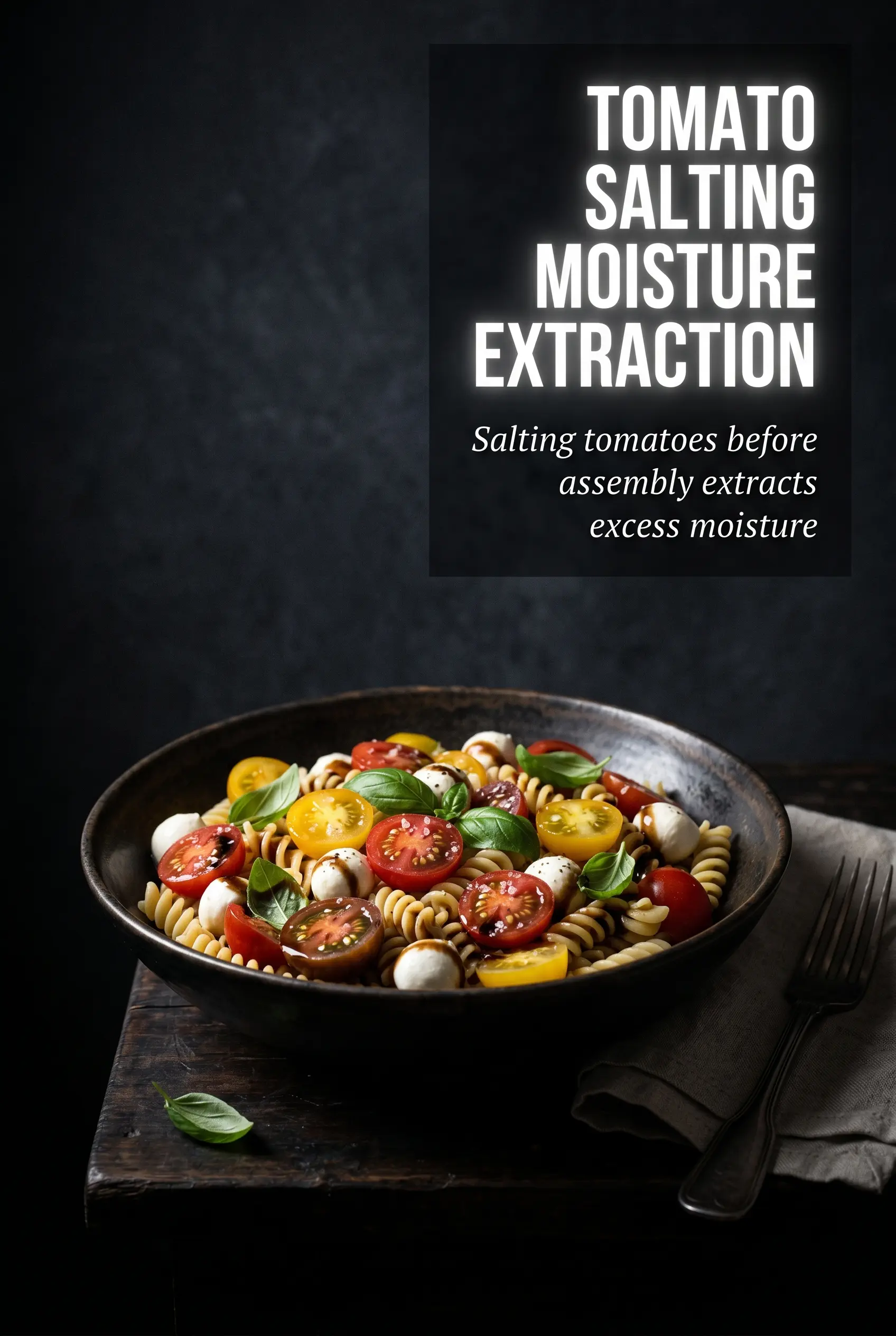
Cherry tomatoes are worth using here because they stay juicy without collapsing into watery pieces. Halving them exposes the inside so the dressing can season them, but it doesn’t flood the bowl the way larger chopped tomatoes can. If your tomatoes are especially juicy, let them sit in the colander for a minute after cutting so the salad doesn’t get diluted.
The olive oil and balsamic vinegar do more than dress the pasta. The oil carries the flavor across the bowl, while the vinegar gives the caprese ingredients their sharp edge and keeps the salad from tasting heavy. A good balsamic glaze at the end adds contrast and a little sweetness, so don’t skip that last drizzle if you want the salad to taste finished.
Building the Bowl in the Right Order
Cooking and Cooling the Pasta
Cook the pasta until just tender, then drain and rinse under cold water until it’s no longer steaming. If you leave it warm, the basil darkens and the mozzarella starts to slump before the salad ever hits the table. Shake off as much water as you can so the dressing doesn’t slide off and pool at the bottom.
Whisking a Dressing That Actually Clings
Whisk the olive oil, balsamic vinegar, garlic, salt, and pepper until the mixture looks glossy and slightly thickened. The garlic should be minced fine so it seasons the salad without throwing sharp chunks in every bite. If the dressing tastes harsh, it’s because the vinegar is too dominant; a little extra olive oil smooths it out without muting the flavor.
Tossing Without Crushing the Good Parts
Combine the pasta, tomatoes, mozzarella, and basil in a large bowl, then pour the dressing over and toss gently. Use a lifting motion instead of stirring hard, or the tomatoes will burst and the mozzarella will smear. You want the pasta coated and the ingredients distributed, but still distinct.
Chilling for the Best Texture
Refrigerate the salad for at least an hour so the flavors meld. This is when the garlic settles down and the dressing settles into the pasta instead of sitting on top. Right before serving, give it one more gentle toss and add the balsamic glaze so it stays shiny and bold.
Three Smart Ways to Bend This Recipe Without Losing the Caprese Feel
Gluten-Free Version
Use a sturdy gluten-free rotini or farfalle that holds its shape after chilling. Cook it just to tender and rinse it well, since gluten-free pasta can go gummy if it sits with residual heat. The flavor stays the same, but the texture is best the day it’s made.
Dairy-Free Swap
Replace the mozzarella with a good dairy-free mozzarella-style pearl or cubes, or leave it out and add chopped avocado just before serving for creaminess. You’ll lose the milky caprese bite, but the tomatoes, basil, and balsamic still carry the dish. Add the avocado only at the end so it doesn’t turn soft and muddy.
Make It More Filling
Add diced grilled chicken or chickpeas for a more substantial main-dish salad. Chicken keeps the Italian feel and adds clean protein, while chickpeas bring a nutty chew that stands up well to the balsamic. If you add either, toss with a little extra dressing so the salad doesn’t taste underseasoned.
Storage and Reheating
- Refrigerator: Store in an airtight container for up to 3 days. The basil will darken a bit and the pasta will absorb more dressing as it sits.
- Freezer: Don’t freeze this salad. The mozzarella turns rubbery and the tomatoes lose their texture after thawing.
- Reheating: Serve chilled or at cool room temperature. If it’s been in the fridge overnight, let it sit out for 15 to 20 minutes and add a fresh drizzle of balsamic glaze to wake it back up.