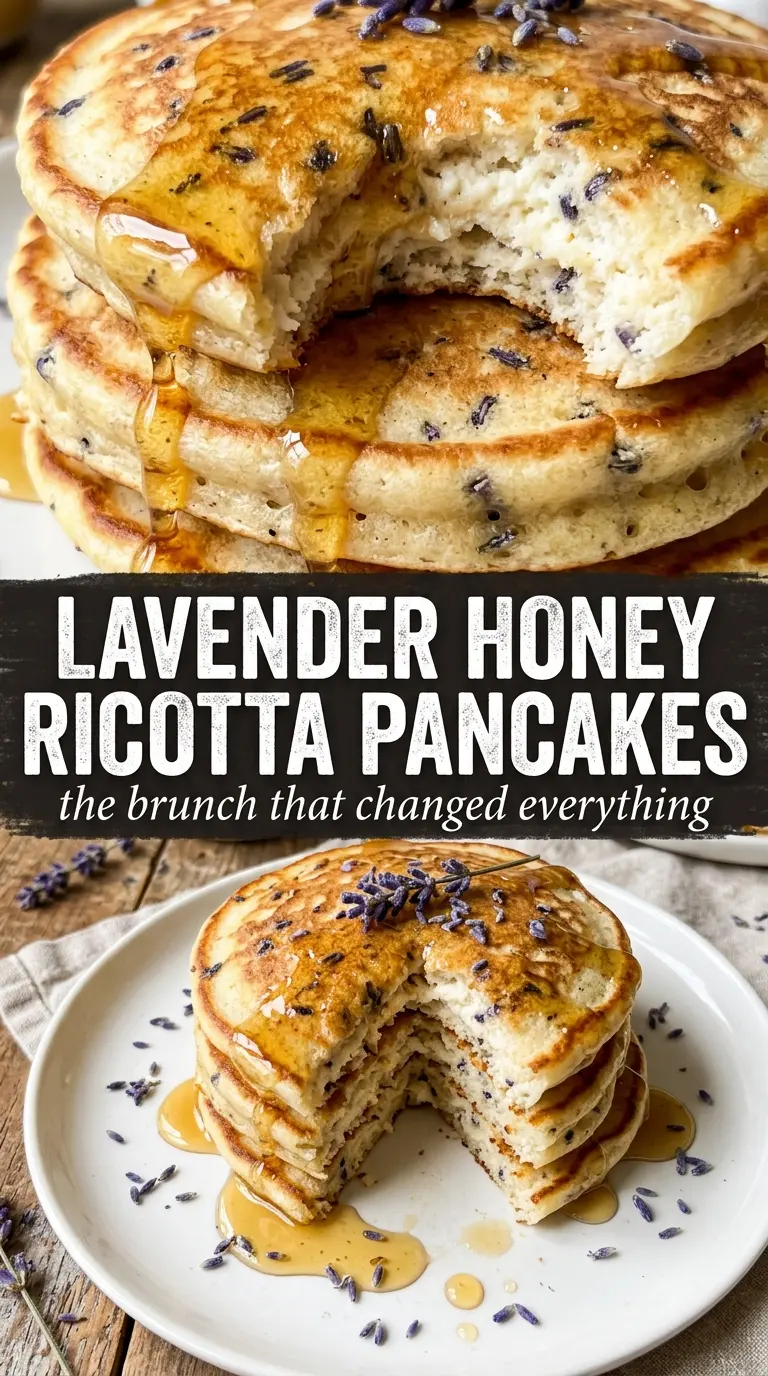
Lavender honey ricotta pancakes come off the griddle with crisp, bronzed edges and a center that stays tender and almost custardy. The ricotta gives them a soft, plush crumb instead of the dry, springy texture you get from standard pancakes, while the honey rounds out the floral notes so the lavender tastes fragrant instead of perfumy. They look like a brunch special, but they’re built from familiar pantry ingredients and a handful of smart choices.
The trick is blending the wet ingredients first so the ricotta disappears into a smooth base. That keeps the batter light and helps the pancakes cook evenly without pockets of cheese. The lavender needs to be finely crushed and used with a light hand; too much, or too many whole buds, and the flavor turns sharp fast. A short mix after the flour goes in is all you need. Overworking the batter tightens the pancakes and knocks out the airy texture that makes this version stand out.
Below you’ll find the one detail that keeps them fluffy, the ingredient note that matters most if you’ve never baked with lavender before, and a few variations for different diets and brunch crowds.
The pancakes stayed unbelievably fluffy, and the lavender stayed floral instead of tasting like soap. I loved how the honey on top made the whole thing taste finished without needing syrup.
Save these lavender honey ricotta pancakes for a brunch stack that’s fluffy, floral, and finished with a honey drizzle.
The Reason These Pancakes Stay Light Instead of Dense
Ricotta changes the whole structure here. It adds moisture and body without making the batter thin, which is why these pancakes cook up soft in the middle instead of collapsing into something heavy and wet. The blender step matters because it turns the ricotta into a smooth base, so the finished pancakes are plush rather than lumpy.
The other place people go wrong is lavender. Culinary lavender is powerful, and whole buds can read as gritty if they aren’t crushed before they hit the batter. Lightly crushing them wakes up the aroma and spreads the flavor through the flour, which keeps each bite balanced. If the lavender tastes too sharp, the batter has usually been overmeasured, not under-sweetened.
What Each Ingredient Is Actually Doing in This Stack
- Ricotta cheese — This is what gives the pancakes their soft, rich texture. Whole-milk ricotta works best because it blends smoother and tastes fuller, but part-skim will still work if that’s what you have.
- Culinary lavender buds — Use food-grade lavender only, and crush it finely before mixing it into the dry ingredients. That keeps the flavor even and prevents little woody bits from showing up in the finished pancakes.
- Honey — Honey sweetens the batter and reinforces the floral note without making the pancakes taste sugary. If yours is thick or crystallized, warm it for a few seconds so it folds in cleanly.
- Milk — This loosens the batter just enough for a tender pour. Any dairy milk works here; non-dairy milk will do in a pinch, but the pancakes lose a little richness.
- Butter, melted — Butter adds flavor and helps the edges brown. If you swap in oil, the pancakes will still cook well, but they won’t have quite the same finish.
Building the Batter Without Knocking Out the Tender Crumb
Blend the Wet Ingredients Until Smooth
Start with the ricotta, eggs, milk, and vanilla in a blender and run it just until the mixture looks smooth and slightly airy. You’re not trying to whip it into meringue; you just want the ricotta fully broken down so the pancakes cook evenly. If there are still visible curds, blend a few seconds more before moving on.
Fold the Dry Ingredients in Briefly
Whisk the flour, baking powder, salt, and crushed lavender together first, then add them to the blended base. Stir only until the flour disappears. A few small streaks are fine because they’ll finish hydrating on the griddle, but a thick, gummy batter means you’ve gone too far and the pancakes will tighten up.
Cook Over Medium Heat and Watch the Edges
Use a lightly buttered skillet or griddle over medium heat, not high heat. These pancakes need enough time for the centers to set before the outside overbrowns, and ricotta-based batter can look done on the outside before the middle firms up. Flip when the edges look matte and a few bubbles break across the top, then give the second side just long enough to turn golden.
Finish With Honey While They’re Still Warm
Stack the pancakes right away and drizzle with honey while the surface is still hot enough to melt it slightly into the top layers. That’s when the lavender aroma opens up and the whole stack tastes most balanced. If you wait until they’ve cooled, the honey sits on top instead of soaking in a little, and the texture feels flatter.
How to Adapt These Pancakes for Different Mornings
Gluten-Free Version
Swap the all-purpose flour for a good 1:1 gluten-free blend that contains xanthan gum. The pancakes will still be tender, but they may spread a little more slowly, so let the batter rest for five minutes before cooking.
Dairy-Free Version
Use a thick dairy-free ricotta and unsweetened oat or almond milk. The texture will be a little less plush than the original because ricotta is doing a lot of the heavy lifting here, but the pancakes will still hold together and brown nicely.
Lemon-Lavender Brunch Version
Add 1 teaspoon finely grated lemon zest to the dry ingredients and finish the stack with a few drops of lemon juice mixed into the honey. The citrus sharpens the floral note and makes the pancakes taste brighter without stealing the softness.
Storage and Reheating
- Refrigerator: Store cooled pancakes in an airtight container for up to 3 days. They’ll soften a bit as they sit, which is normal for ricotta pancakes.
- Freezer: Freeze in a single layer, then stack with parchment between each pancake. They freeze well for up to 2 months and reheat without losing much texture.
- Reheating: Warm them in a toaster oven or skillet over low heat until hot through. The common mistake is blasting them in the microwave, which makes the edges rubbery before the center is warm.
Questions I Get Asked About This Recipe
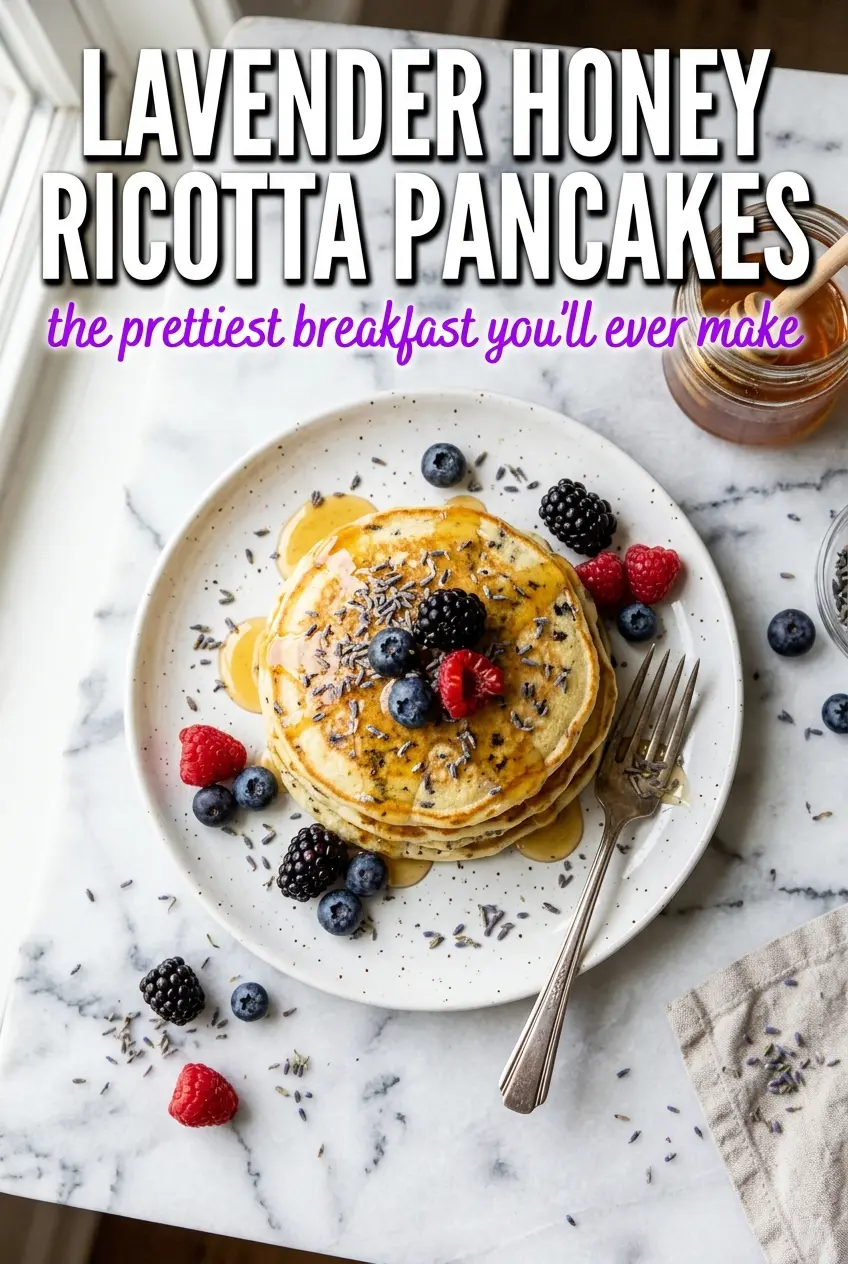
Lavender Honey Ricotta Pancakes
Ingredients
Equipment
Method
- Add ricotta cheese, eggs, milk, and vanilla extract to a blender and blend until smooth and slightly fluffy.
- Set the blender aside while you mix the dry ingredients.
- In a separate bowl, whisk together all-purpose flour, baking powder, salt, and finely crushed culinary lavender buds until evenly combined.
- Add the flour mixture to the ricotta mixture and stir until just combined, then stop to avoid overmixing.
- Fold in honey and melted butter until the batter looks cohesive with no dry streaks.
- Heat a griddle or skillet over medium heat and lightly butter or oil the surface.
- Pour batter in 1/4 cup portions onto the griddle, spacing them apart.
- Cook for 2-3 minutes until the bottoms are golden and bubbles appear on the surface edges.
- Flip and cook for another 1-2 minutes until both sides are golden and the centers spring back lightly.
- Stack the pancakes warm and drizzle generously with additional honey.
- Garnish with fresh lavender sprigs and serve immediately while fluffy.