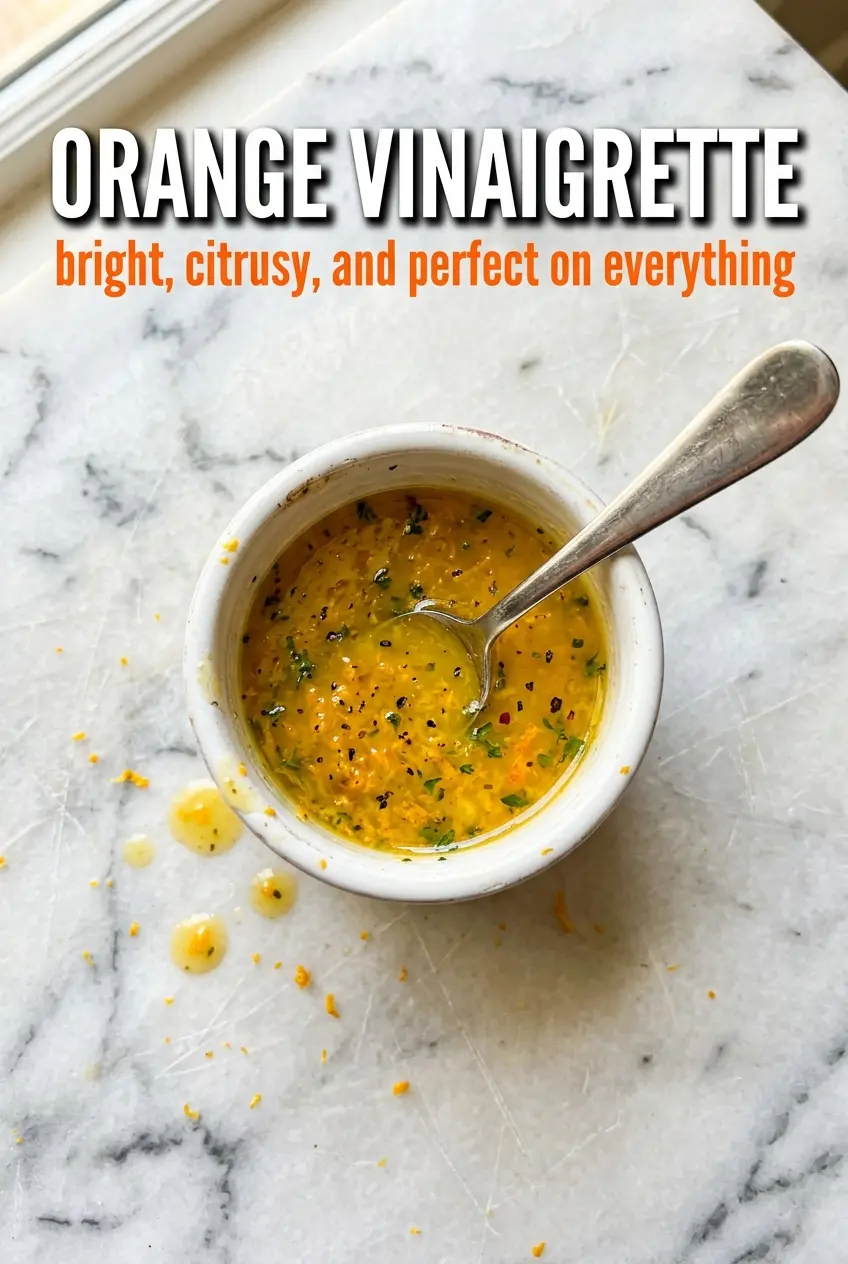
Orange vinaigrette is the kind of dressing that wakes up a plain bowl of greens and makes roasted vegetables taste finished. It lands glossy and bright, with enough body to cling to leaves instead of sliding off the plate. The orange gives it a sunny sweetness, but the mustard and vinegar keep it sharp enough that it never turns flat.
The texture comes from a proper emulsion, not from dumping everything into a jar and hoping for the best. Whisking the juice, vinegar, and Dijon first gives the mustard a chance to anchor the oil, and adding the olive oil slowly keeps the dressing creamy instead of separated. A little honey rounds out the citrus, while orange zest and garlic add the kind of back-note that makes people notice the dressing even if they can’t quite name why.
Below you’ll find the small technique details that keep this vinaigrette smooth, along with a few useful ways to adjust it for different salads and vegetables.
The dressing emulsified fast and stayed smooth in the fridge. I used it on a spinach salad with feta, and the orange zest made it taste fresh instead of too sweet.
Save this orange vinaigrette for salads that need a bright citrus finish and a smooth, pourable texture.
The Part That Keeps Orange Vinaigrette from Turning Thin and Flat
Most citrus dressings fail in one of two ways: they separate fast, or they taste bright for a second and then disappear. This one avoids both because Dijon mustard does more than add flavor. It acts as the stabilizer that helps the oil and orange juice hold together long enough to coat a salad properly.
The other detail that matters is balance. Orange juice brings sweetness and acidity, but it doesn’t have the same punch as a harsher vinegar on its own, so white wine vinegar keeps the dressing awake. If it tastes a little soft at first, the fix is usually more salt, not more honey. Salt sharpens the citrus and makes the whole thing taste intentional instead of sweet.
- Whisking order matters — Start with the juice, vinegar, and Dijon so the mustard can begin emulsifying before the oil goes in.
- Slow oil addition matters most — Pouring the olive oil in a thin stream gives you a creamy dressing instead of a broken one.
- Zest should be fine — Grate only the orange skin, not the bitter white pith underneath. Fine zest distributes flavor without making the dressing harsh.
What Each Ingredient Is Doing in This Citrus Dressing
Each ingredient has a job here, and the dressing tastes best when none of them are working too hard. Orange juice gives the obvious citrus note, but fresh juice matters because bottled juice tends to taste dull and less aromatic. Dijon mustard is non-negotiable for texture; no other ingredient in the bowl will emulsify the dressing as effectively.
Extra virgin olive oil brings body and a peppery finish, so use a bottle you actually like to taste. Honey softens the edges of the vinegar and helps the dressing cling a little better, but it shouldn’t make the vinaigrette taste sweet. If you don’t have white wine vinegar, champagne vinegar works well; apple cider vinegar can substitute in a pinch, though it reads a little fruitier and less clean.
- Fresh orange juice — Freshly squeezed gives a brighter, more aromatic dressing than carton juice.
- White wine vinegar — Keeps the citrus from tasting flat. Champagne vinegar is the closest swap.
- Dijon mustard — This is the emulsifier, so don’t replace it with yellow mustard unless you want a different flavor and a looser texture.
- Extra virgin olive oil — A good one pays off here because the oil is a major flavor, not just a fat.
- Honey — Balances the acidity. Maple syrup can work, but it tastes warmer and less citrusy.
- Orange zest — Adds the top-note orange aroma that juice alone can’t give.
- Garlic — Use one small clove. Too much and it overpowers the citrus after a short rest.
How to Whisk It So It Stays Smooth
Starting the Base
Whisk the orange juice, white wine vinegar, and Dijon mustard until the mixture looks completely unified and a little cloudy. That first minute matters because the mustard needs to be fully dispersed before the oil goes in. If you dump everything together at once, the dressing can still taste fine, but it won’t have that silky body that clings to lettuce.
Building the Emulsion
Add the olive oil in a slow, thin stream while whisking constantly. You should see the dressing thicken slightly and turn glossy as the oil breaks into tiny droplets. If it starts to look streaky, stop pouring for a few seconds and whisk harder before continuing. Rushing this stage is the fastest way to get a greasy, separated dressing.
Finishing the Flavor
Stir in the honey, orange zest, garlic, salt, and white pepper after the emulsion comes together. This keeps the honey from sticking to the bowl and lets you taste the final balance without overworking the oil. Taste it with a leaf of lettuce or a piece of cucumber if you can, since dressing tastes sharper on its own than it does on a salad.
Make It Sweeter or Sharper
For a sweeter vinaigrette, add another teaspoon of honey. For a sharper finish, add a little more vinegar and a pinch more salt. The key is making small adjustments after the emulsion is complete, because sweetness and acidity read differently once the dressing is fully mixed.
Make It Dairy-Free and Naturally Vegan
The recipe is already dairy-free and vegan as written if you use maple syrup instead of honey. Maple changes the flavor slightly, giving the vinaigrette a rounder, deeper sweetness, while honey keeps the orange note brighter. Either version works; the difference is about mood, not technique.
Make It Creamier for Hearty Salads
If you want a dressing that clings a little more, whisk in an extra half teaspoon of Dijon or a teaspoon of plain Greek yogurt. Dijon keeps the flavor clean and sharp, while yogurt softens the citrus and gives a thicker, more spoonable texture. Yogurt doesn’t keep as long, though, so use that version within a few days.
Storage and Reheating
- Refrigerator: Store in a sealed glass jar for up to 1 week. The oil may solidify a bit in the fridge, which is normal.
- Freezer: I don’t recommend freezing this vinaigrette. The emulsion breaks and the texture turns grainy once thawed.
- Reheating: There’s no reheating needed. Let it sit at room temperature for 10 to 15 minutes, then shake or whisk hard before using so the oil loosens and the dressing comes back together.
Questions I Get Asked About This Recipe
Orange Vinaigrette
Ingredients
Method
- Whisk fresh orange juice, white wine vinegar, and Dijon mustard together until smooth.
- Slowly drizzle in extra virgin olive oil while whisking constantly to form a glossy emulsion.
- Stir in honey and orange zest until evenly combined.
- Mix in minced garlic clove along with salt and white pepper to taste.
- Taste and adjust seasoning as needed for balance.
- Pour into a glass jar, then shake well before each use.