Peach honey Dijon balsamic vinaigrette brings sharp, sweet, and savory into one glossy dressing that clings to greens instead of sliding off them. The peach adds roundness and a soft fruit note, while the Dijon keeps it from tasting flat or syrupy. It’s the kind of dressing that makes a simple salad feel finished, and it’s just as good drizzled over grilled chicken, roasted vegetables, or sliced tomatoes.
What makes this version work is the balance. Balsamic vinegar gives structure, peach puree gives body, and the two oils keep the texture silky without muting the flavor. The minced shallot adds a gentle bite that softens as the dressing sits, and the pinch of thyme gives it a little herbal lift without pushing it into something fussy. If you’ve ever had homemade vinaigrette separate too quickly or taste too sharp, the order of ingredients here fixes that.
Below, I’ve included the one part that matters most when you want a dressing this smooth, plus a few swaps and storage notes that actually help when you’re making it ahead.
The peach made it taste bright instead of heavy, and the dressing stayed emulsified long enough to dress the whole bowl without turning watery at the bottom.
Save this peach honey Dijon balsamic vinaigrette for salads that need a glossy, fruity dressing with a clean Dijon finish.
The Part That Keeps This Vinaigrette from Breaking
Most homemade vinaigrettes split because the oil goes in too fast or the acidic base isn’t thick enough to hold it together. This dressing avoids that by starting with peach puree, honey, Dijon, balsamic, and shallot, which gives the whisk something to grab onto before the oil is added. Dijon is doing more than adding tang here; it helps stabilize the emulsion, which is why the dressing stays creamy instead of turning greasy within minutes.
The second thing that matters is the ratio of olive oil to grapeseed oil. All olive oil can taste heavy or bitter in a fruit-forward dressing, especially if it’s bold. Blending it with grapeseed oil keeps the flavor clean and lets the peach and balsamic stay front and center. If your dressing ever looks thin at first, keep whisking after the oil is in. It usually comes together faster than you expect.
- Start with the peach puree, not the oil. That gives the dressing body before emulsification begins, which makes it much harder to break.
- Whisk the oil in slowly. A thin stream matters more than speed here. Fast pouring is the quickest way to get a slick of oil sitting on top of the bowl.
- Use the Dijon as your insurance. It doesn’t just flavor the dressing; it helps the vinaigrette hold together longer in the fridge.
- Let the shallot sit in the acid for a minute. It softens the sharp edge and takes away that raw bite that can distract from the peach.
What Each Ingredient Is Actually Doing in This Dressing
Balsamic vinegar gives the dressing its backbone. A good balsamic brings sweetness and acidity at the same time, which matters because peach puree already adds softness. If your balsamic is sharp and thin, the dressing will taste harsher; if it’s aged and syrupy, it will make the vinaigrette taste deeper and more rounded.
Peach puree is the ingredient that turns this from a standard vinaigrette into something with body and a little luxury. Fresh, ripe peaches make the brightest version, but thawed frozen peaches puree well too. If you use canned peaches, drain them well so you don’t water down the dressing.
Honey and Dijon do two different jobs. Honey smooths the acidity and helps the peach read as fruit instead of sugar, while Dijon sharpens everything and helps the emulsion hold. Olive oil and grapeseed oil work best together here because the olive oil brings flavor and the grapeseed oil keeps the dressing from feeling heavy. Shallot adds a gentle bite that fades as the dressing rests, and the thyme gives the whole thing a savory edge that keeps it from tasting like dessert.
Whisking It Into a Glossy Emulsion
Build the Flavor Base First
Combine the balsamic vinegar, peach puree, honey, Dijon mustard, and minced shallot in a bowl. Whisk until the honey dissolves and the mixture looks unified, not streaky. You want the shallot dispersed evenly so you don’t get sharp little pockets in the finished dressing. If the honey is clinging to the whisk, keep going for a few more seconds before adding oil.
Add the Oil in a Thin Stream
Whisk constantly while you pour in the olive oil and grapeseed oil slowly. This is the point where the dressing either turns silky or stays separated, so don’t dump the oil in all at once. If the mixture looks loose at first, that’s normal; it should thicken slightly and turn glossy as the oil is incorporated. Stop whisking when it looks cohesive and lightly creamy.
Season and Taste Like a Cook
Add the salt, black pepper, and a pinch of thyme, then taste. If it tastes flat, it usually needs a little more salt before it needs more honey. If it tastes too sharp, add a touch more peach puree or honey, not extra oil. Let it sit for a few minutes and taste again, because shallot and thyme bloom as the dressing rests and the flavor changes a little.
Ways to Adjust This Dressing Without Losing What Makes It Good
Make It Dairy-Free, Naturally
This dressing is already dairy-free, which makes it easy to serve with almost anything. The key is keeping the emulsion stable so it coats salad greens, grain bowls, or roasted vegetables without needing any creamy add-ins. If you want a richer finish, add a little more peach puree rather than trying to thicken it with anything dairy-based.
Swap the Sweetener for a Less Sweet Finish
Maple syrup can replace the honey in equal measure, but it changes the flavor toward deeper, woodsy sweetness. It works especially well if you’re serving the dressing with roasted squash, bitter greens, or grain salads. The tradeoff is that the peach will taste a little less bright, so add the maple slowly if you want the fruit to stay at the center.
Use Nectarines or Apricots Instead of Peaches
Nectarines swap in almost seamlessly and give the dressing a slightly firmer fruit note. Apricots make it tangier and a little more floral, so you may want a touch more honey to balance them. Either way, puree the fruit until completely smooth so the vinaigrette doesn’t separate around little bits of pulp.
Make It Onion-Free
If you want a gentler dressing, leave out the shallot and add a tiny pinch more salt to keep the flavors from feeling empty. You’ll lose a little savory bite, but the peach and balsamic will read cleaner and softer. This is the version I’d use for a fruit salad-adjacent plate or a very delicate lettuce mix.
Storage and Reheating
- Refrigerator: Store in a glass jar for up to 1 week. The oil may firm up a little in the cold, and that’s normal.
- Freezer: I don’t recommend freezing this dressing. The emulsion usually breaks after thawing, and the peach puree can turn grainy.
- Reheating: Don’t heat it. Set the jar out for 10 to 15 minutes, then shake hard or whisk again before serving. If it looks separated, that’s the oil and vinegar doing what they naturally do in the fridge.
Answers to the Questions Worth Asking
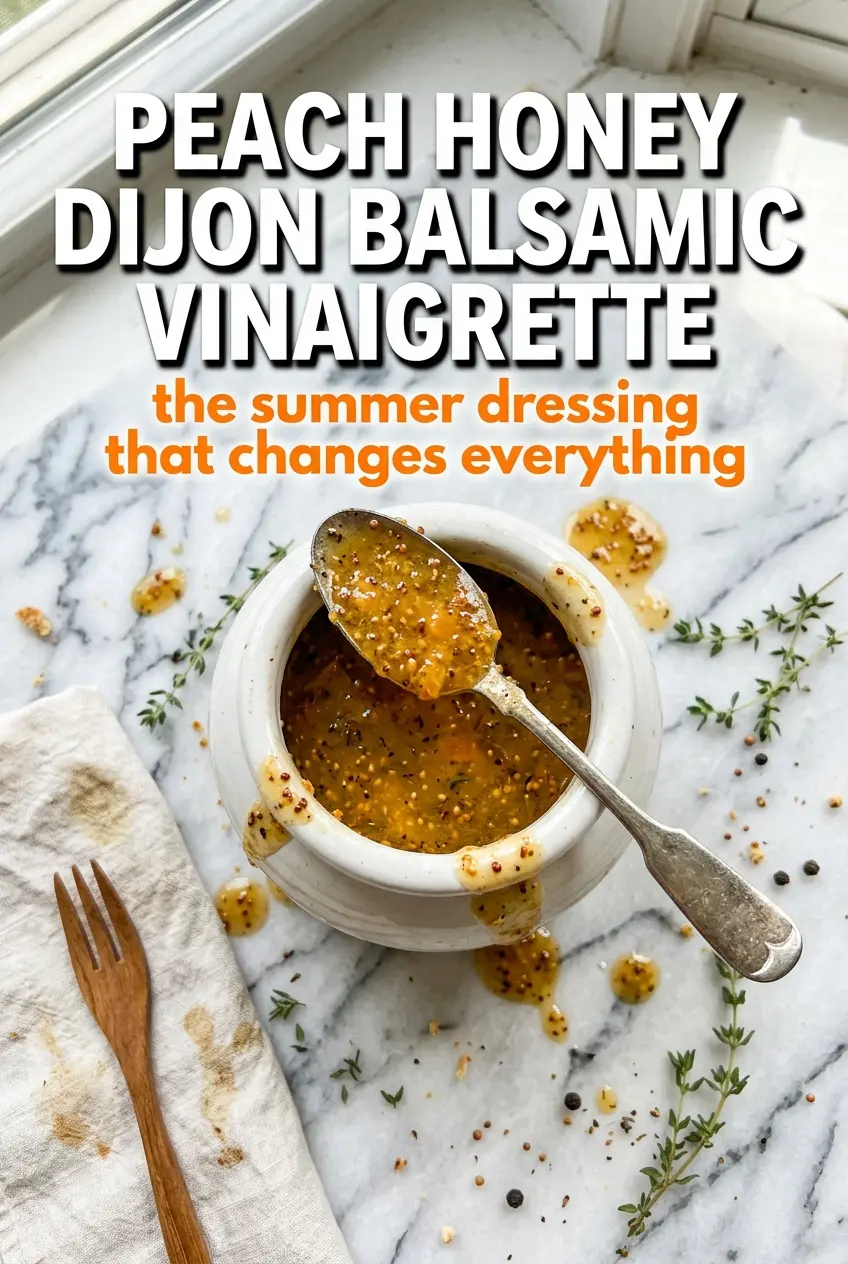
Peach Honey Dijon Balsamic Vinaigrette
Ingredients
Method
- Add balsamic vinegar, peach puree, honey, Dijon mustard, and minced shallot to a bowl. Whisk until evenly combined and the shallot looks suspended.
- Slowly whisk in the olive oil and grapeseed oil in a steady stream to form an emulsion. Stop when the dressing looks glossy and slightly thickened with peach flecks.
- Season with salt, black pepper, and thyme, whisking again to distribute. Taste and adjust the balance of sweet and tang as needed.
- Pour the vinaigrette into a glass jar and refrigerate. Use within up to one week.
- Shake well before using, then drizzle over salads. The dressing will look separated before shaking, then turn cohesive again.