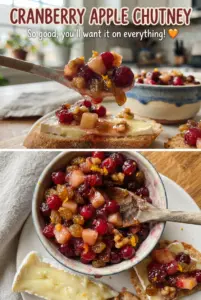
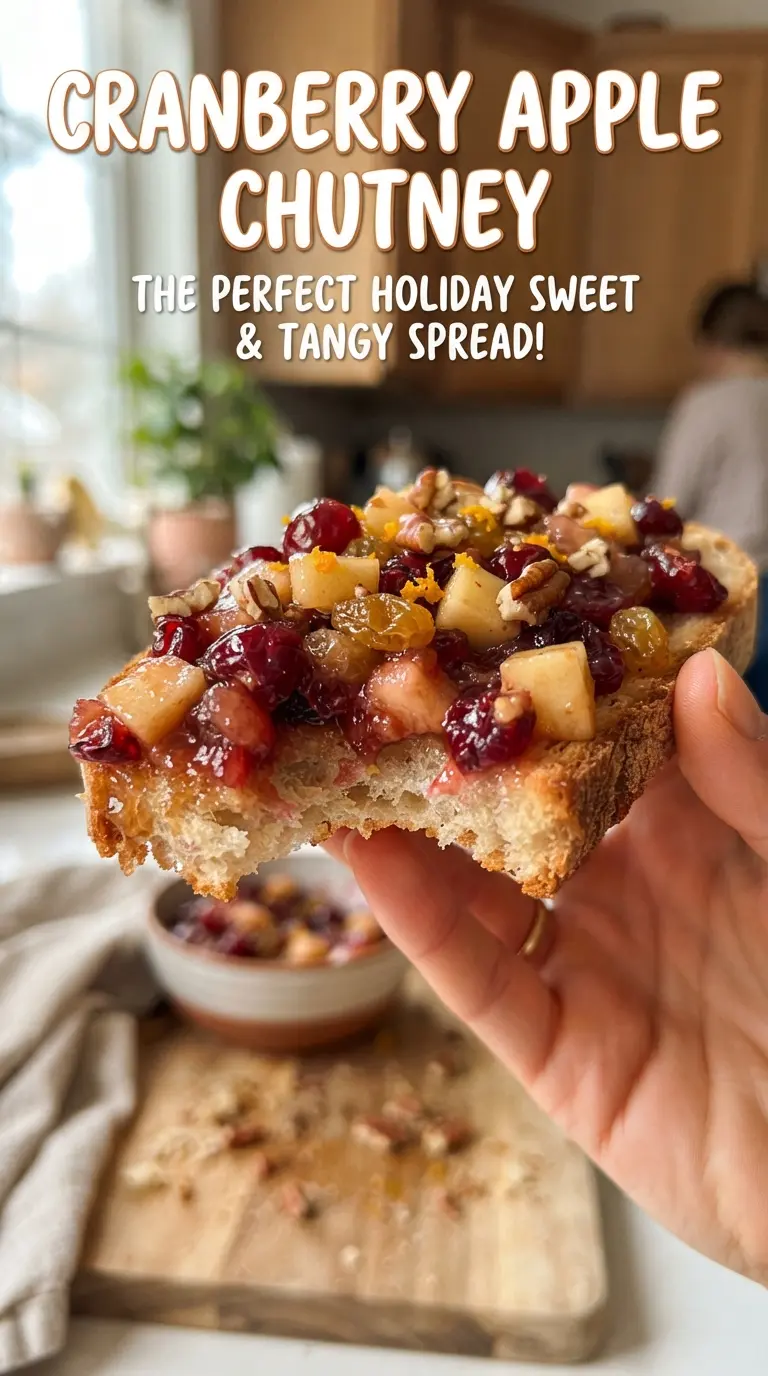
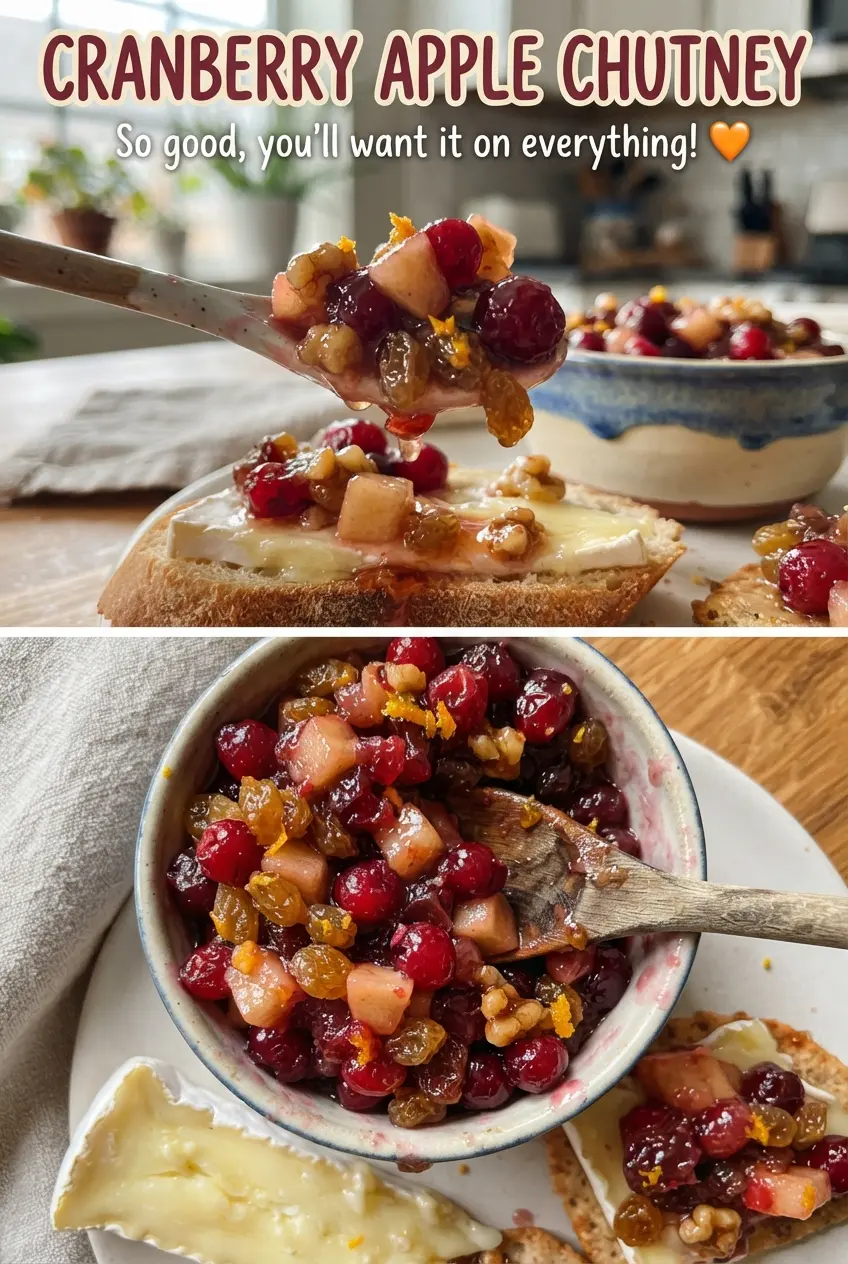
Cranberry apple chutney lands in that sweet-tart, spoonable middle ground that makes plain turkey, roast pork, and a simple cheese board feel finished. The cranberries break down just enough to thicken the pot while the apples hold onto a little shape, so every bite has both jammy richness and something you can still identify. It’s the kind of side dish that disappears fast, then has people asking what’s in it after the bowl is scraped clean.
What makes this version work is the balance: enough brown sugar to soften the sharp edges, enough apple cider vinegar to keep it bright, and a short simmer for the onion and spices before the fruit goes in. That first step takes the raw bite off the onion and lets the ginger, cinnamon, and cloves bloom without tasting dusty. The golden raisins add little pockets of sweetness that keep the chutney from reading as all tart, all the time.
Below, I’ve included the small details that matter most, from keeping the texture thick instead of watery to the best swaps if you want to adjust the sweetness or heat. If you’ve ever had cranberry relish turn limp or one-note, this version fixes that.
The chutney thickened up beautifully and the apples stayed a little chunky, which made it perfect with leftover turkey sandwiches the next day.
Save this cranberry apple chutney for turkey dinners, pork chops, or any cheese board that needs a sweet-tart upgrade.
The Trick to Keeping Cranberry Chutney Thick Instead of Soupy
The biggest mistake with cranberry chutney is pulling it off the heat while it still looks loose. It always thickens more as it cools, and cranberries release a lot of juice before they break down, which can make the pot look thinner than it really is. The finished texture should mound on a spoon and leave a slow trail across the pan when you drag a spatula through it.
The onion and ginger need that five-minute simmer before the fruit goes in because they’re the backbone of the chutney. If you skip that step, the onion tastes sharp and the spices read a little raw. The fruit should go in only after the vinegar mixture has had time to settle and smell balanced.
- Cranberries — Fresh cranberries give the chutney its bright pop and natural pectin, which is what helps it set into that thick, glossy texture. Frozen cranberries work too; add them straight from the freezer and expect the simmer to take a few extra minutes.
- Apples — Use a firm apple like Granny Smith, Honeycrisp, or Braeburn if you want pieces that stay defined. Softer apples will dissolve more, which makes the chutney smoother and sweeter, but less chunky.
- Apple cider vinegar — This keeps the chutney lively and cuts through the sugar. Distilled vinegar tastes harsher here, so stick with cider vinegar unless you’re desperate.
- Golden raisins — They melt into little sweet spots without darkening the whole pot. Regular raisins work in a pinch, but the flavor is deeper and less delicate.
What Each Ingredient Is Actually Doing in This Recipe
- Primary ingredient (the star) — Quality matters most. Choose the best you can find.
- Cooking medium (oil, butter, or broth) — This carries flavors and prevents dryness.
- Seasonings (salt, pepper, spices, herbs) — Layer flavors so nothing overpowers. Build depth gradually.
- Aromatics (garlic, onion, herbs) — Cook with fat to bloom flavors. Become the foundation.
- Supporting ingredients — Complement the main ingredient without overpowering it.
- Sauce or liquid (if applicable) — Brings flavors together. Balance richness with acid.
- Acid (lemon, vinegar, wine, or other) — Brightens and prevents flat-tasting results.
- Final finish (garnish, glaze, or sauce) — Prevents one-dimensional taste and adds visual appeal.
Building the Flavor in the Pot, Not at the End
Starting With the Syrup Base
Bring the brown sugar, vinegar, and water to a full boil before anything else goes in. That first boil dissolves the sugar completely and gives you a clean base instead of grainy syrup at the bottom of the pan. Once it boils, lower the heat before adding the onion and spices so the mixture simmers instead of reducing too fast.
Softening the Onion and Waking Up the Spices
Let the onion, ginger, cinnamon, cloves, red pepper flakes, and salt simmer for five minutes until the onion loses its raw edge and the liquid smells round and spiced. This is where the chutney gets depth; if the onion still tastes sharp at this stage, it will stay noticeable in the finished jar. The mixture should look slightly darker and more fragrant, not syrupy and reduced by half.
Cooking the Fruit to a Jammy Finish
Stir in the cranberries, apples, and raisins, then keep the pot at a lively simmer, not a hard boil. The cranberries will start popping, the apples will soften at the edges, and the liquid will slowly turn glossy and thick. Stir often so the fruit at the bottom doesn’t scorch, especially near the end when the chutney starts to cling to the spoon.
Cooling for the Final Set
Take the chutney off the heat when it still looks a touch looser than you want. As it cools, the pectin in the cranberries does its job and the mixture tightens up to that spoonable, jamlike texture. Refrigerate it only after it’s fully cool, or the trapped steam will add extra moisture and loosen the set.
How to Adapt This Chutney for Different Tables
Less Sweet, More Tangy
Cut the brown sugar down by 1/4 cup if you want the cranberries to stay front and center. The chutney will taste brighter and less candied, but it will also finish a little looser, so give it the full cooling time before judging the texture.
Dairy-Free and Vegan Serving
The chutney itself is naturally dairy-free and vegan, so the main adjustment is what you serve it with. It works just as well with roasted vegetables, grain bowls, or a vegan cheese board as it does with turkey or pork.
Spicier Chutney
Increase the red pepper flakes to 1/2 teaspoon for a gentler heat or 3/4 teaspoon if you want more bite. The heat reads more clearly after the chutney cools, so don’t judge it while it’s still hot off the stove.
Storage and Reheating
- Refrigerator: Keeps for 10 to 14 days in a sealed jar or container. It thickens more in the fridge, so expect a firmer, more spreadable texture after chilling.
- Freezer: Freezes well for up to 3 months. Leave a little headspace in the container because the fruit mixture expands as it freezes.
- Reheating: Warm it gently on the stove or in short bursts in the microwave until just loosened. Don’t boil it hard again or the apples can collapse and the chutney can turn watery instead of glossy.
Questions I Get Asked About This Chutney
Cranberry Apple Chutney
Ingredients
Equipment
Method
- Combine brown sugar, apple cider vinegar, and water in a saucepan, then bring to a boil over medium-high heat. Once it reaches a boil, keep it bubbling steadily for clear syrupy consistency.
- Add red onion, fresh ginger, ground cinnamon, ground cloves, red pepper flakes, and salt, then simmer for 5 minutes. Keep the mixture at a gentle simmer so the onion softens and the spices bloom, stirring occasionally.
- Stir in fresh cranberries, apples, and golden raisins, then return to a simmer. Simmer for 20-25 minutes, stirring often, until the chutney looks thick, glossy, and jammy with fruit pieces softened.
- Cool the chutney completely, then refrigerate until chilled before serving. Serve with turkey, pork, or on a cheese board.