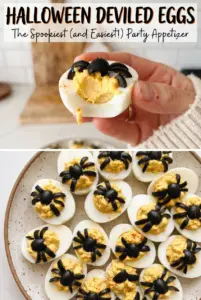
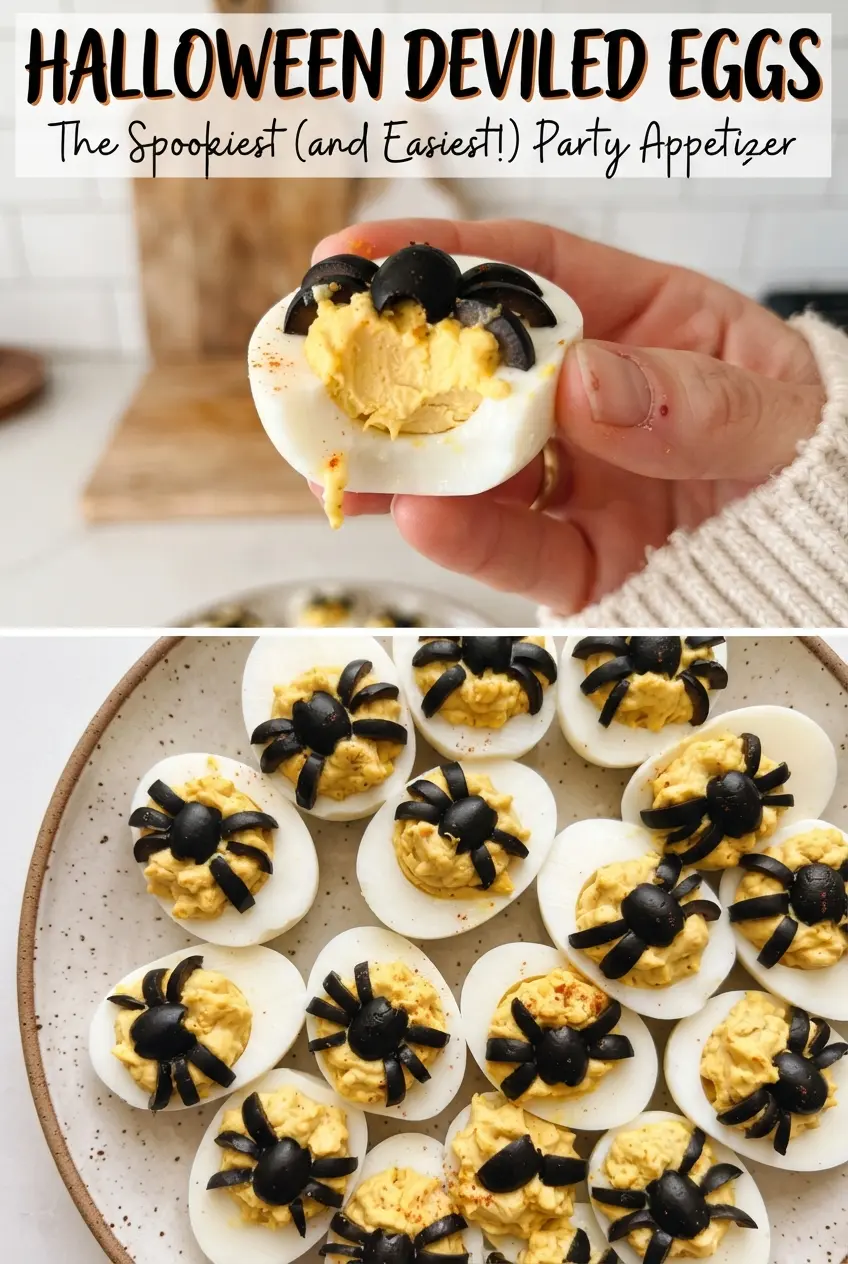
Halloween deviled eggs bring the same creamy, tangy filling everyone expects, but the bright green color and olive spiders turn them into the first thing people grab at the appetizer table. The filling stays smooth and pipeable, the whites stay firm, and the whole tray looks playful without needing any fancy tools or hard-to-find ingredients.
The trick is balancing the yolk filling so it holds its shape without turning stiff. Mayonnaise gives the filling its body, Dijon adds a little bite, and white vinegar keeps the flavor from tasting flat. A few drops of green gel coloring are enough to make the filling pop without watering it down, which matters more than people think when you’re piping eggs.
Below, I’ll show you the part that makes the spiders look neat instead of fussy, plus a couple of easy swaps if you want to adjust the filling or make these ahead for a party.
The filling was smooth and held its shape beautifully, and the olive spiders stayed put even after the eggs chilled. I made them the night before and they still looked sharp on the platter.
Save these Halloween deviled eggs for a spooky appetizer that’s creamy, bright green, and topped with olive spiders.
The Trick to Bright Filling Without a Watery Yolk
Deviled eggs fail in one of two ways: the yolk mixture turns loose and slides around, or it gets so thick it pipes like paste. The filling for these works because the mayonnaise and vinegar are doing different jobs. Mayo smooths and emulsifies the yolks, while the vinegar cuts through the richness and loosens the mixture just enough to pipe cleanly.
Gel food coloring matters here because liquid coloring can thin the filling and dull the color. Two or three drops are usually enough for a vivid green. If the mixture looks a touch soft after stirring, chill it for 10 minutes before piping. That short rest firms it up without changing the texture.
- Mayonnaise — This is the base that makes the filling creamy and stable. Use a good full-fat mayo for the best texture; light versions can make the filling taste flat and a little loose.
- Dijon mustard — Dijon gives the filling a sharper, cleaner bite than yellow mustard. It keeps the flavor from reading as just egg and mayo.
- White vinegar — The acid brightens the yolks and helps the filling taste balanced. Apple cider vinegar works in a pinch, but it will add a softer, slightly sweeter note.
- Green gel food coloring — Gel gives strong color without thinning the filling. Stir in the smallest amount first, then add more only if you want a brighter shade.
- Black olives — These do the decorative work and bring a salty contrast to the creamy filling. Pitted olives are easiest, and whole olives sliced yourself give the cleanest spider shape.
What Each Ingredient Is Actually Doing in This Recipe

- Primary ingredient (the star) — Quality matters most. Choose the best you can find.
- Cooking medium (oil, butter, or broth) — This carries flavors and prevents dryness.
- Seasonings (salt, pepper, spices, herbs) — Layer flavors so nothing overpowers. Build depth gradually.
- Aromatics (garlic, onion, herbs) — Cook with fat to bloom flavors. Become the foundation.
- Supporting ingredients — Complement the main ingredient without overpowering it.
- Sauce or liquid (if applicable) — Brings flavors together. Balance richness with acid.
- Acid (lemon, vinegar, wine, or other) — Brightens and prevents flat-tasting results.
- Final finish (garnish, glaze, or sauce) — Prevents one-dimensional taste and adds visual appeal.
Building the Spiders So They Look Sharp Instead of Messy
Start with eggs that have been chilled in an ice bath. Warm eggs are harder to peel cleanly, and torn whites make the finished tray look rough before you even fill them. After peeling, cut them lengthwise and dry the cut sides lightly with a paper towel so the filling doesn’t slide.
Pipe or spoon the yolk mixture into the whites, then build each spider right on top. Half an olive makes the body, and thin olive strips make the legs. The key is cutting the legs narrow enough that they look like legs instead of clunky wedges. If the olives are slippery, pat them dry before slicing. The filling should be chilled and slightly firm when you assemble everything, which helps the toppings stay put.
Boiling and Chilling the Eggs
Put the eggs in cold water first, then bring the pot up to a boil. Once it boils, cover it, pull it off the heat, and let it stand for 12 minutes. That gentler method gives you cooked yolks without the gray ring that shows up when eggs sit at a hard boil too long. Move them straight into an ice bath for 10 minutes so they stop cooking and peel more cleanly.
Mixing the Filling
Scoop out the yolks and mash them until there are no dry bits left. Stir in the mayonnaise, Dijon, vinegar, salt, and food coloring until the mixture looks smooth and evenly bright green. If it seems stiff, add another spoonful of mayonnaise, not more vinegar. Too much acid makes the filling loose and sharp instead of creamy.
Assembling the Spider Tops
Fill the egg whites with a piping bag or a small spoon. Piping gives you the cleanest look, but a spoon works fine if you mound the filling a little in the center. Place one olive half dome-side up for the spider body, then cut the remaining olive halves into thin strips and arrange four on each side for legs. Chill the tray until serving so the olives stay anchored and the filling holds its shape.
How to Adapt These for Different Tables and Timelines
Make-Ahead Party Tray
You can boil, peel, and halve the eggs a day ahead, then store the whites and filling separately. Assemble the spiders the day of serving so the olive legs stay neat and the cut edges don’t dry out. This is the best way to keep the tray looking fresh without rushing.
Dairy-Free Deviled Eggs
This recipe is already dairy-free as written, so you don’t need to change anything for that diet. If you want a richer filling, use a mayonnaise you already trust for flavor because the mayo is the main source of creaminess here.
Milder Filling for Kids
Replace the Dijon with a small amount of yellow mustard if you want a gentler, more familiar flavor. The filling will taste softer and less sharp, though the color and texture stay the same. Start with half the amount and taste before adding more.
Storage and Reheating
- Refrigerator: Store assembled deviled eggs in a covered container for up to 2 days. The whites stay fine, but the olive legs can soften slightly after the first day.
- Freezer: Don’t freeze deviled eggs. The whites turn rubbery and the filling separates after thawing.
- Reheating: These are meant to be served cold, so don’t reheat them. If they’ve been chilled for a while, let them sit out for 10 to 15 minutes before serving so the filling tastes creamier.
Answers to the Questions Worth Asking
Halloween Deviled Eggs
Ingredients
Equipment
Method
- Place 12 large eggs in a pot, cover with cold water, and bring to a boil. Cover the pot, remove from heat, and let stand for 12 minutes.
- Chill the eggs in an ice bath for 10 minutes. Peel and halve them lengthwise.
- Mash the yolks with mayonnaise, Dijon mustard, white vinegar, and salt until smooth. Stir in green gel food coloring until bright green.
- Pipe the bright green filling into the egg whites. Fill each egg half evenly for a consistent look.
- Halve each black olive lengthwise and place one half dome-side up on each egg for the spider body. Slice the remaining olive halves into thin strips and arrange 8 legs around each body. Chill until serving.