Caramel Apple Sangria lands in that sweet spot between easy and special: crisp white wine, spiced apple cider, and a caramel note that tastes like it belongs there instead of feeling forced. The fruit turns the pitcher into something you want to leave on the table, and the bubbles at the end keep every glass bright instead of syrupy.
What makes this version work is balance. Pinot grigio stays light enough to carry the apples and pears, while the cider gives it body and the caramel vodka adds flavor without the gritty heaviness you can get from too much sauce. The fruit needs time in the pitcher, too. Two hours in the fridge lets the slices soften just enough to perfume the drink without turning mushy.
Below, I’ll walk through the one step that keeps this from tasting flat, plus the best way to rim the glasses so the caramel and sugar actually stick. If you’re serving this for a crowd, the make-ahead timing matters here, and I’ve included that too.
The caramel flavor came through without making it heavy, and the apple slices soaked up just enough of the sangria that they tasted like dessert.
Caramel Apple Sangria tastes best after it chills and the fruit has time to steep, so it’s a great pitcher drink to make ahead for a crowd.
The Trick to Keeping Caramel Sangria Light, Not Sticky
The biggest mistake with caramel sangria is treating it like a dessert punch. Once it gets too sweet, the wine disappears and all you taste is syrup. The fix is simple: use a dry white wine and lean on apple cider for body, then add the caramel note in a measured way so it reads as flavor, not frosting.
The other thing that matters is timing. Ginger ale goes in at the end, right before serving, because the bubbles wake up the fruit and keep the whole pitcher tasting fresh. If you add it early, the drink goes flat fast and the sweetness starts to feel heavier than it should.
What Each Ingredient Is Actually Doing in the Pitcher
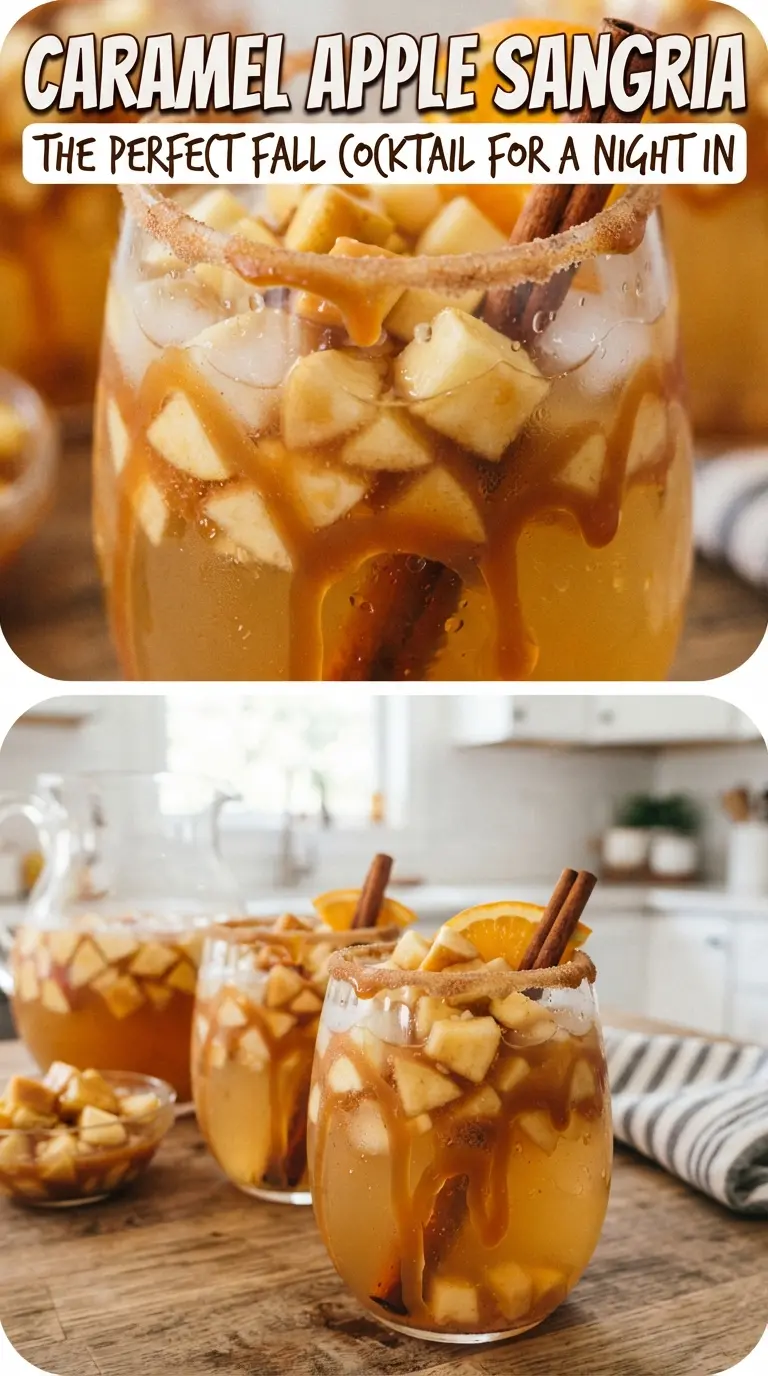
- Pinot grigio — This gives the sangria a crisp, clean base. A sweeter wine will make the drink cloying, while a dry pinot grigio keeps the caramel and cider from taking over.
- Apple cider — This is where the apple flavor really comes from. Fresh cider tastes fuller and more rounded than bottled apple juice, and it gives the drink that autumn-spiced depth without needing extra sugar.
- Caramel vodka or caramel sauce — Vodka mixes in cleanly and keeps the pitcher smooth. If you use caramel sauce instead, whisk it hard so it dissolves; any stubborn streaks will sink and leave the first glasses sweeter than the last.
- Apples and pear — Thin slices are important because they steep faster and look better in the pitcher. A firm apple holds its shape; mealy fruit turns soft and tired after a couple of hours.
- Cinnamon sticks — Whole sticks give a gentle spice that infuses without muddying the drink. Ground cinnamon would cloud the pitcher and settle at the bottom.
- Ginger ale or club soda — Ginger ale adds another layer of sweetness and spice, while club soda keeps the drink leaner. Either way, it belongs in the pitcher right before serving so the fizz stays alive.
Building the Pitcher So Every Glass Tastes the Same
Mix the Base Thoroughly
Start with the wine, cider, and caramel vodka or caramel sauce in a large pitcher. If you’re using sauce, whisk until the liquid looks uniform and no caramel streaks cling to the sides. That step matters because undissolved sauce settles fast, which means the first pour can taste different from the last.
Let the Fruit Steep
Add the apple slices, pear slices, and cinnamon sticks, then chill the pitcher for at least two hours. The fruit should soften slightly and perfume the liquid, but it shouldn’t collapse. If you leave it too long, the apples start to lose their snap and the sangria can take on a watered-down fruit-cup taste.
Finish With Bubbles and Serve Cold
Top with ginger ale or club soda just before serving, then pour over ice with a few pieces of fruit in each glass. If you add the bubbles too early, they vanish before the pitcher hits the table. The caramel-rimmed glasses are best done right before pouring, while the rim is still tacky enough for the sugar to cling.
How to Adjust the Sweetness, Make It Sparkling, or Keep It Alcohol-Free
Drier Sangria With Less Sugar
Use club soda instead of ginger ale and keep the caramel vodka on the lighter side. You’ll lose a little sweetness, but the wine and fruit taste brighter and the drink feels more like a cocktail than a dessert punch.
Alcohol-Free Version
Swap the wine and caramel vodka for extra apple cider and a splash of caramel syrup, then finish with ginger ale. The result is sweeter and more dessert-like, but it still has the same apple-cider-cinnamon backbone.
Make It Ahead for a Party
Mix the wine, cider, caramel vodka or sauce, fruit, and cinnamon sticks up to 24 hours ahead. Hold the ginger ale and the ice until the last minute so the drink stays fizzy and cold instead of diluted.
Storage and Serving
- Refrigerator: Store the sangria base, without ginger ale, for up to 2 days. The fruit will soften more each hour, so the texture gets less crisp over time.
- Freezer: Don’t freeze sangria. The wine texture turns dull and the fruit turns mushy once thawed.
- Serving: Add ginger ale right before pouring and serve over ice. The most common mistake is adding the bubbles too soon, which leaves you with a flat drink and less lift in the glass.
Answers to the Questions Worth Asking
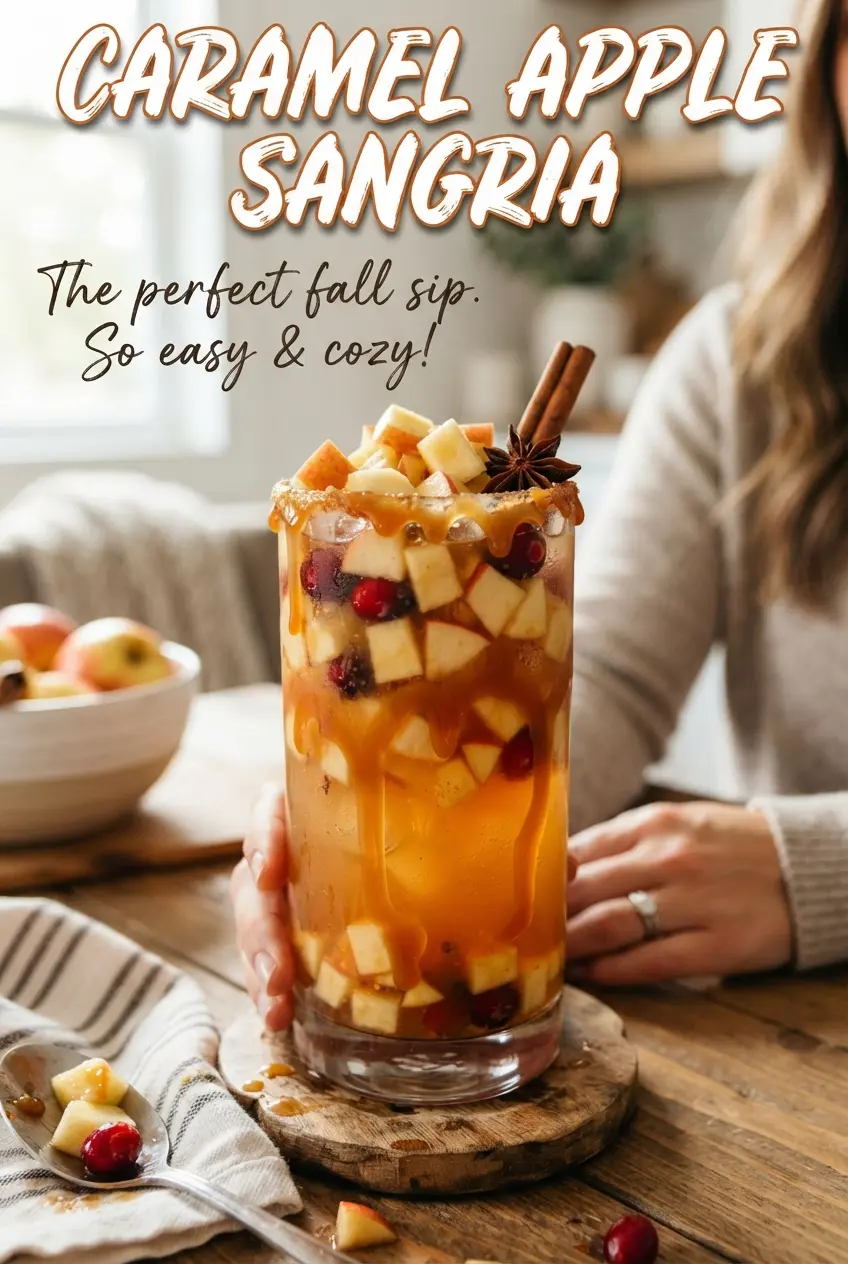
Caramel Apple Sangria
Ingredients
Equipment
Method
- Combine the pinot grigio, apple cider, and caramel vodka in a large pitcher, whisking well if using caramel sauce.
- Add the thinly sliced apples, pear slices, and cinnamon sticks to the pitcher and gently stir to distribute the fruit.
- Chill the sangria at least 2 hours so the fruit soaks up the flavor.
- Dip the glass rims in caramel, then in coarse sugar to coat the edges.
- Top the pitcher with ginger ale just before serving, then pour over ice with some fruit in each glass.