Roasted potatoes, carrots, and zucchini land on the table with the kind of contrast that keeps people reaching back for another scoop: crisp-edged potatoes, sweet caramelized carrots, and zucchini that stays tender instead of collapsing into mush. The best versions don’t feel like three vegetables cooked side by side. They taste like one pan that was handled with a little timing and a little restraint.
The key is giving the potatoes and carrots a head start. They need more time to brown and soften than zucchini does, and if everything goes in at once, the zucchini gives up moisture before the potatoes have a chance to crisp. A hot oven helps, but the real difference comes from adding the zucchini later and spreading everything out in a single layer so the vegetables roast instead of steam.
Below, I’ve included the timing that keeps each vegetable in its best state, plus a few swaps that still give you a pan with good texture and plenty of flavor.
The potatoes got those crisp little corners I was hoping for, and the zucchini stayed tender instead of turning watery. Adding the zucchini halfway through made all the difference.
Save these roasted potatoes, carrots, and zucchini for the nights when you want one sheet pan of crispy, caramelized vegetables with almost no cleanup.
The Timing Trick That Keeps Zucchini From Going Soft
Roasting mixed vegetables sounds straightforward until the pan starts flooding with moisture. Zucchini is the main culprit. It cooks faster than potatoes and carrots, and if it goes in at the beginning, it sheds water before the other vegetables have a chance to brown. The result is a pan that tastes fine but never gets that roasted edge people are after.
This recipe fixes that by splitting the cook into two phases. Potatoes and carrots get the first 20 minutes on their own, which gives them time to soften and start caramelizing. Zucchini joins later, after the hot pan has already done the hard work. The vegetables still roast together at the end, but they don’t all need the same amount of time to get there.
What Each Ingredient Is Actually Doing In This Dish
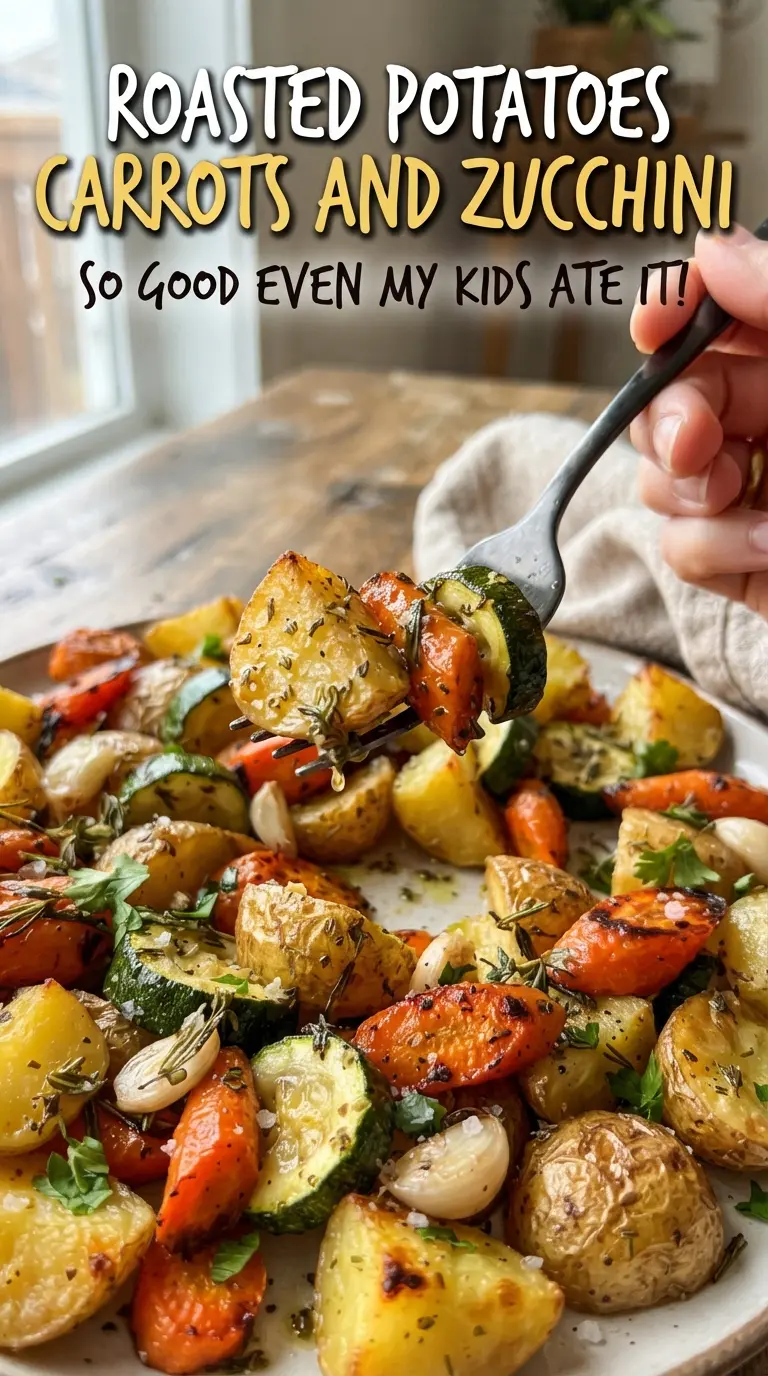
- Baby potatoes — Their starch is what gives you the crisp edges and fluffy centers. Quartering them creates flat sides that can brown against the pan instead of rolling around and steaming. If you only have larger potatoes, cut them into similar-sized chunks so they finish at the same time.
- Carrots — Carrots bring sweetness and hold their shape through the full roast. The 1/2-inch coins are thick enough to caramelize without drying out. Thinner slices work, but they soften faster and can start to look wrinkled before the potatoes are done.
- Zucchini — Zucchini adds freshness, but it needs less time than the other vegetables. Cut it into bigger chunks so it doesn’t disappear into the pan. Smaller pieces overcook quickly and release more moisture.
- Olive oil — This is what carries the seasoning and helps the vegetables brown instead of sticking. Use enough to coat the vegetables lightly, not drown them. Too little oil gives you dry surfaces and patchy color.
- Parmesan — The Parmesan finishes the pan with a salty, nutty edge. Freshly grated works best because it melts and clings without clumping. Pre-grated cheese is fine in a pinch, but it won’t melt as cleanly.
Building A Roasted Vegetable Pan That Browns Instead Of Steams
Coating The Hardy Vegetables First
Toss the potatoes and carrots with the oil, garlic, Italian seasoning, salt, and pepper right on the sheet pan. That keeps the seasoning concentrated where it matters and gives every cut surface a light coating. Spread them out so they sit in a single layer with a little breathing room, because crowded vegetables trap steam and stay pale. If your pan is overloaded, use two pans instead of piling everything on top of itself.
Letting The First Roast Do The Heavy Lifting
The first 20 minutes are where the structure of the dish is built. The potatoes begin to brown and the carrots start to soften, but they’re still firm enough to handle another turn in the oven. Pull the pan when you can see the first signs of color on the potatoes; if they’re already deep brown at this stage, the zucchini won’t have enough time to finish without overcooking.
Adding Zucchini At The Right Moment
Toss the zucchini with the remaining oil before it goes on the pan, then stir everything together so the new pieces pick up some of the seasoned oil already on the tray. Bake until the zucchini is tender and the potatoes are crisp at the edges. If the zucchini looks glossy and soft before the potatoes are done, the pieces were cut too small or the pan was too crowded.
Finishing With Cheese And Herbs
Add the Parmesan and parsley after the vegetables come out of the oven. The heat on the pan is enough to soften the cheese slightly without turning it into a greasy layer. Parsley goes in at the end for a clean, fresh finish. If you add either one too early, the cheese can clump and the herbs lose their brightness.
Three Useful Ways To Change The Pan Without Losing The Texture
Dairy-Free Finish
Skip the Parmesan and finish with a squeeze of lemon or a little extra chopped parsley. You lose the salty, nutty coating from the cheese, but the vegetables stay bright and the pan still tastes complete. A dusting of nutritional yeast also works if you want a savory finish without dairy.
Add More Protein-Friendly Flavor
Toss in sliced smoked sausage or cooked chickpeas during the last 15 minutes. Sausage adds fat and a deeper savory note; chickpeas bring a crisp exterior if they’re well drained and dried first. If you add either one too early, they can dry out before the vegetables finish.
Gluten-Free And Vegetarian As Written
This recipe is naturally gluten-free and vegetarian as long as your Parmesan fits your needs. The technique doesn’t need adjusting, which is part of why it works so well for mixed tables. The only real risk is overpacking the pan and losing the roast.
Storage And Reheating
- Refrigerator: Store leftovers in an airtight container for up to 4 days. The potatoes will soften a bit, and the zucchini will release a little moisture as it sits.
- Freezer: Not the best candidate for freezing. Zucchini turns watery after thawing, and the potatoes lose their crisp edges.
- Reheating: Reheat on a sheet pan in a 400F oven until the vegetables are hot and the potatoes re-crisp at the edges. The microwave works in a pinch, but it wipes out the roasted texture that makes this dish worth keeping.
Answers To The Questions Worth Asking
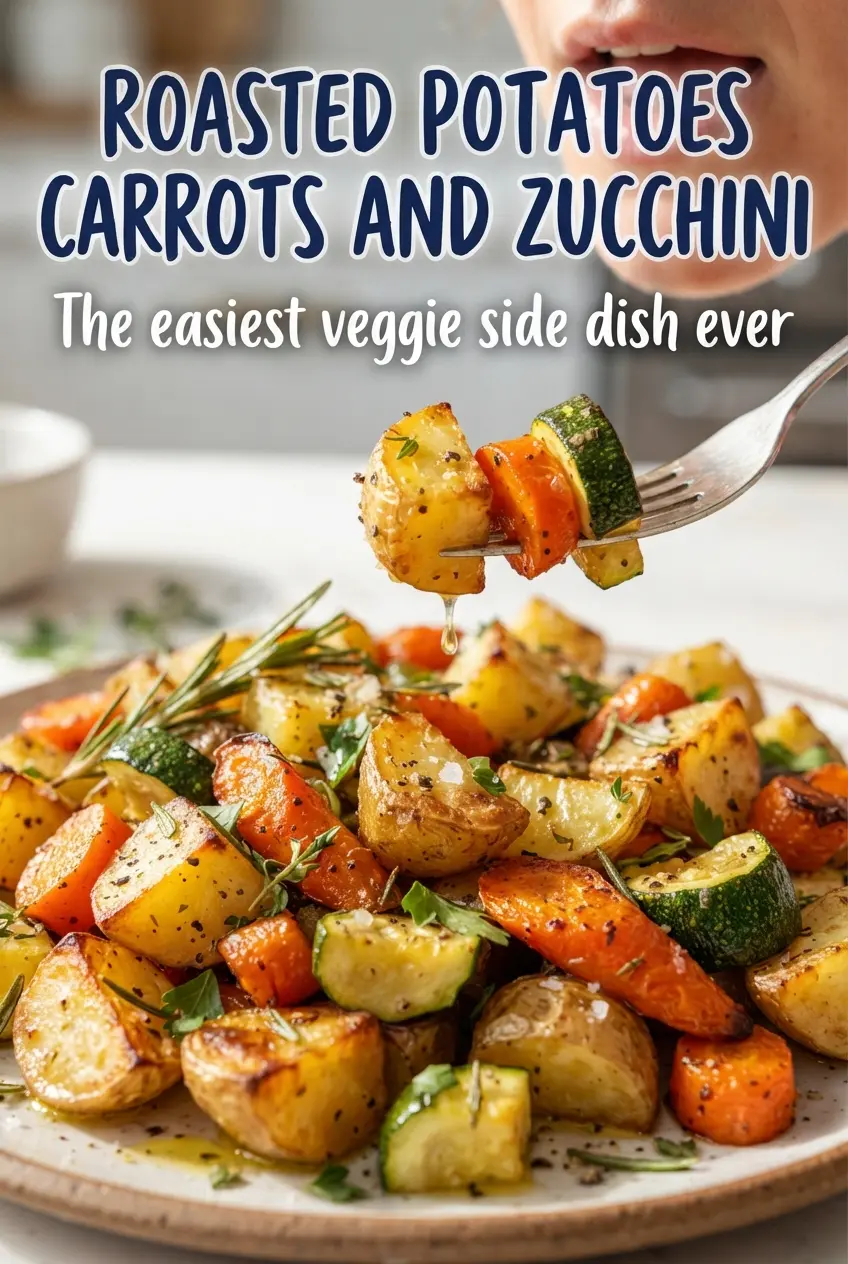
Roasted Potatoes Carrots and Zucchini
Ingredients
Equipment
Method
- Preheat oven to 425F so the sheet pan gets hot for browning.
- Toss potatoes and carrots with 3 tablespoons olive oil, garlic, dried Italian seasoning, salt, and black pepper on a sheet pan until evenly coated.
- Roast for 20 minutes, then use a spatula to stir if needed to keep edges browning.
- Toss zucchini with the remaining olive oil, add it to the pan, and stir so the vegetables spread out in an even layer.
- Roast for 15 minutes more at 425F until potatoes are crispy and zucchini is tender, with browned spots on the cut sides.
- Sprinkle with Parmesan and fresh parsley, then serve immediately while hot.